
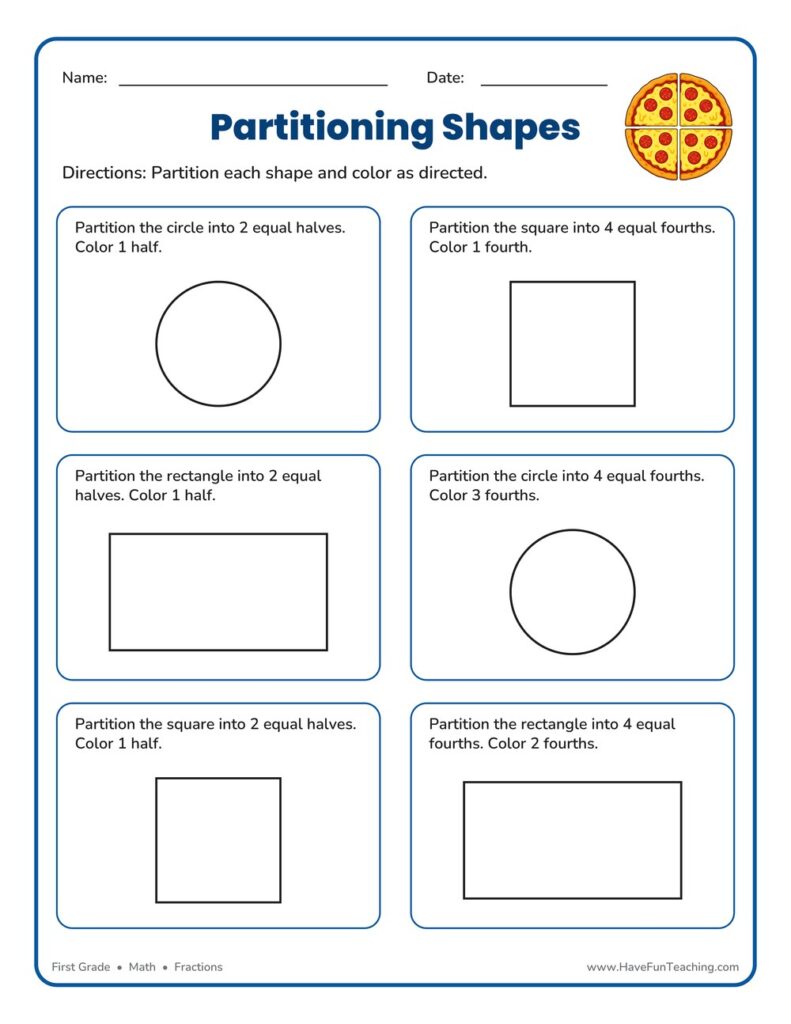
Partitioning Shapes Worksheet
This partitioning shapes worksheet gives 1st graders hands-on practice splitting circles, squares, and rectangles into equal halves and fourths. An answer key is included, making it a quick, no-prep way to build early fraction skills.
$6.97
Or free with a membership — members pay $3.33/mo for all 10,000+ resources. See plans
Want this one free?
Tell us where to send it and it’s yours — no card, no catch.
One free resource per teacher. We’ll also send free teaching ideas each week — unsubscribe anytime.
Teaching is easier with a membership
Unlimited printables, games & videos for PreK–6th — for your classroom or homeschool. Cancel anytime.
Start your 3-day free trial$0 today · cancel anytime · Instant access to 10,000+ resources
About this resource
Description
This Partitioning Shapes Worksheet helps first graders learn to split circles, squares, and rectangles into equal parts. Students discover that a whole shape can be divided into two equal halves or four equal fourths, which builds the foundation for understanding fractions. The partitioning shapes worksheet uses familiar shapes and simple coloring so young learners can see and feel what equal parts really mean.
On this 1st grade fractions worksheet, children partition six shapes and color the parts as directed. Each shape sits in its own box with one clear instruction, so students can focus on a single task at a time. Print the page and have learners draw the lines that make equal parts, then color the correct number of halves or fourths. The included answer key makes checking finished work quick and easy for busy teachers and parents.
What’s Included
- 1 print-ready PDF worksheet
- Answer key
- 6 partition-and-color shape activities (halves and fourths)
This partitioning shapes worksheet helps kids learn in three important ways. First, it connects fractions to real shapes they already know, which makes the idea of equal parts concrete and easy to picture. Second, drawing and coloring keeps hands and minds engaged, so the learning sticks. Third, the mix of halves and fourths gives students practice moving between two and four equal parts, strengthening their early number sense.
Teachers and parents can extend this skill in fun, hands-on ways. Fold paper plates or sandwiches into halves and fourths at snack time, or slice a real pizza into equal pieces and count the parts together. Use pattern blocks to build shapes and talk about the equal parts inside them. Ask children to spot halves and fourths around the house, from window panes to floor tiles, so partitioning becomes part of everyday play.
Related Resources
What teachers say
Reviews
You must be logged in to post a review.

This whole half worksheet gives 1st graders eight picture activities for naming whole and half shapes and partitioning their own halves. Answer key included, so it is ready for no-prep fraction practice.

This 1st grade Halves and Fourths Worksheet lets children color shapes and name equal parts to build a strong fraction foundation. Includes an answer key—perfect for hands-on, no-prep fraction practice.
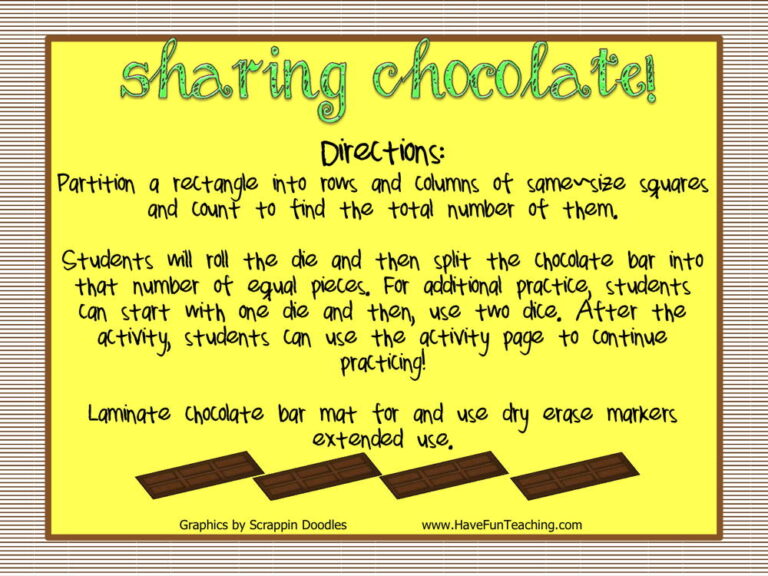
Using this Sharing Chocolate Rows and Columns Activity, students partition a rectangle into rows and columns of same-size squares and count to find the total number of them.

Using this Sweet Rectangular Arrays Addition Activity, students use addition to find the total number of objects arranged in rectangular arrays with up to 5 rows and up to 5 columns; write an equation to express the total as a sum of equal addends.
This 1.G.3 First Grade Common Core Lesson includes 1.G.3 Worksheets, 1.G.3 Activities, 1.G.3 Assessment, and 1.G.3 Poster.
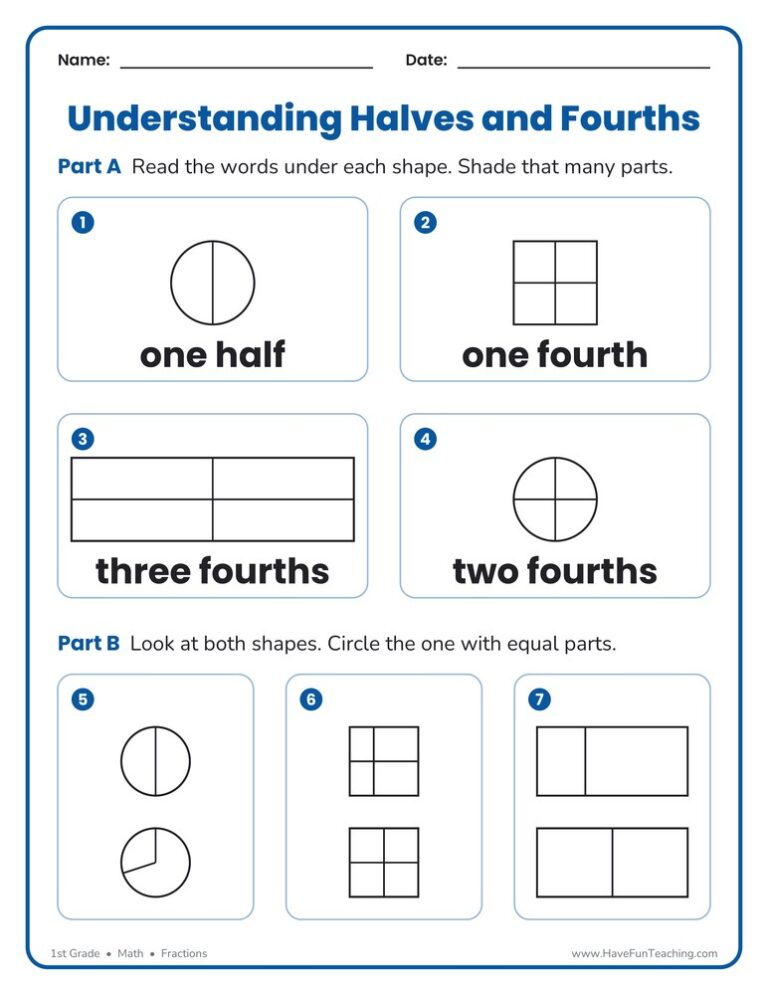
This Understanding Halves and Fourths Worksheet asks 1st grade students to shade halves and fourths of printed shapes, then spot which shapes have equal parts. An answer key is included for quick checking.
Using this Pizza For All Equal Parts Fractions Activity, students cut shapes into small parts and then describe them as halves, fourths, or quarters.

Using Two Three or Four Equal Shares Worksheet, students shade in the proper amount for each circle and divide the rectangles to create equal parts, then shade.
Using this 1 Part of a Whole Fractions Activity, students understand a fraction 1/b as the quantity formed by 1 part when a whole is partitioned into b equal parts.

Using thisMaking Equal Parts Fractions Activity, students cut shapes into small parts and then describe them as halves, fourths, or quarters.

Using Fraction Action Fractions Activity, students match fraction cards represented graphically, numerically, and in words from 1/2 to 1/10.
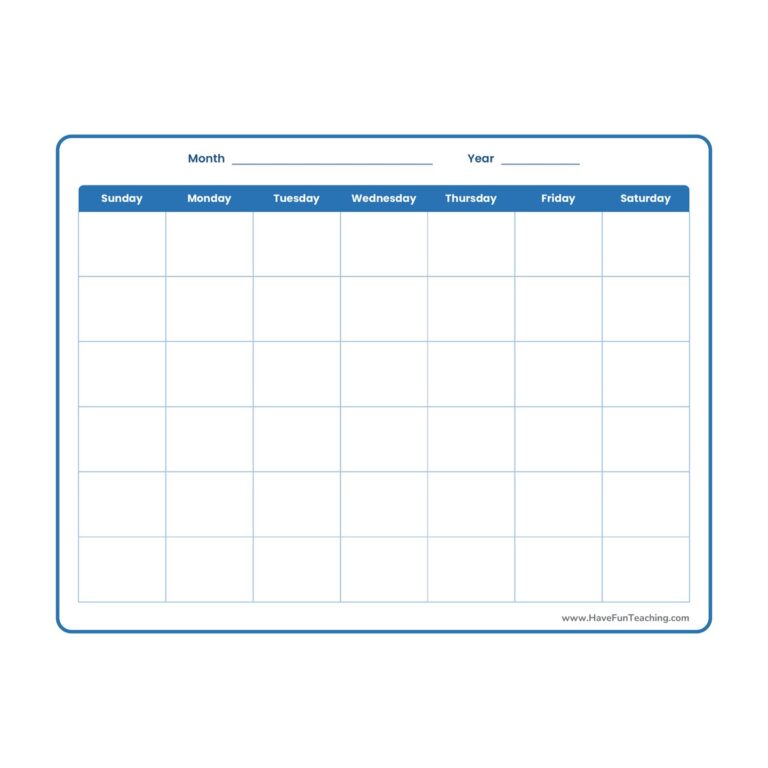
A printable, ready-to-use blank calendar with a landscape monthly grid and labeled day columns. Great for Kindergarten through 5th grade classrooms to map out lessons, holidays, and daily routines—just add the month and the dates.




Reviews
There are no reviews yet