
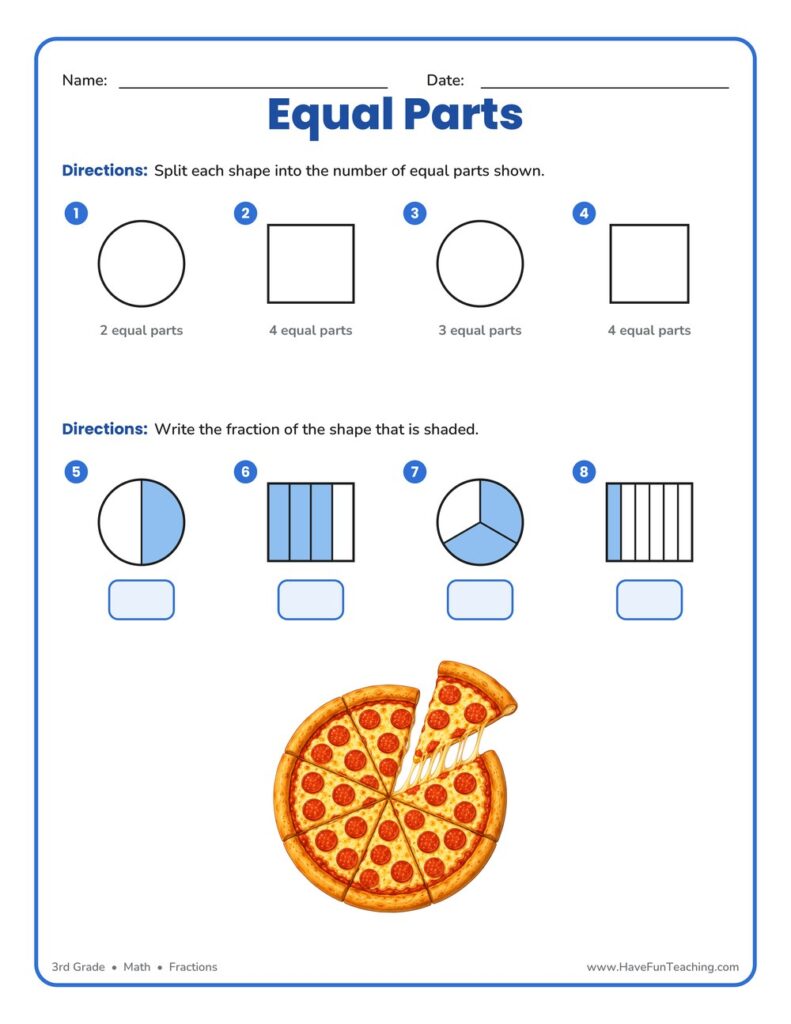
Equal Parts Fractions Worksheet
This equal parts fractions worksheet helps 3rd graders split shapes into equal parts and write the fraction for the shaded part. Includes a complete answer key—perfect for hands-on, no-prep fraction practice.
$6.97
Or free with a membership — members pay $3.33/mo for all 10,000+ resources. See plans
Want this one free?
Tell us where to send it and it’s yours — no card, no catch.
One free resource per teacher. We’ll also send free teaching ideas each week — unsubscribe anytime.
Teaching is easier with a membership
Unlimited printables, games & videos for PreK–6th — for your classroom or homeschool. Cancel anytime.
Start your 3-day free trial$0 today · cancel anytime · Instant access to 10,000+ resources
About this resource
Description
Understanding equal parts is the first big step toward mastering fractions, and this Equal Parts Fractions Worksheet gives third graders focused practice at exactly that skill. When students can split a shape into equal parts and name each part as a fraction, they build the foundation they need for comparing, adding, and simplifying fractions later on. This equal parts fractions worksheet keeps the concept concrete by using familiar shapes—circles, rectangles, and squares—so learners can see that a fraction is simply one or more equal parts of a whole.
This printable 3rd grade fractions worksheet is divided into two simple parts. In the first section, students split each shape into the number of equal parts shown, drawing lines to create halves, thirds, and fourths. In the second section, they look at shapes that are already divided, notice which part is shaded, and write the fraction that names the shaded portion. To use it, print the page and have students work independently or with a partner; the included answer key makes checking their work fast and painless.
What’s Included
- 1 print-ready PDF worksheet
- Answer key
- 8 shape-based equal parts and fraction activities
There are three reasons this equal parts fractions worksheet helps students learn. First, it moves from doing to naming: kids physically partition each shape before they write a fraction, so the symbol finally makes sense. Second, it mixes circles, squares, and rectangles, which stops students from memorizing one picture and helps them generalize the idea of equal parts. Third, the built-in answer key gives immediate feedback, so small misconceptions get corrected before they turn into habits.
Teachers and parents can extend this skill in fun, hands-on ways. Fold paper plates or sandwiches into equal parts at snack time and name the fractions out loud. Cut a real pizza or pie into equal slices and ask how many parts make one whole. Use building blocks or a chocolate bar to show that equal parts must be the same size, not just the same number. Turning everyday objects into fraction models makes the idea stick long after the worksheet is finished.
Related Resources
What teachers say
Reviews
You must be logged in to post a review.

A 3rd grade fractions on a number line worksheet where students name points and plot fractions between 0 and 1 on equal-part number lines. Includes a complete answer key for quick, no-prep fraction practice.

This Fractions of a Whole worksheet lets 3rd graders name the fraction for each shaded shape and color shapes to match a fraction. Answer key included for fast, no-prep fraction practice.

This Matching Fractions on a Number Line Worksheet gives 3rd graders practice naming points on number lines split into halves through eighths by matching each one to the right fraction. Includes an answer key for fast, no-prep fraction practice.

Using these Fraction Flash Cards, students identifying the fraction which represents the picture provide in order toimprove their fraction skills.

This Comparing Visual Fractions Worksheet helps 3rd graders shade fraction models and compare them using <, >, and =. Answer key included—perfect for hands-on, no-prep fraction practice at home or school.

This Comparing Fractions Worksheet gives 3rd graders eleven problems to compare fractions using , and = symbols, including visual fraction bars. Answer key included for quick, no-prep fraction practice.
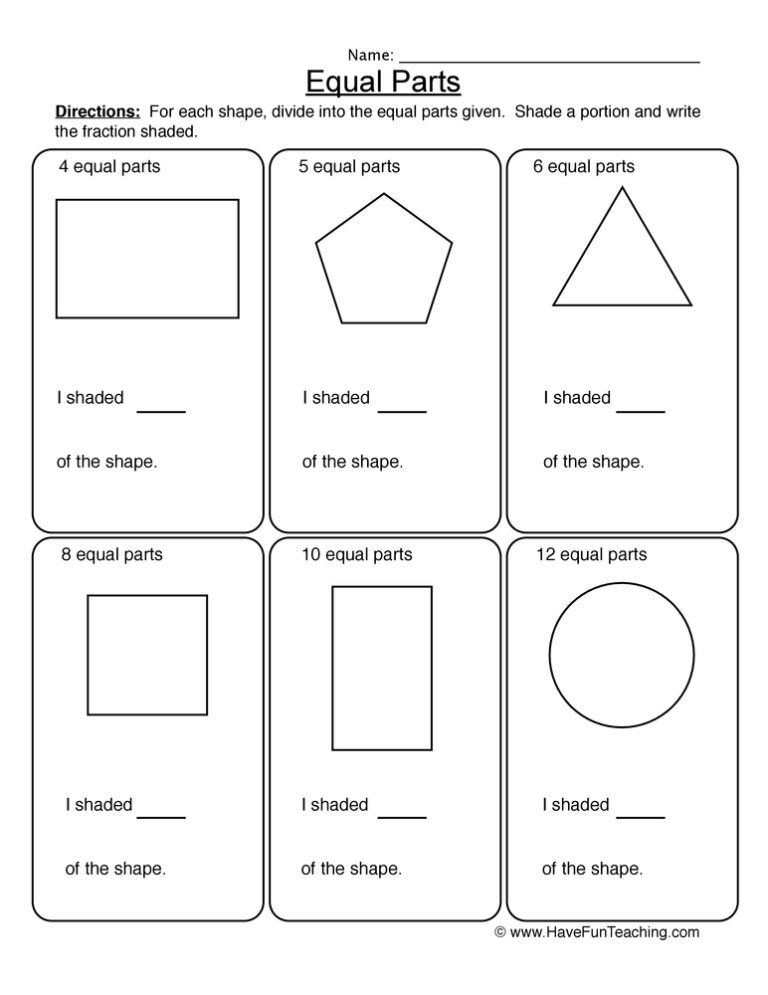
This dividing equal parts fractions worksheet has 3rd Grade students divide shapes into equal parts, shade them, and name the fraction. An answer key is included, so practice is quick to check.

Students partition six shapes into equal parts and shade the fraction shown, then solve a pizza word problem on this partitioning a whole worksheet for 3rd grade. Answer key included for fast, no-prep fraction practice.
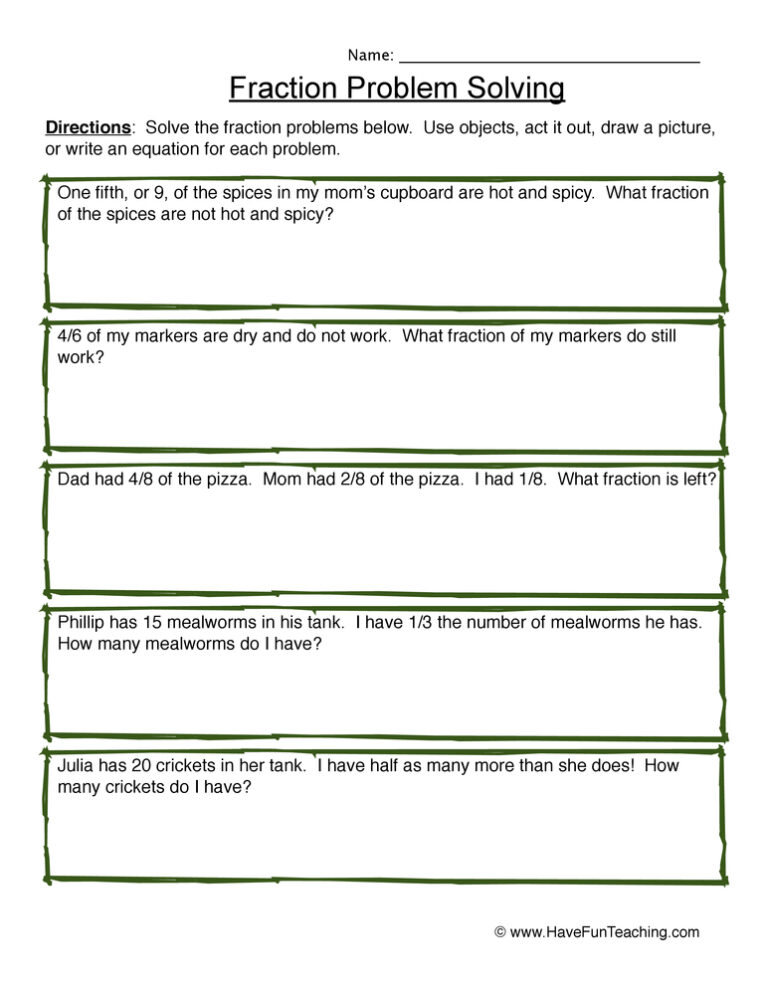
This fraction word problem solving worksheet lets 3rd grade students shade fraction strips, write fractions and compare two fractions, and it includes an answer key so checking is fast and easy.

This partitioning shapes fractions worksheet has 3rd graders cut shapes into equal parts, name each part with a unit fraction, and explain unequal cuts. An answer key is included for quick checking.

This Fractions Half Third Fourth Worksheet has 3rd Grade students name shaded halves, thirds and fourths on circles, bars and sets, then shade circles to match, with an answer key for fast checking.
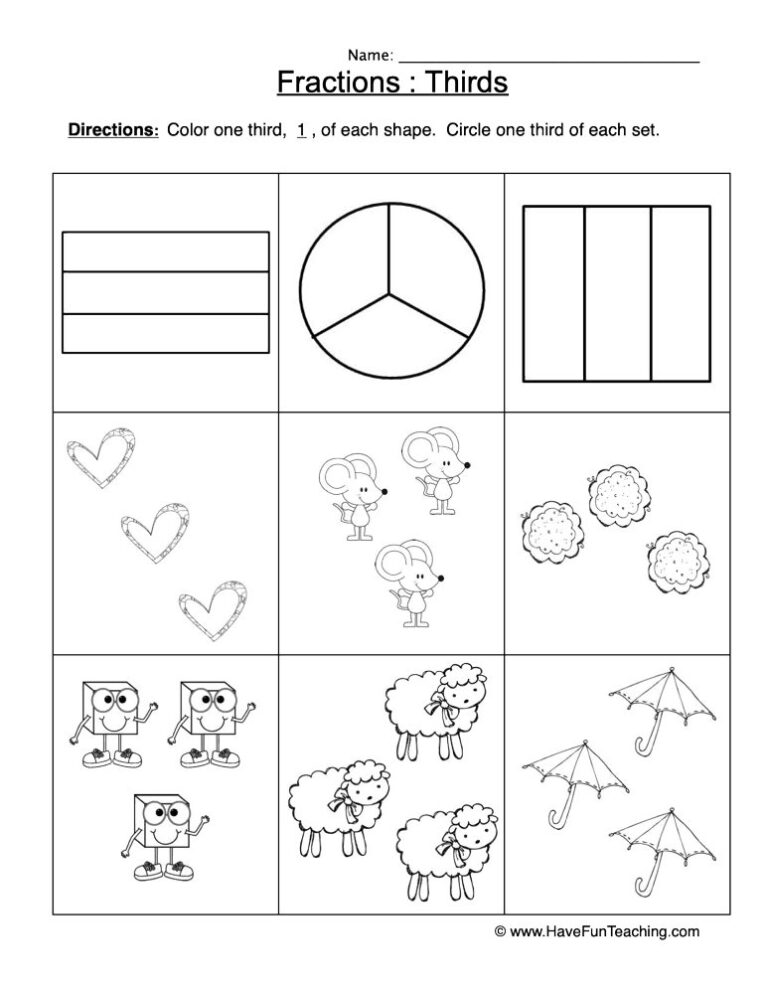
This Fractions Thirds Worksheet has 3rd Grade students name shaded thirds on circles, bars and sets, then shade circles to match, with an answer key for quick checking and confident fraction sense.




Reviews
There are no reviews yet