
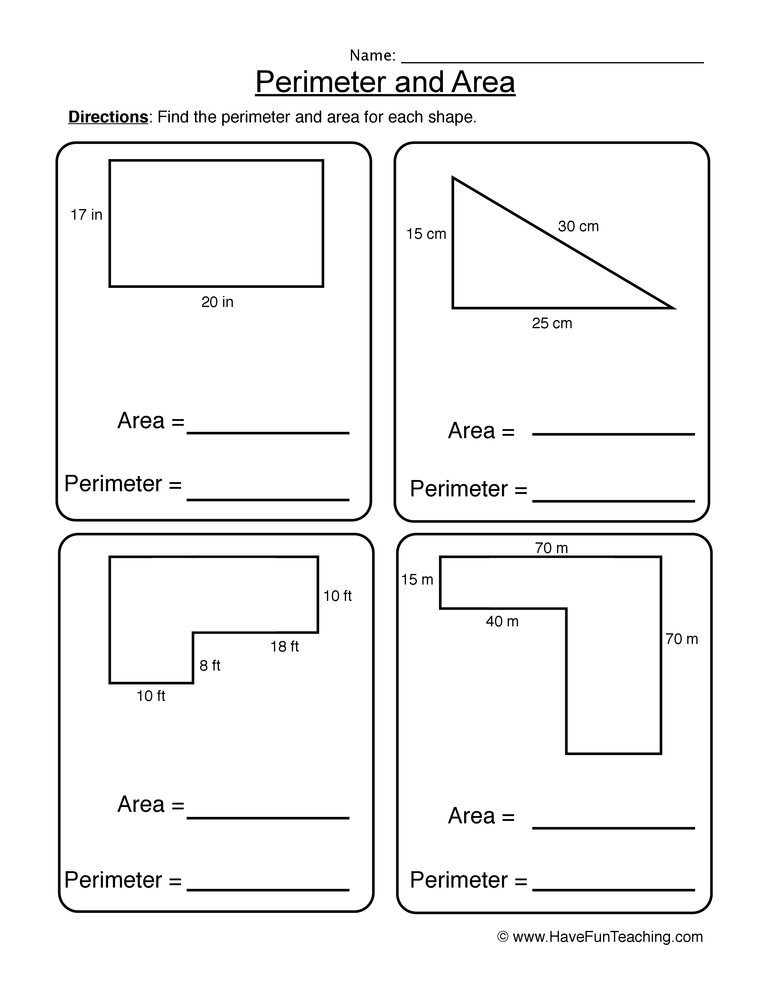
Perimeter Area Worksheet
This perimeter area worksheet gives 3rd graders four labeled figures and a garden word problem for finding perimeter and area. An answer key is included, so measurement practice is ready to print and go.
$6.97
Or free with a membership — get this and 10,000+ resources. See plans
Teaching is easier with a membership
Unlimited printables, games & videos for PreK–6th — for your classroom or homeschool. Cancel anytime.
Start your 3-day free trialNo commitment · Cancel anytime · Instant access to 10,000+ resources
About this resource
Description
Perimeter and area are two of the most important measurement skills in third grade math. Perimeter is the distance all the way around the outside of a shape, and area is the amount of space that the shape covers. This perimeter area worksheet gives students clear, fully labeled figures so they can practice both ideas side by side and learn to tell them apart with confidence.
The printable sheet moves from simple rectangles and a square to a composite figure built from two rectangles, and then finishes with a real-world garden story. Use it as guided perimeter and area practice during your measurement unit, as morning work, as a quick review before a quiz, or as homework. Students add the side lengths to find each perimeter, multiply length by width to find each area, and label every answer with the correct units.
What’s Included
- 1 print-ready PDF worksheet
- Answer key
- 4 labeled figures with perimeter and area lines, plus a two-part garden word problem
Three things make this perimeter area worksheet especially helpful. First, every figure is fully labeled, so students spend their thinking on the math instead of guessing at a missing measurement. Second, the L-shaped composite figure asks them to break one shape into two rectangles, which is exactly the multi-step reasoning third graders are expected to do. Third, the garden problem asks students to decide which measurement actually answers the question, so they learn that perimeter buys the fence while area covers the ground.
Teachers and parents can carry this skill off the page. Hand students a tape measure and let them find the perimeter and the area of a desk, a rug, or a raised garden bed. Build shapes on grid paper and count the squares inside them. Cover a rectangle with color tiles and compare the tile count to length times width. Then challenge students to draw two different rectangles that share the same perimeter but have different areas, a quick activity that makes the difference stick.
Related Resources
What teachers say
Reviews
You must be logged in to post a review.
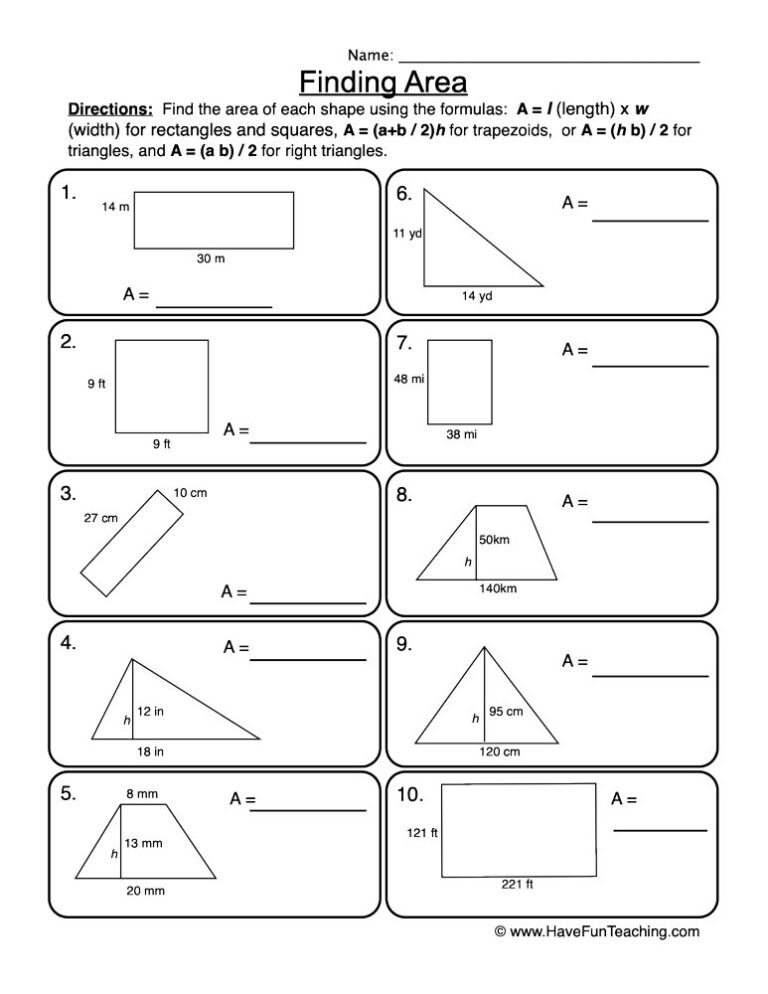
A Finding Different Shapes Area Worksheet where 3rd graders find the area of rectangles, squares, and composite shapes in square units. Answer key included—great for no-prep area practice.

This 3rd grade Finding the Area of Grid Shapes Worksheet has students count unit squares to find the area of rectangles and L-shapes. Answer key included.

This Finding the Area by Multiplying Worksheet gives 3rd graders six labeled rectangles on a unit grid to practice finding area by multiplying length by width. An answer key is included for easy, no-prep geometry practice.

Count unit squares to find the area with this finding the area in total units worksheet. Built for 3rd grade, it includes an answer key and hands-on area practice that builds real geometry confidence.
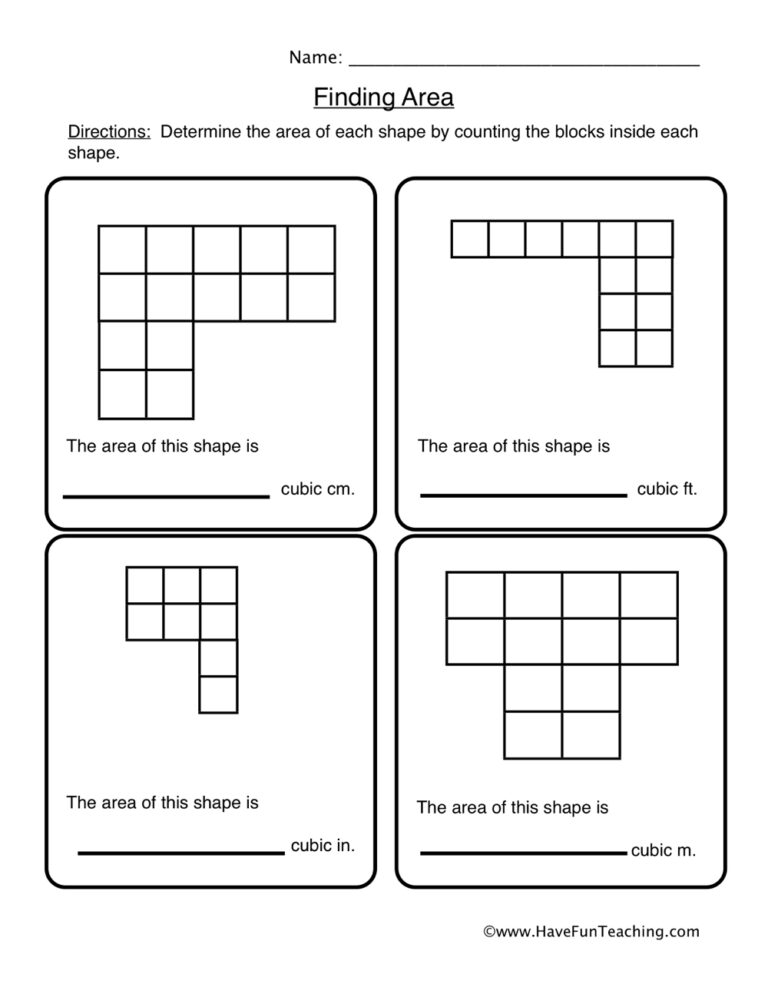
A count-the-squares finding area of irregular shapes worksheet that helps 3rd graders measure area by counting unit squares on six grid figures. Answer key included, perfect for no-prep area practice at home or school.
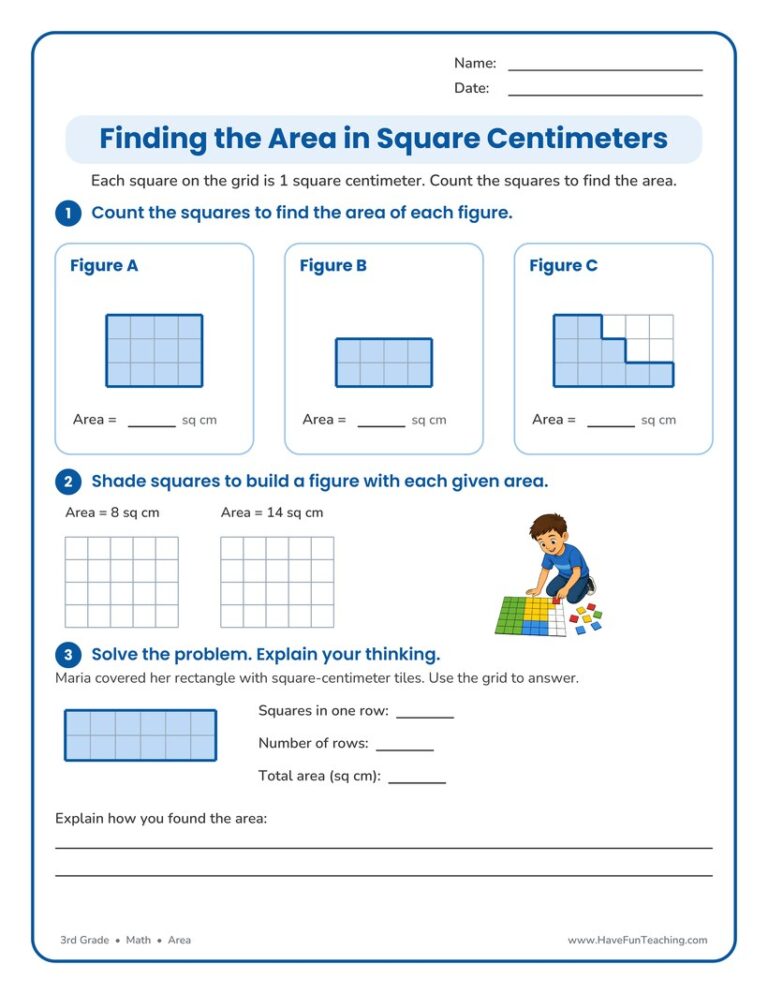
This Finding the Area in Square Centimeters Worksheet lets 3rd graders count grid squares to measure area, build their own figures, and explain their thinking. Includes an answer key for quick, no-prep practice.

This Finding the Area in Square Units Worksheet lets 3rd graders count same-size squares inside six shapes to measure area. Includes a complete answer key—great for hands-on, no-prep geometry practice at home or school.
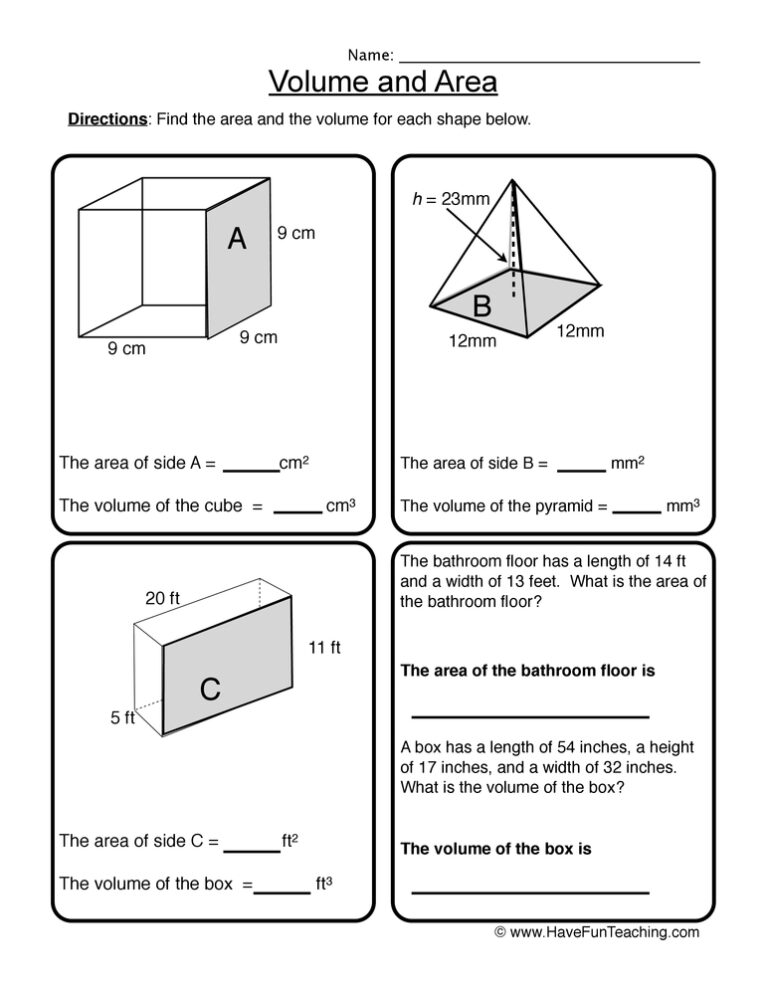
Using this Volume Area Worksheet, students find the surface area and volume of a 3D shape.

Using this Finding the Area of Shapes Formulas Worksheet, students find the area of shapes using formulas and dimensions.
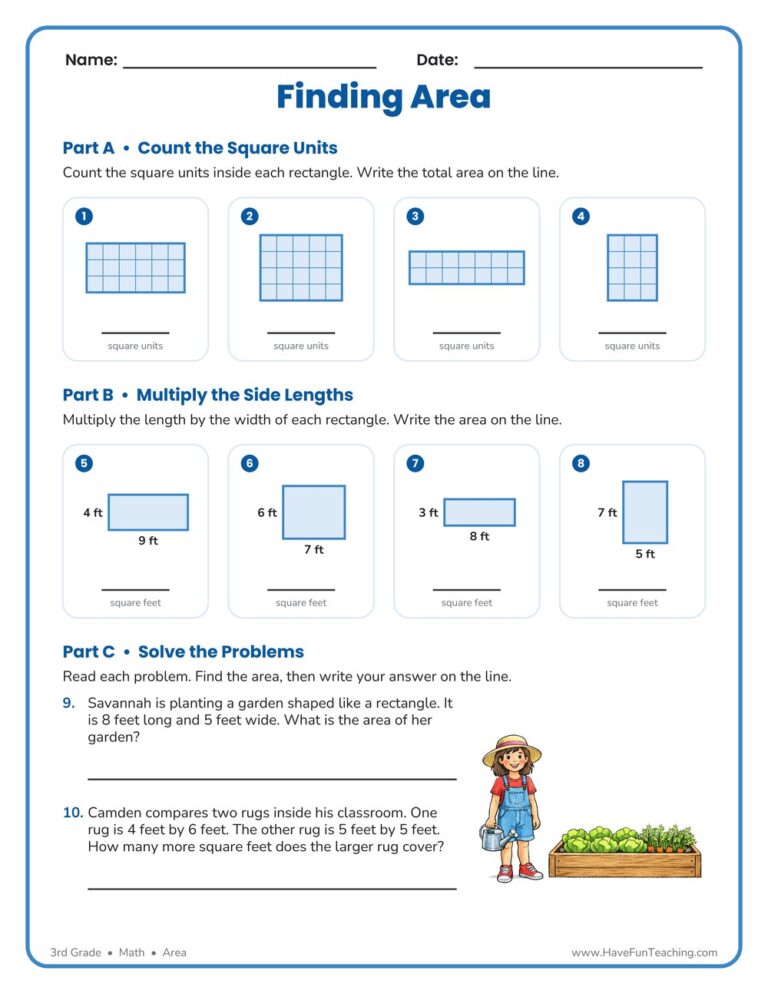
This Rectangles Area Worksheet helps 3rd graders find area by counting unit squares and by multiplying side lengths, then apply the skill to two word problems. An answer key is included, so practice is ready in a single print.

Using this Geometric Measurement Understanding Unit Squares Activity, match area terms and definitions in order to be able to find area.

Using Perimeter and Area Worksheet, students find the area and perimeter in different real life scenario word problems.
Reviews
There are no reviews yet