

Rounding to Thousands Worksheet
This rounding to thousands worksheet gives 4th graders eight numbers, a labeled number line, and two estimation word problems. An answer key is included, so checking work takes seconds.
$6.97
Or free with a membership — get this and 10,000+ resources. See plans
Teaching is easier with a membership
Unlimited printables, games & videos for PreK–6th — for your classroom or homeschool. Cancel anytime.
Start your 3-day free trialNo commitment · Cancel anytime · Instant access to 10,000+ resources
About this resource
Description
Rounding is one of the first big estimation skills a fourth grader meets, and it turns up everywhere from mental math to checking whether a long answer makes sense. This rounding to thousands worksheet gives students focused practice deciding whether a multi-digit number sits closer to one thousand or to the next one. Students find the thousands place, look at the digit just to its right, and write the nearest thousand on the line.
This printable is built for 4th Grade and moves from quick practice into real thinking. Part A gives eight numbers, from four digits all the way up to six digits, with a wide writing line under each one. Part B adds a labeled number line split into hundreds, so students can see why a number rounds up or down instead of only memorizing a rule. Part C finishes with two word problems that ask students to round first and then estimate a sum and a difference. Use this round to the nearest thousand worksheet as morning work, a math center task, homework, a quick check before a unit test, or a warm-up before a lesson on estimation.
What’s Included
- 1 print-ready PDF worksheet
- 8 round-to-the-nearest-thousand problems, from four digits to six digits
- 1 labeled number line activity with three plotted numbers
- 2 real-world estimation word problems
- 1 complete answer key
This rounding to thousands worksheet helps kids learn the skill in three ways. First, it breaks rounding into clear steps that a student can repeat on any number, no matter how many digits it has. Second, the number line turns an abstract rule into a picture, which is exactly what a student who keeps rounding the wrong way needs to see. Third, the word problems answer the question children always ask, which is why rounding matters at all: estimating a total is faster than adding exact numbers, and a good estimate catches mistakes before they spread.
Teachers and parents can stretch this practice in a few easy ways. Try calling out a number and having students show thumbs up or thumbs down for rounding up or down. Draw a blank number line on a whiteboard and let students place their own numbers on it. Use grocery receipts, sports scores, or the number of steps walked in a day, and round each one together to the nearest thousand. Play a partner game where one child writes a five-digit number and the other rounds it, then swap. Finish by asking students to explain out loud how they decided, because saying the rule out loud is what makes it stick.
Related Resources
What teachers say
Reviews
You must be logged in to post a review.
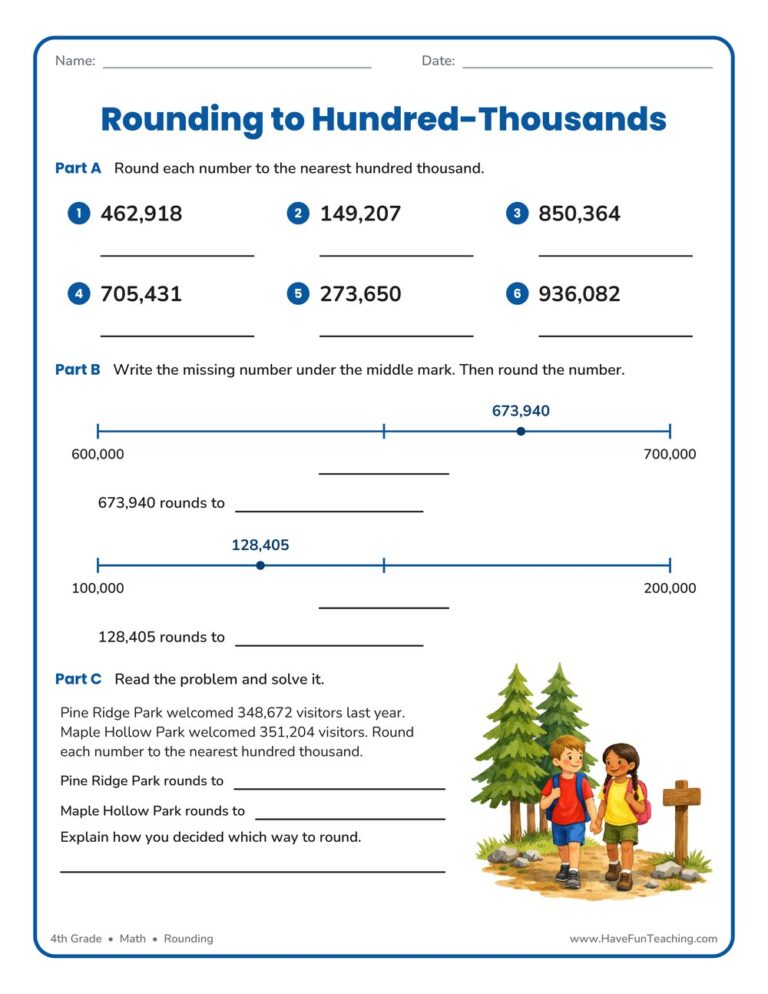
This round to hundred thousands worksheet gives 4th Grade students six numbers to round, two number lines to reason with, and a park word problem to solve. An answer key is included, so checking work takes seconds.
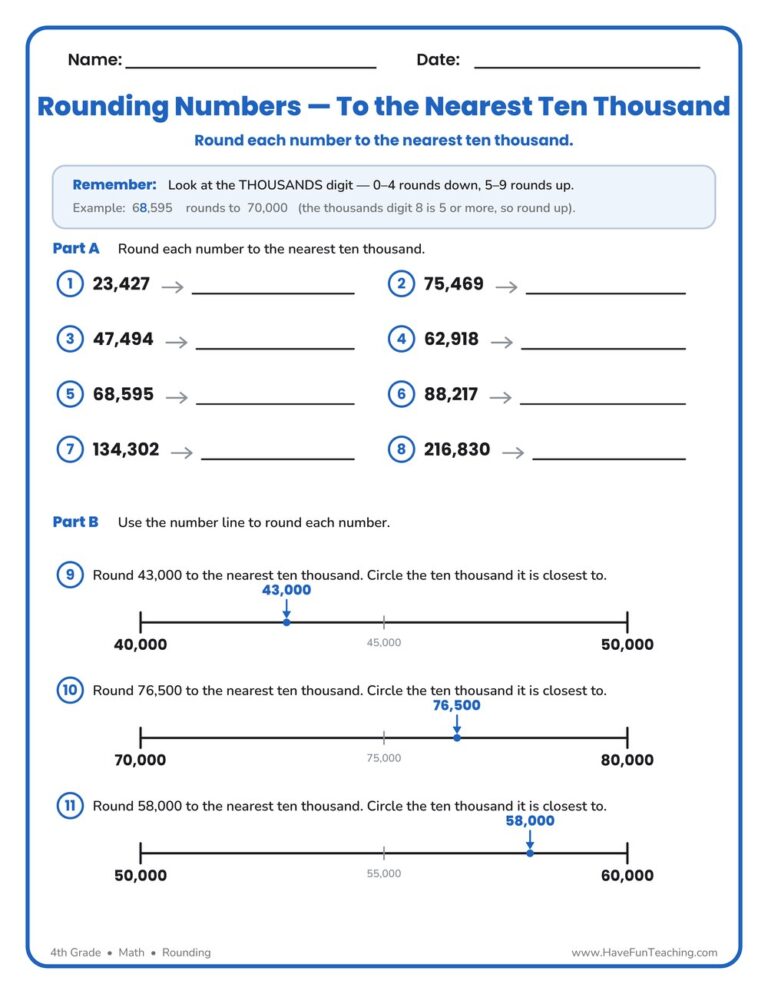
This Rounding to the Nearest Ten Thousand Worksheet gives 4th graders eight place-value problems and three number-line challenges. Answer key included for quick, no-prep estimation and rounding practice.
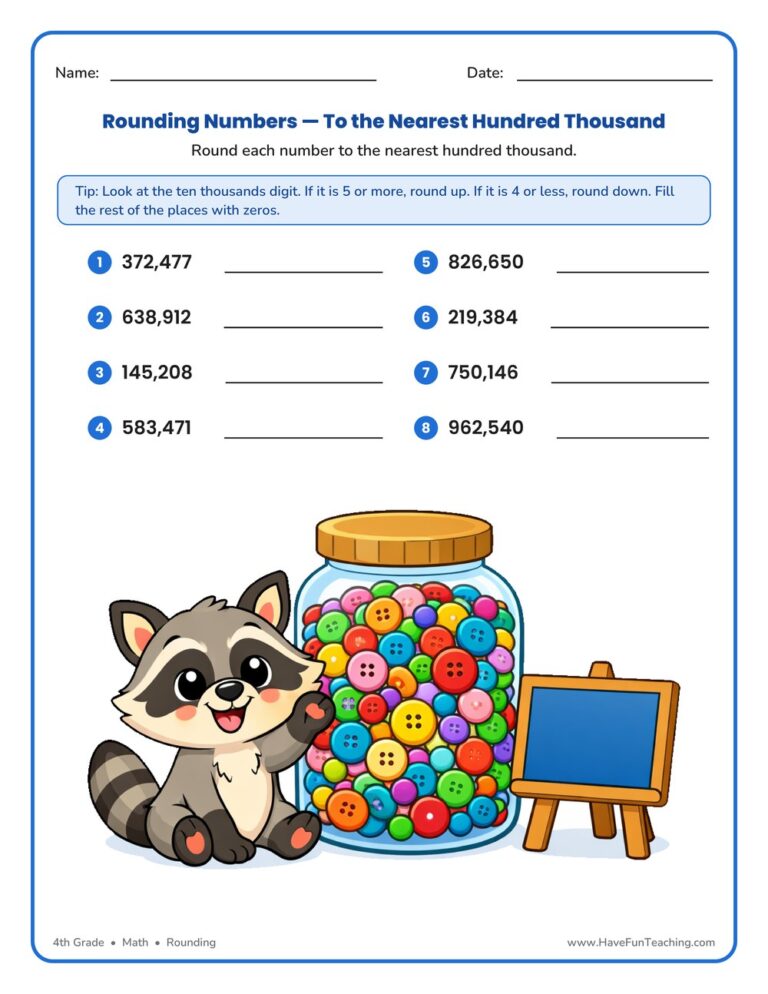
This Rounding to the Nearest Hundred Thousand Worksheet gives 4th graders focused practice rounding six-digit numbers using place value. An answer key is included, making it a quick, no-prep way to build confident number sense.
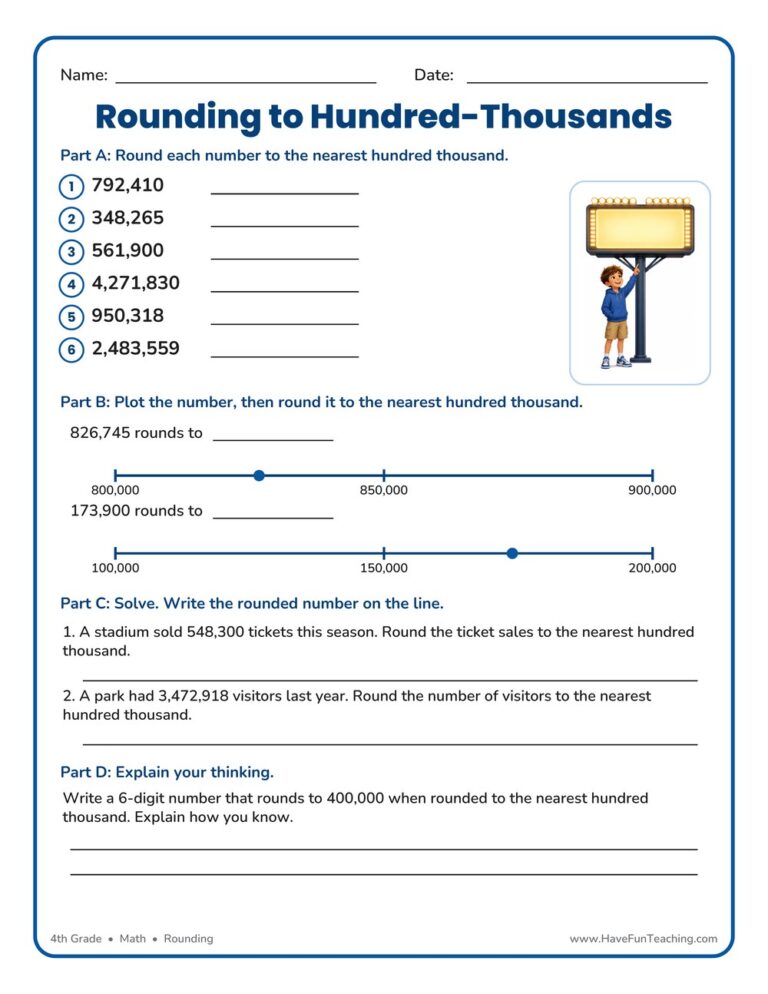
This rounding to hundred thousands worksheet gives 4th graders place-value practice rounding big numbers on a number line and in word problems. Answer key included for quick, no-prep math review.
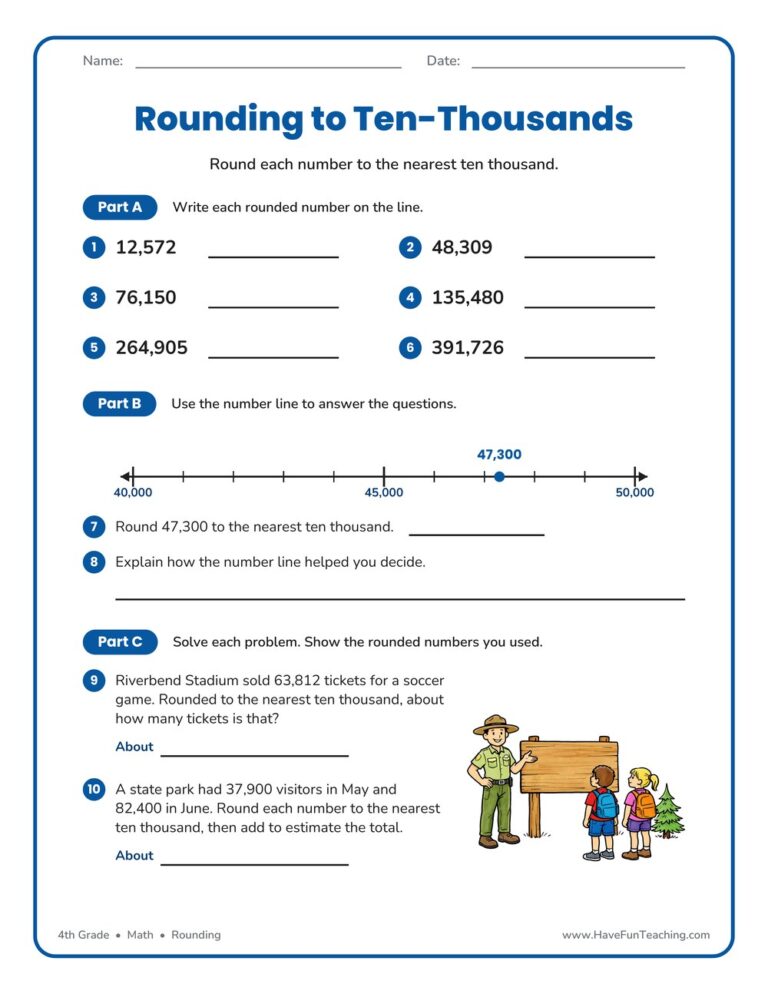
This Rounding to Ten Thousands Worksheet gives 4th Grade students six rounding problems, a number line to reason with, and two word problems. An answer key is included, so estimation practice is ready in one print.
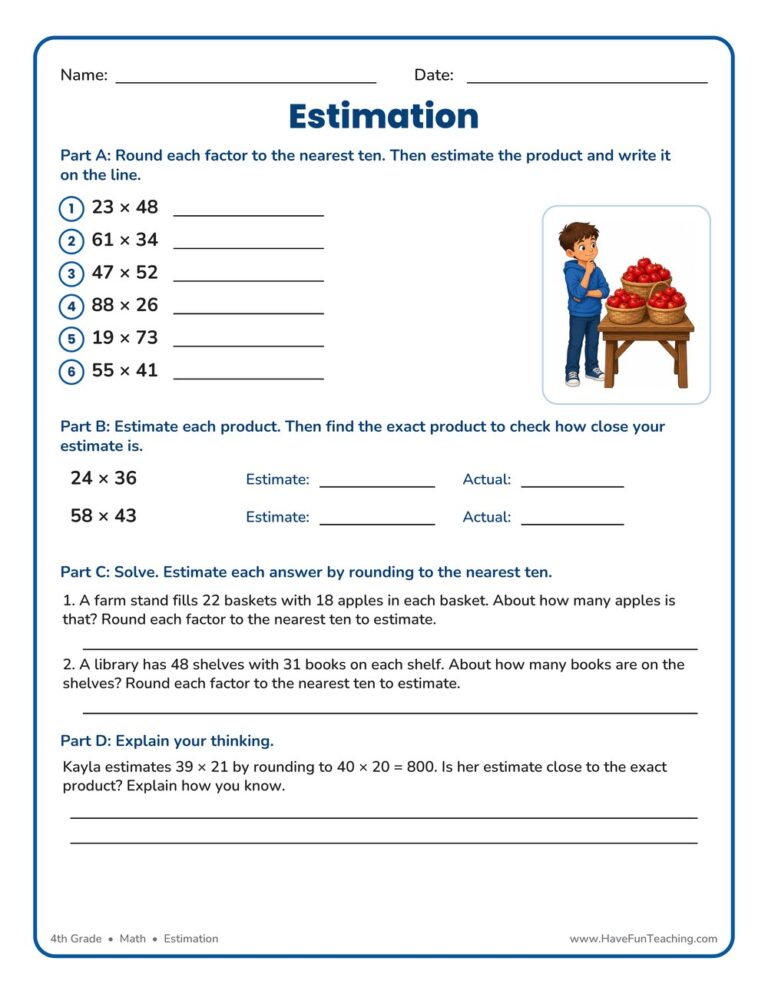
This multiplication estimation worksheet gives 4th graders practice rounding factors to the nearest ten to estimate products, then checking against the exact answers. An answer key is included for fast, no-prep math practice at home or school.
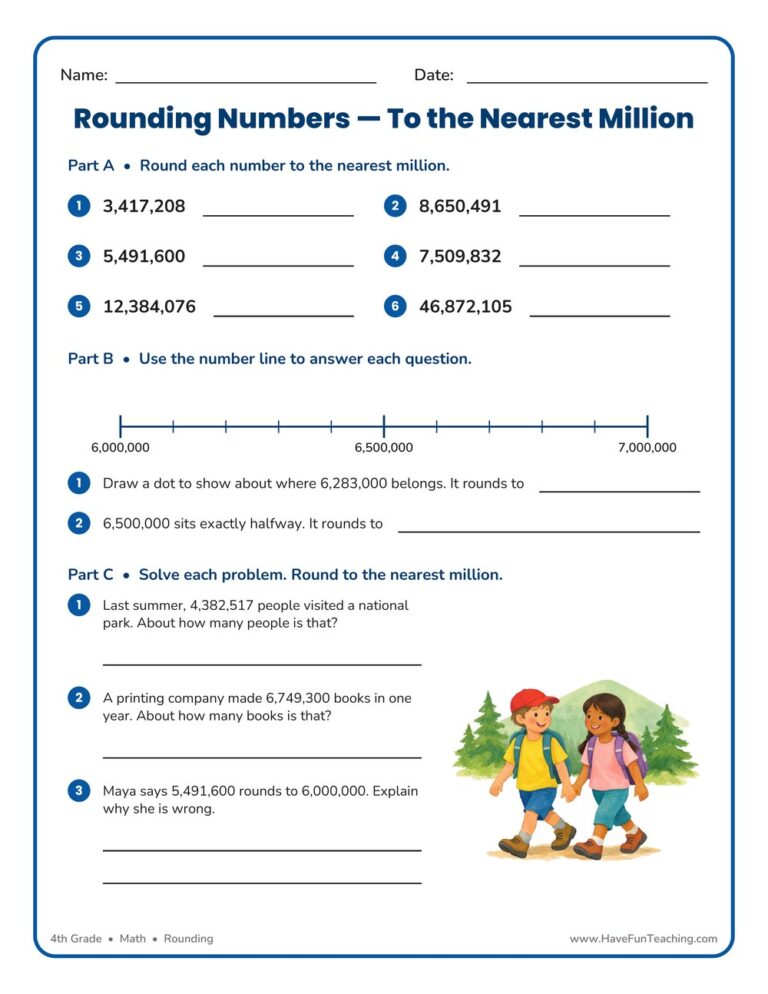
A hiking-themed rounding to the nearest million worksheet that takes 4th graders from quick practice to a number line and real-world word problems. An answer key is included, so it is ready for no-prep math review.

A 4th grade rounding to the nearest thousand worksheet that builds place-value skills through rounding drills and real-world estimation problems. Includes a full answer key for fast, no-prep math practice.
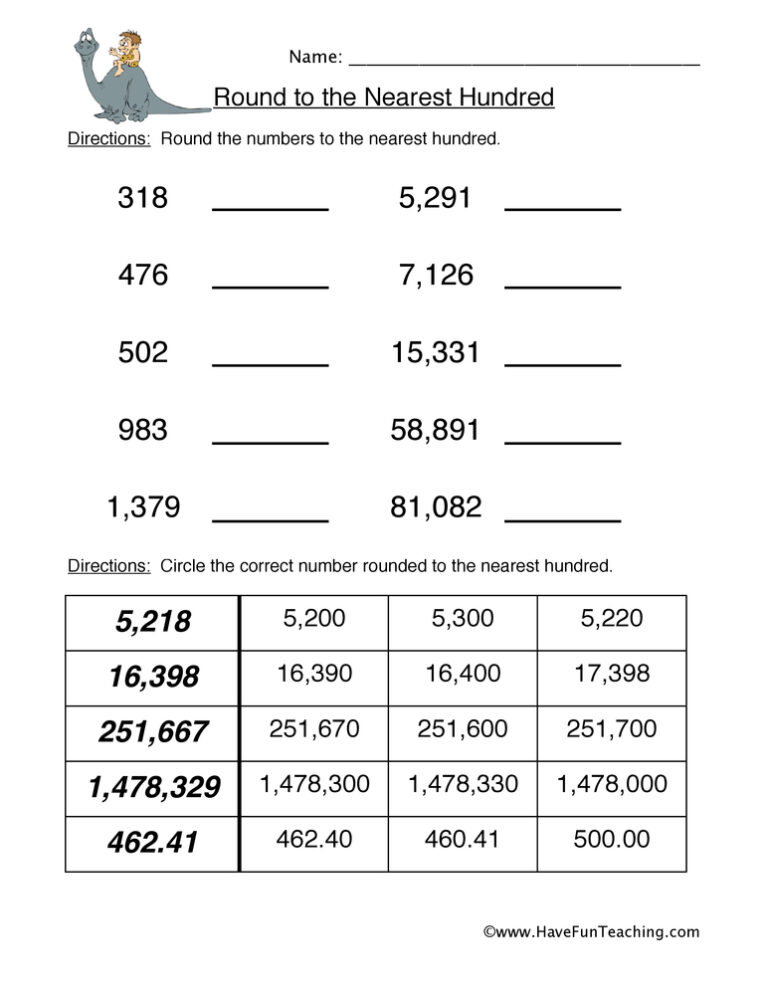
In this Round to the Nearest Hundred Worksheet, students round multi-digit numbers to the nearest hundred.
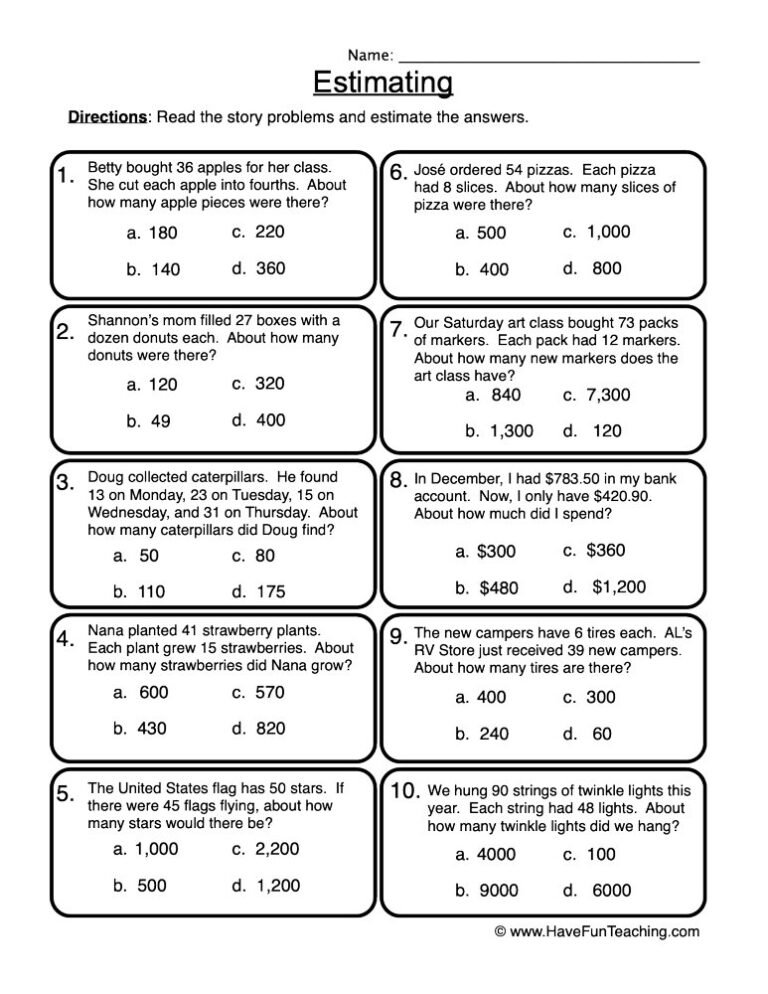
Using Estimation Multiple Choice Worksheet, students estimate answers when solving word problems of all operations, then select multiple choice answer.
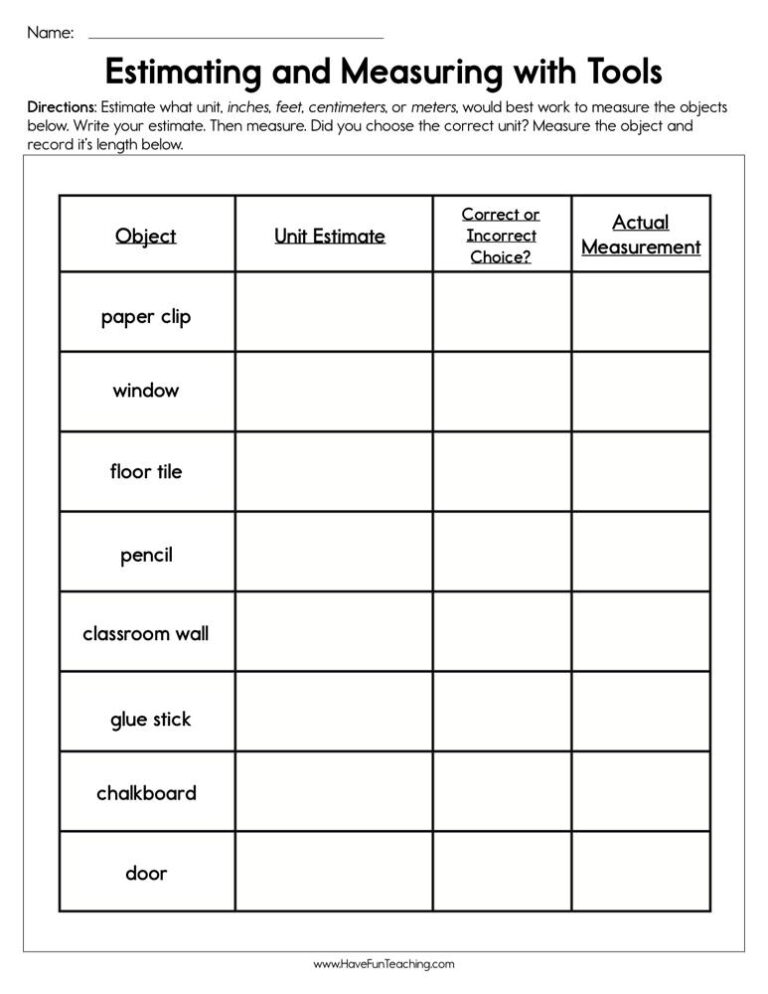
In this Estimating and Measuring with Tools Worksheet, students estimate and then measure lengths using units of inches.
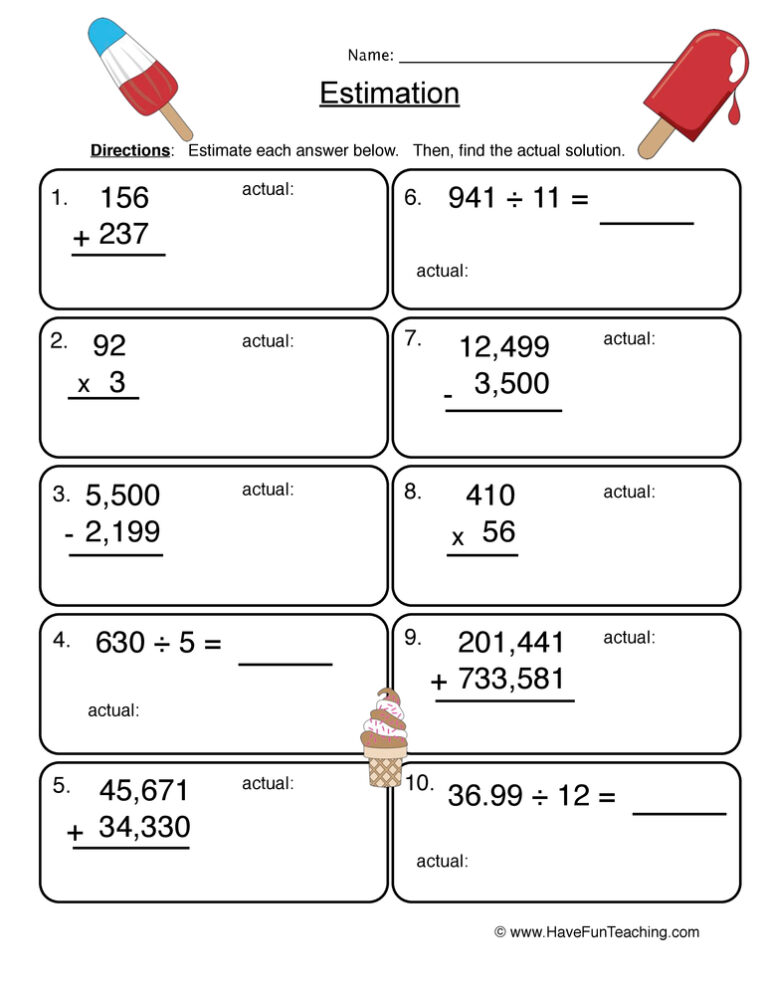
UsingMixed Operations Estimation Worksheet , students round provided numbers before adding, subtracting, multiplying, or dividing.
Reviews
There are no reviews yet