

True or False Addition Worksheet
This true or false addition worksheet asks first graders to decide whether each addition equation is true or false, then write the missing number that balances four more. An answer key is included.
$6.97
Or free with a membership — members pay $3.33/mo for all 10,000+ resources. See plans
Want this one free?
Tell us where to send it and it’s yours — no card, no catch.
One free resource per teacher. We’ll also send free teaching ideas each week — unsubscribe anytime.
Teaching is easier with a membership
Unlimited printables, games & videos for PreK–6th — for your classroom or homeschool. Cancel anytime.
Start your 3-day free trial$0 today · cancel anytime · Instant access to 10,000+ resources
About this resource
Description
The equal sign is one of the first big ideas in math, and it does not mean “the answer comes next.” It means both sides are the same. This True or False Addition Worksheet gives first graders steady practice deciding whether an addition equation is true or false, so they read the equal sign as a balance instead of a signal to start adding. Students add the numbers on the left, add the numbers on the right, and then compare the two totals. That one habit prevents the classic first grade mistake of writing 4 + 3 = 7 + 2, and it lays the groundwork for missing addends, fact families, and every equation students will meet later.
This printable is built for independent work. The first section holds eight addition equations with a true bubble and a false bubble beside each one, so students commit to an answer they can defend. The second section turns the same idea around and asks students to write the number that makes the equation balance. A friendly balance scale at the bottom of the page shows the idea in picture form. Use this true or false addition worksheet as morning work, as a quick check after a lesson on the equal sign, as a math center task, or as homework. An answer key is included on the second page, so grading takes seconds.
What’s Included
- One printable worksheet page and one answer key page
- Eight true or false addition equations with fill-in bubbles
- Four missing number problems that ask students to balance the equation
- Sums to 20, using addends first graders already know
- A balance scale illustration that models what the equal sign means
- A name and date line for easy classroom collection
Three things make this resource work. First, it separates computing from comparing: students practice adding twice in a single problem, then make a judgment, which is more thinking per item than a page of plain sums. Second, the true and false format gives instant feedback about a misconception teachers cannot always see, because a student who believes the equal sign means “write the answer” will mark true on equations that are clearly false. Third, the missing number section moves students from recognizing balance to creating it, which is the step that carries into algebra. Every one of these skills is grade level work for a first grade addition worksheet and lines up with first grade addition standards.
Teachers and parents can stretch this lesson well past the page. Set out a real pan balance with counting cubes and build each equation on it, so students see both sides level or tipping. Write an equation on a whiteboard and have the class vote true or false with thumbs up or thumbs down. Give partners a deck of number cards and ask them to build two addition expressions that match. Challenge early finishers to fix each false equation on the page by changing one number. Ask students to say the equal sign out loud as “is the same as” for a whole week and listen to how their explanations change.
Related Resources
What teachers say
Reviews
You must be logged in to post a review.
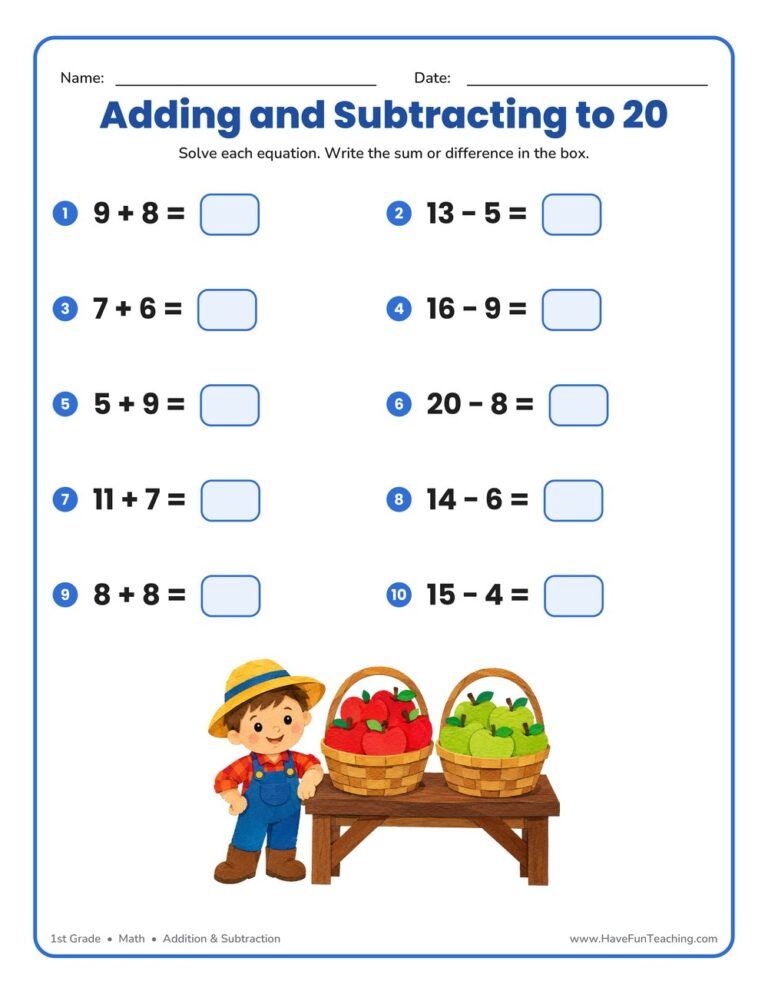
This adding and subtracting to 20 worksheet gives 1st graders ten mixed addition and subtraction equations to solve within 20. Answer key included — perfect for quick, no-prep math fact practice at home or school.

This adding and subtracting within 20 worksheet gives first graders mixed addition and subtraction fact practice with a helpful number line. Includes a complete answer key for quick, no-prep math review.
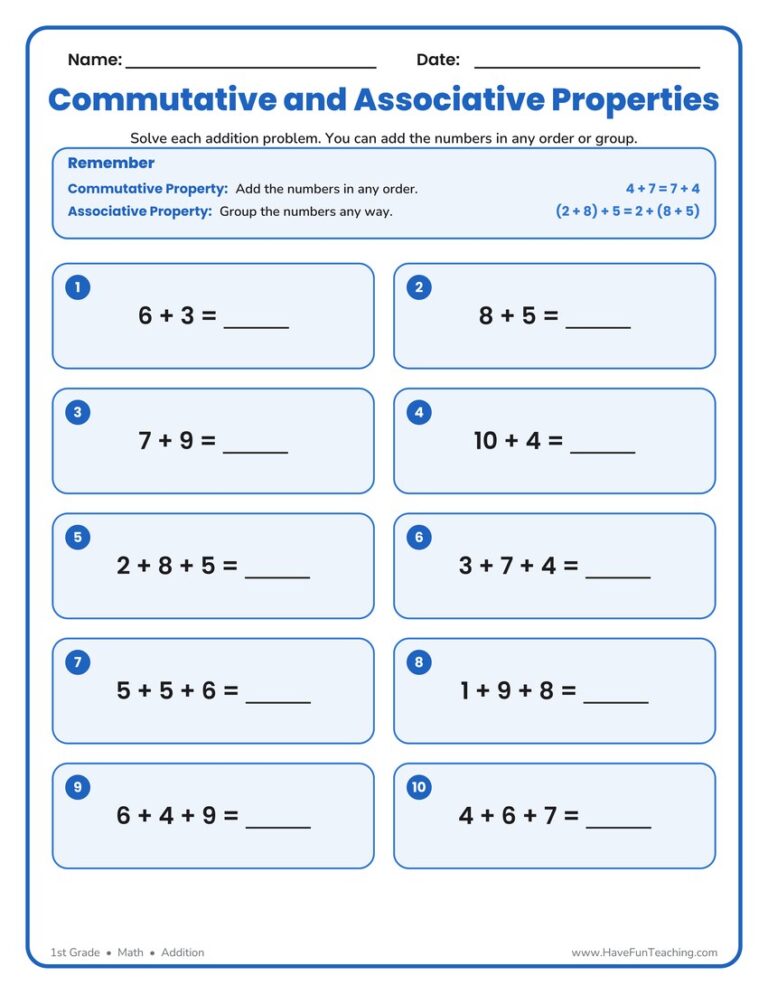
A first-grade commutative and associative properties worksheet where students solve ten addition problems by adding the numbers in any order or group. Includes an answer key and a handy reminder box for no-prep math practice.

This counting on to add worksheet helps 1st graders start from the bigger number and count forward on a number line to twenty. An answer key is included, so checking work takes seconds.
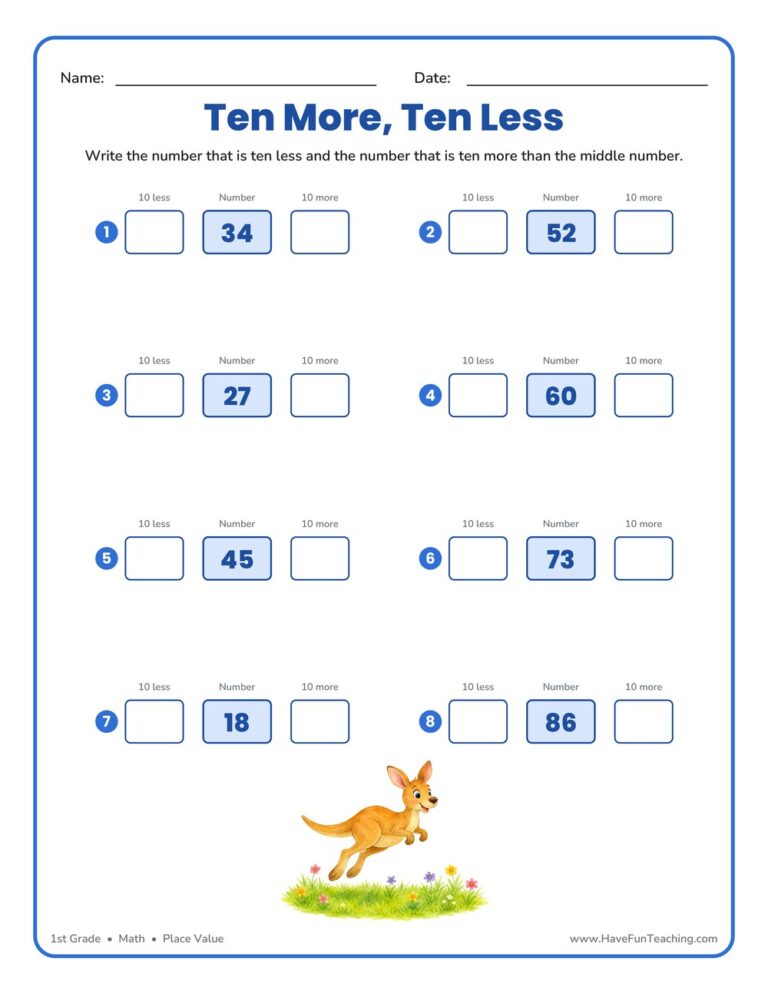
This Ten More Ten Less Worksheet gives 1st graders eight quick problems to find ten more and ten less than a two-digit number. Includes an answer key for fast, no-prep place value practice.

This Adding In Any Order Worksheet helps 1st graders see that 3 + 4 and 4 + 3 always match, using picture groups first and quick fact flips second. Answer key included, so practice takes minutes to check.

This Adding 3 Whole Numbers Within 20 Worksheet gives 1st graders twelve problems to practice adding three single-digit numbers for sums up to 20. Includes a complete answer key for fast, no-prep addition practice.

This finding the missing number worksheet gives first graders focused practice solving for the unknown number in addition and subtraction equations within 20. Includes an answer key — a quick, no-prep way to build number sense and fact fluency.
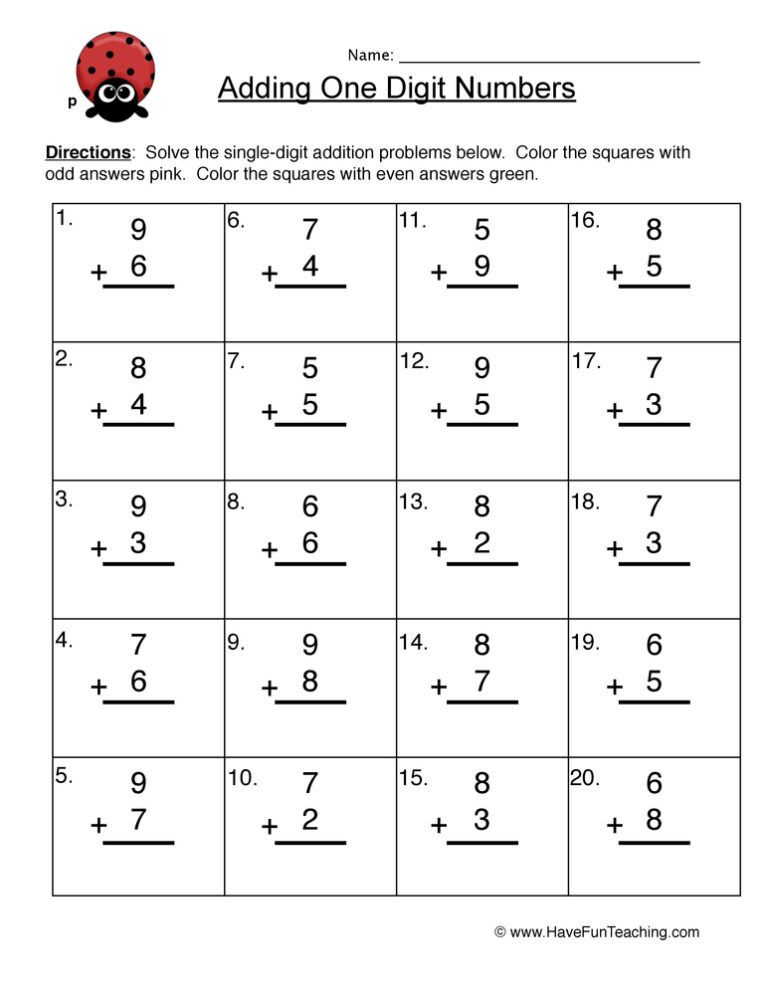
This single digit addition problems worksheet gives 1st graders twelve column facts to 18 plus an illustrated bird word problem. Answer key included, so students build fact fluency with no prep for you.

This Adding to Solve Subtraction Problems Worksheet helps 1st graders solve subtraction facts within 20 by finding the missing addend. Six paired problems and a story problem, with an answer key included, build quick and confident fact fluency.
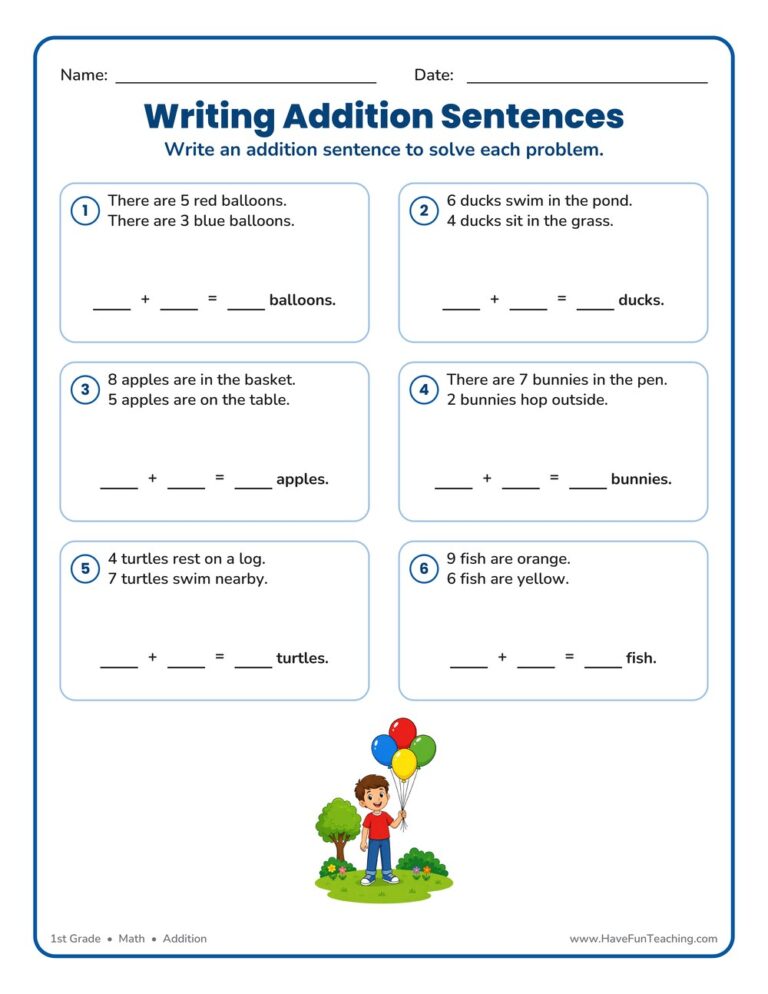
This writing addition sentences worksheet gives 1st graders six picture-friendly word problems to solve by filling in each addition number sentence. Answer key included — perfect for no-prep addition practice at home or in class.

This Adding Word Problems with 3 Numbers Worksheet helps 1st graders add three single-digit numbers using fun story problems about ducks, apples, and more. Includes a complete answer key for quick, no-prep addition practice.

Reviews
There are no reviews yet