
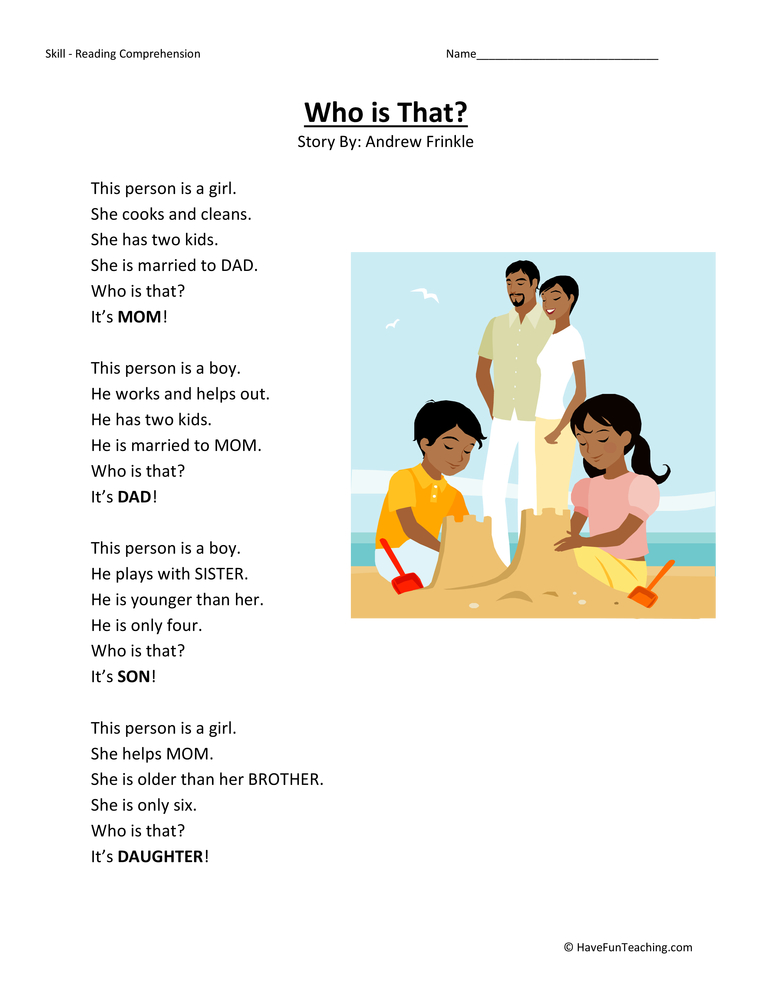
Who is That Reading Comprehension Worksheet
This who is that reading comprehension worksheet gives kindergarten readers three family riddles and five bubble-in questions. An answer key is included, so every answer is easy to check against the clues.
$6.97
Or free with a membership — members pay $3.33/mo for all 10,000+ resources. See plans
Want this one free?
Tell us where to send it and it’s yours — no card, no catch.
One free resource per teacher. We’ll also send free teaching ideas each week — unsubscribe anytime.
Teaching is easier with a membership
Unlimited printables, games & videos for PreK–6th — for your classroom or homeschool. Cancel anytime.
Start your 3-day free trial$0 today · cancel anytime · Instant access to 10,000+ resources
About this resource
Description
Families are the first people a child learns to name, and a riddle about them is one of the friendliest ways to practice careful reading. This who is that reading comprehension worksheet gives a kindergartner three tiny riddles to read, each one giving clues about a person in a family and then asking the question in the title: who is that? One person knits a warm hat, one rides a red bike to school, and one drinks milk from a bottle. Every clue a child needs is right there in the sentences.
This kindergarten family worksheet is a three-page printable. Page one holds a colored-pencil picture of Grandma’s knitting basket and the short passage, page two holds five multiple-choice questions, and page three is the answer key. Children read the riddles first, on their own or with an adult, then fill in the bubble beside each best answer. The questions ask who does what, what each person makes or rides, and where the big brother goes, so every answer has to come from the words on the page.
What’s Included
- 1 print-ready PDF worksheet
- Answer key
- 1 illustrated three-riddle passage and 5 multiple-choice questions
A who is that reading comprehension worksheet helps children in three ways. First, riddles teach readers to hold several clues in mind and put them together, which is the heart of making an inference. Second, it teaches text evidence at the earliest level: every correct answer is a word the child can point to on the page. Third, the fill-in-the-bubble format gives young readers an easy, low-stress way to answer before they can write much, and it looks like the tests they will meet later.
Teachers and parents can carry the idea off the page. Play a spoken version at home or in circle time: give two or three clues about someone in the child’s own family and let them guess who it is. Then trade places and let the child make up clues for you. Read the passage a second time and stop before each answer so the child can predict it. Finally, invite children to draw a family member and write one clue underneath it for a friend to solve.
Related Resources
What teachers say
Reviews
You must be logged in to post a review.
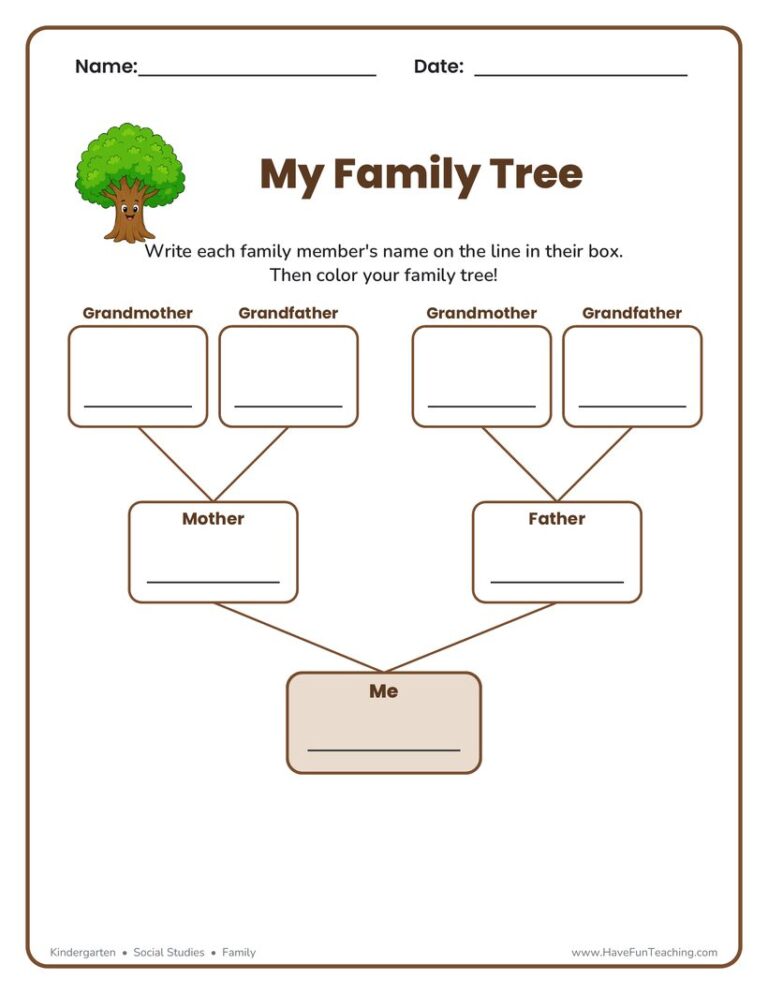
A 1 Child Family Tree Worksheet where kindergarteners write the names of their grandparents, parents, and themselves on a friendly tree they can color. A no-prep, all-about-me activity perfect for the start of a family unit.
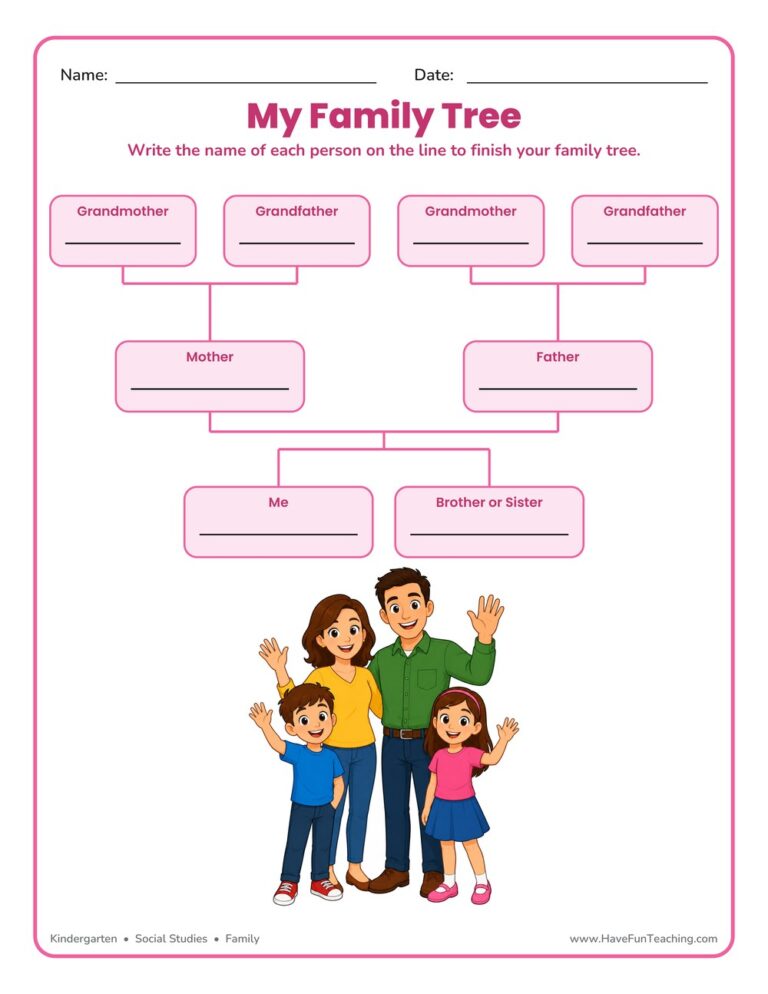
The 2 Children Family Tree Worksheet lets kindergarteners fill in the names of their grandparents, parents, and two children to build a simple family tree. A fun, hands-on way to explore family and social studies.
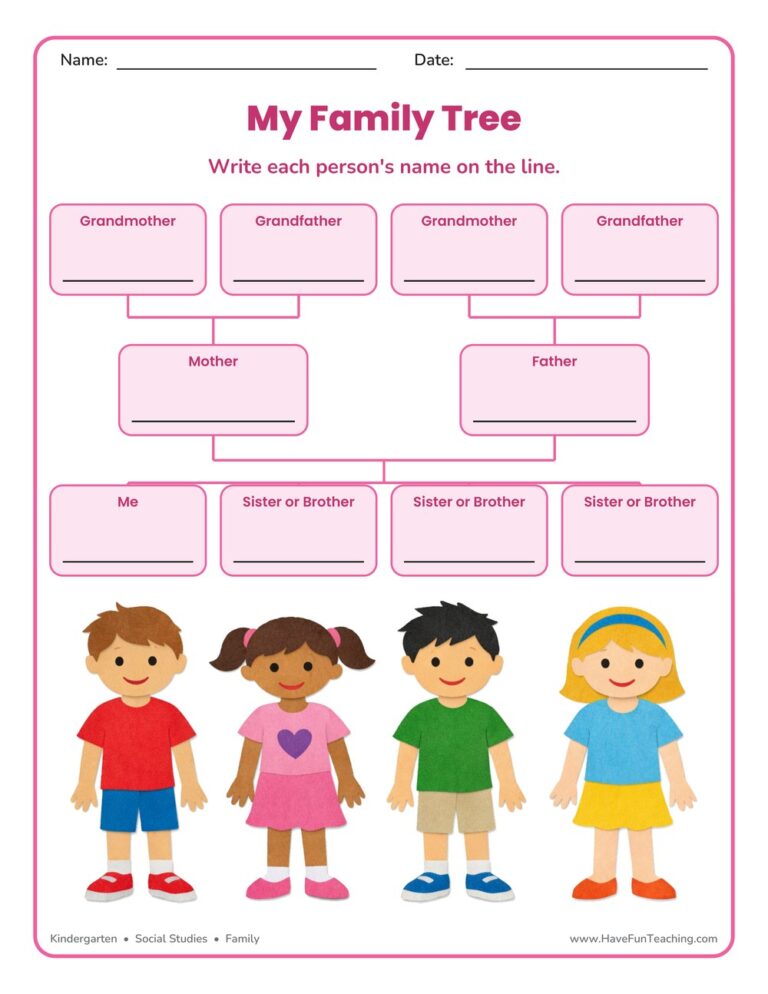
This 4 children family tree worksheet gives Kindergarten students a clear, printable place to name four grandparents, two parents, and four children. A personal graphic organizer that makes family vocabulary stick.
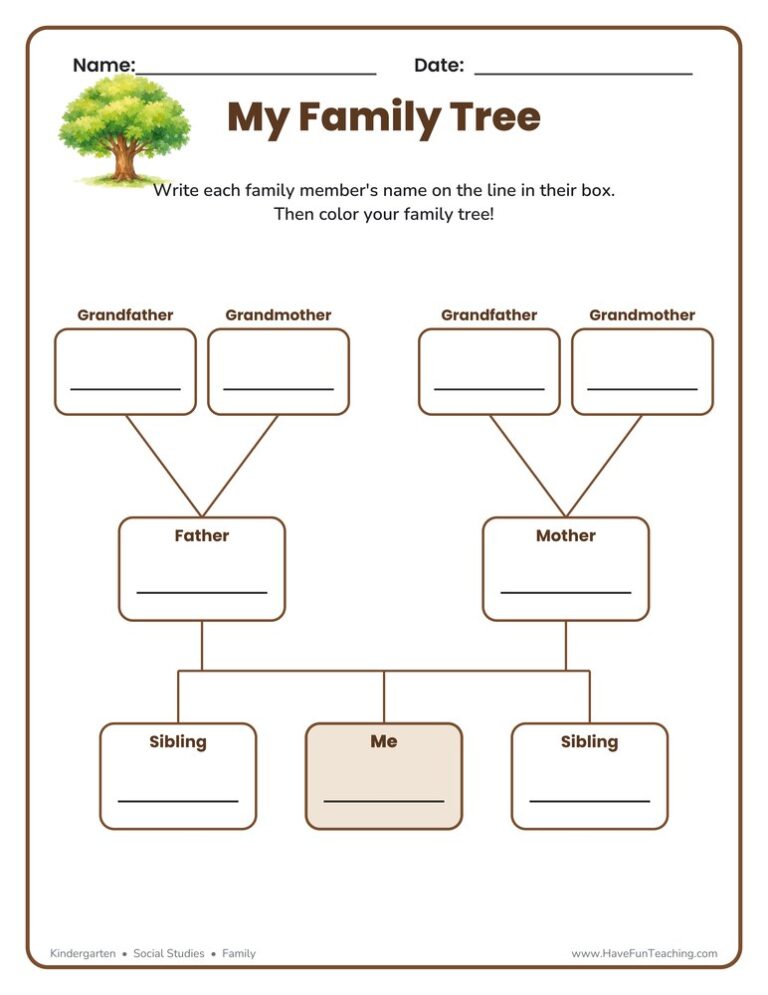
The 3 Children Family Tree Worksheet gives kindergarten learners a friendly diagram to fill in four grandparents, two parents, and three children. A no-prep way to explore family relationships and build early social studies vocabulary.

Using the Caring Song, students learn how to care for others at home. This song will help build confidence and your kids will want to show kindness to others. Our students need a lot of practice and examples of how to treat each other kindly. This song will help your…
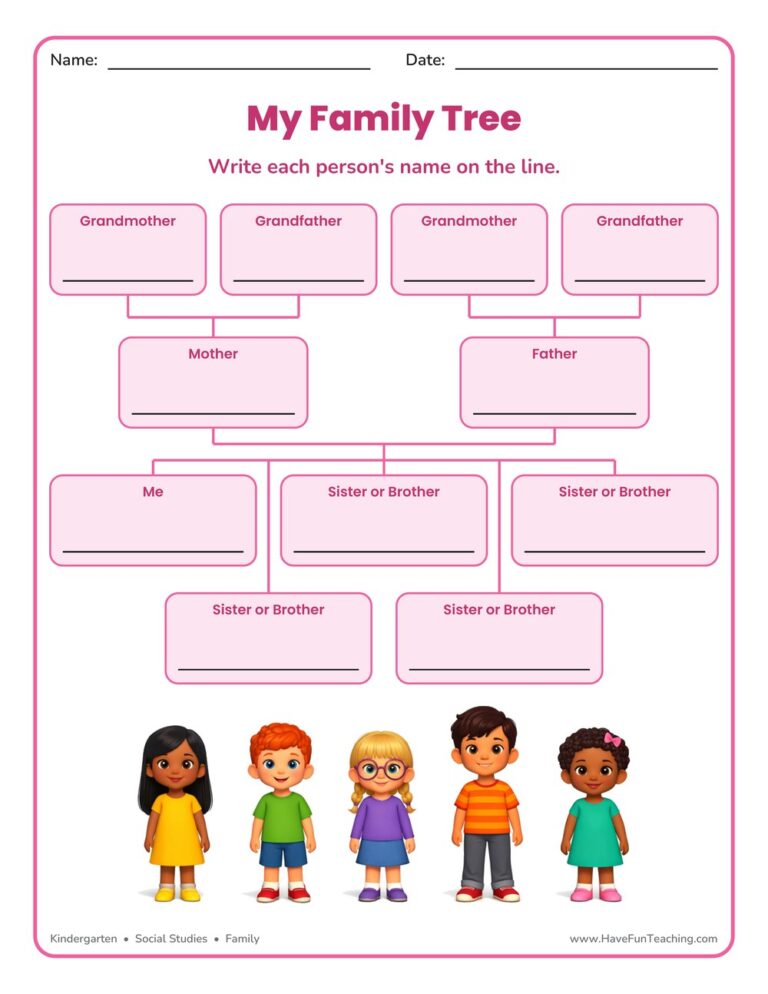
The 5 children family tree worksheet gives Kindergarten students eleven labeled boxes for four grandparents, two parents, and five children. A friendly first graphic organizer that builds family vocabulary and handwriting on one printable page.

Using this Dear Valentine Activity, students practice writing names of family and friends by writing Valentines Day cards.
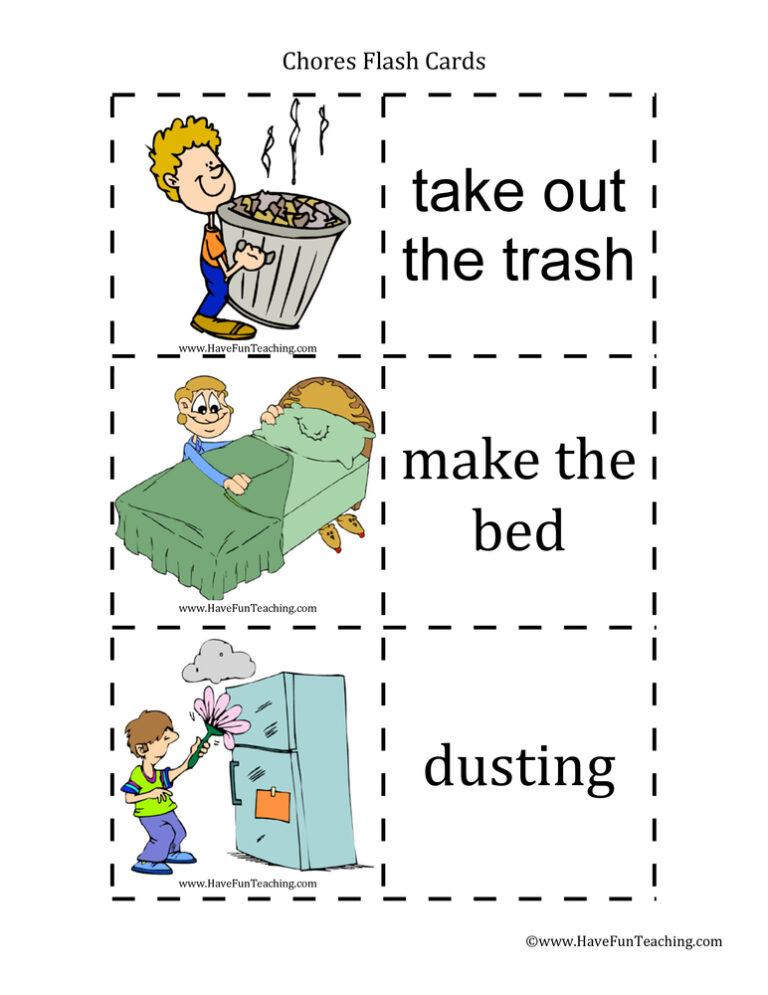
Using these Chores Flash Cards, students improve their chore vocabulary by describing the colorful flash cards.
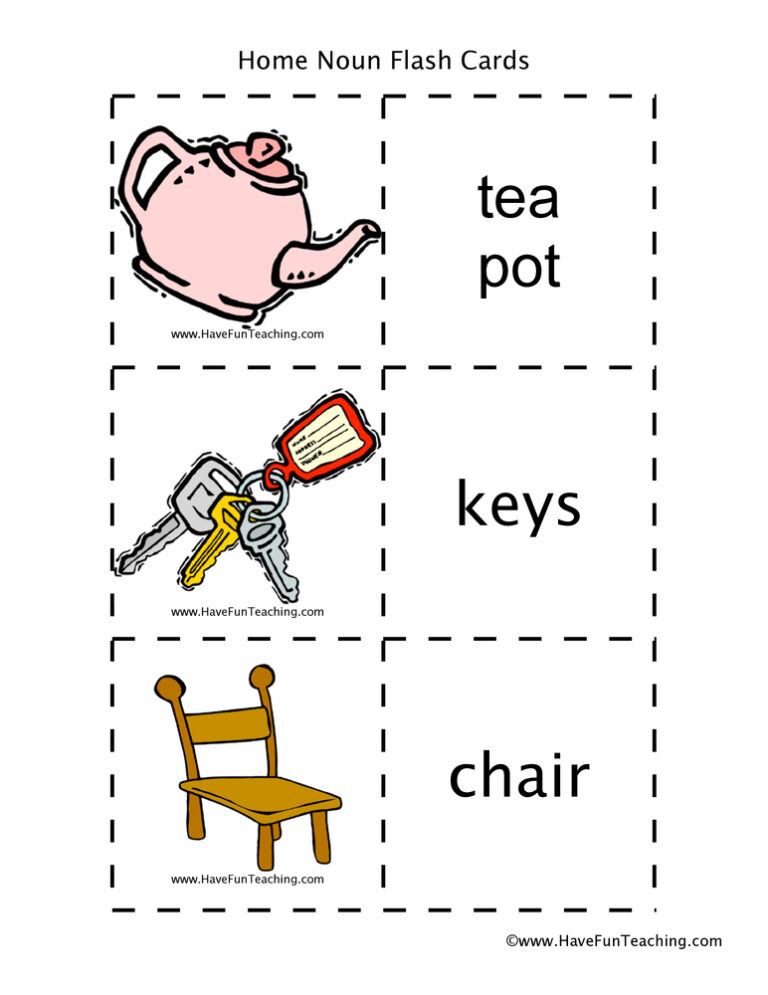
Using these Home Flash Cards, students improve their home vocabulary by describing the colorful flash cards.
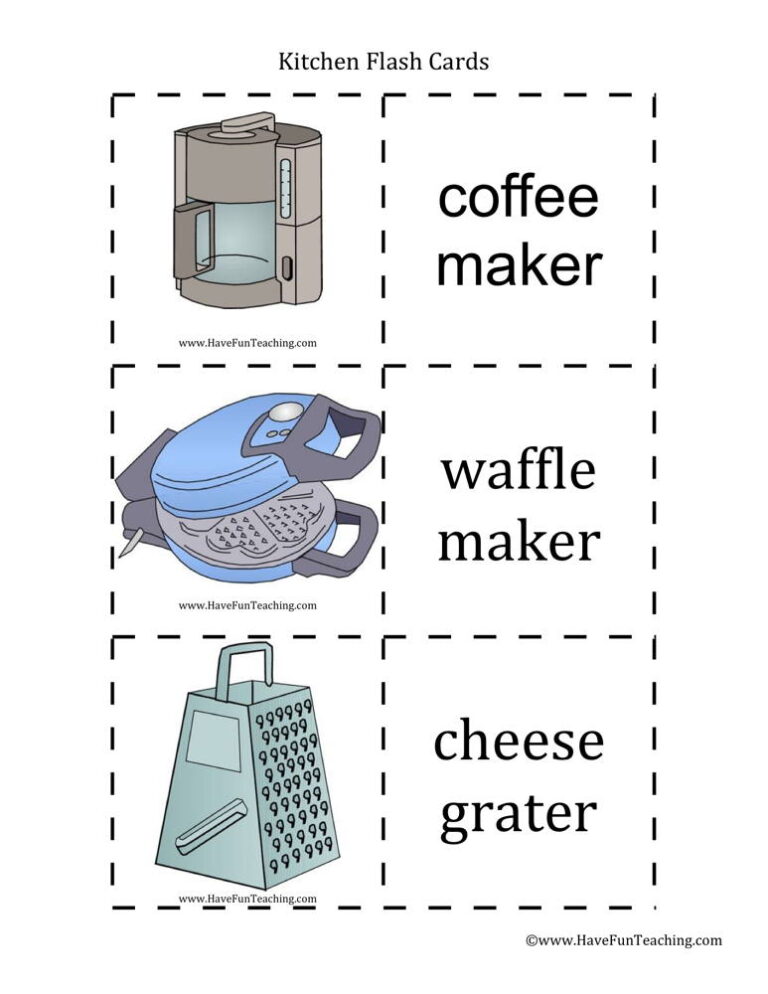
Using these Kitchen Flash Cards, students improve their kitchen vocabulary by describing the colorful flash cards.
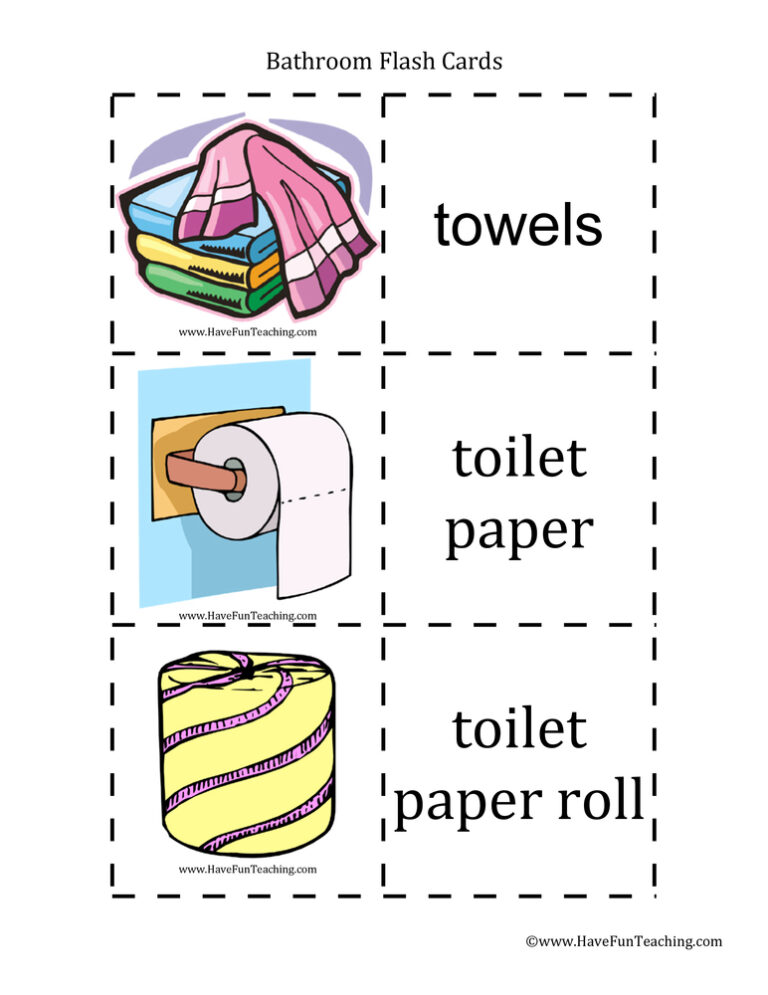
Using these Bathroom Flash Cards, students improve their bathroom vocabulary by describing the colorful flash cards.
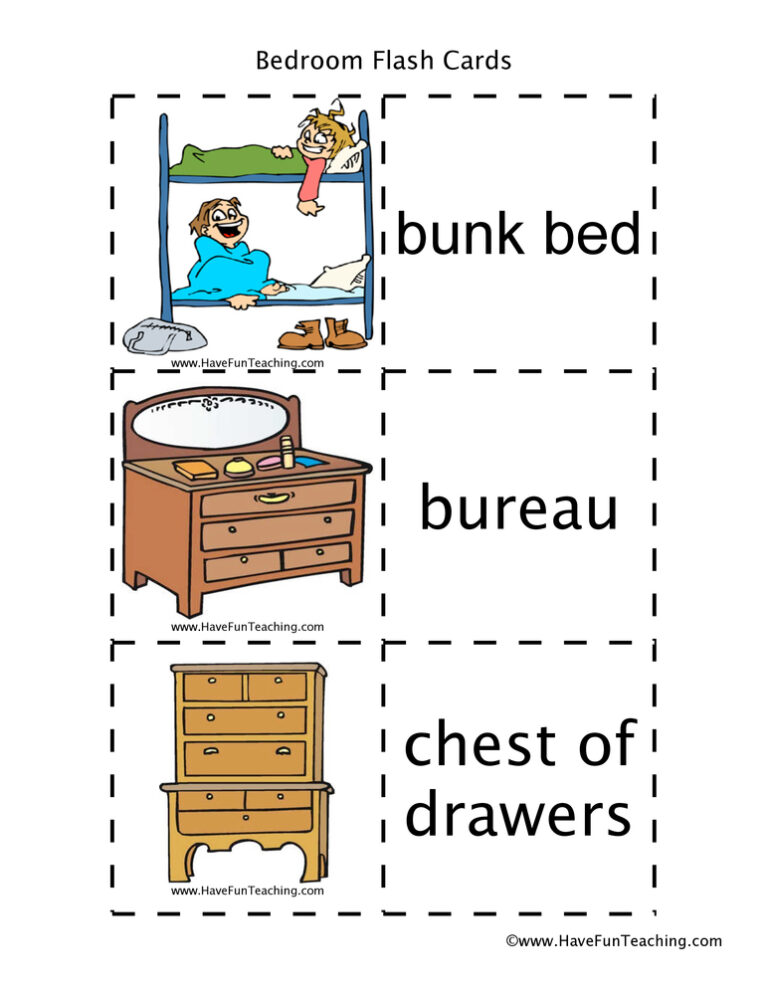
Using these Bedroom Flash Cards, students improve their bedroom vocabulary by describing the colorful flash cards.
Reviews
There are no reviews yet