
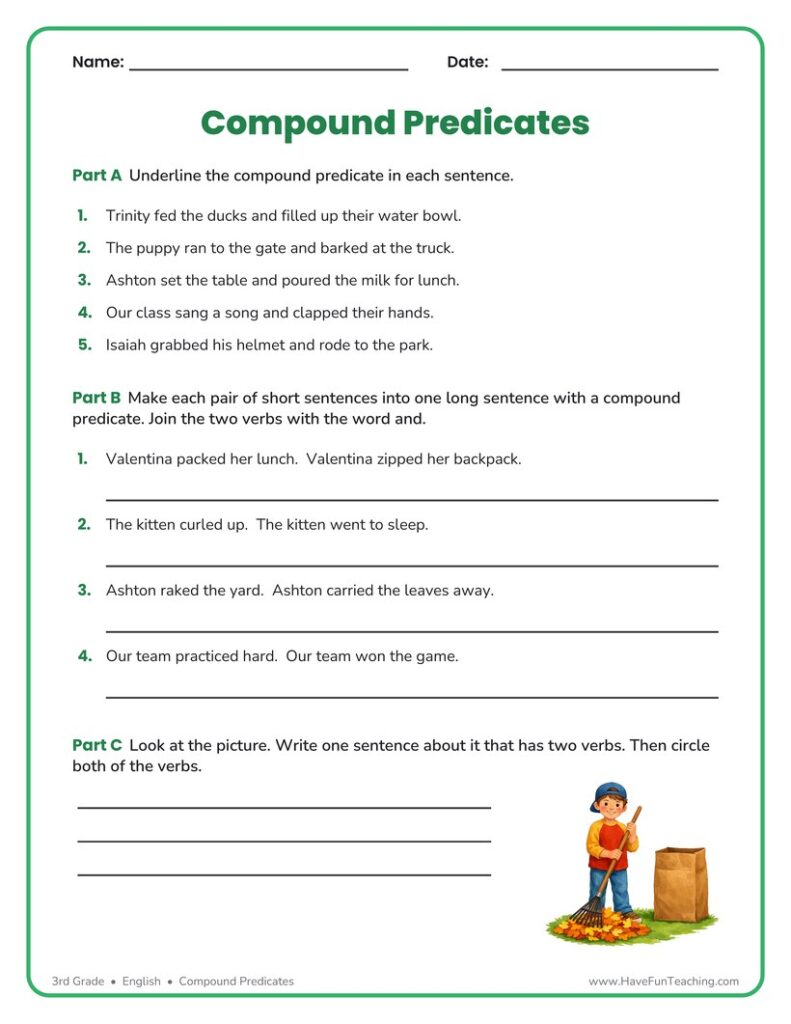
Compound Predicates Sentences Worksheet
This compound predicates sentences worksheet gives 3rd grade students three levels of practice: underline, combine, and write their own. An answer key is included, so it works for quick grammar review at school or at home.
$6.97
Or free with a membership — members pay $3.33/mo for all 10,000+ resources. See plans
Want this one free?
Tell us where to send it and it’s yours — no card, no catch.
One free resource per teacher. We’ll also send free teaching ideas each week — unsubscribe anytime.
Teaching is easier with a membership
Unlimited printables, games & videos for PreK–6th — for your classroom or homeschool. Cancel anytime.
Start your 3-day free trial$0 today · cancel anytime · Instant access to 10,000+ resources
About this resource
Description
A compound predicate tells two or more things that the same subject does, and learning to spot one is a big step toward writing longer, smoother sentences. This compound predicates sentences worksheet gives third grade students focused practice with predicates that share a single subject. Students see how two short, choppy sentences about the same person or thing can be joined into one clear sentence with the word and.
This 3rd grade sentences worksheet is organized into three parts that build on each other. In Part A, students underline the compound predicate in five sentences. In Part B, they combine four pairs of short sentences into one longer sentence. In Part C, they look at the picture, write an original sentence that has two verbs, and circle both verbs. Use it as guided practice after a grammar mini-lesson, as morning work, as homework, or as a quick review before a writing assessment.
What’s Included
- 1 print-ready PDF worksheet
- Answer key
- 10 compound predicate activities in three parts: underline, combine, and write
There are three reasons this compound predicates sentences worksheet helps children learn. First, it moves from recognizing to producing: students identify a compound predicate before they are asked to build one, so the skill is scaffolded instead of rushed. Second, the sentence-combining practice in Part B builds writing fluency, because students feel the difference between two choppy sentences and one smooth one. Third, the picture prompt in Part C asks students to apply the rule in their own words, which shows a teacher right away whether the concept really transferred.
Teachers and parents can stretch this skill in fun ways. Try a sentence-combining relay where partners each write a short sentence about the same subject and then race to join them with and. Hunt for compound predicates in a favorite chapter book and mark them with highlighter tape. Play “and what else?” at the dinner table, where each person adds a second verb to a sentence someone else started. You can also have students act out two actions in a row and then write the sentence that describes exactly what they did.
Related Resources
What teachers say
Reviews
You must be logged in to post a review.
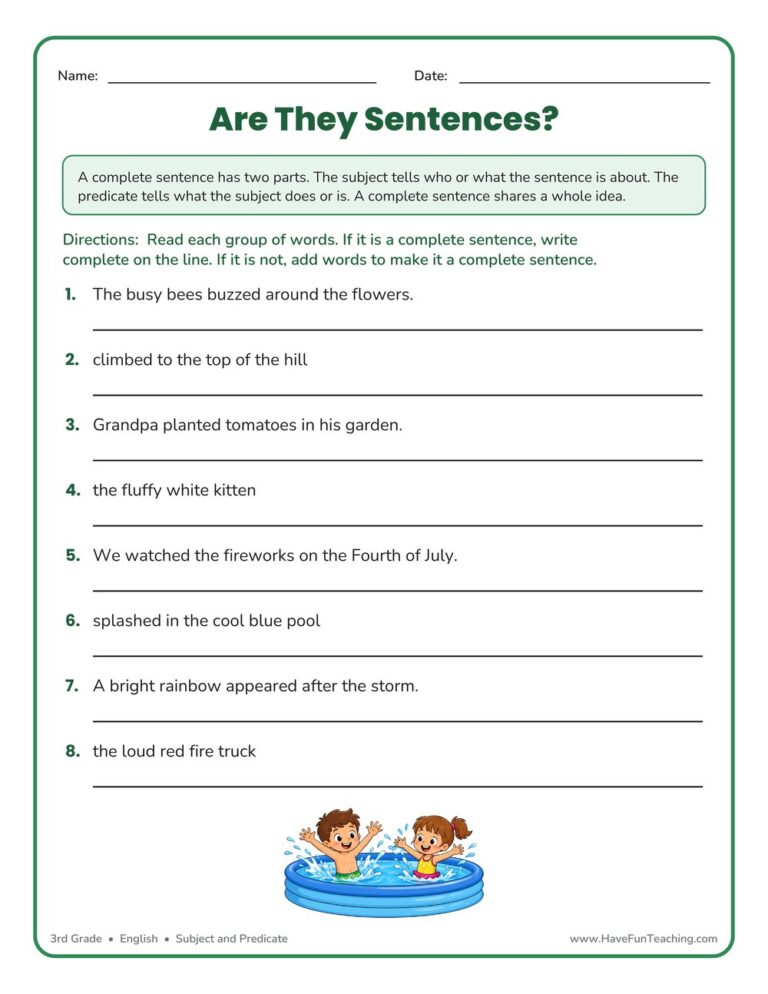
This Creating Complete Sentences Worksheet asks 3rd graders to spot complete sentences and fix fragments by adding a missing subject or predicate. Answer key included — perfect for quick, no-prep grammar practice at home or school.
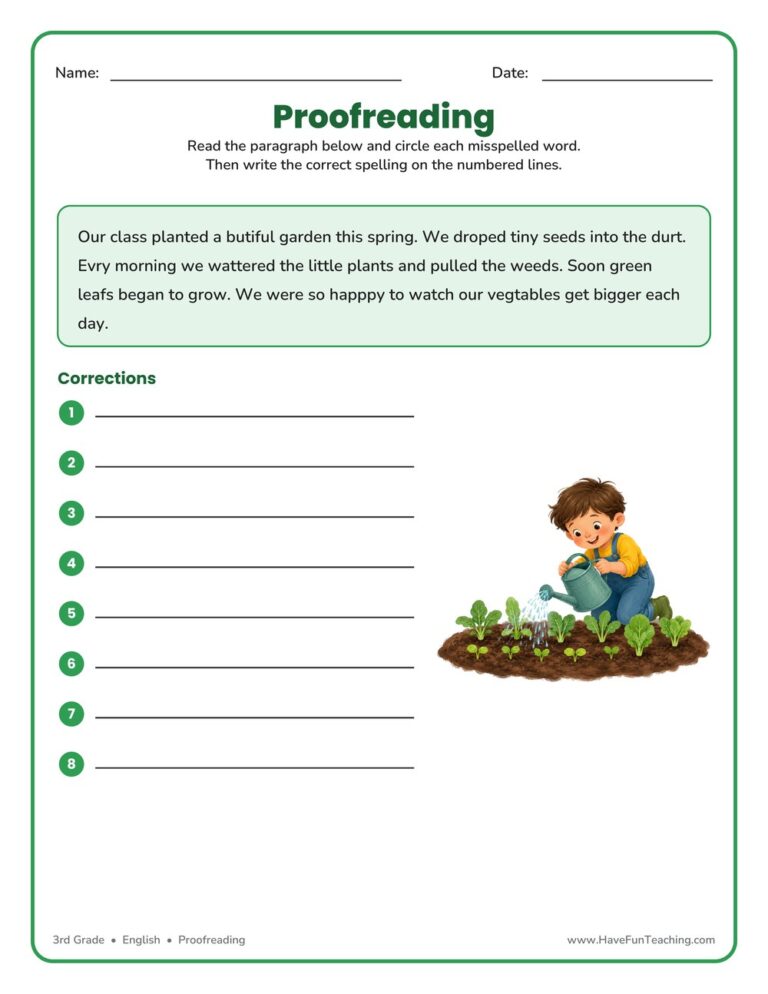
This 3rd grade proofreading worksheet has students hunt for and fix eight misspelled words in a fun garden paragraph. Answer key included — perfect for quick, no-prep spelling and editing practice at home or school.
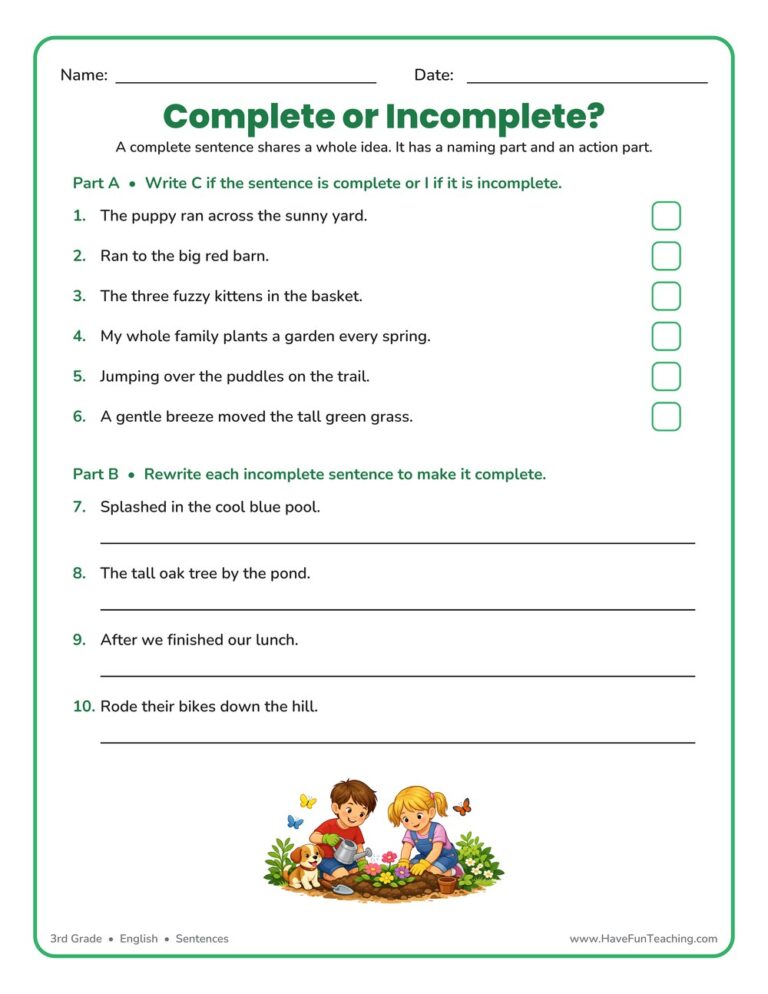
This rewriting incomplete sentences worksheet helps 3rd graders sort complete and incomplete sentences, then rewrite the fragments into full thoughts. Includes an answer key for fast, no-prep grammar practice at home or school.
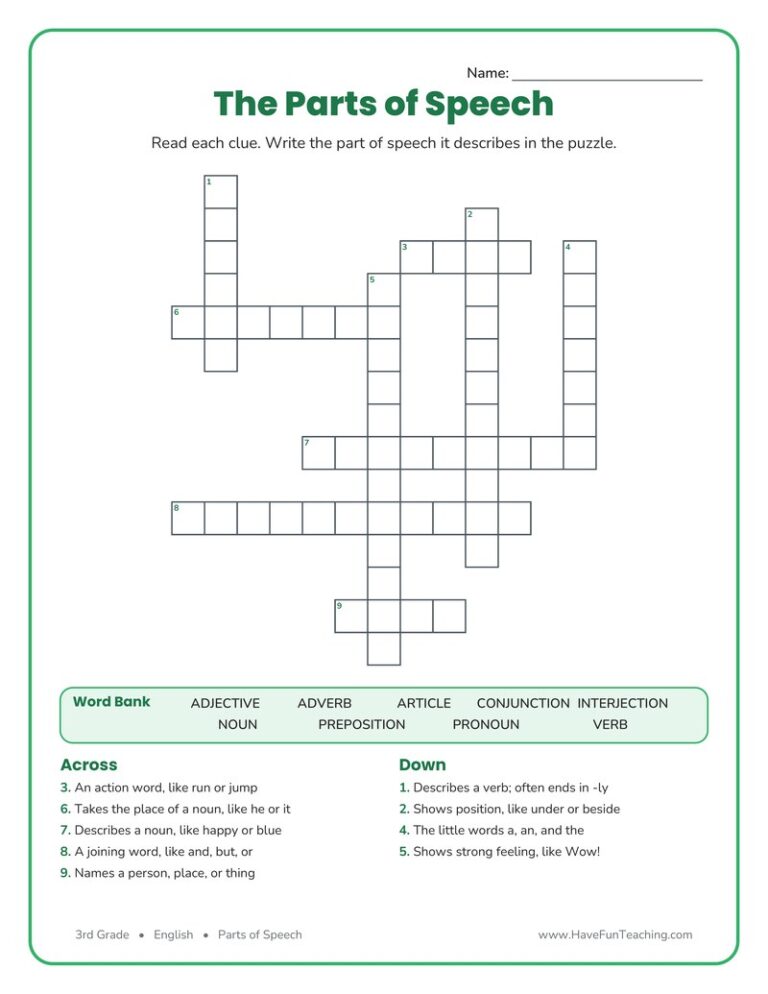
This Parts of Speech Crossword Puzzle has 3rd grade students match grammar clues to nouns, verbs, adjectives, and more, then fill in the grid. Includes an answer key and a helpful word bank for no-prep practice.
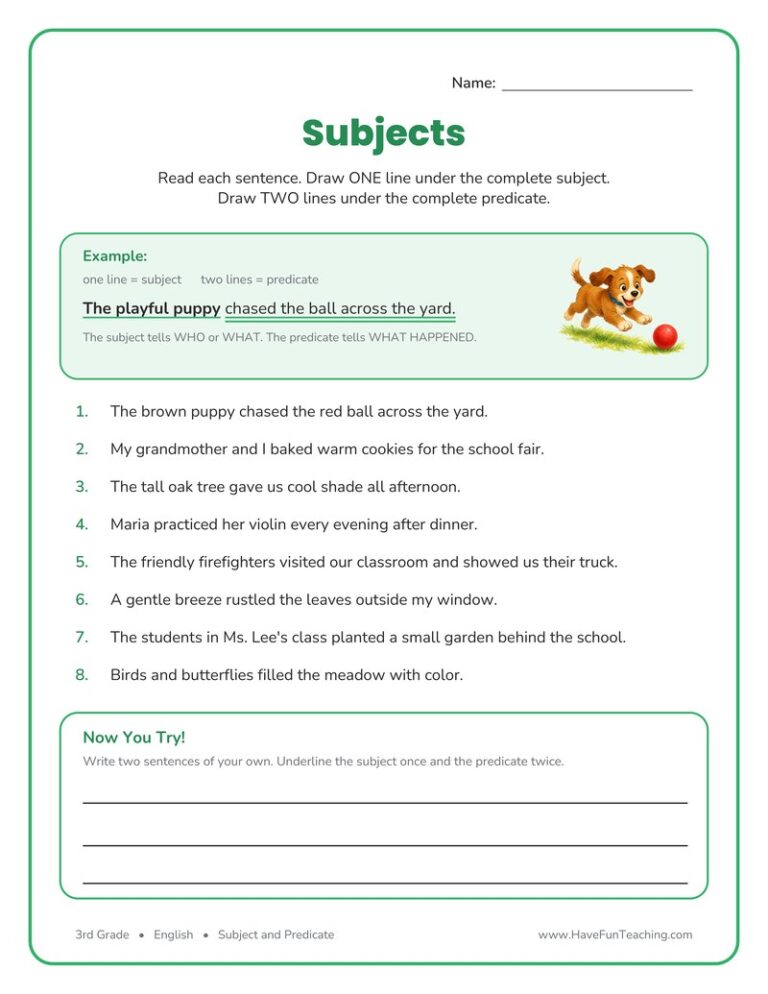
A 3rd grade subject predicate worksheet where kids underline the subject and predicate in eight sentences, then write their own. Includes a full answer key for quick, confident grammar practice.

This Adding Commas in a Series Worksheet gives 3rd graders practice separating list items with commas, spotting misplaced commas, and writing their own list sentence. Answer key included for quick, no-prep grammar practice.
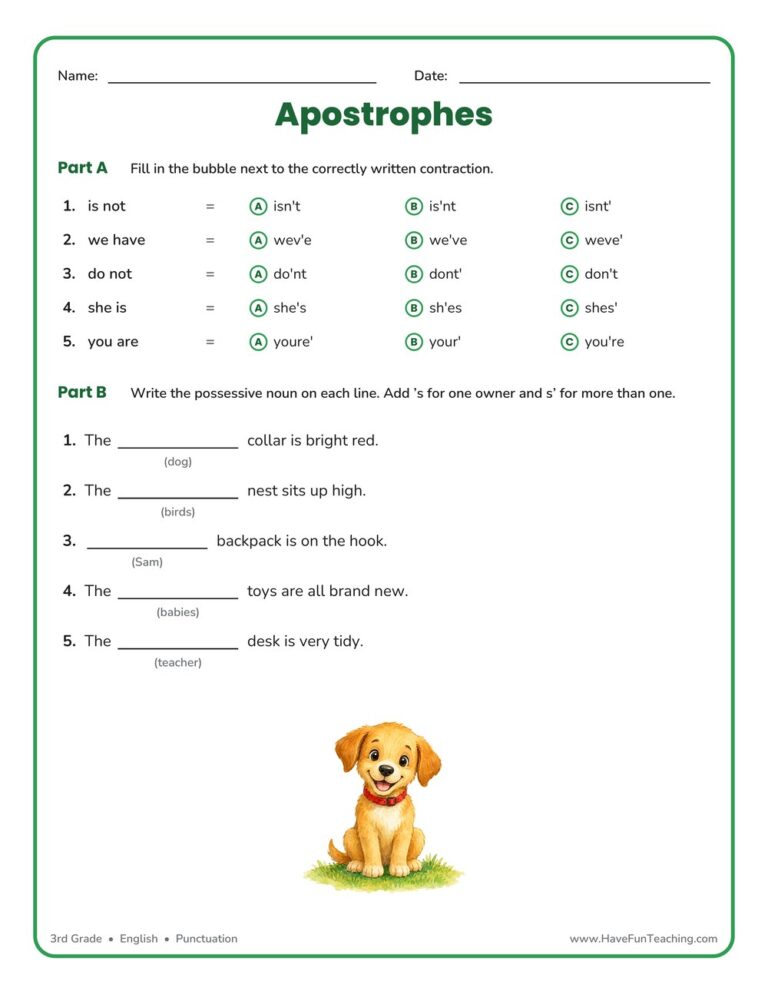
The Possession & Contraction Apostrophe Worksheet gives 3rd graders focused practice using apostrophes for contractions and possessive nouns. Includes a complete answer key — perfect for quick, no-prep punctuation practice.
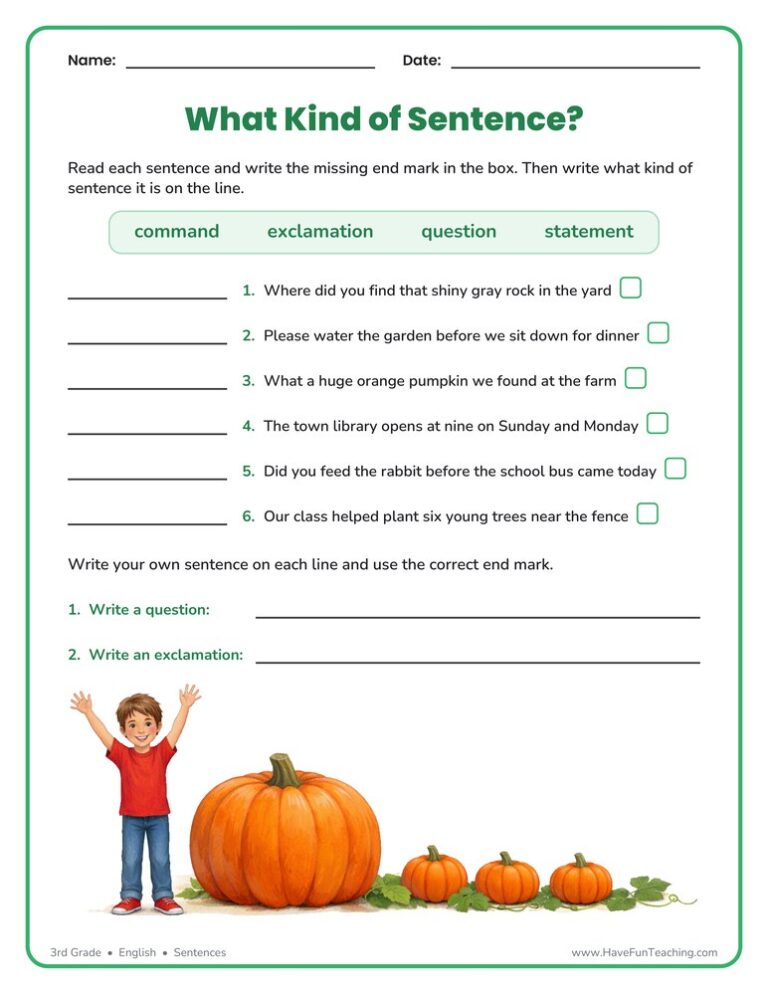
With this What Kind of Sentence? Worksheet, 3rd Grade students add the missing end mark and label each sentence as a statement, question, command, or exclamation. An answer key is included, so practice is quick to check.

The Rewriting Compound Subjects Worksheet has 3rd grade students combine four sentence pairs into one sentence with a compound subject, then split two more apart. An answer key is included, so checking is quick.

Using the Science Songs (MP3 Album), students learn about different science concepts while listening to these upbeat and catchy songs.

Using this Who or What? Compound Subjects Worksheet, 3rd graders name the two subjects in a sentence, join sentence pairs, and write one of their own. Answer key included for quick, no-prep grammar practice.
Using the Noun Song (Lyric Music Video), students will be able to define, give examples and use adjectives in their own writing using the catchy and memorable lyrics.

Reviews
There are no reviews yet