Skip to content
Start My 3 Free Days $0 today · cancel anytime

5th Grade Idioms Resources

6 5th grade idioms resources: 3 worksheets and 3 activities. How teachers use these

5th Grade Idioms Resources

6 5th grade idioms resources: 3 worksheets and 3 activities. How teachers use these

Worksheet
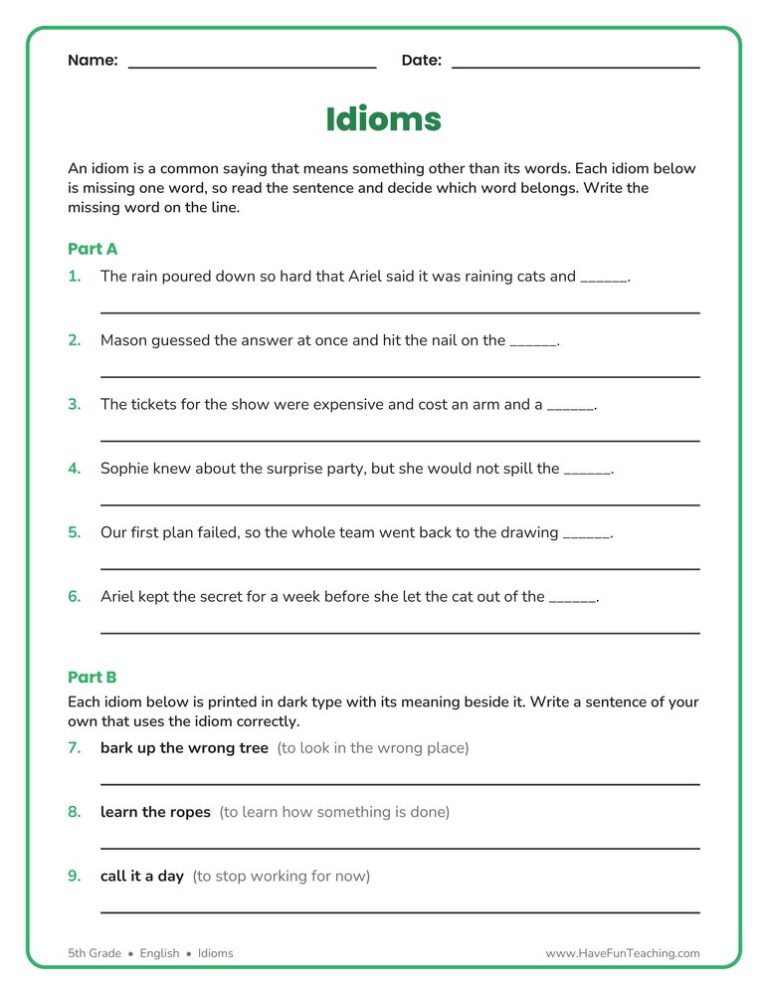
Worksheet5th GradeCompleting Idioms Worksheet

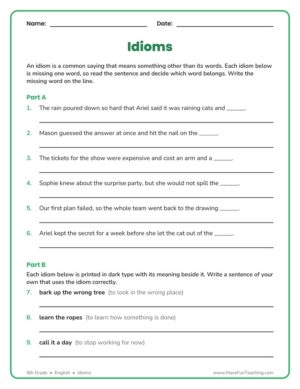
This Completing Idioms Worksheet asks 5th Grade students to finish six common idioms from memory and write three of their own, with an answer key, so figurative language practice takes one page.

Worksheet
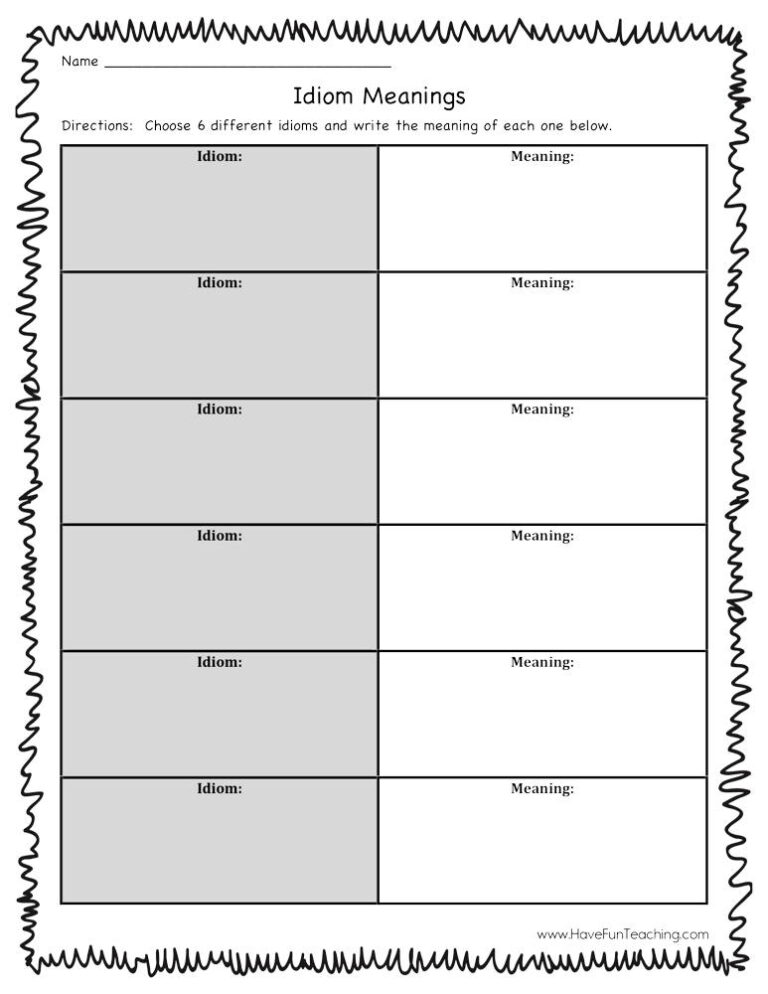
Worksheet5th GradeIdiom Meanings Worksheet

This idiom meanings worksheet helps 5th grade students explain common idioms with context clues and tell idioms from literal phrases. An answer key is included, making practice and checking quick and easy.

Activity
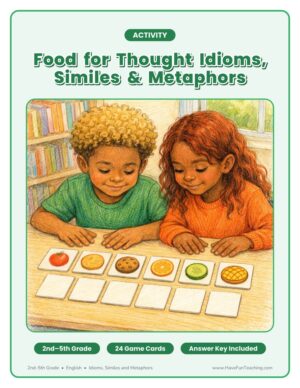
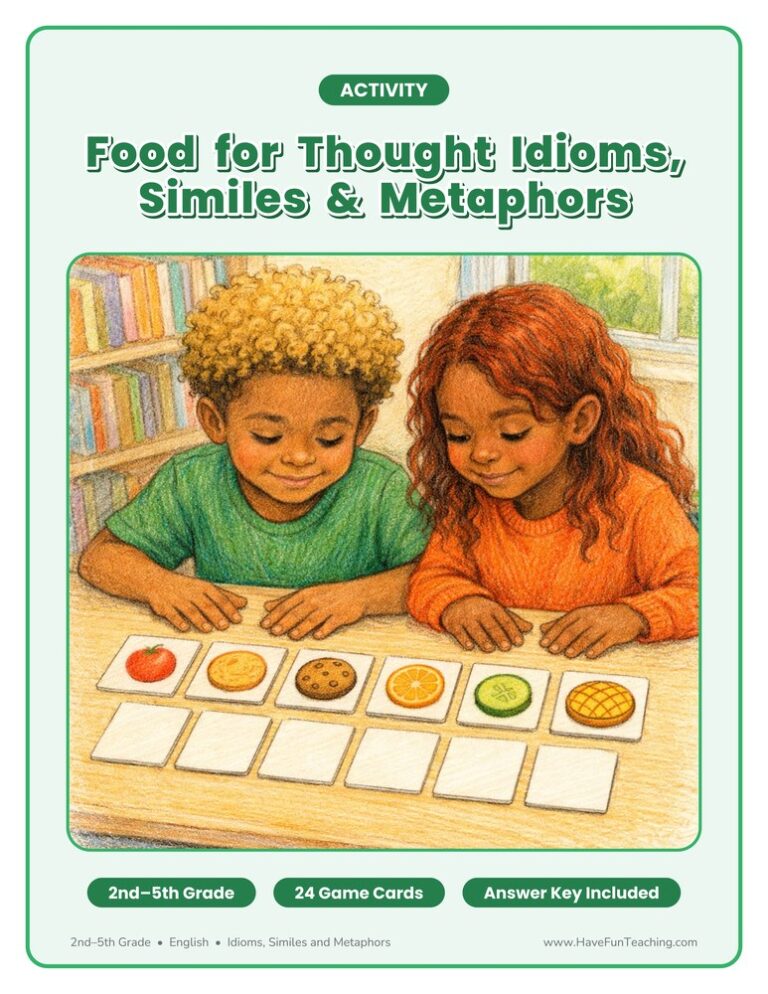
Activity5th GradeFood for Thought Idiom Simile Metaphor Activity

Students match food idioms, similes, and metaphors to their meanings and sort them by kind in this food for thought idiom simile metaphor activity for 2nd to 5th grade, with an answer key included.

Activity
Activity5th GradePlaying With Idioms Activity

This playing with idioms activity has 3rd to 5th grade students match idiom cards to their real meanings, draw funny literal pictures and read idioms in stories. An answer key is included.

Worksheet
Worksheet5th GradeDescribing Idioms Worksheet

Using Describing Idioms Worksheet, students choose four idioms to describe through writing and drawing in order to use them in their writing.

Activity
Activity5th GradeL.3.5 Common Core Activity

This L.3.5 common core activity gives 3rd to 5th grade students idiom task cards, a tips chart, and a practice page. An answer key is included for quick checking.

From our teachers' playbook

No, it is not actually raining cats and dogs

What do 5th graders learn about idioms?

An idiom is a phrase that means something different from its words. In 5th grade, kids learn to spot idioms in their reading and figure out the real meaning from context, so "the test was a piece of cake" means easy, not tasty. They tell idioms apart from similes, metaphors and proverbs, and start using them on purpose to give their writing some personality. The click comes when a student reads "she spilled the beans" and laughs because they get the joke instead of picturing a mess.

Our favorite ways to make idioms stick

Idioms are funny, so we let kids enjoy them. These moves turn silly phrases into real understanding.

Draw it wrong, then right

Kids fold a page in half. On one side they draw the literal meaning of "it's raining cats and dogs," animals falling from the sky. On the other side they draw what it really means. The silly picture makes the real meaning impossible to forget.

Why it works: children learn more from words and pictures together than from words alone (Mayer, 2009).

Describing Idioms WorksheetTry it withDescribing Idioms WorksheetWorksheetsOpen it →
Finish the idiom

Say the first half of an idiom, "hold your...", and have kids write the ending and the meaning on a whiteboard. Five a day as a warm-up builds a bank of idioms they recognize instantly when they meet them in a book.

Why it works: pulling an answer out of memory makes it stick far better than rereading it, one of the strongest findings in learning research (Dunlosky and colleagues, 2013).

Completing Idioms WorksheetTry it withCompleting Idioms WorksheetWorksheetsOpen it →

Use the clues around it

Read a sentence aloud like "After the long hike, Dad was ready to hit the hay" and think out loud: "He's tired, the hike was long, so hit the hay must mean go to sleep." Then let partners crack the next one the same way.

Why it works: handing over the work step by step, from teacher to student, is one of the most widely used teaching frameworks (Pearson and Gallagher, 1983).

Idiom Meanings WorksheetTry it withIdiom Meanings WorksheetWorksheetsOpen it →

Questions teachers and parents ask about 5th grade idioms

What is an idiom for 5th graders?

An idiom is a common saying that does not mean exactly what its words say. "Break a leg" means good luck, and "under the weather" means feeling sick. Fifth graders learn to figure out the meaning from context.

What is the difference between an idiom and a metaphor?

A metaphor compares two things to describe one of them, like "the classroom was a zoo." An idiom is a fixed phrase whose meaning has to be learned, like "let the cat out of the bag." Some idioms started as metaphors and just stuck around.

Why are idioms hard for some kids?

Idioms only make sense if you already know them, so kids who are new to English or who think very literally can find them confusing. Explaining where an idiom came from and drawing its literal picture helps a lot.

What are some common idioms to teach?

Great starters are piece of cake, spill the beans, break the ice, hit the hay, under the weather and costs an arm and a leg. Kids hear these all the time, so they get to use them right away.