
Skip to content
Start My 3 Free Days $0 today · cancel anytime

5th Grade Similes Resources

3 5th grade similes resources: 1 song, 1 video, 1 activity and more. How teachers use these

5th Grade Similes Resources

3 5th grade similes resources: 1 song, 1 video, 1 activity and more. How teachers use these

Video
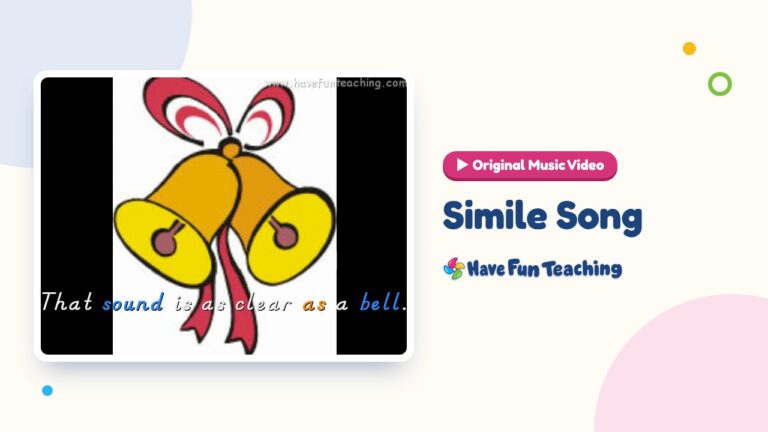
Video5th GradeSimile Song (Original Music Video)

Using this Simile Song (Original Music Video), your students learn about how to use similes in order to bring emotion and feeling into their writing.

Activity
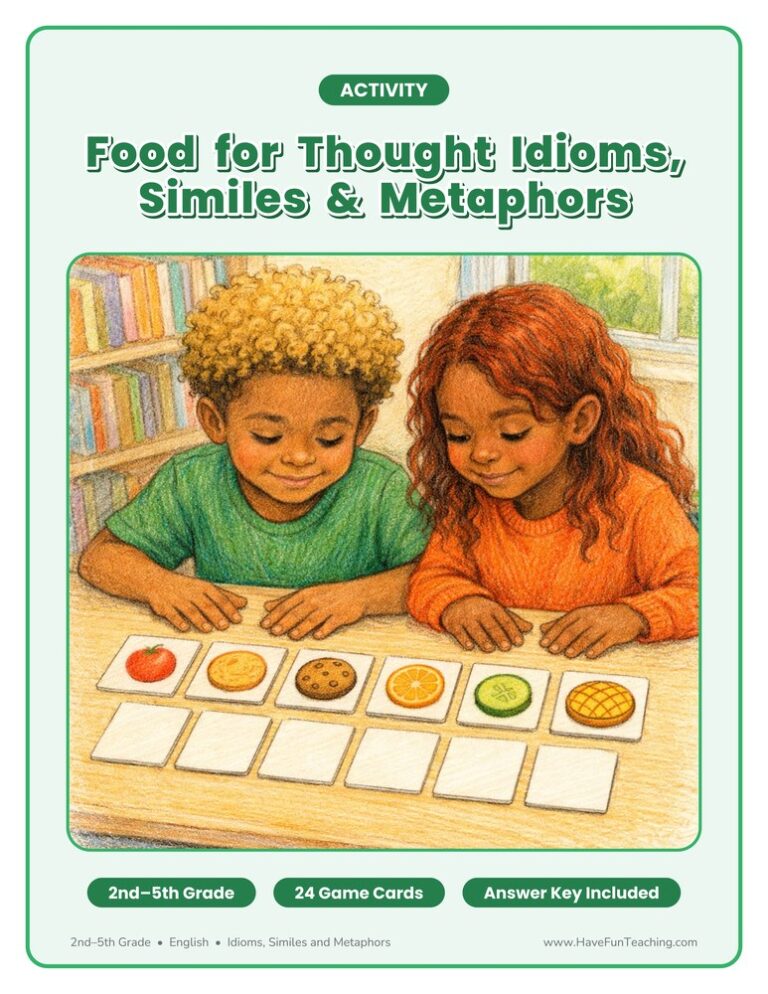
Activity5th GradeFood for Thought Idiom Simile Metaphor Activity

Students match food idioms, similes, and metaphors to their meanings and sort them by kind in this food for thought idiom simile metaphor activity for 2nd to 5th grade, with an answer key included.

Worksheet
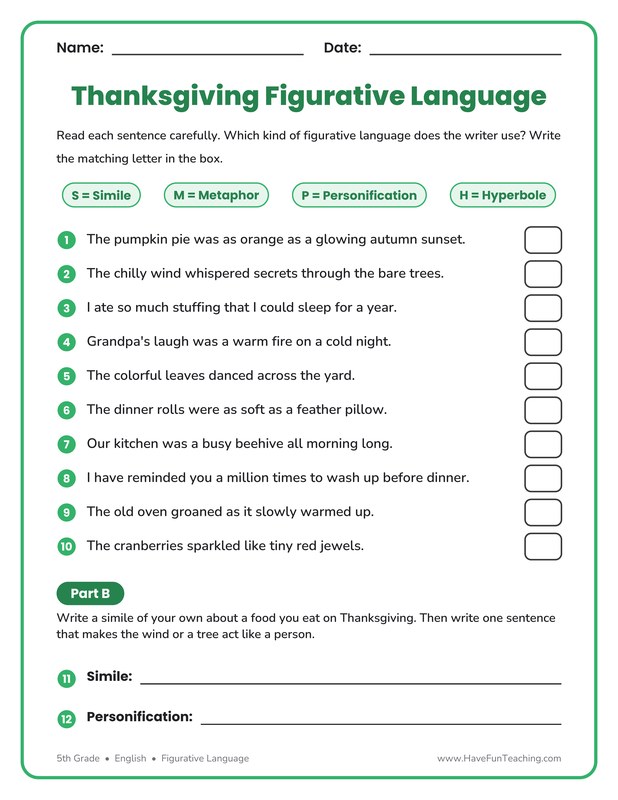
Worksheet5th GradeThanksgiving Figurative Language Worksheet

This thanksgiving figurative language worksheet asks 5th Grade students to label similes, metaphors, personification and hyperbole in holiday sentences. Answer key included.

From our teachers' playbook

As fun as a cannonball on a hot day

What do 5th graders learn about similes?

Fifth graders learn that a simile compares two different things using like or as: "Her laugh was like a bell," or "He was as quiet as a mouse." They find similes in poems and stories, explain what the comparison really means, and tell similes apart from metaphors (which compare without like or as) and idioms (sayings that don't mean what the words say). Then they write their own fresh similes instead of tired ones. The click moment is when a student reads "the hallway was as loud as a stadium" and says, "Oh, so it was really, really loud!"

Our favorite ways to teach similes

Similes are easy to spot and harder to explain. These moves build both skills.

Sing the definition

Play a simile song at the start of the lesson and again before writing time. The catchy line about "like" or "as" gives kids a quick check they can hum when they find a comparison in their reading.

Why it works: a catchy, repeating tune gives the brain a hook to hang words on, so sung text is remembered better (Wallace, 1994).

Simile Song (Original Music Video)Try it withSimile Song (Original Music Video)SongsOpen it →
Sort simile, metaphor or idiom

Give kids a stack of phrases and three columns. They sort each one and explain their choice: "It uses as, so it's a simile." Mixing the three side by side is what finally makes the differences clear.

Why it works: shuffled practice teaches kids to choose the right strategy, not just repeat one, and it improved test scores in research (Rohrer and Taylor, 2007).

Food for Thought Idiom Simile Metaphor ActivityTry it withFood for Thought Idiom Simile Metaphor ActivityActivitiesOpen it →

Upgrade a tired simile

Write "as cold as ice" on the board and think out loud: "How cold? Cold like what, for me?" Turn it into "as cold as the back of the freezer at midnight." Then kids upgrade three tired similes of their own.

Why it works: showing first, practicing together, then letting kids try alone is the "gradual release" model teachers have relied on for decades (Pearson and Gallagher, 1983).

Questions parents and teachers ask

What is a simile for 5th grade?

A simile compares two different things using the words like or as. "The moon was like a silver coin" is a simile.

What is the difference between a simile and a metaphor?

A simile uses like or as to compare. A metaphor says one thing is another: "The moon was a silver coin." Both make writing more vivid.

How do I help my 5th grader write better similes?

Ask them to compare something to an image from their own life instead of a common phrase. "As hungry as my brother after soccer" is more fun than "as hungry as a bear."

Why do 5th graders learn figurative language?

It helps them understand poems and stories more deeply and makes their own writing more interesting. It also shows up often in reading tests.



