
Skip to content
Start My 3 Free Days $0 today · cancel anytime

5th Grade Suffixes Resources

3 5th grade suffixes resources: 1 game, 1 activity and 1 worksheet. How teachers use these

5th Grade Suffixes Resources

3 5th grade suffixes resources: 1 game, 1 activity and 1 worksheet. How teachers use these

Game
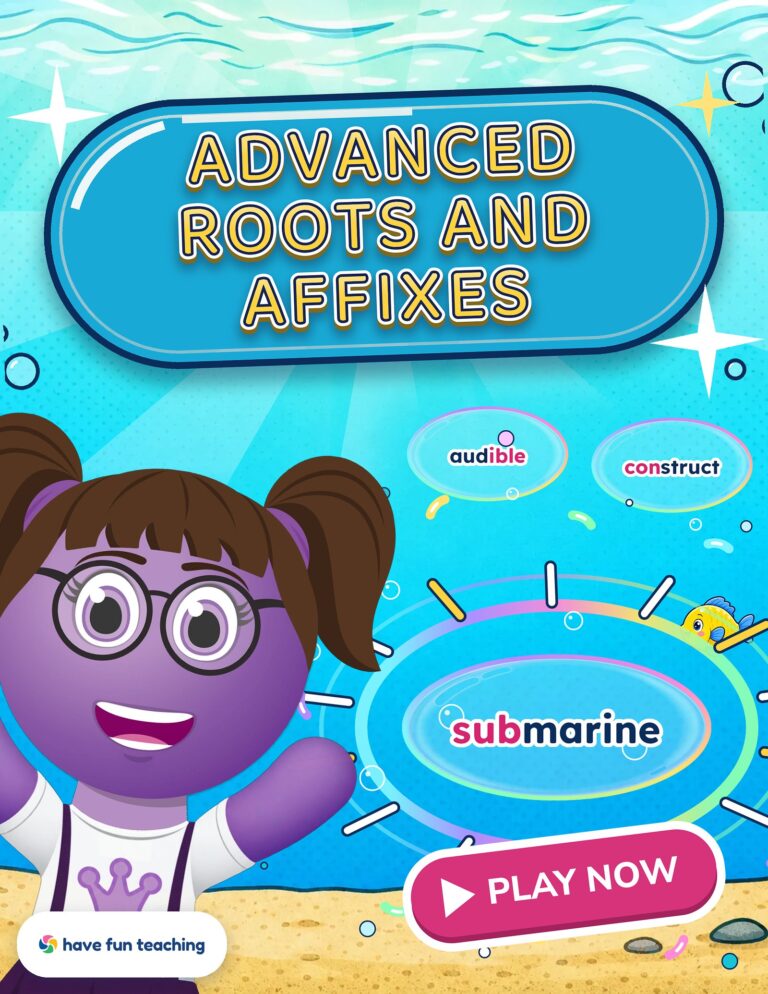
Game5th GradeAdvanced Roots and Affixes Game

An underwater bubble game where 5th grade kids read each clue and pop the bubble with the matching word, using Greek and Latin roots, prefixes and suffixes. Play online on any phone, tablet, Chromebook or computer.

Activity
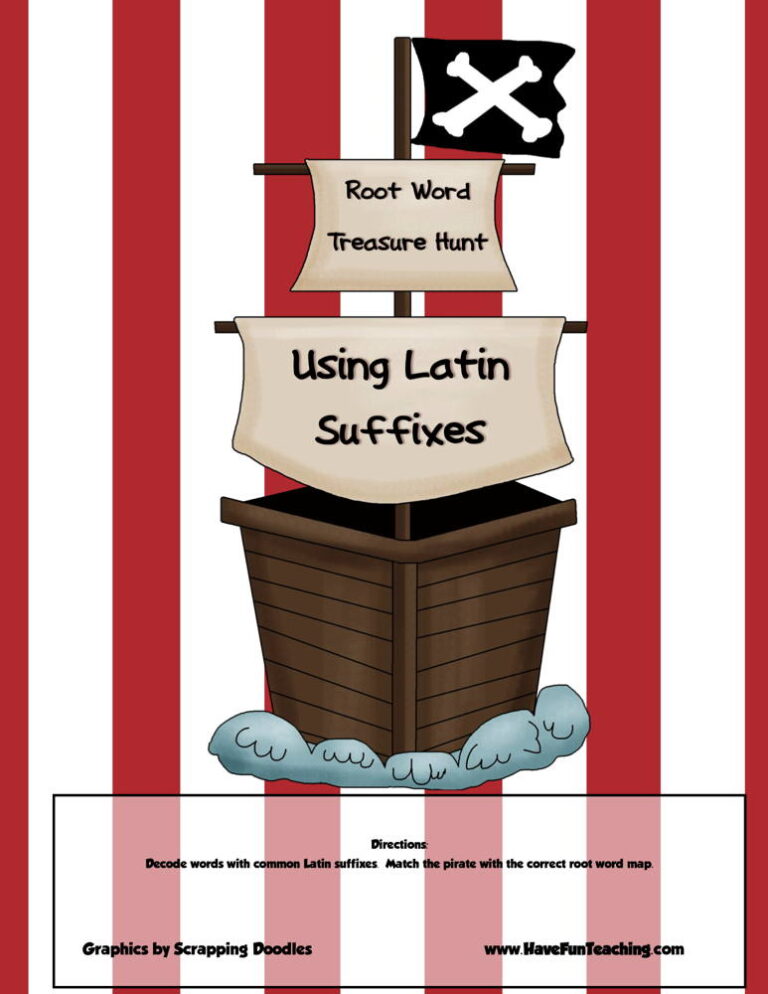
Activity5th GradeRoot Word Treasure Hunt Using Latin Suffixes Activity

This root word treasure hunt using latin suffixes activity is a card matching game for 3rd to 5th grade, with a suffix guide, recording sheet and practice page. Answer key included.

Worksheet
Worksheet5th GradeSuffixes Word List Worksheet

This Suffixes Word List Worksheet helps 5th graders match suffixes to their meanings and add suffixes to base words in sentences. An answer key is included for fast, easy checking.

From our teachers' playbook

Small endings, big meaning changes

What do 5th graders learn about suffixes?

Fifth graders learn that a suffix does more than add letters. It often changes a word's part of speech. teach + er = teacher turns a verb into a noun, and hope + ful = hopeful turns a noun into an adjective. They move past -s and -ed into Greek and Latin endings like -able, -ible, -tion, -ment, -ous and -ology, and learn spelling changes like dropping the e in create + ion = creation. The click moment comes when kids decode a big unfamiliar word in a science book just by breaking it into parts.

Our favorite ways to teach suffixes

Suffixes are a code. These moves teach kids to crack it on their own.

Word part surgery

Write a long word like "disagreement" on the board. Kids box the root, underline the prefix and circle the suffix, then explain what each part adds. Doing it daily with words from class reading builds a decoding habit fast.

Why it works: children learn more from words and pictures together than from words alone (Mayer, 2009).

Suffixes Word List WorksheetTry it withSuffixes Word List WorksheetWorksheetsOpen it →
Suffix meaning sprint

Call out a suffix ("-less!") and kids write its meaning and two words that use it in 30 seconds. Then flip it: show "fearless" and they name the suffix and meaning. Quick retrieval keeps the endings fresh.

Why it works: researchers who compared ten study methods found practice testing is one of the two that work best (Dunlosky and colleagues, 2013).

Advanced Roots and Affixes GameTry it withAdvanced Roots and Affixes GameGamesOpen it →

One suffix family a week

Group suffixes by job: noun makers (-tion, -ment, -ness), adjective makers (-ful, -ous, -able), and so on. Teach one family each week and mix in old ones every Friday.

Why it works: short practice spread over several days beats one long session, according to a large review of learning research (Dunlosky and colleagues, 2013).

Root Word Treasure Hunt Using Latin Suffixes ActivityTry it withRoot Word Treasure Hunt Using Latin Suffixes ActivityActivitiesOpen it →

Questions parents and teachers ask about suffixes

What suffixes should 5th graders know?

Common ones include -able, -ible, -tion, -sion, -ment, -ness, -ful, -less, -ous, -ive and -ly. Fifth graders also start meeting Greek and Latin endings like -ology and -logy.

How do suffixes change the part of speech?

Many suffixes turn a word into a different part of speech. Adding -ness makes a noun (kind to kindness), and -ly often makes an adverb (quick to quickly).

What is the difference between -able and -ible?

Both mean "can be." A useful tip: -able often goes on a complete word (readable), while -ible often goes on a root that isn't a word by itself (visible). It's a pattern, not a rule, so check a dictionary.

How do I help my child learn suffixes at home?

Pick a suffix of the week and hunt for it in books and signs. Ask your child what each word means and how the ending changed it.



