Skip to content
Start My 3 Free Days $0 today · cancel anytime

5th Grade Capacity Resources

5 5th grade capacity resources: 2 activities, 2 worksheets and 1 Common Core Lesson. How teachers use these

5th Grade Capacity Resources

5 5th grade capacity resources: 2 activities, 2 worksheets and 1 Common Core Lesson. How teachers use these

Activity
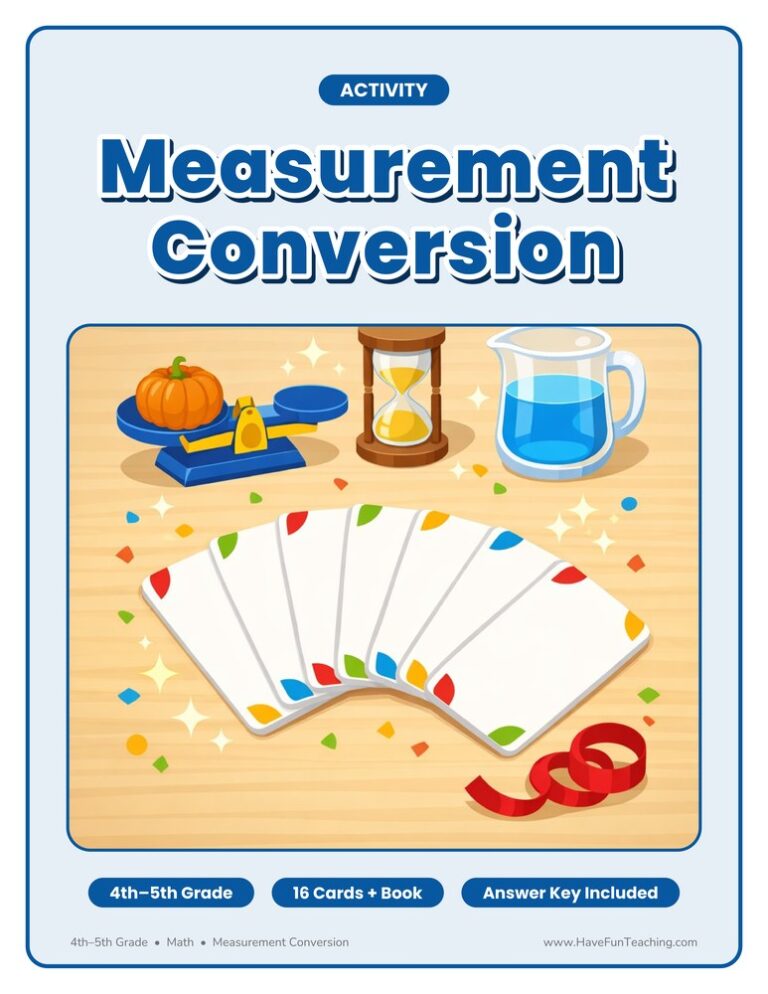
Activity5th GradeMeasurement Conversion Activity

This measurement conversion activity helps 4th-5th grade students change kilometers, kilograms, liters, hours and more into smaller units with cards, tables and a poster. Answer key included.

Activity
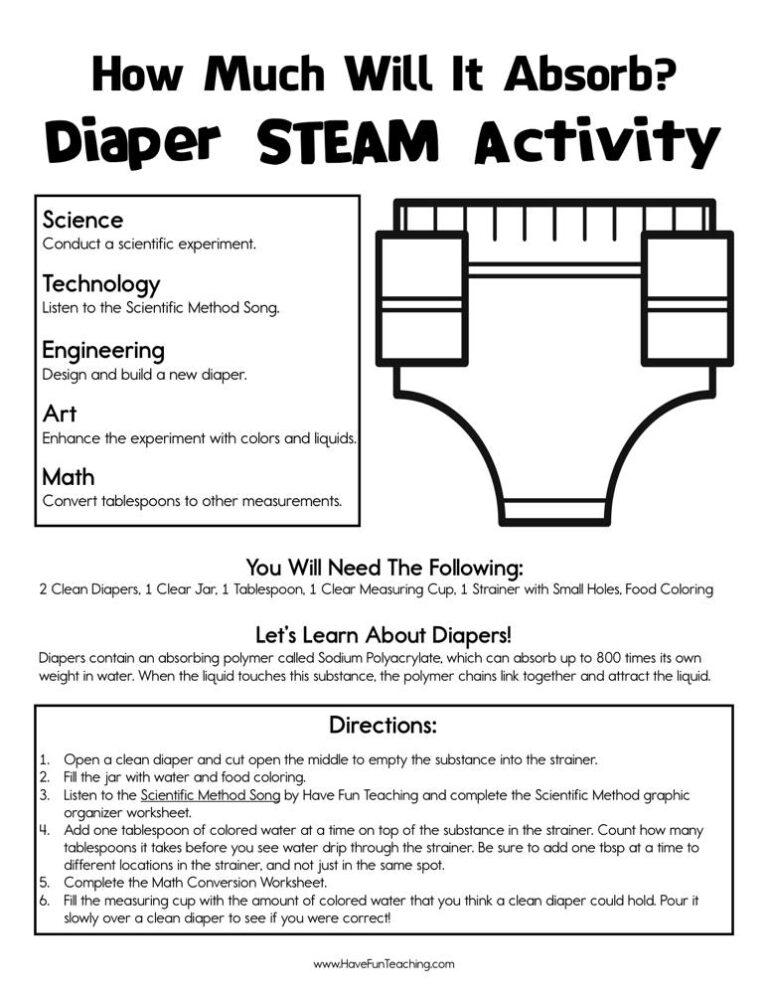
Activity5th GradeHow Much Will It Absorb Diaper STEAM Activity

Run the How Much Will It Absorb Diaper STEAM Activity as a real lab for 4th to 6th grade: test diaper gel, convert capacity units, and design a diaper, with an answer key included.

Worksheet
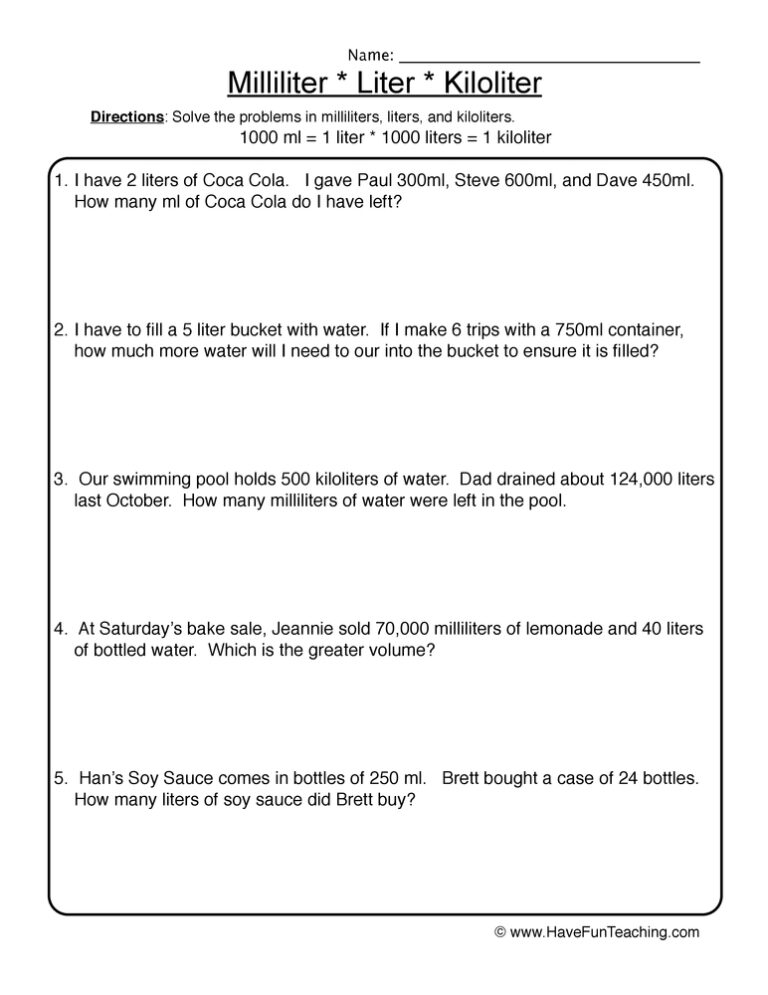
Worksheet5th GradeLiquid Measurement Scenarios Worksheet

This liquid measurement scenarios worksheet gives 5th grade students four two-step word problems that convert milliliters, liters, and kiloliters. An answer key is included, so every step is easy to check.

Common Core Lesson
Common Core Lesson5th Grade5.MD.1 Fifth Grade Common Core Lesson

In this 5.MD.1 Fifth Grade Common Core Lesson, students convert among different-sized standard measurement units within a system tosolve multi-step, real world problems.

Worksheet
Worksheet5th GradeMeasurement Conversions Worksheet

This measurement conversions worksheet has 5th grade students scale a fruit punch recipe and solve capacity word problems with cups, pints, quarts, and gallons. An answer key is included for easy checking.

From our teachers' playbook

Convert it, pour it, prove it

What do 5th graders learn about capacity?

Fifth graders take capacity further by converting between units in both systems and using those conversions in multi-step word problems. They know 1 gallon = 4 quarts = 8 pints = 16 cups and 2.5 L = 2,500 mL, and they multiply or divide to move between them, often with fractions and decimals. They solve real problems like how many 250 mL cups a 3 liter jug can fill. The click comes when kids see that converting in metric is just sliding the decimal point, while customary units take a little more multiplying.

Our favorite ways to teach capacity

Fifth graders are ready for bigger numbers and trickier problems. These moves keep conversions meaningful, not just memorized.

Model a multi-step problem

Solve a problem out loud like "A recipe needs 3 quarts of broth. How many cups is that?" Show the conversion table, then the multiplying. Point out how you decide whether to multiply or divide before kids try one.

Why it works: handing over the work step by step, from teacher to student, is one of the most widely used teaching frameworks (Pearson and Gallagher, 1983).

5.MD.1 Fifth Grade Common Core LessonTry it with5.MD.1 Fifth Grade Common Core LessonCommon Core LessonsOpen it →

Measure the absorb-a-thon

Run the diaper experiment, but have fifth graders record results in milliliters and convert them to liters. Then compare groups with decimals. Real data makes the decimal slide make sense.

Why it works: going from real objects to pictures to symbols is a core recommendation of the U.S. Department of Education's elementary math guide.

How Much Will It Absorb Diaper STEAM ActivityTry it withHow Much Will It Absorb Diaper STEAM ActivityActivitiesOpen it →

Mix the units

Give a page that mixes customary and metric conversions instead of practicing one at a time. Kids have to stop and choose the right relationship every problem, which is what builds real flexibility.

Why it works: shuffled practice teaches kids to choose the right strategy, not just repeat one, and it improved test scores in research (Rohrer and Taylor, 2007).

Measurement Conversions WorksheetTry it withMeasurement Conversions WorksheetWorksheetsOpen it →

Questions parents and teachers ask

What capacity skills do 5th graders learn?

Fifth graders convert between units of capacity, like gallons to cups and liters to milliliters, and use those conversions to solve multi-step word problems.

How do you convert liters to milliliters?

Multiply by 1,000, because one liter equals 1,000 milliliters. So 2.5 liters is 2,500 milliliters. To go the other way, divide by 1,000.

How many cups are in a gallon?

There are 16 cups in a gallon. That comes from 4 quarts in a gallon, 2 pints in a quart and 2 cups in a pint.

How can I help my 5th grader with capacity conversions?

Cook together and double or halve a recipe, converting the units as you go. Ask your child to explain whether to multiply or divide. Real measuring cups make it stick.