Skip to content
Start My 3 Free Days $0 today · cancel anytime

5th Grade Patterns Resources

6 5th grade patterns resources: 3 activities, 2 test prep, 2 assessments and more. How teachers use these

5th Grade Patterns Resources

6 5th grade patterns resources: 3 activities, 2 test prep, 2 assessments and more. How teachers use these

Activity
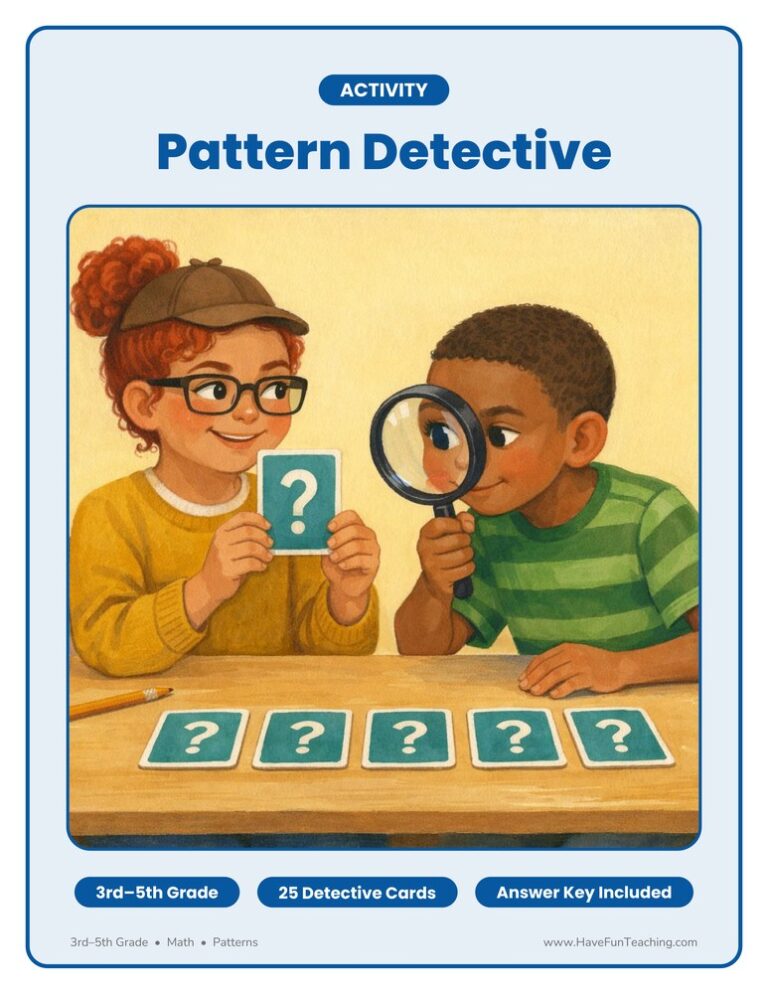
Activity5th GradePattern Detective Activity

This pattern detective activity has 3rd to 5th grade students find the rule in number patterns, uncover the next numbers, and build their own patterns. An answer key is included for quick checking.

Workbook
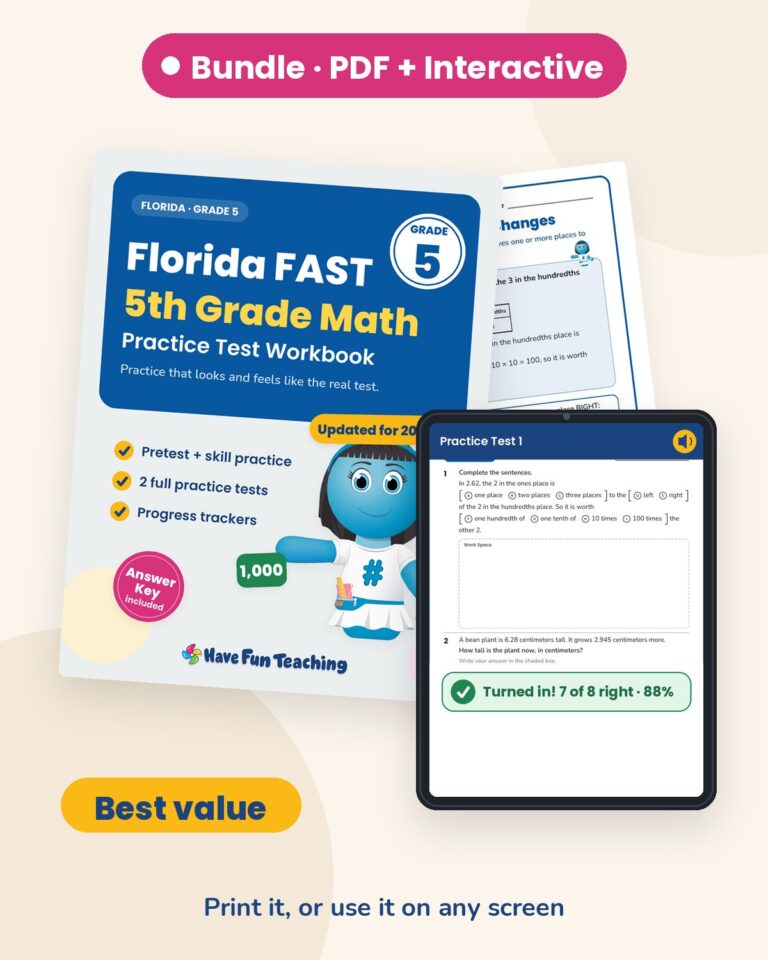
Workbook5th GradeFlorida FAST 5th Grade Math Practice Test Workbook

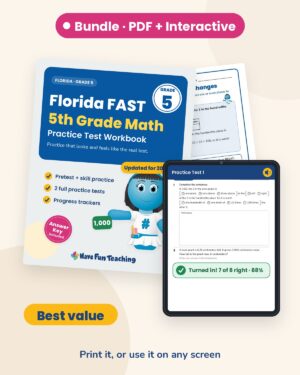
A Florida FAST 5th grade math practice test workbook for teachers, with a pretest, skill practice for all 36 benchmarks, mixed review and 2 full-length practice tests. Answer key included, so test prep is ready to go.

Workbook
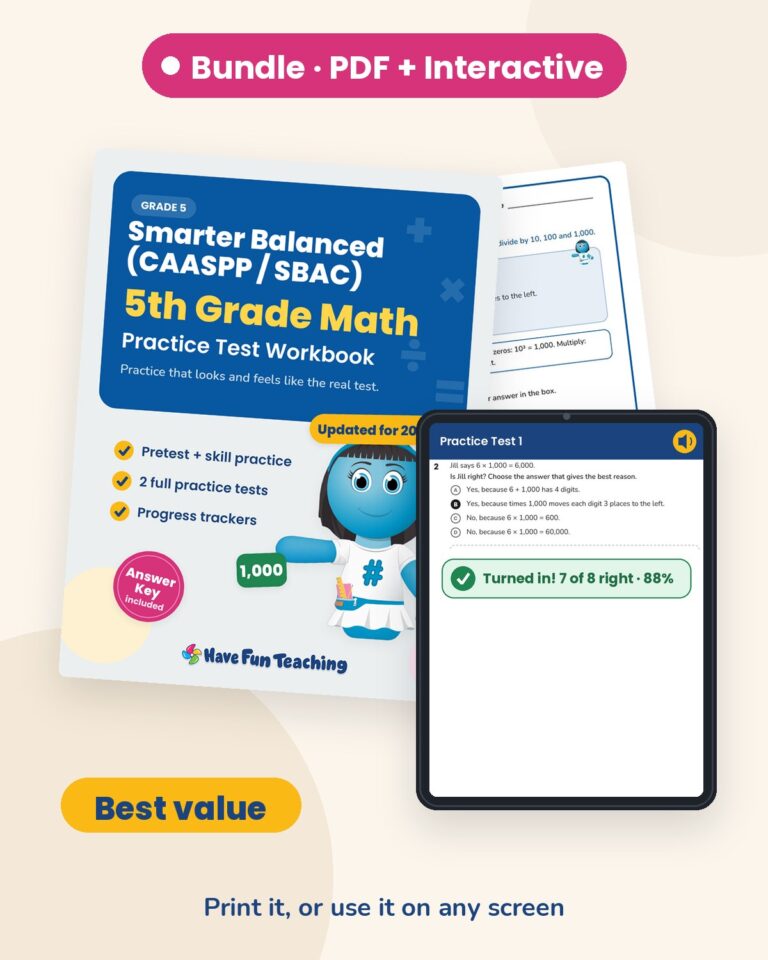
Workbook5th GradeSmarter Balanced (CAASPP / SBAC) 5th Grade Math Practice Test Workbook

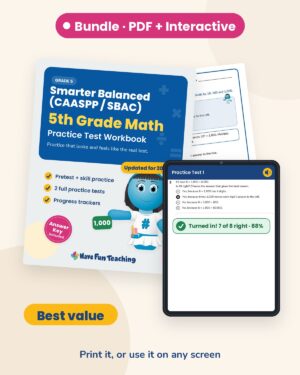
A Smarter Balanced (CAASPP / SBAC) 5th grade math practice test workbook for teachers, with a pretest, skill practice for all 37 standards, mixed review and 2 full-length practice tests. Answer key included, so test prep is ready to go.

Activity
Activity5th GradePattern Fun Arithmetic Activity

This Pattern Fun arithmetic activity has 3rd-5th grade students match number pattern cards to rule cards and describe patterns, with a practice page and answer key included.

Activity
Activity5th GradePattern Pairs Arithmetic Patterns Activity

In this Pattern Pairs Arithmetic Patterns Activity, students identify arithmetic patterns and explain them using properties of operations.

Common Core Lesson
Common Core Lesson5th Grade5.OA.3 Fifth Grade Common Core Lesson

In this 5.OA.3 Fifth Grade Common Core lesson students generate numerical patterns using given rules and identify relationships between corresponding terms.

From our teachers' playbook

Two rules, one cool graph

What do 5th graders learn about patterns?

Fifth graders build two number patterns side by side from two different rules, then compare them. For example, Rule A is "add 3" and Rule B is "add 6": 0, 3, 6, 9 and 0, 6, 12, 18. They notice each term in B is twice the matching term in A. Then they turn the pairs into ordered pairs like (3, 6) and plot them on a coordinate grid. The click comes when the points line up and kids see the relationship as a picture.

Our favorite ways to teach patterns

Patterns are where arithmetic starts turning into algebra. These moves help kids see the relationship.

Two columns, think aloud

Make a table with Rule A and Rule B side by side. Fill in the first rows and think aloud: "Hmm, 6 is double 3, and 12 is double 6." Then kids finish the table and look for the pattern on their own.

Why it works: showing first, practicing together, then letting kids try alone is the "gradual release" model teachers have relied on for decades (Pearson and Gallagher, 1983).

5.OA.3 Fifth Grade Common Core LessonTry it with5.OA.3 Fifth Grade Common Core LessonCommon Core LessonsOpen it →

Graph the pairs

Once the table is done, kids plot each pair on a coordinate grid. The straight line of points shows the relationship more clearly than the numbers alone, and it sets up graphing in middle school.

Why it works: children learn more from words and pictures together than from words alone (Mayer, 2009).

Pattern Pairs Arithmetic Patterns ActivityTry it withPattern Pairs Arithmetic Patterns ActivityActivitiesOpen it →

Prove the pattern

Ask partners, "How do you know B is always double A?" Each pair has to explain with one example and one reason. Talking it out turns a lucky guess into real understanding.

Why it works: when kids say the precise math words, their understanding gets sharper, a recommendation of the U.S. Department of Education's elementary math guide.

Pattern Fun Arithmetic ActivityTry it withPattern Fun Arithmetic ActivityActivitiesOpen it →

Questions parents and teachers ask

What do 5th graders learn about patterns?

They create two number patterns from two rules, compare how the terms relate, and graph the pairs as ordered pairs on a coordinate grid.

What is a numerical pattern?

A numerical pattern is a list of numbers that follows a rule, like "add 4": 0, 4, 8, 12. The rule tells you how to get the next number.

How do patterns lead to algebra?

Comparing two patterns shows a relationship, like "B is always twice A." That is the same idea as a simple equation, y = 2x, that kids learn later.

How can I practice patterns at home?

Pick two rules and take turns making the patterns. Then ask your child what they notice about the numbers.