Skip to content
Start My 3 Free Days $0 today · cancel anytime

1st Grade Letter Recognition Assessments

10 1st grade letter recognition assessments. Teacher favorites: Alphabet Reading Comprehension Workbook and Alphabet Stories Letter B Reading Comprehension Worksheet. How teachers use these

1st Grade Letter Recognition Assessments

10 1st grade letter recognition assessments. Teacher favorites: Alphabet Reading Comprehension Workbook and Alphabet Stories Letter B Reading Comprehension Worksheet. How teachers use these

Assessment
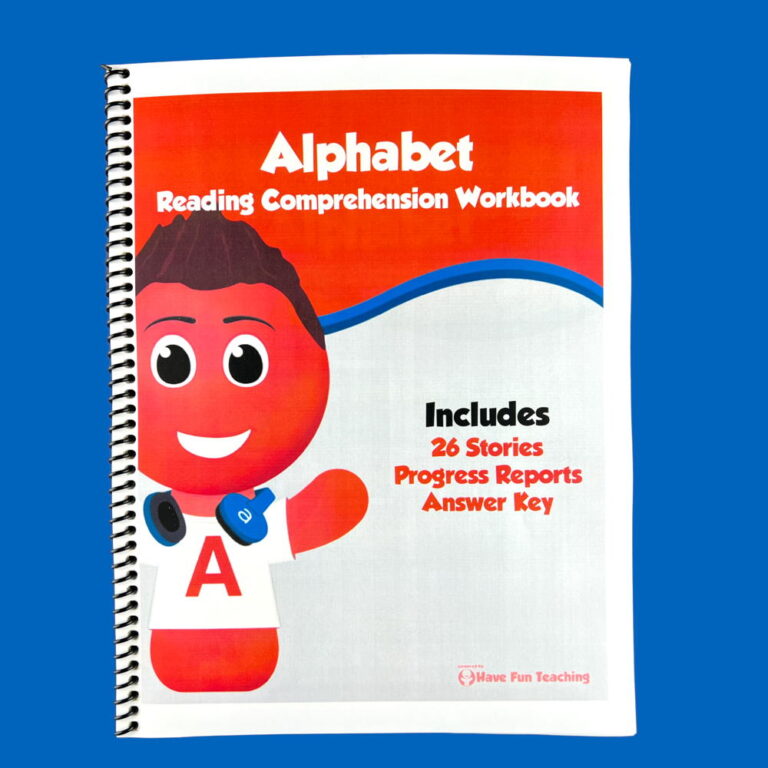
Assessment1st GradeAlphabet Reading Comprehension Workbook

Use Alphabet Reading Comprehension Workbook to build student reading comprehension skills using the Alphabet Stories.

Assessment
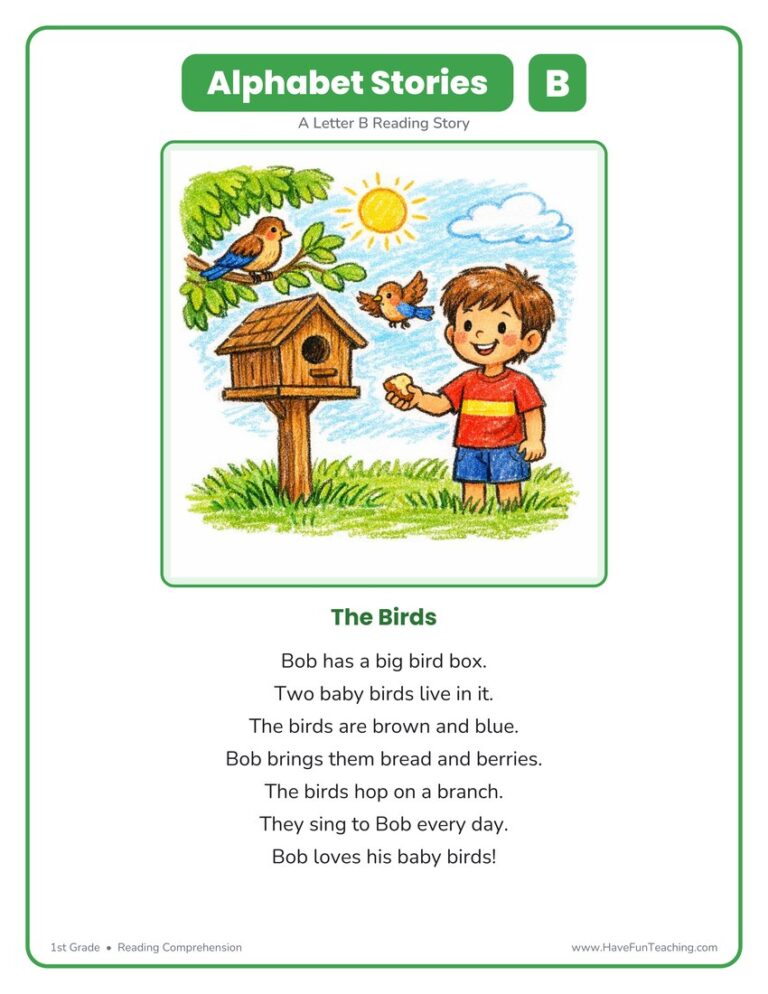
Assessment1st GradeAlphabet Stories Letter B Reading Comprehension Worksheet

A first grade Alphabet Stories Letter B Reading Comprehension Worksheet built around a short story about Bob and his birds. Includes an answer key — perfect for no-prep letter B reading practice at home or school.

Assessment
Assessment1st GradeDavey and the Cheese Phonics Reading Comprehension Story Worksheet - Long Vowel E Sound

The Davey and the Cheese Phonics Reading Comprehension Story Worksheet - Long Vowel E Sound gives 1st graders a silly long E story and comprehension questions. An answer key is included for quick, no-prep phonics practice.

Assessment
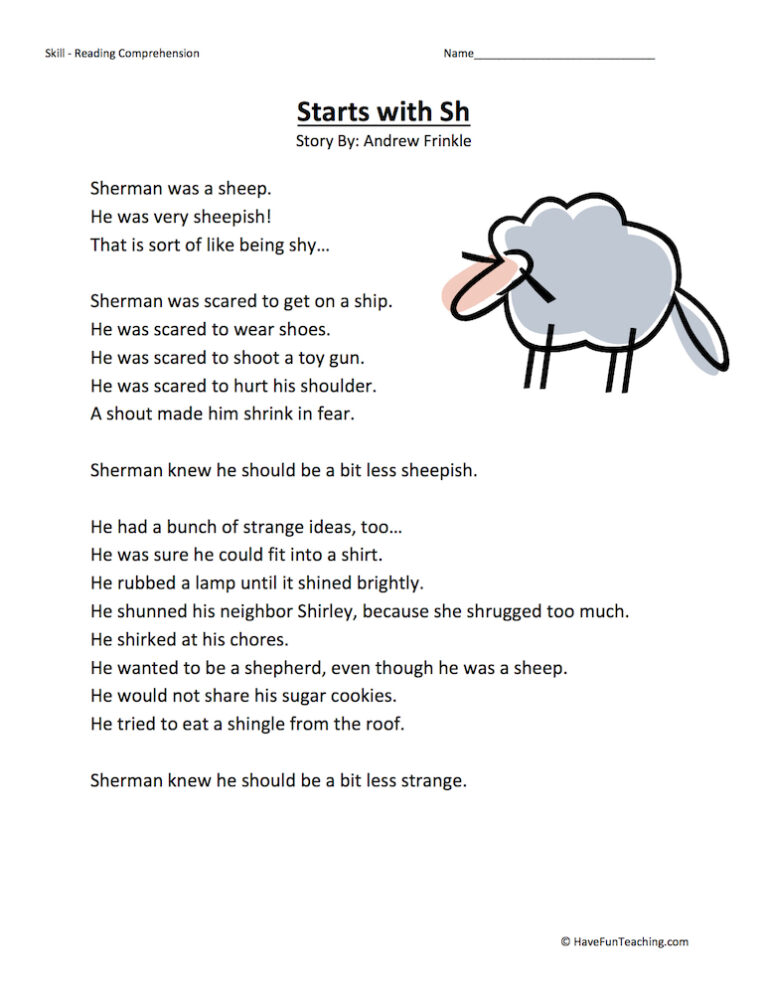
Assessment1st GradeStarts With SH Reading Comprehension Worksheet

This Starts With SH Reading Comprehension Worksheet gives 1st graders a short beach story full of sh words plus five bubble-in questions. An answer key is included, so phonics practice and reading comprehension happen in one no-prep activity.

Assessment
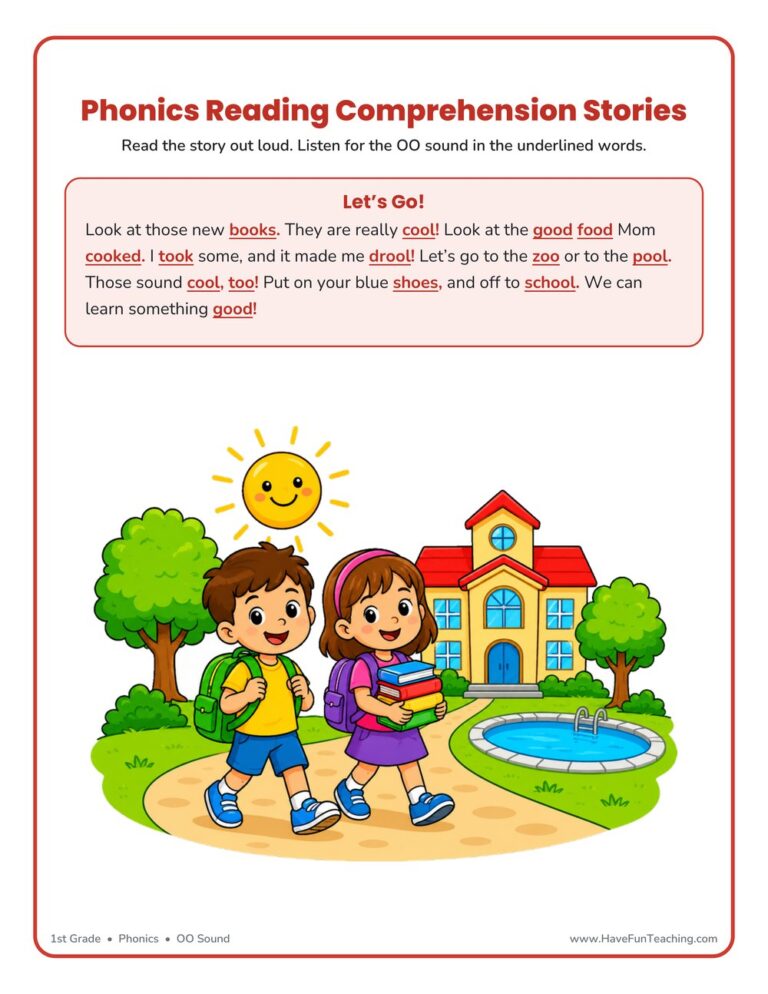
Assessment1st GradeLet's Go Phonics Reading Comprehension Story Worksheet - OO Sound

An OO sound phonics worksheet that pairs a fun “Let’s Go!” story with five comprehension questions for 1st graders. Kids read, spot OO words like zoo and pool, then answer. Answer key included — perfect for no-prep phonics practice.

Assessment
Assessment1st GradeConsonant Sounds Reading Comprehension Workbook

Using Consonant Sounds Reading Comprehension Workbook, students can have all of the passages about different consonant sounds all in one workbook.

Assessment
Assessment1st GradeVowel Sounds Reading Comprehension Workbook

Using this Vowel Sounds Reading Comprehension Workbook, you can have all of the passages about different vowel sounds all in one place.

Assessment
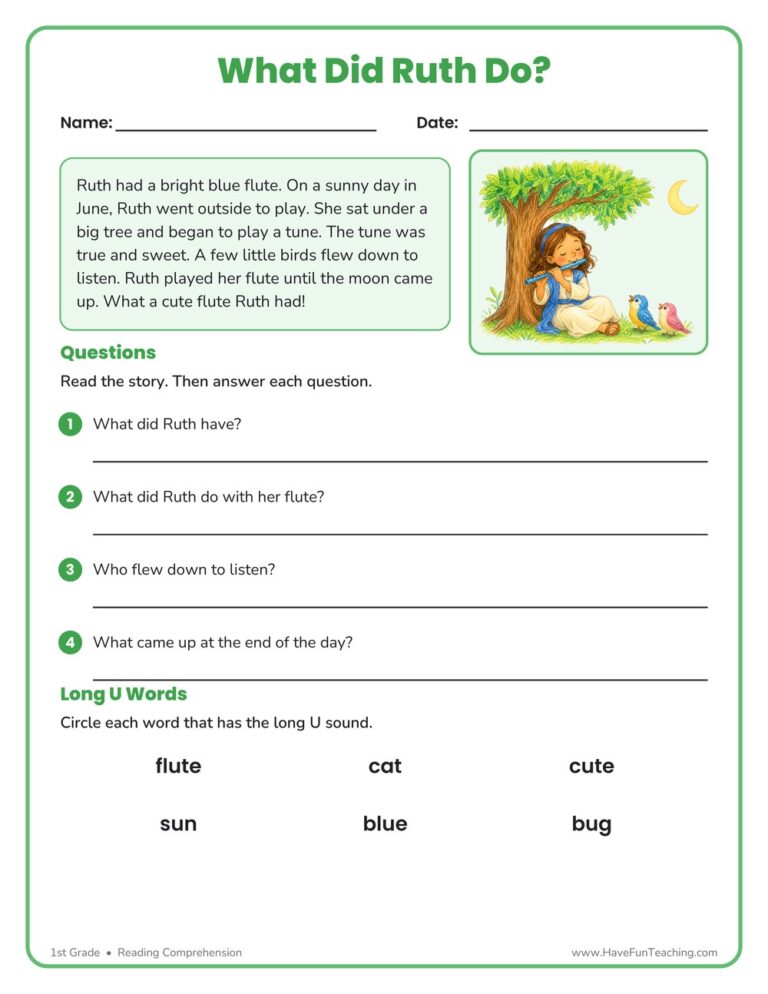
Assessment1st GradeWhat Did Ruth Do? Phonics Reading Comprehension Story Worksheet - Long Vowel U Sound

The What Did Ruth Do? phonics reading comprehension story worksheet helps 1st graders practice the long vowel U sound by reading a short decodable story and answering questions. Includes an answer key for easy, no-prep practice.

Assessment
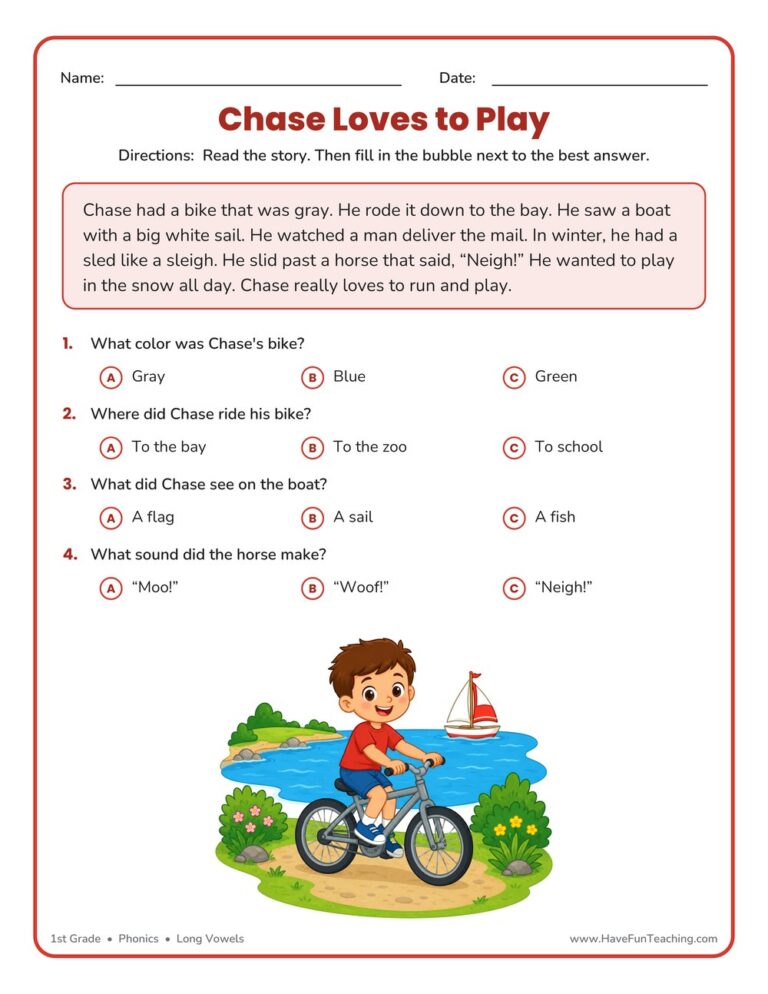
Assessment1st GradeChase Loves to Play Phonics Reading Comprehension Story Worksheet - Long Vowel A Sound

The Chase Loves to Play Phonics Reading Comprehension Story Worksheet - Long Vowel A Sound gives 1st graders a rhyming long A story with comprehension questions. Answer key included for quick, no-prep phonics practice.

Assessment
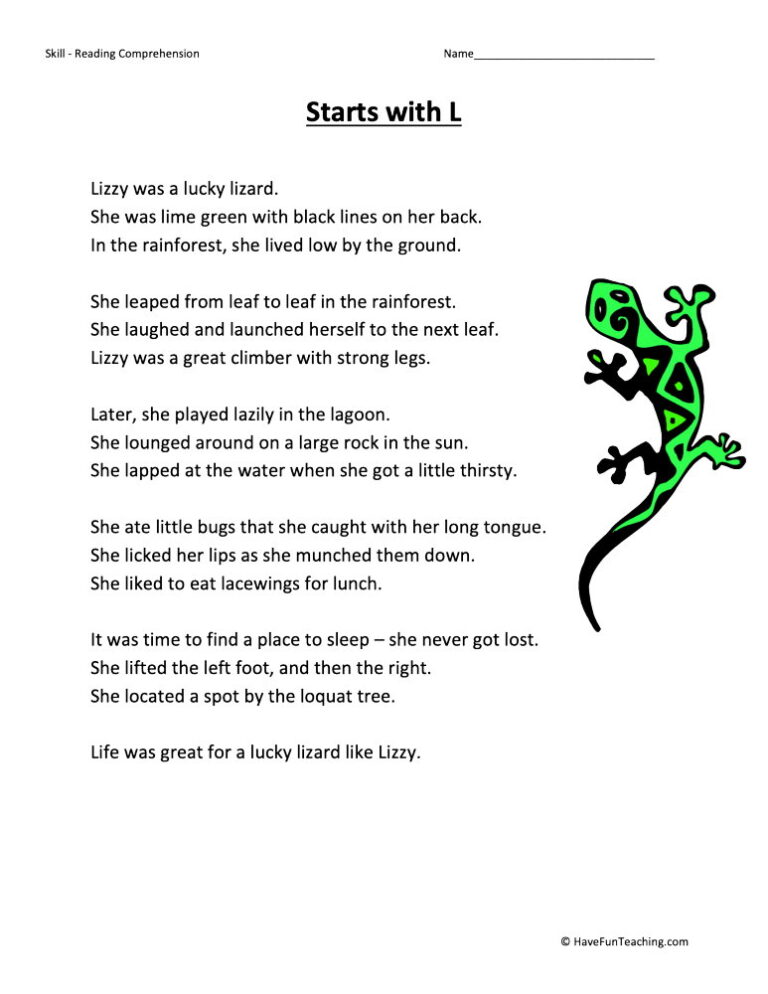
Assessment1st GradeStarts With L Reading Comprehension Worksheet

This Starts With L Reading Comprehension Worksheet gives 1st Grade students a short story packed with beginning-L words plus five questions and an answer key, so phonics and reading practice happen on one page.

From our teachers' playbook

Quick names, clear sounds

What do 1st graders learn about letter recognition?

Most first graders already know their letters, so the work now is speed and accuracy. Kids name every capital and lowercase letter instantly, link each one to its sound, and stop mixing up look-alikes like b and d or p and q. Fast letter naming is tied closely to reading fluency, so this quick review matters. First graders also start to notice that some letters make more than one sound, like the c in cat and city. The click moment is when the b/d mix-up disappears from their writing for good.

How we sharpen letter skills in 1st grade

A few minutes a day keeps letters sharp and catches any gaps from kindergarten.

Capital and lowercase match

Flip a capital card and kids race to say the lowercase partner and its sound. Put any slow letters in a "practice" pile for tomorrow. Quick retrieval builds the speed that helps with reading.

Why it works: a big review of study methods ranked quick self-quizzing among the most powerful ways to remember (Dunlosky and colleagues, 2013).

Alphabet Uppercase and Lowercase Flash CardsTry it withAlphabet Uppercase and Lowercase Flash CardsFlash CardsOpen it →

Revisit old letters

Play a few classic letter songs each week, especially for the letters that cause trouble. Spacing the review out over the year keeps every letter strong.

Why it works: short practice spread over several days beats one long session, according to a large review of learning research (Dunlosky and colleagues, 2013).

Alphabet Songs (Classic Video Collection)Try it withAlphabet Songs (Classic Video Collection)BundlesOpen it →

Spotlight a tricky letter

Pick the letter your class mixes up most, like J, and play its song. Kids write it in the air and then on paper. One focused song can fix a stubborn reversal.

Why it works: a catchy, repeating tune gives the brain a hook to hang words on, so sung text is remembered better (Wallace, 1994).

Letter J Song (Original Music Video)Try it withLetter J Song (Original Music Video)VideosOpen it →

1st grade letter recognition questions

Should a 1st grader still be learning letters?

Most first graders know their letters but still benefit from quick review for speed and accuracy, especially lowercase letters and look-alikes like b and d.

Why does my 1st grader reverse b and d?

Letter reversals are common through about age 7. Teach a memory trick like the "bed" hand shape and practice the two letters on separate days.

How fast should a 1st grader name letters?

Most first graders can name all the letters in random order quickly and without hesitating. If a child is slow, short daily practice usually helps.

How do letter skills connect to reading?

Knowing letters and sounds quickly frees up attention for blending words and understanding text. It's one of the strongest early predictors of reading success.