


Skip to content
Start My 3 Free Days $0 today · cancel anytime

1st Grade Phonics Resources

550 1st grade phonics resources: 292 worksheets, 120 activities, 88 videos and more, covering alphabet, vowels, letter recognition, plus more. How teachers use these

1st Grade Phonics Resources

550 1st grade phonics resources: 292 worksheets, 120 activities, 88 videos and more, covering alphabet, vowels, letter recognition, plus more. How teachers use these

Video
Video1st GradeLetter A Song (Original Music Video)

The Letter A Song (Original Music Video) will help students learn all about the letter by watching a video about letter sounds, vocabulary words, and letter formation.

Video
Video1st GradeAlphabet Song (Original Music Video)

The Alphabet Song (Animated Music Video) will help students learn letter names and sounds by listening to the catchy lyrics and colorful video.

Video
Video1st GradeBaby Shark Alphabet Song (Animated Music Video)

The Baby Shark Alphabet Song (Animated Music Video) will help students learn letter names and sounds by listening to the catchy lyrics and colorful video.

Bundle
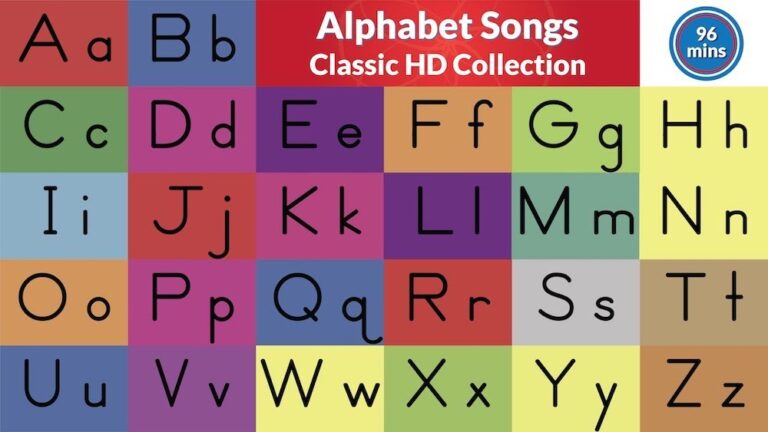
Bundle1st GradeAlphabet Songs (Classic Video Collection)

The Alphabet Songs Collection - Classic will help your kids gain a better understanding of letter names and sounds by listening to these ABC Songs.

Bundle
Bundle1st GradeAlphabet Songs (Animated Video Collection)

The Alphabet Songs Pack - Animated will help support your visual learners gain a better understanding of letter names and sounds by listening to this song.

Worksheet
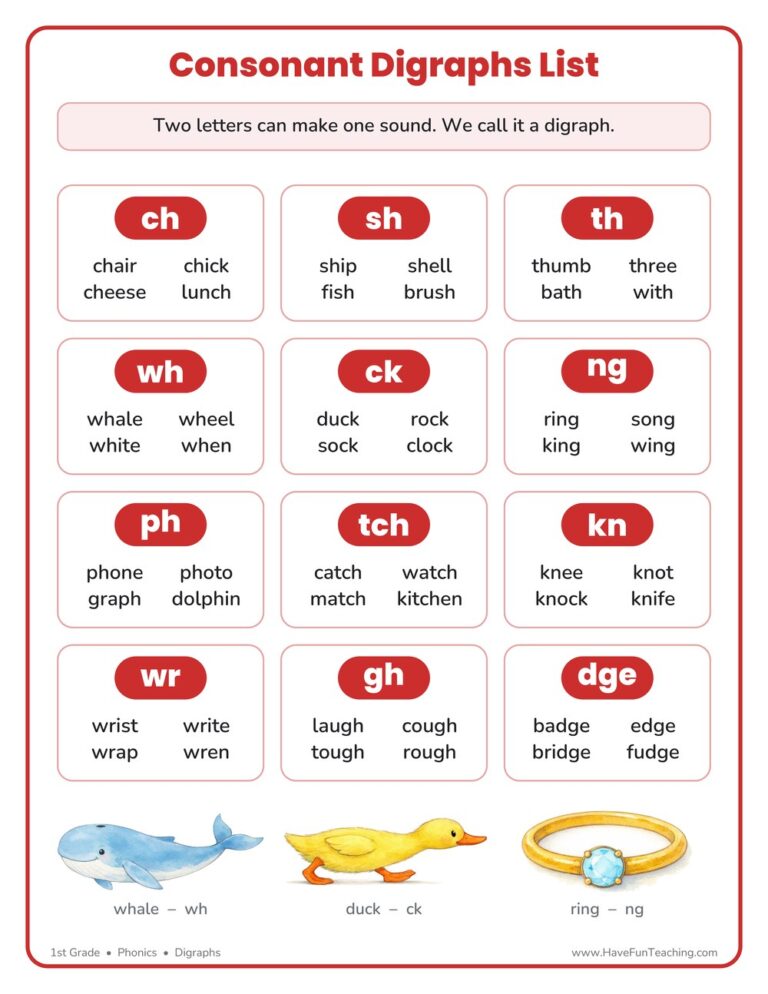
Worksheet1st GradeDigraphs Word List

Keep this Digraphs Word List within reach during 1st Grade phonics. Twelve consonant digraphs and forty-eight example words sit on one print-ready page, so readers can check a spelling in seconds.

Assessment
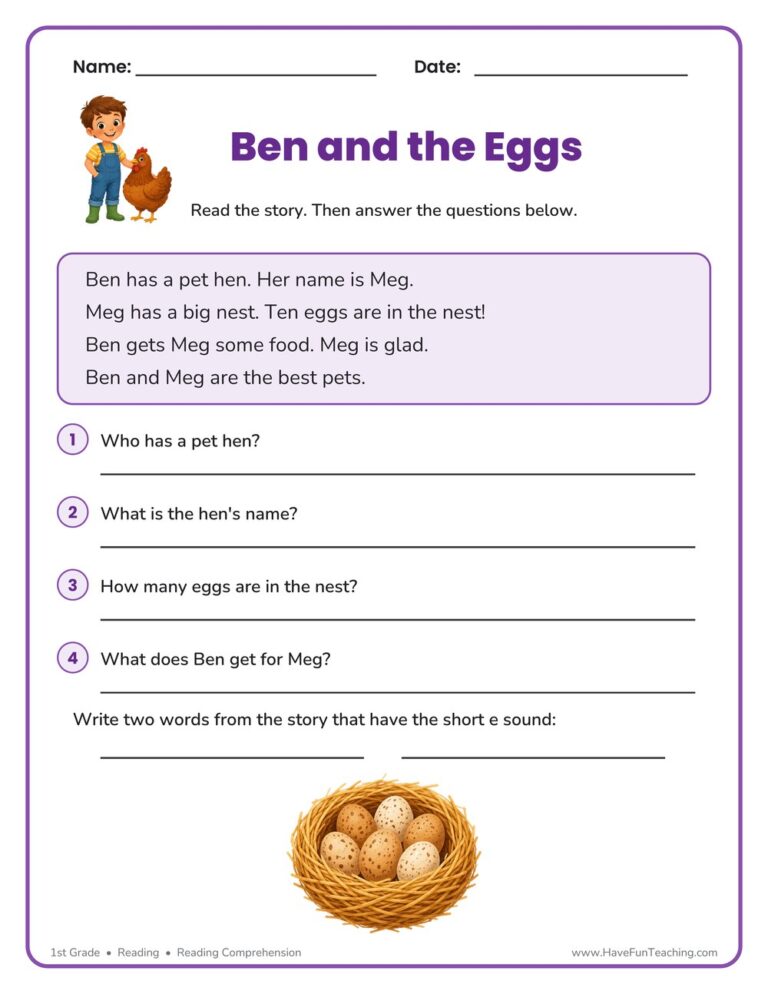
Assessment1st GradeBen and the Eggs Phonics Reading Comprehension Story Worksheet - Short Vowel E Sound

A short vowel E reading comprehension story worksheet starring Ben and his hen. 1st graders read the decodable story and answer questions. Includes a complete answer key — great for quick, no-prep phonics and reading practice.

Game
Game1st GradeShort Vowel Review Game

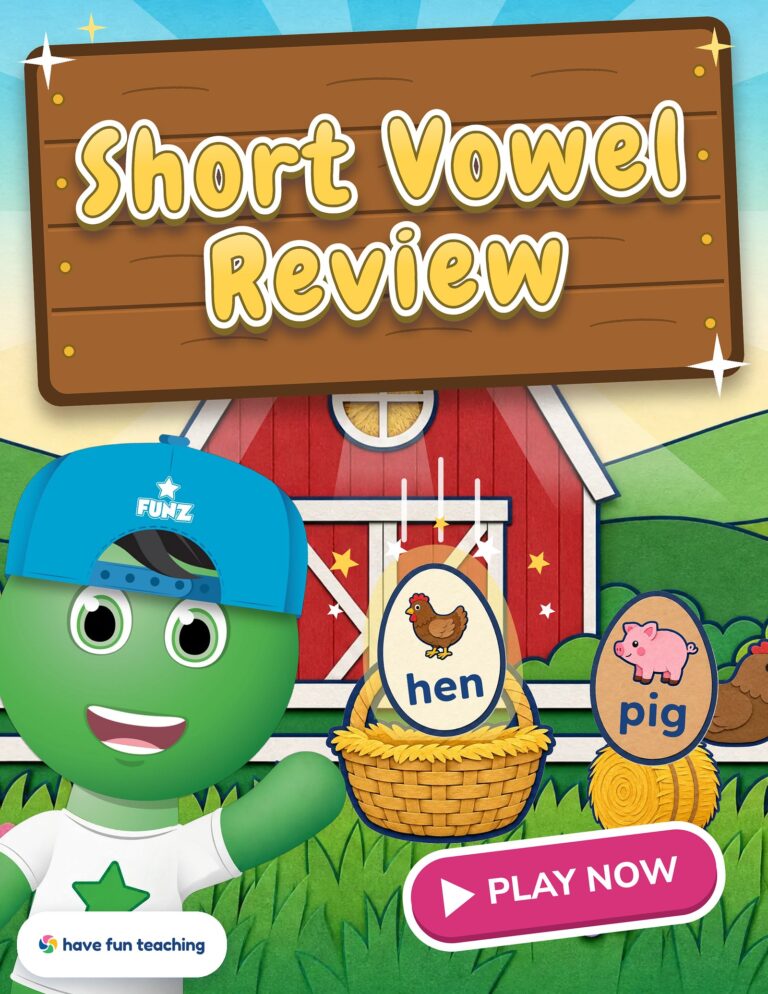
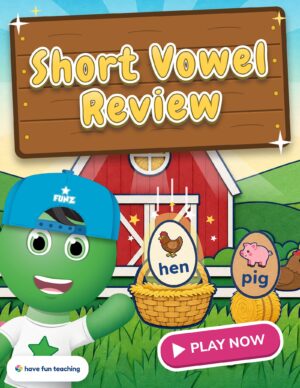
A farm egg-catching short vowel review game where first grade kids catch the eggs with short a, e, i, o and u words like cat, hen, pig, pot and sun. Play online on any phone, tablet, Chromebook or computer.

Activity
Activity1st GradeAlphabet Uppercase Letter Matching Activity

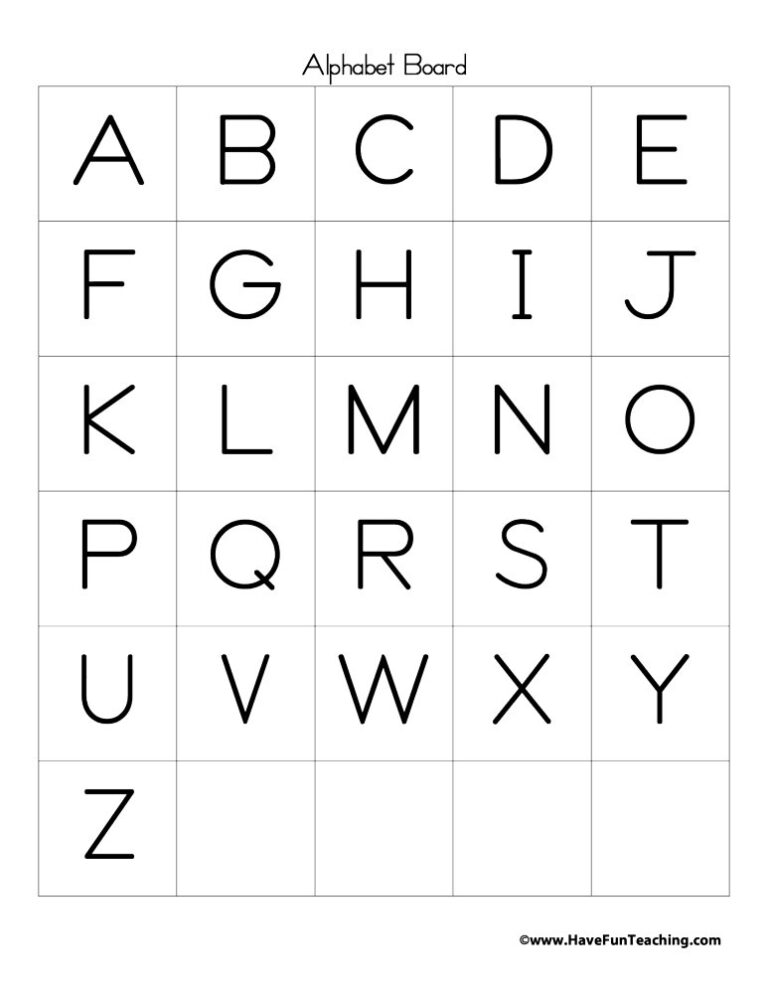
This alphabet uppercase letter matching activity has preschool, kindergarten, and 1st grade children match 26 letter cards to a game board. A practice page and answer key are included for easy letter recognition fun.

Video
Video1st GradeLetter B Song (Original Music Video)

The Letter B Song (Original Music Video) will help students learn all about the letter by watching a video about letter sounds, vocabulary words, and letter formation.

Video
Video1st GradeLetter H Song (Original Music Video)

The Letter H Song (Original Music Video) will help students learn all about the letter by watching a video about letter sounds, vocabulary words, and letter formation.

Video
Video1st GradeLetter G Song (Original Music Video)

The Letter G Song (Original Music Video) will help students learn all about the letter by watching a video about letter sounds, vocabulary words, and letter formation.

Video
Video1st GradeAlphabet Song (Animated Music Video)

The Alphabet Song (Animated Music Video) will help students learn letter names and sounds by listening to the catchy lyrics and colorful video.

Video
Video1st GradeLetter J Song (Original Music Video)

The Letter J Song (Original Music Video) will help students learn all about the letter by watching a video about letter sounds, vocabulary words, and letter formation.

Worksheet
Worksheet1st GradeLong and Short Vowels Worksheet

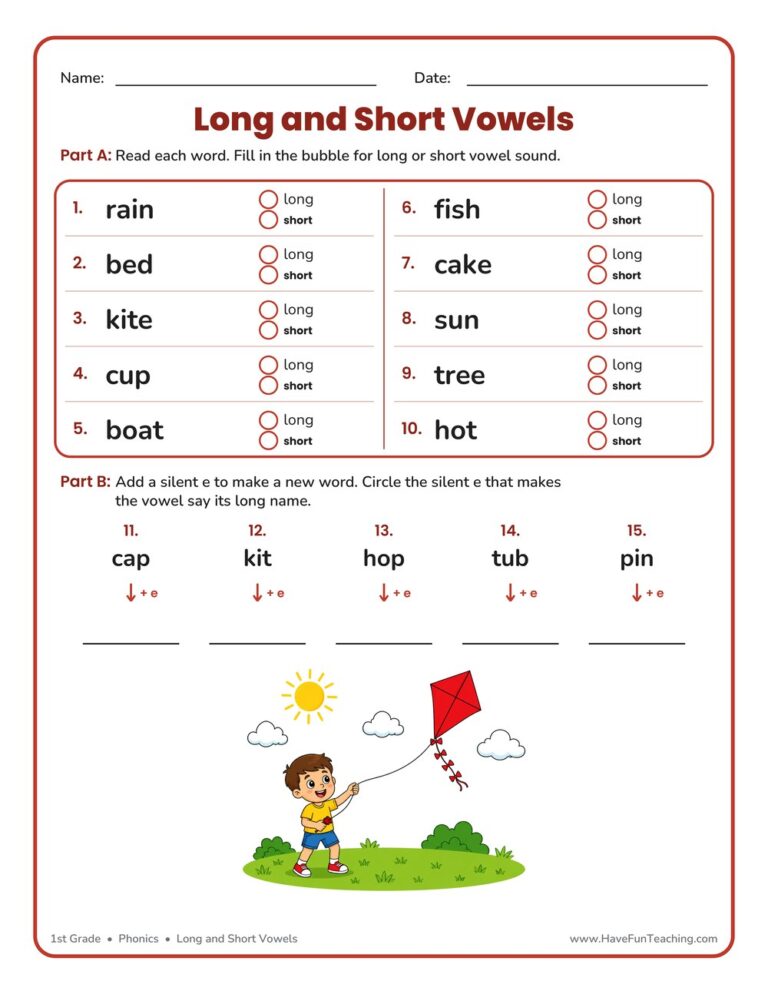
This Long and Short Vowels Worksheet helps 1st graders identify long and short vowel sounds and practice silent-e words. Answer key included, making it perfect for quick, no-prep phonics practice at home or school.

Video
Video1st GradeLetter M Song (Original Music Video)

The Letter M Song (Original Music Video) will help students learn all about the letter by watching a video about letter sounds, vocabulary words, and letter formation.

Video
Video1st GradeLetter E Song (Original Music Video)

The Letter E Song teaches the short E and long E sounds, uppercase and lowercase letter e, vocabulary words with e, and letter E handwriting practice.

Video
Video1st GradeLetter D Song (Original Music Video)

The Letter D Song (Original Music Video) will help students learn all about the letter by watching a video about letter sounds, vocabulary words, and letter formation.

Worksheet
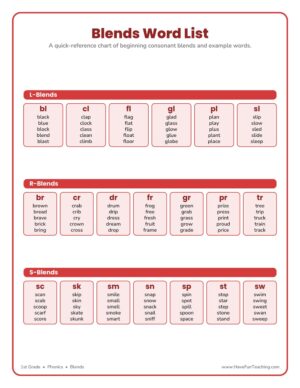
Worksheet1st GradeBlends Word List

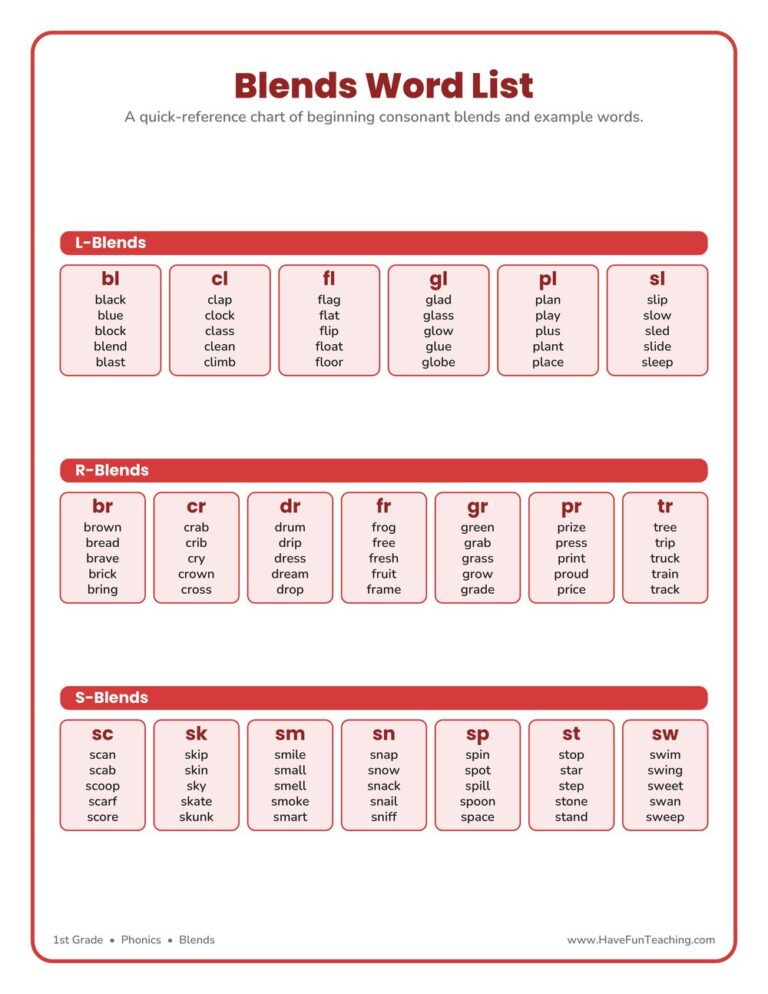
This Blends Word List is a single-page phonics reference chart grouping L-blends, R-blends, and S-blends with example words for each. A clean, no-prep tool that helps 1st graders read and build blend words with confidence.

Video
Video1st GradeLetter I Song (Original Music Video)

The Letter I Song (Original Music Video) will help students learn all about the letter by watching a video about letter sounds, vocabulary words, and letter formation.

From our teachers' playbook

From c-a-t to real reading!

What do 1st graders learn in phonics?

First grade is when sounding out turns into real reading. Kids lock in short vowel words like c-a-t, then add consonant blends (st, fl, gr) and digraphs, where two letters make one sound: sh, ch, th, wh. Next comes the silent e that makes a vowel say its name, cap → cape, plus vowel teams like ee and ai and endings like -ing and -ed. The click comes when a child reads a brand-new word all by themselves and looks up grinning.

How we teach 1st grade phonics

Explicit, a little every day, and always ending with real reading. Here are the moves we never skip.

Tap it, blend it, read it

Kids tap one finger per sound, then sweep their hand to blend: "sh... i... p... ship!" Digraphs get one tap because they make one sound. That little rule clears up a ton of confusion.

Why it works: teaching letter sounds directly and in order is one of the best-supported findings in reading research (National Reading Panel, 2000).
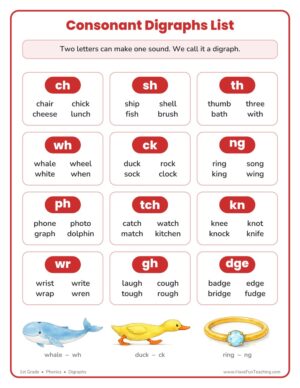
Digraphs Word ListTry it withDigraphs Word ListWorksheetsOpen it →
Game day for short vowels

Short vowels are the backbone of 1st grade, and kids need lots of reps. Turn review into a game so they read dozens of words without noticing. Listen in to see which vowel sounds still get mixed up.

Why it works: playful practice with a clear goal keeps kids practicing longer, and simple learning games have been shown to build real skills (Ramani and Siegler, 2008).

Short Vowel Review GameTry it withShort Vowel Review GameGamesOpen it →

Mix long and short

Once silent e is in play, give kids mixed lists: hop, hope, kit, kite. Making them decide every time is what builds real readers, not just pattern copiers.

Why it works: shuffled practice teaches kids to choose the right strategy, not just repeat one, and it improved test scores in research (Rohrer and Taylor, 2007).

Long and Short Vowels WorksheetTry it withLong and Short Vowels WorksheetWorksheetsOpen it →

1st grade phonics questions

What phonics skills should a 1st grader know?

By the end of 1st grade, kids should read short vowel words, consonant blends, digraphs (sh, ch, th, wh), silent e words and common vowel teams like ee, ea, ai and oa. They should also read words with -s, -ed and -ing endings and simple two-syllable words.

What order should 1st grade phonics be taught in?

Most programs review short vowels and CVC words first, then blends and digraphs, then silent e (CVCe). Vowel teams, r-controlled vowels (ar, or, er) and endings usually come later in the year.

How long should phonics practice be each day?

In class, 20 to 30 minutes of focused phonics is typical. At home, 10 minutes of reading words and a short decodable book is plenty. Consistency matters more than length.

My 1st grader guesses words from pictures. What should I do?

Cover the picture and ask them to look at the letters and sound the word out. Praise every attempt to decode. Decodable books, where most words follow taught patterns, make this much easier.