
Skip to content
Start My 3 Free Days $0 today · cancel anytime

4th Grade Prefixes Resources

5 4th grade prefixes resources: 2 worksheets, 1 game, 1 flash card and more. How teachers use these

4th Grade Prefixes Resources

5 4th grade prefixes resources: 2 worksheets, 1 game, 1 flash card and more. How teachers use these

Game
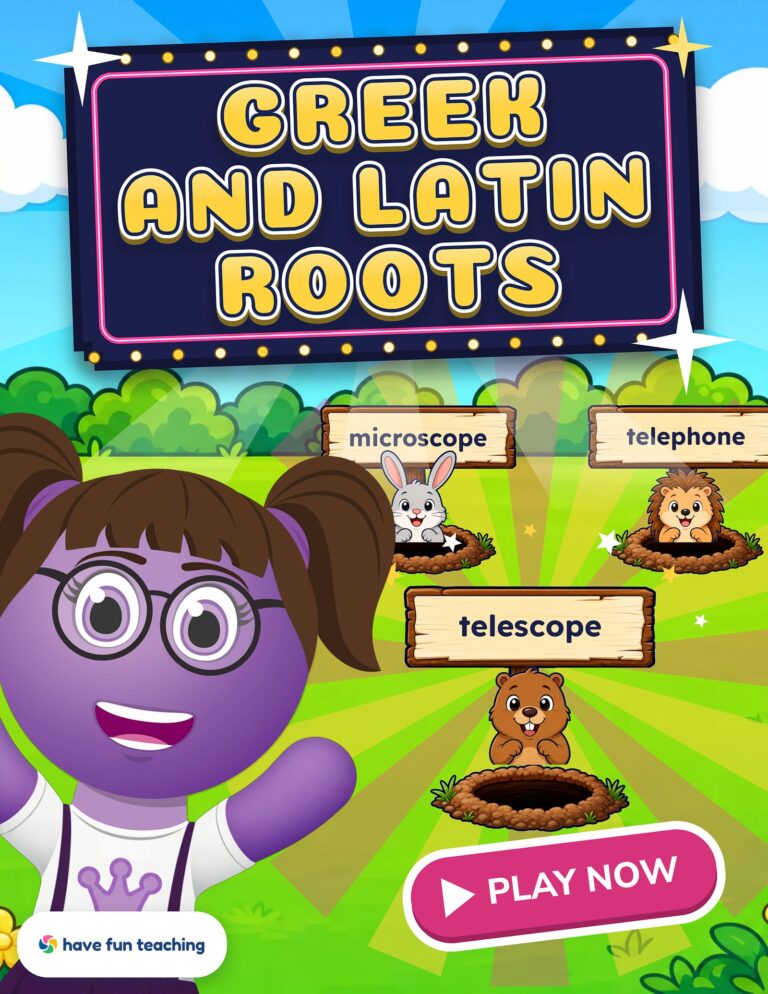
Game4th GradeGreek and Latin Roots Game

A retro arcade game where 4th grade kids read each clue and tap the critter holding the matching word, using Greek and Latin roots like tele, scope, port and graph. Play online on any phone, tablet, Chromebook or computer.

Flash Cards
Flash Cards4th GradePrefix Flash Cards

These prefix flash cards help kindergarten to 4th grade students learn 24 common prefixes, their meanings and an example word for each. Fold-over cards, a practice page and an answer key are included.

Worksheet
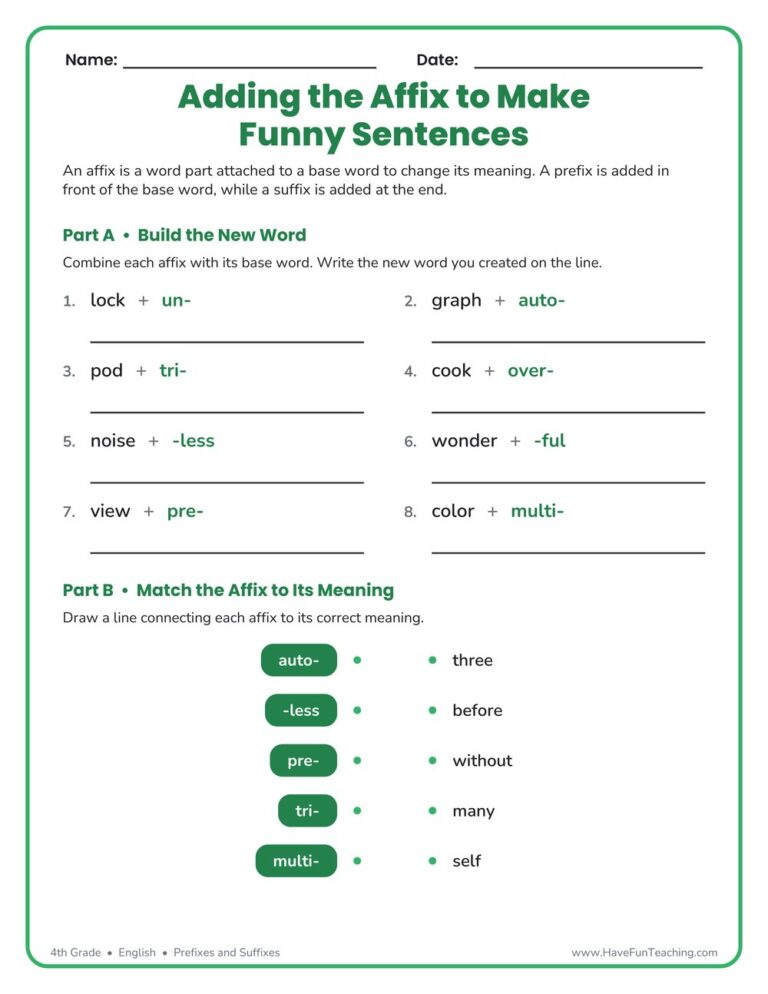
Worksheet4th GradeAdding the Affix to Make Funny Sentences Worksheet

Fourth graders combine base words with prefixes and suffixes, match each affix to its meaning, and write silly sentences in this Adding the Affix to Make Funny Sentences Worksheet. Answer key included for quick, no-prep practice.

Worksheet
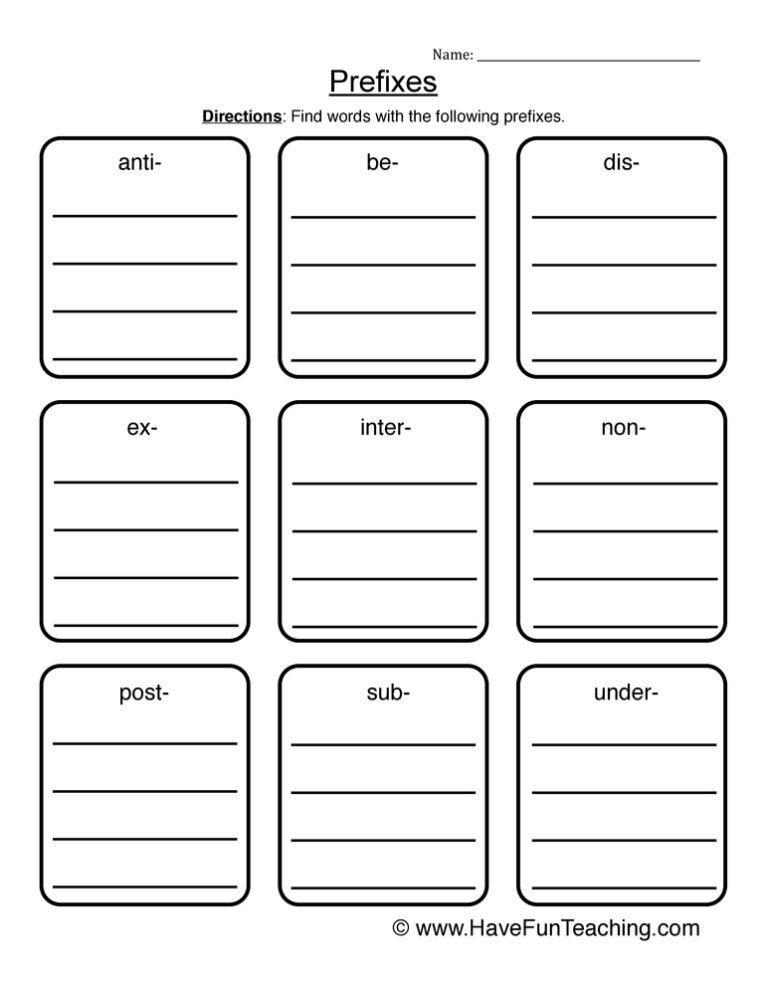
Worksheet4th GradePrefix List Worksheet

This prefix list worksheet has 4th graders remove prefixes like anti-, dis-, sub- and under- to find base words, then match words to meanings. An answer key makes checking quick.

Activity
Activity4th GradeBarnyard Prefix Matching Activity

This barnyard prefix matching activity has 2nd to 4th Grade students sort un-, re-, pre- and mis- word cards into fence pens by meaning. Answer key included.

From our teachers' playbook

Tiny word parts, giant word power

What do 4th graders learn about prefixes?

In 4th grade, prefixes become a real decoding tool. Kids learn that a prefix is a word part added to the front of a base word that changes its meaning: un + happy = unhappy, re + write = write again. They master the big ones (un-, re-, dis-, mis-, pre-, non-) and start meeting Greek and Latin parts like tri- and sub-. The click moment comes when a student hits a brand-new word like misplace and figures it out alone by peeling off the prefix.

Our favorite ways to teach prefixes

Prefixes stick when kids take words apart and put them back together. These three moves do exactly that.

Roots and prefixes game day

Put the Greek and Latin roots game out in a center and let teams race to build real words from parts. Before they play, model one round out loud: "tri means three, cycle means wheel, so tricycle is a three-wheeler!" Kids love being word detectives.

Why it works: in a well-known study, a few short sessions of a simple number board game measurably boosted young children's number skills (Ramani and Siegler, 2008).
Greek and Latin Roots GameTry it withGreek and Latin Roots GameGamesOpen it →

Flash a prefix, name the meaning

Hold up a prefix card and give kids five seconds to call out its meaning and one word that uses it. Keep a tally of the prefixes they miss and start tomorrow with those. A two-minute round at the door works wonders.

Why it works: a big review of study methods ranked quick self-quizzing among the most powerful ways to remember (Dunlosky and colleagues, 2013).

Prefix Flash CardsTry it withPrefix Flash CardsFlash CardsOpen it →

Make it silly, make it stick

Have kids add a prefix to a base word and then write a funny sentence that proves the new meaning, like "The dog was so disorganized it buried the remote." Silly sentences force them to think about what the word now means.

Why it works: kids understand an idea best when they touch it, then draw it, then write it, the order the U.S. Department of Education recommends for elementary math.

Adding the Affix to Make Funny Sentences WorksheetTry it withAdding the Affix to Make Funny Sentences WorksheetWorksheetsOpen it →

Questions teachers and parents ask about prefixes

What is a prefix in 4th grade?

A prefix is a group of letters added to the beginning of a base word that changes its meaning. In "rewrite," re- means again. Fourth graders use prefixes to figure out unfamiliar words while they read.

What are the most common prefixes to teach first?

Start with un-, re-, in-, dis-, and mis-. Those few show up in a huge share of prefixed words kids meet in books, so they pay off right away.

What is the difference between a prefix and a suffix?

A prefix goes at the front of a word and a suffix goes at the end. Un- in "unkind" is a prefix, and -ness in "kindness" is a suffix.

How can I practice prefixes at home?

Play a quick car game: say a word like "happy" and have your child add a prefix and explain the new meaning. Point out prefixes on cereal boxes and signs too, like "preheat" or "nonstick."



