
Skip to content
Start My 3 Free Days $0 today · cancel anytime

4th Grade Experiments Resources

3 4th grade experiments resources: 2 worksheets and 1 activity. How teachers use these

4th Grade Experiments Resources

3 4th grade experiments resources: 2 worksheets and 1 activity. How teachers use these

Worksheet
Worksheet4th GradeScientific Method Worksheet

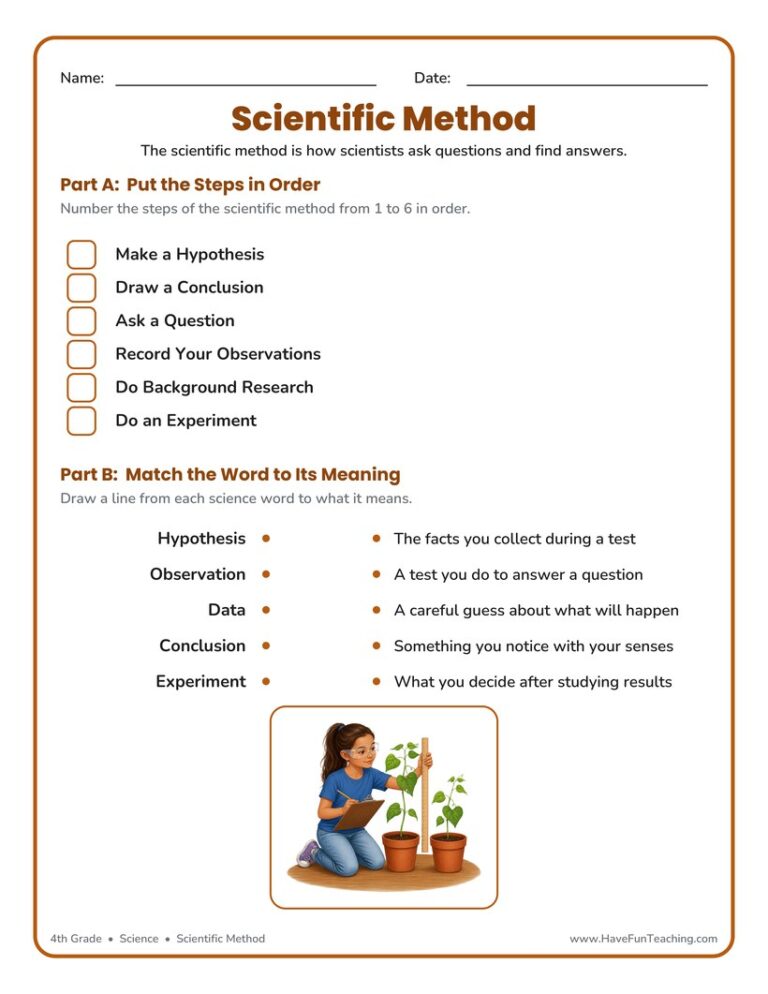
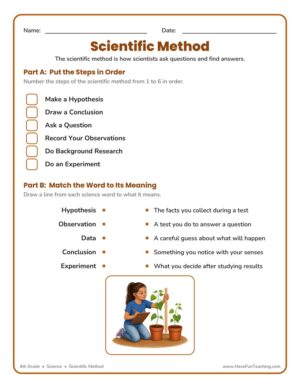
This Scientific Method Worksheet helps 4th graders order the six steps of an investigation, match key science words, and analyze a real bean-plant experiment. Answer key included — a no-prep way to build real science-thinking skills.

Worksheet
Worksheet4th GradeScientific Observation Worksheet

This scientific observation worksheet gives 4th graders practice sorting observations from inferences, recording what they notice, and judging a science note. Answer key included for quick, no-prep science practice.

Activity
Activity4th GradeHow Much Will It Absorb Diaper STEAM Activity

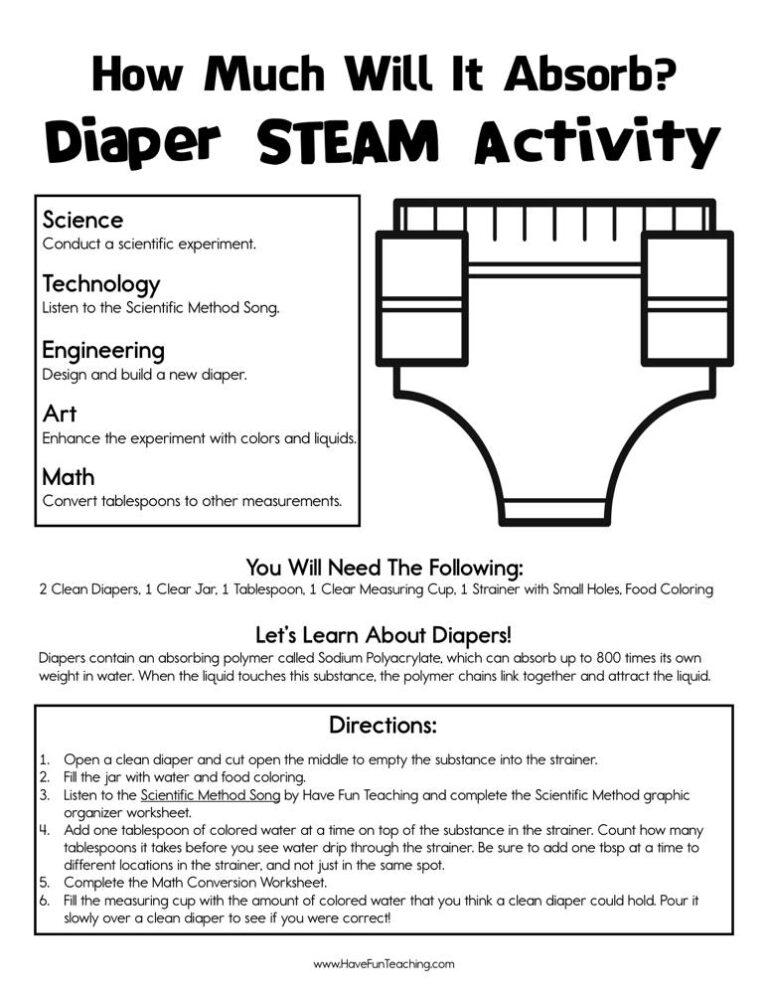
Run the How Much Will It Absorb Diaper STEAM Activity as a real lab for 4th to 6th grade: test diaper gel, convert capacity units, and design a diaper, with an answer key included.

From our teachers' playbook

Ask, test, find out!

What do 4th graders learn about experiments?

In 4th grade, kids learn to run a fair test. They ask a question, make a prediction, change just one variable and keep everything else the same. If they want to know which paper towel absorbs the most, every towel gets the same amount of water. They record careful observations, measure with tools, and use evidence to explain what happened. The click moment comes when a group's results look strange and they figure out they changed two things at once.

Our favorite ways to teach experiments

Experiments are about thinking, not just doing. These moves keep kids thinking like scientists.

Scientific method on one page

Before every experiment, kids fill out the steps: question, hypothesis, materials, procedure, results, conclusion. Using the same page every time makes the process a habit.

Why it works: going from real objects to pictures to symbols is a core recommendation of the U.S. Department of Education's elementary math guide.
Scientific Method WorksheetTry it withScientific Method WorksheetWorksheetsOpen it →

Spot the unfair test

Describe a test where two things changed, like different plants AND different amounts of water. Kids explain what's unfair and how to fix it. This builds the idea of variables fast.

Why it works: a big review of study methods ranked quick self-quizzing among the most powerful ways to remember (Dunlosky and colleagues, 2013).

Scientific Observation WorksheetTry it withScientific Observation WorksheetWorksheetsOpen it →

Observe like a scientist

Teach kids to write what they actually see, hear and measure, not what they think. "The water turned blue in 3 minutes" beats "It worked." Practice with a quick daily observation.

Why it works: showing first, practicing together, then letting kids try alone is the "gradual release" model teachers have relied on for decades (Pearson and Gallagher, 1983).

Scientific Observation WorksheetTry it withScientific Observation WorksheetWorksheetsOpen it →

Questions parents and teachers ask about experiments

What experiments are good for 4th grade?

Absorption tests, plant growth tests, ramp and ball tests, and egg drops all work well. The key is changing one variable and measuring results.

What is a variable in a 4th grade experiment?

A variable is something that can change. In a fair test, kids change one variable on purpose and keep the others the same.

What are the steps of the scientific method for kids?

Ask a question, make a hypothesis, plan and do the test, record results, and make a conclusion based on evidence.

How do I make experiments safe at home?

Use kitchen-safe materials, work with an adult, and wear goggles for anything that splashes. Many great tests just use water, paper and a timer.



