

Scientific Observation Worksheet
This scientific observation worksheet gives 4th graders practice sorting observations from inferences, recording what they notice, and judging a science note. Answer key included for quick, no-prep science practice.
$6.97
Or free with a membership — members pay $3.33/mo for all 10,000+ resources. See plans
Want this one free?
Tell us where to send it and it’s yours — no card, no catch.
One free resource per teacher. We’ll also send free teaching ideas each week — unsubscribe anytime.
Teaching is easier with a membership
Unlimited printables, games & videos for PreK–6th — for your classroom or homeschool. Cancel anytime.
Start your 3-day free trial$0 today · cancel anytime · Instant access to 10,000+ resources
About this resource
Description
Scientific observation is the first step in the scientific method, and it is a skill every young scientist has to practice on purpose. An observation is something you notice directly with your senses — a color, a shape, a sound, a measurement — while an inference is the explanation your brain adds on top of it. Fourth graders blend the two together constantly, writing “the plant is thirsty” when what they actually saw was drooping leaves. This scientific observation worksheet slows that moment down and gives students a clear, repeatable way to separate what they saw from what they think it means.
This science observation worksheet for 4th grade is built in three short parts that move from recognizing to producing to judging. In Part A, students read five statements about a bean plant investigation and fill in the bubble for O or I to label each one an observation or an inference. In Part B, they study an illustration of two students examining a potted plant at a science table, then record one thing they can see, one detail about size or shape, and one inference of their own. Part C shows two science notebook entries about the same plant and asks students to fill in the bubble beside the better observation and explain their reasoning on the line. Print it as a warm-up before a lab, as an exit ticket after one, or as a quick review before a science assessment.
What’s Included
- 1 print-ready PDF worksheet
- Answer key
- 5 observation-or-inference bubble items, 3 written observation prompts, and 1 explain-your-choice question
Three things make this scientific observation worksheet stick. First, it separates recognizing from producing: students label someone else’s statements before they have to write their own, so the harder task is scaffolded instead of dropped on them cold. Second, the illustration gives every student the same thing to observe, so a class can compare answers and discover that strong observations are specific and checkable while inferences are not. Third, the last question asks students to defend a choice in writing, which is exactly the kind of short constructed response science assessments ask for.
Keep the practice going after the page is finished. Set a mystery object on a tray and have partners write three observations before anyone is allowed to guess what it is. Start a class observation journal for a classroom plant, a window, or the weather, and add one measured detail to it each day. Play “observation or inference” out loud with photographs from a nature magazine. Ask students to rewrite a weak note — “the rock is cool” — into one a scientist could actually use. Each of these builds the same habit the worksheet starts.
Related Resources
What teachers say
Reviews
You must be logged in to post a review.
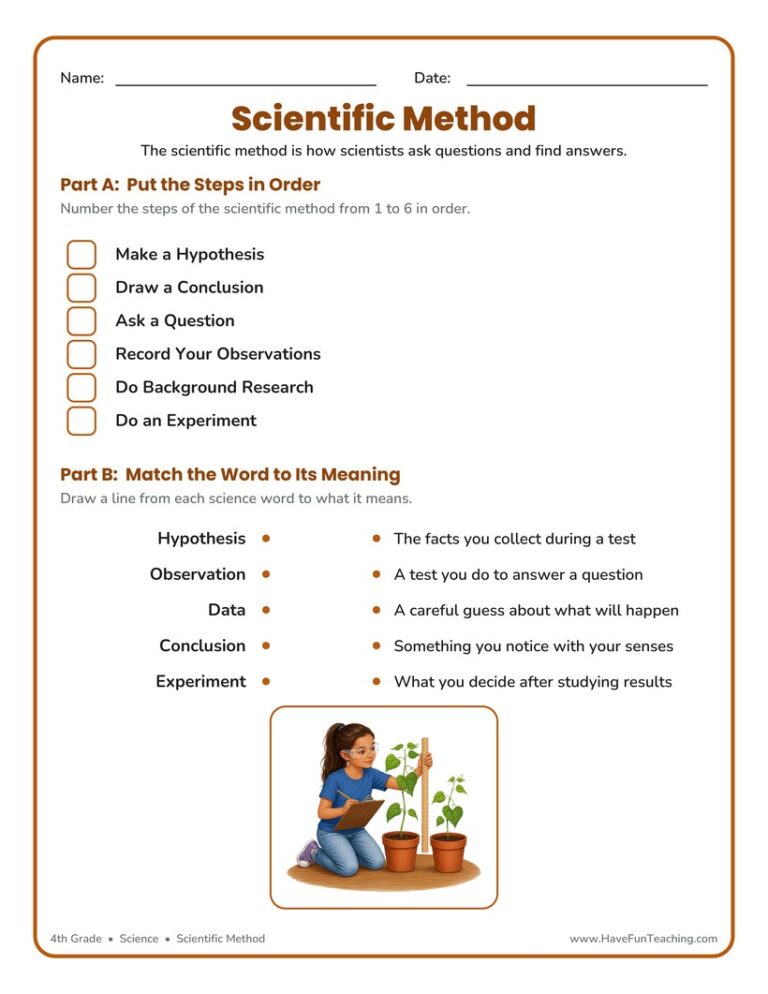
This Scientific Method Worksheet helps 4th graders order the six steps of an investigation, match key science words, and analyze a real bean-plant experiment. Answer key included — a no-prep way to build real science-thinking skills.
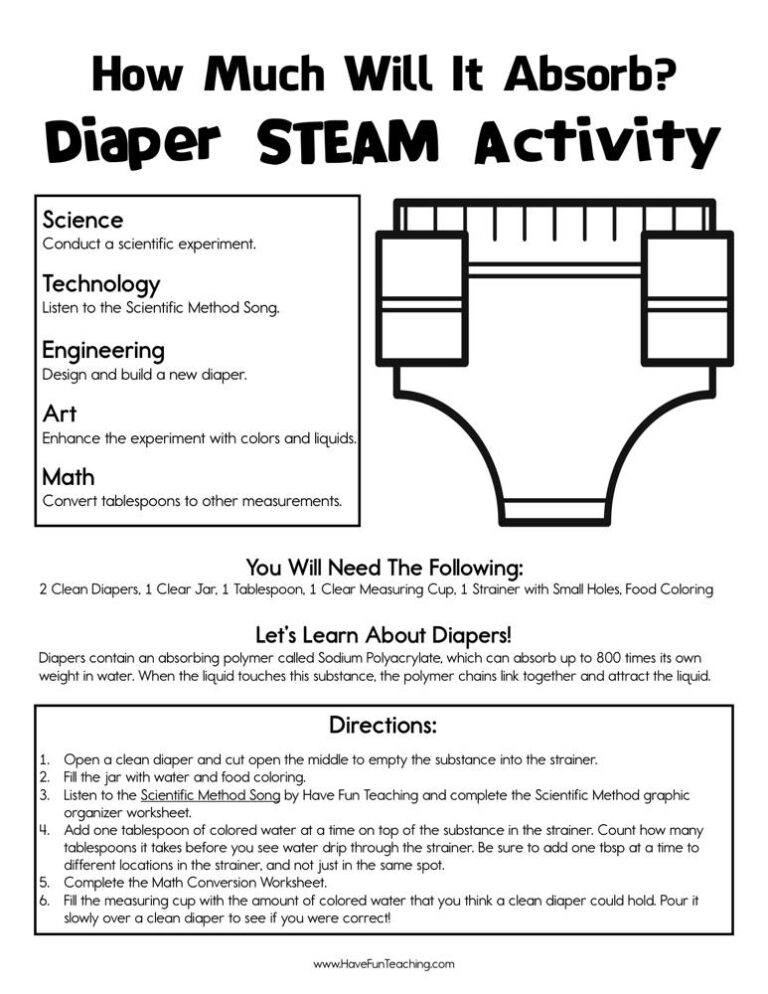
This How Much Will It Absorb? Diaper STEAM Activity includes all the learning components: Science, Technology, Engineering, Art, and Math.
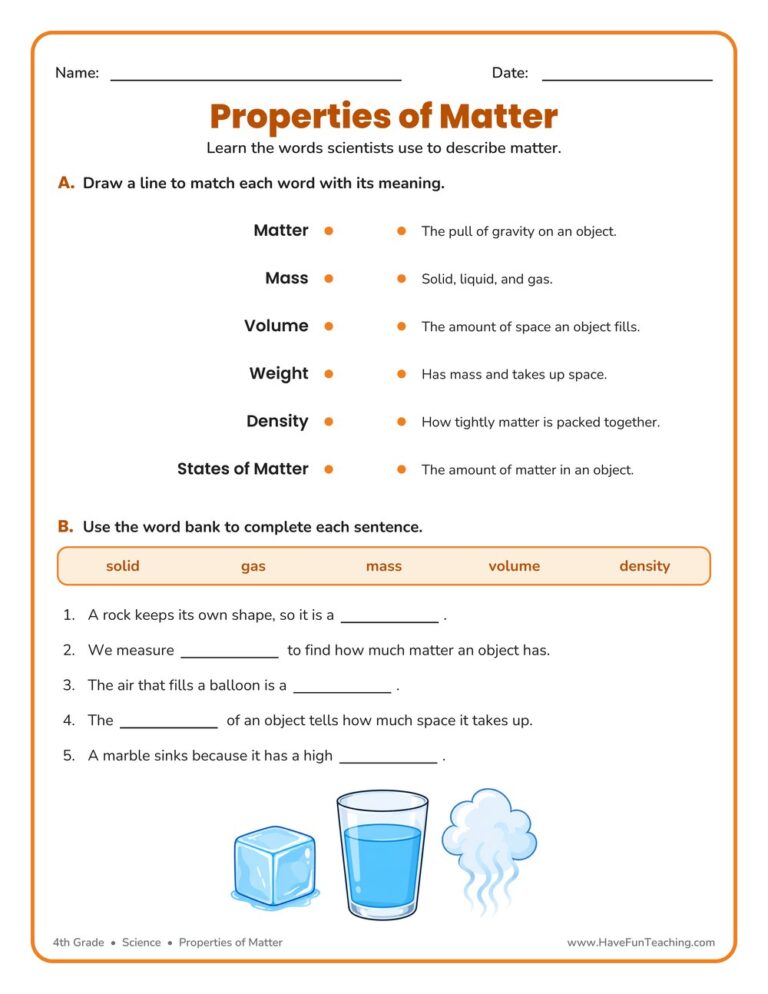
This Properties of Matter Definitions Worksheet helps 4th grade students match key science terms—matter, mass, volume, weight, and density—to their meanings and complete sentences about solids and gases. Answer key included for fast, no-prep science practice.
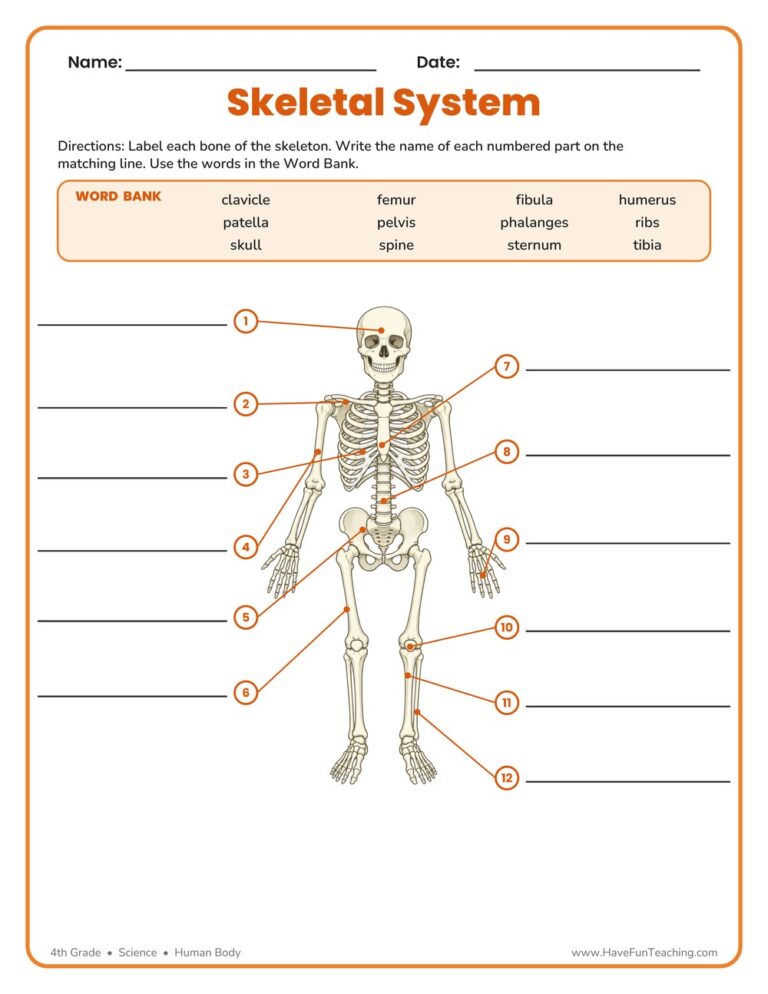
This Label Skeletal System Worksheet lets 4th grade students identify and name twelve major bones on a clear skeleton diagram using a word bank. An answer key is included for quick, no-prep human body practice.
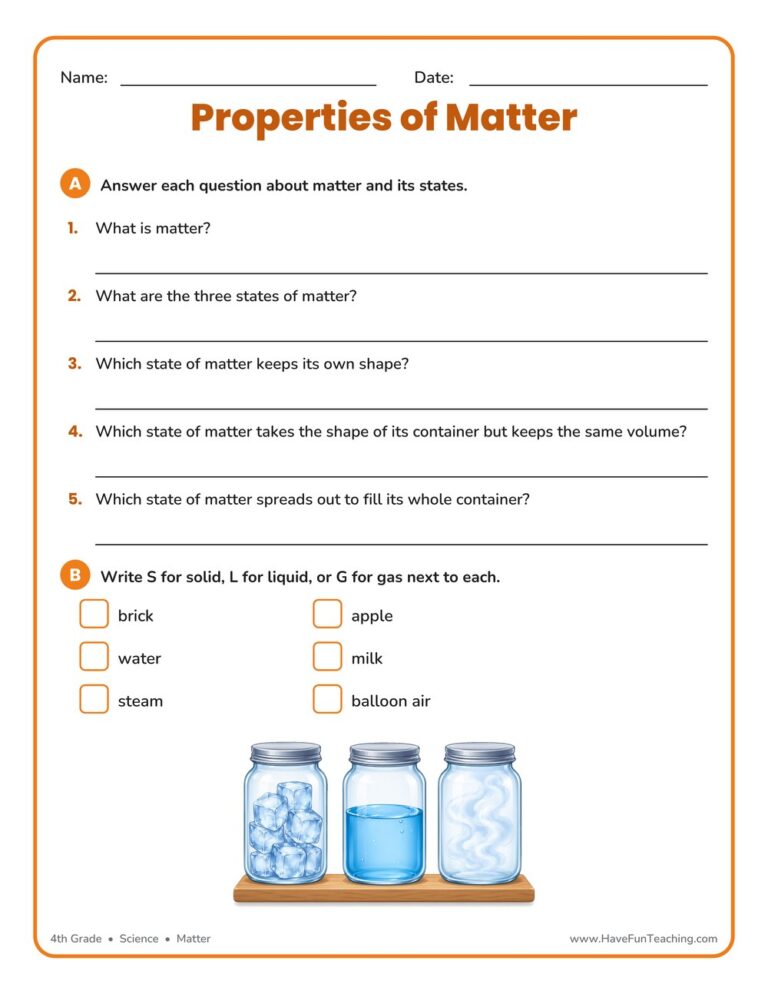
This 4th Grade Properties of Matter Review Worksheet has students answer key questions about matter and sort everyday objects as solid, liquid, or gas. Answer key included — an easy, no-prep way to review states of matter.
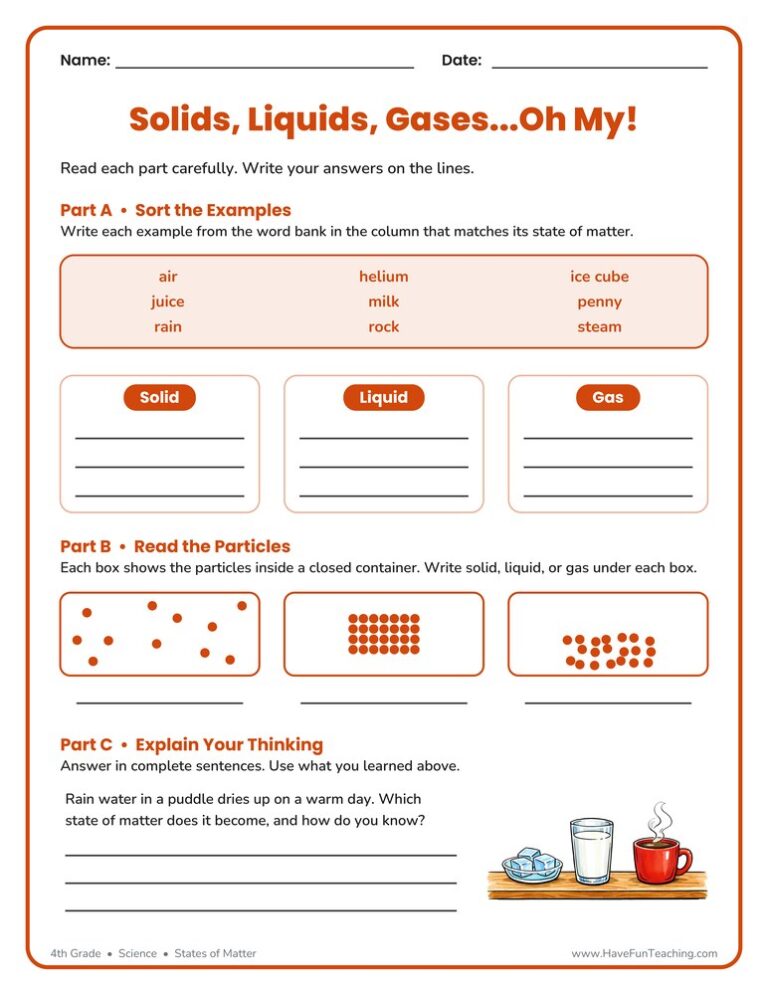
Sort nine everyday examples, label three particle diagrams, and explain a change of state with this states of matter examples worksheet for 4th grade. An answer key is included, so checking work takes seconds.

The Matter Song teaches all about matter and the states of matter. With this states of matter song, students learn about solid, liquid, and gas, as well as the phases of matter, properties of matter, physical changes, chemical changes, and so much more. Matter has mass and takes up space.…

While listening the Scientific Method Song (Animated Music Video), students learn about seven steps of the scientific method while listening to a catchy song.
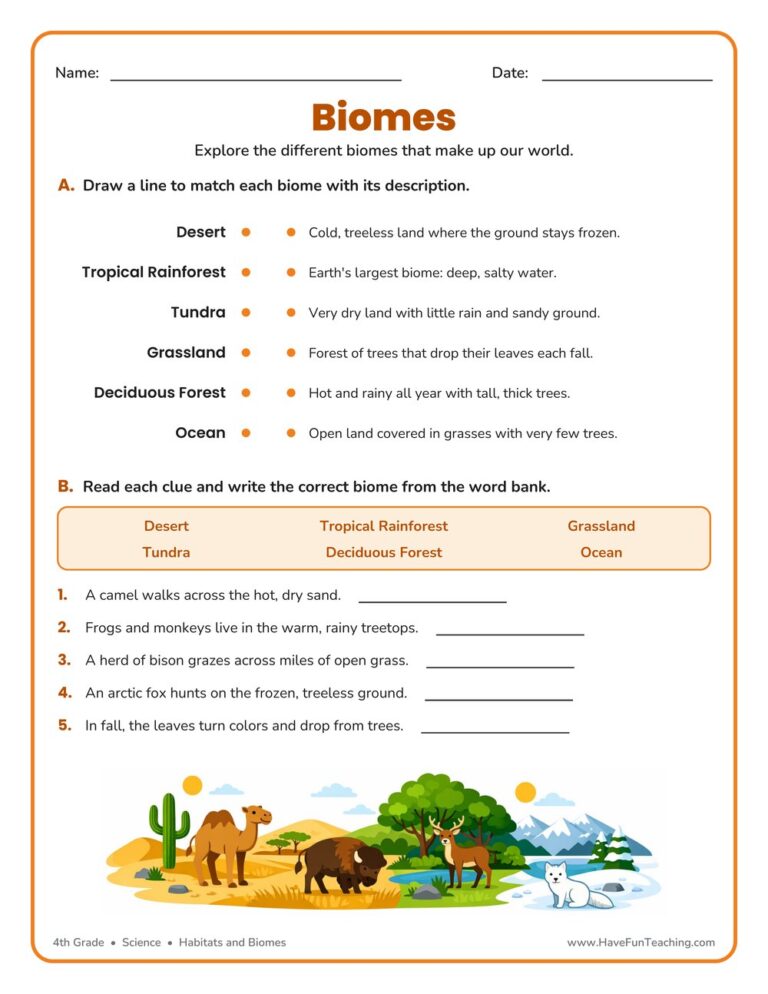
This Biomes Worksheet helps 4th grade students match major biomes to their climates and identify each one from real-world clues. Includes an answer key for fast, no-prep science practice at home or school.

A layers of the Earth definition worksheet for 4th grade where students match each layer to its description and label a cross-section diagram. Answer key included for quick, no-prep earth science practice.

This Muscular System Research Worksheet has 4th graders name the three muscle types, sort voluntary and involuntary actions, and explain their thinking. Answer key included, so checking work takes seconds.
These Star Cut Outs will quickly give you templates for classroom decoration or student activities.
Reviews
There are no reviews yet