Skip to content
Start My 3 Free Days $0 today · cancel anytime

4th Grade Plants Resources

5 4th grade plants resources: 4 worksheets, 2 assessments and 1 activity. How teachers use these

4th Grade Plants Resources

5 4th grade plants resources: 4 worksheets, 2 assessments and 1 activity. How teachers use these

Worksheet
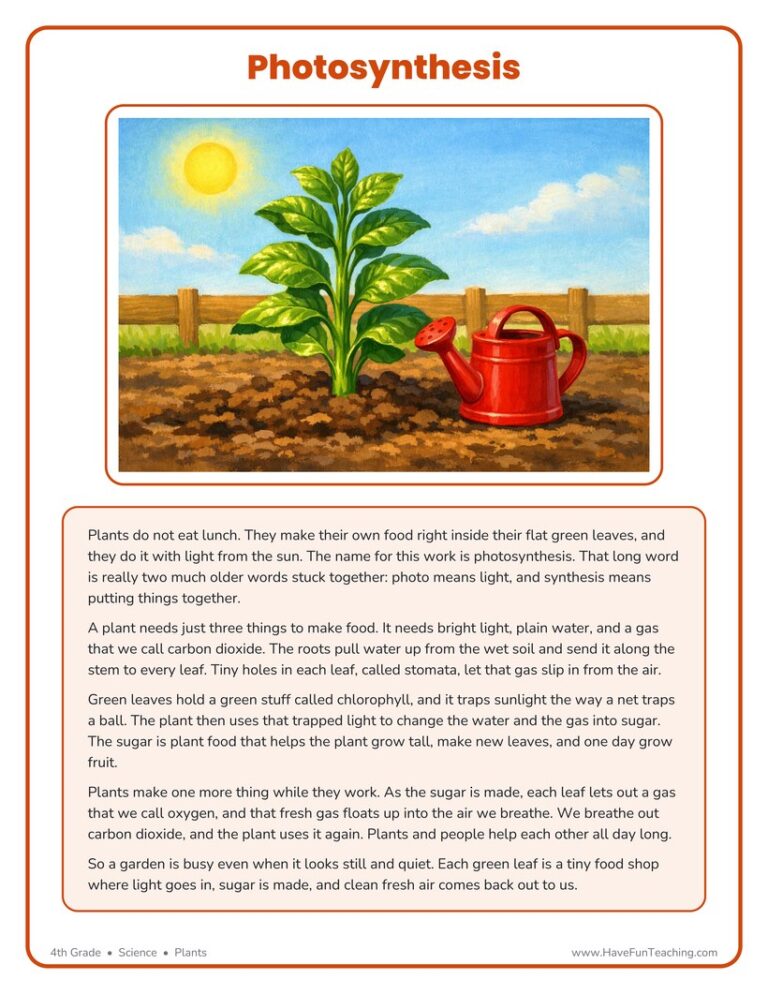
Worksheet4th GradePhotosynthesis Reading Worksheet

A 4th grade photosynthesis reading worksheet with an original nonfiction passage about how leaves make food, plus multiple choice, word bank, and written response questions. Answer key included for fast, no-prep science review.

Assessment
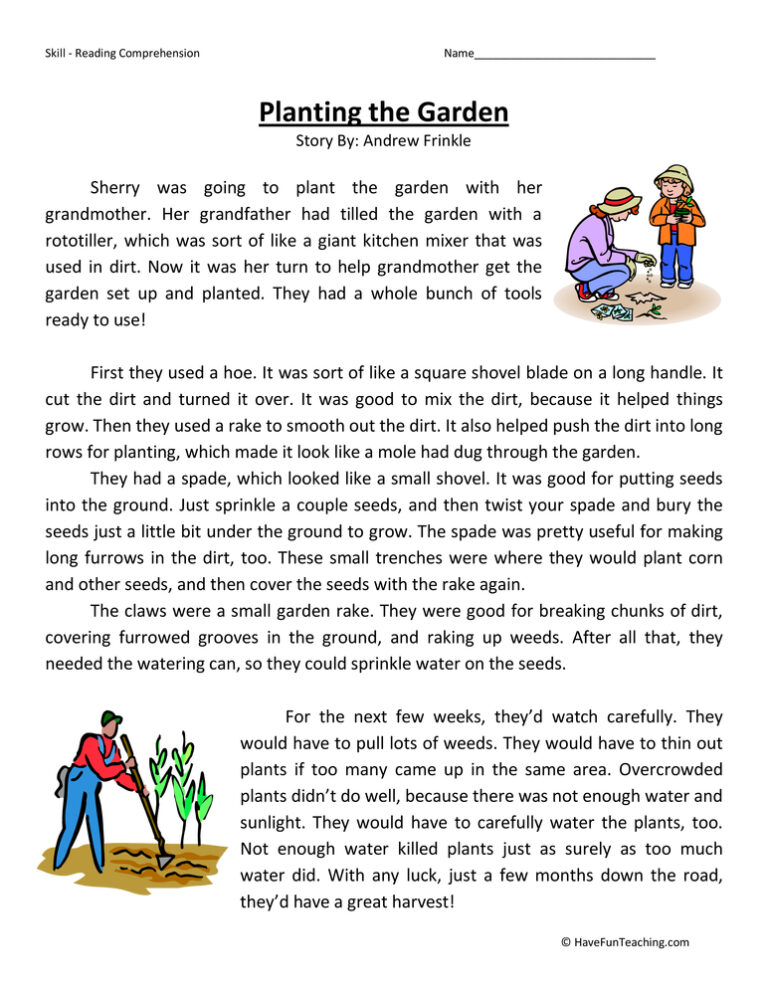
Assessment4th GradePlanting Gardens Reading Comprehension Worksheet

A Planting Gardens Reading Comprehension Worksheet for 4th grade, built around an original garden story with multiple-choice, sequencing, and written-response questions. Answer key included for fast, no-prep comprehension practice.

Assessment
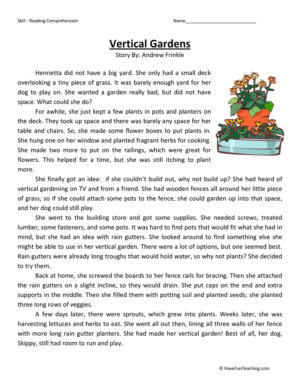
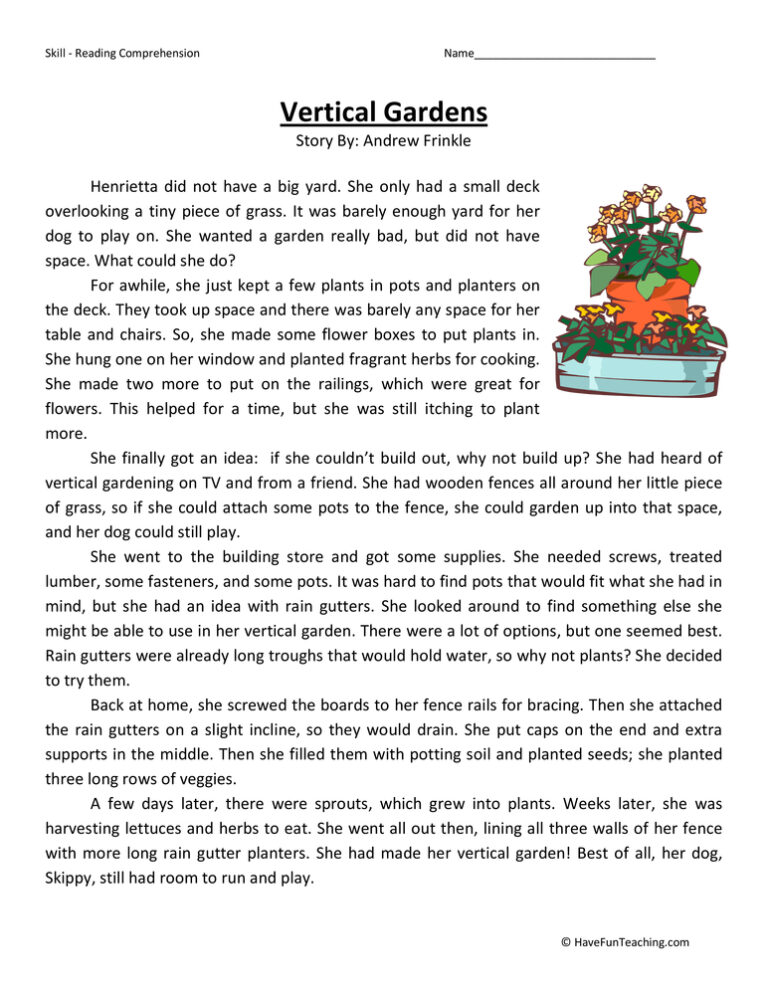
Assessment4th GradeVertical Gardens Reading Comprehension Worksheet

The Vertical Gardens Reading Comprehension Worksheet gives 4th Grade students a two page non-fiction passage about growing food up a fence, plus questions and an answer key that build real reading stamina.

Activity
Activity4th GradeEarth Day Writing Activity

UsingEarth Day Writing Activity, students brainstorm the sequence of events of a growing seed, then publish using them Earth Day themed writing.

Worksheet
Worksheet4th GradePlant Life Cycle Observations Worksheet

This plant life cycle observations worksheet has 4th grade students read a pea plant log, graph its height, and explain its growth. An answer key is included for quick checking.

From our teachers' playbook

How plants survive, grow and thrive

What do 4th graders learn about plants?

Fourth graders look at plants like engineers. They learn that every structure has a job: roots take in water, stems carry it up, leaves capture sunlight, and flowers, seeds and fruits help make new plants. Thorns and bark protect them. Many classes also introduce photosynthesis, how leaves use sunlight, water and air to make food. They observe life cycles from seed to seed. The click comes when kids look at a cactus and can explain why its spines and thick stem help it survive.

How we teach plants in 4th grade

Plants are perfect for real observation. These moves make structure and function come alive.

Observe a life cycle

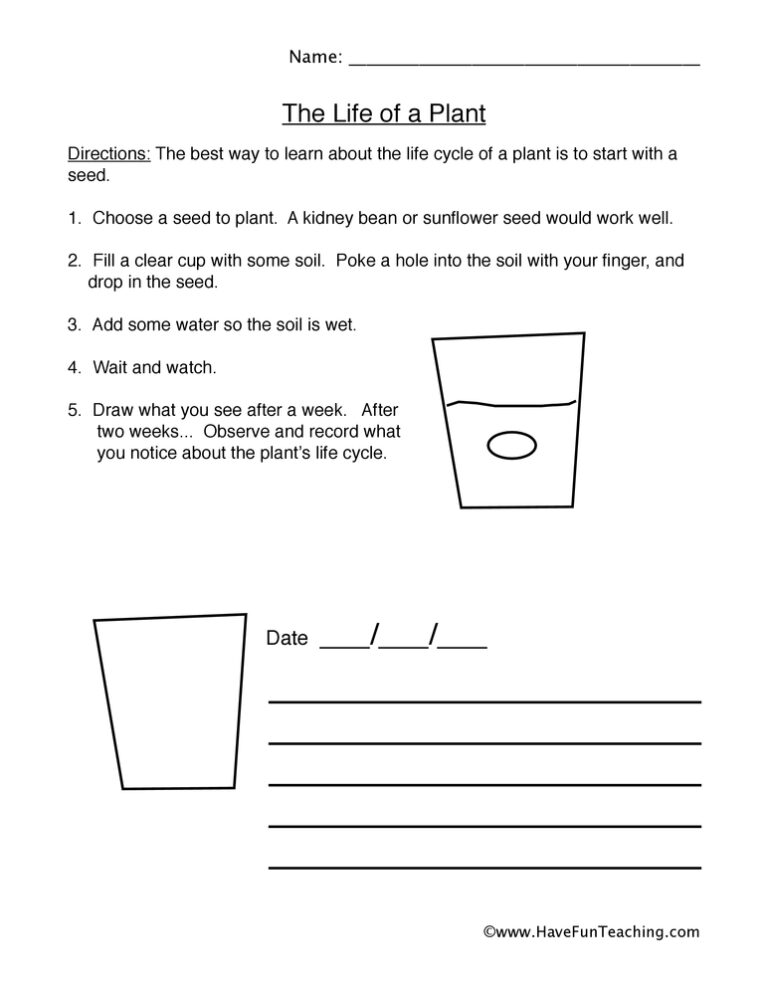
Plant bean seeds in clear cups and have kids record what they see every few days: the seed coat splitting, roots, the first leaves. Drawings and measurements go in an observation log. Watching it happen is worth more than any diagram.

Why it works: the U.S. Department of Education's guide for teaching elementary math recommends moving from hands-on objects to drawings to numbers.

Plant Life Cycle Observations WorksheetTry it withPlant Life Cycle Observations WorksheetWorksheetsOpen it →
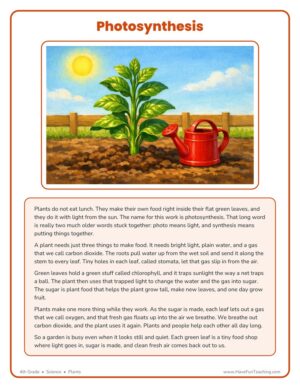
Read about photosynthesis

Read a short passage together and model a summary in one sentence: "Leaves use sunlight, water and air to make sugar for the plant." Kids then draw the inputs and outputs with arrows. Simple diagrams make an abstract process concrete.

Why it works: handing over the work step by step, from teacher to student, is one of the most widely used teaching frameworks (Pearson and Gallagher, 1983).

Photosynthesis Reading WorksheetTry it withPhotosynthesis Reading WorksheetWorksheetsOpen it →

Structure and job chart

Make a two-column chart: plant structure and its job. Kids look at real plants or photos of a cactus, rose and oak and fill it in. Comparing plants shows how different structures help them survive in different places.

Why it works: children learn more from words and pictures together than from words alone (Mayer, 2009).

Planting Gardens Reading Comprehension WorksheetTry it withPlanting Gardens Reading Comprehension WorksheetWorksheetsOpen it →

Questions parents and teachers ask

What do 4th graders learn about plants?

They learn how plant structures, like roots, stems, leaves and flowers, help the plant survive, grow and reproduce. Many also learn the basics of photosynthesis and plant life cycles.

How do you explain photosynthesis to a 4th grader?

Plants make their own food. Leaves use sunlight, water from the roots and carbon dioxide from the air to make sugar, and they give off oxygen.

What are good plant experiments for 4th grade?

Grow beans in clear cups, compare plants with and without sunlight, or put celery in colored water to watch it travel up the stem.

How do plants reproduce?

Many plants make flowers that produce seeds. Seeds grow into new plants. Some plants also grow new plants from roots, stems or bulbs.