
Skip to content
Start My 3 Free Days $0 today · cancel anytime

Kindergarten Prefixes Resources

4 kindergarten prefixes resources: 2 activities, 1 flash card and 1 Common Core Lesson. How teachers use these

Kindergarten Prefixes Resources

4 kindergarten prefixes resources: 2 activities, 1 flash card and 1 Common Core Lesson. How teachers use these

Flash Cards
Flash CardsKindergartenPrefix Flash Cards

These prefix flash cards help kindergarten to 4th grade students learn 24 common prefixes, their meanings and an example word for each. Fold-over cards, a practice page and an answer key are included.

Activity
ActivityKindergartenRoot Words and Endings Activity

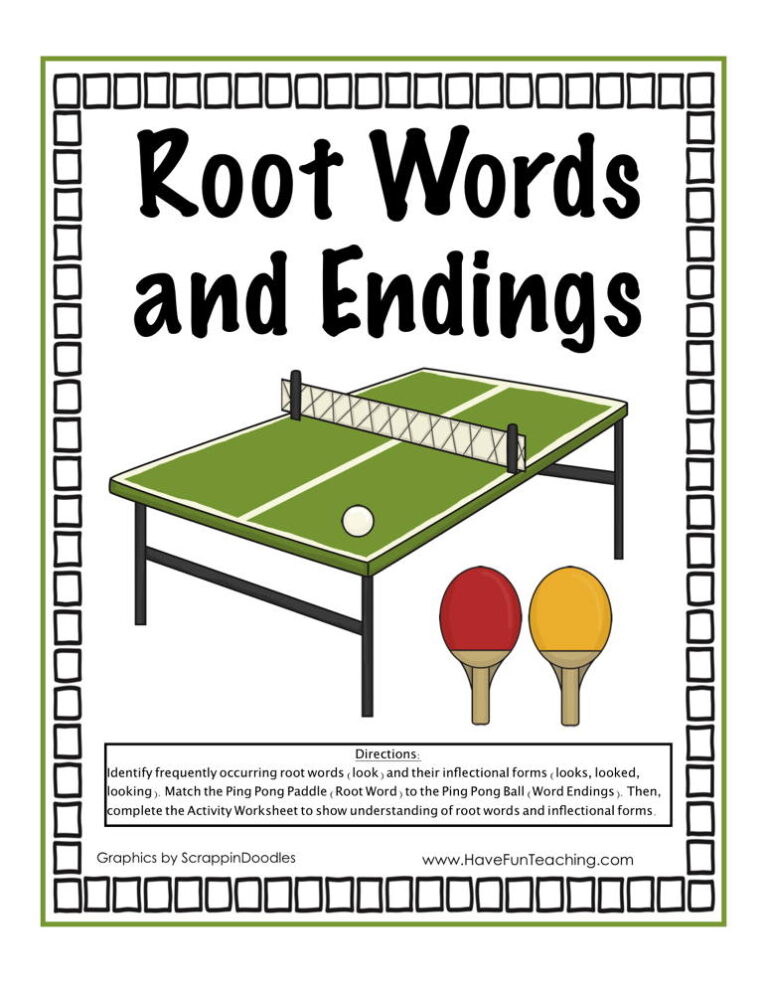
This Root Words and Endings activity has kindergarten and 1st grade students sort ping pong ball word cards by -s, -ed and -ing and find each root word, with a practice page and answer key included.

Common Core Lesson
Common Core LessonKindergartenL.K.4 Kindergarten Common Core Lesson

Using L.K.4 Kindergarten Common Core Lesson, students use the most frequently occurring inflections and affixes ( -ed, -s, re-, un-, pre-, -ful, -less) as a clue to the meaning of an unknown word.

Activity
ActivityKindergartenWord Meanings Affixes Activity

Using Word Meanings Affixes Activity, students use the most frequently occurring inflections and affixes as a clue to the meaning of an unknown word.

From our teachers' playbook

Tiny word parts, big meaning

What do kindergartners learn about prefixes?

Kindergarten is just a first peek at prefixes, and it happens mostly out loud. Kids learn that a little chunk at the start of a word can change what it means: un + happy = unhappy, and re + do = redo. They practice with word endings too, like -s, -ing and -ed. Nobody is expected to spell these yet. The goal is noticing that words are built from parts. The click moment comes when a kindergartner says "Untie means not tied!" all on their own.

Playful ways to introduce prefixes in kindergarten

Five-year-olds learn word parts best by hearing them, moving with them and saying them out loud.

Show the change

Hold up a picture of a happy face, then flip the card to a sad face as you say "happy... UNhappy!" Kids say it with you. Pictures make the meaning change easy to see before kids can read the word.

Why it works: pairing a picture with each word gives kids two ways to remember it, a well-tested principle of how people learn (Mayer, 2009).

Prefix Flash CardsTry it withPrefix Flash CardsFlash CardsOpen it →

Act it out

Call out a word, like "tie," and kids pretend to tie their shoes. Then say "untie!" and they do the opposite. Five quick rounds before lunch is plenty, and kids giggle the whole time.

Why it works: playful practice with a clear goal keeps kids practicing longer, and simple learning games have been shown to build real skills (Ramani and Siegler, 2008).

Word Meanings Affixes ActivityTry it withWord Meanings Affixes ActivityActivitiesOpen it →

Think aloud with word parts

During a read-aloud, stop on one word with a prefix or ending and wonder out loud: "Hmm, refill. I know fill. Re means again. So refill means fill again!" Modeling the thinking shows kids how word detectives work.

Why it works: handing over the work step by step, from teacher to student, is one of the most widely used teaching frameworks (Pearson and Gallagher, 1983).

L.K.4 Kindergarten Common Core LessonTry it withL.K.4 Kindergarten Common Core LessonCommon Core LessonsOpen it →

Questions about teaching prefixes in kindergarten

Do kindergartners learn prefixes?

Yes, a little! Kindergartners are introduced to common prefixes like un- and re- and endings like -s and -ing mostly through talking and listening. They are not expected to spell them yet.

What prefixes should a kindergartner know?

Un- (not) and re- (again) are the most common starting points. Pre- sometimes comes up too. Keep the focus on hearing how the meaning changes.

How do I explain a prefix to a 5-year-old?

Say it is a little word part that goes at the front and changes the meaning. Then show it: happy and unhappy, do and redo. Acting it out works better than any definition.

How can I practice prefixes at home?

Play opposite games in the car or at bedtime: "Lock... unlock! Zip... unzip!" A few rounds a day builds word awareness without any worksheets.



