
Skip to content
Start My 3 Free Days $0 today · cancel anytime

Kindergarten Syllables Resources

2 kindergarten syllables resources: 1 activity and 1 lesson plan. How teachers use these

Kindergarten Syllables Resources

2 kindergarten syllables resources: 1 activity and 1 lesson plan. How teachers use these

Activity
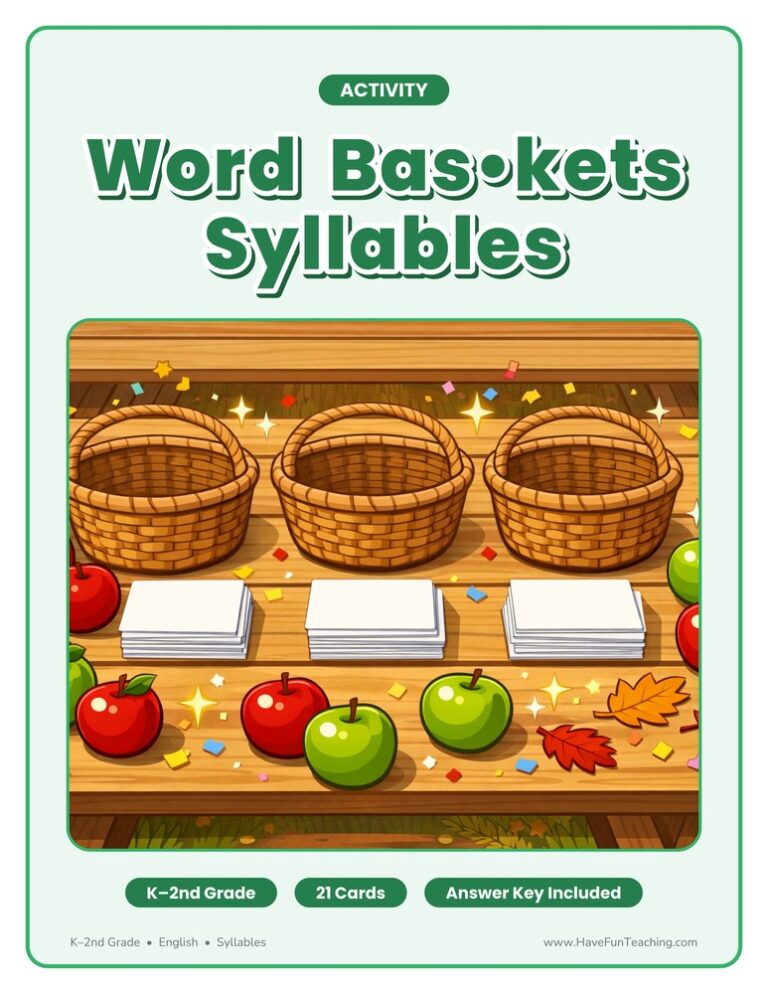
ActivityKindergartenWord Baskets Syllables Activity

This word baskets syllables activity is an apple-themed card sort for kindergarten through 2nd grade. Children clap each word, sort it by syllables and check their work with the answer key included.

Lesson Plan
Lesson PlanKindergartenSyllables Lesson Plan

Materials available in this Syllables Lesson Plan include Syllables Activities and Syllables Worksheets. We also provide you with a lesson plan that include

From our teachers' playbook

Clap it, tap it, count the beats!

What do kindergartners learn about syllables?

Kindergartners learn that words are made of beats called syllables, and they can hear them before they can read them. They clap, tap or stomp each part of a word: cat = 1, ti-ger = 2, el-e-phant = 3. They also practice blending syllables back into a word ("pop... corn... popcorn!") and pulling them apart. The click moment is when kids discover their own name has beats, and suddenly every word in the room becomes something to clap.

Our favorite ways to make syllables stick

Syllables are all about the ears and the body. These moves get kids moving and listening at the same time.

Clap names first

Start with the most interesting words in the room: your students' names! Say each name slowly and clap the beats together. Then line kids up by how many claps their name has. It is a lesson they ask to repeat.

Why it works: handing over the work step by step, from teacher to student, is one of the most widely used teaching frameworks (Pearson and Gallagher, 1983).

Syllables Lesson PlanTry it withSyllables Lesson PlanLesson PlansOpen it →
Sort words into syllable baskets

Label three baskets 1, 2 and 3. Kids pick a picture card, clap the word, and drop it in the right basket. Saying the word out loud while clapping is the key step, so keep the room a little noisy.

Why it works: kids understand an idea best when they touch it, then draw it, then write it, the order the U.S. Department of Education recommends for elementary math.

Word Baskets Syllables ActivityTry it withWord Baskets Syllables ActivityActivitiesOpen it →

Chin drops and robot talk

Have kids put a hand under their chin and say a word slowly. Every time the chin drops, that is a syllable. Then talk like robots, one beat at a time: "ba-na-na." Silly voices keep everyone listening.

Why it works: a catchy, repeating tune gives the brain a hook to hang words on, so sung text is remembered better (Wallace, 1994).

What's on this page

Teacher favorites right now: Word Baskets Syllables Activity and Syllables Lesson Plan.

Questions teachers and parents ask

How do I teach syllables to kindergarten?

Start by clapping students' names, then move to familiar words. Use clapping, tapping or the chin-drop trick so kids feel each beat. Keep it oral and playful, with no reading needed yet.

What is the chin trick for syllables?

Put your hand under your chin and say a word slowly. Your chin drops once for each vowel sound, which is each syllable. Kids love feeling it work.

Why are syllables important for kindergarten?

Hearing syllables is an early phonological awareness skill. It helps kids break words into parts, which makes later reading and spelling of longer words easier.

What age can kids count syllables?

Most children can clap syllables in familiar words around ages 4 to 5. By the end of kindergarten, they can usually count, blend and segment syllables in spoken words.



