
Skip to content
Start My 3 Free Days $0 today · cancel anytime

Syllables Resources

37 syllables resources: 29 worksheets, 4 activities, 3 Common Core Lessons and more. How teachers use these

Syllables Resources

37 syllables resources: 29 worksheets, 4 activities, 3 Common Core Lessons and more. How teachers use these

Worksheet
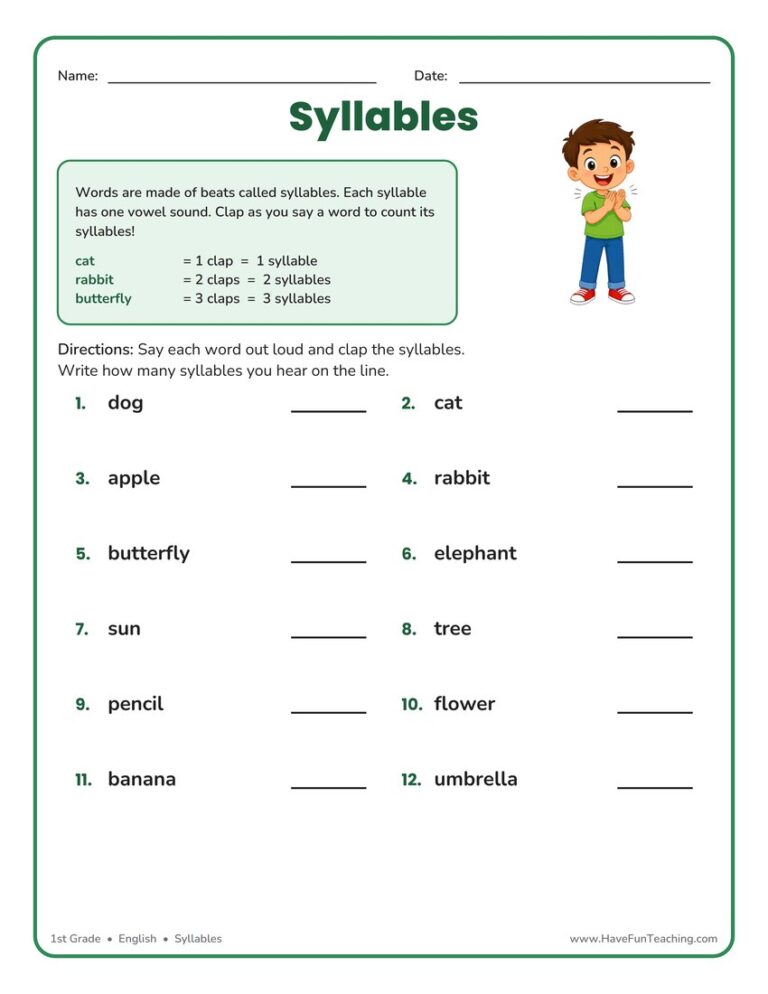
Worksheet1st GradeSyllables Worksheet

A clap-and-count syllables worksheet that helps first graders hear and count the beats in everyday words. Includes a complete answer key — perfect for quick, no-prep phonological awareness practice.

Worksheet
Worksheet1st GradeTwo Syllable Words Reading Words Worksheet

This Two Syllable Words Reading Words Worksheet gives 1st Grade readers hands-on practice splitting words into syllables and spotting two-syllable words, with an answer key included so checking work takes seconds.

Worksheet
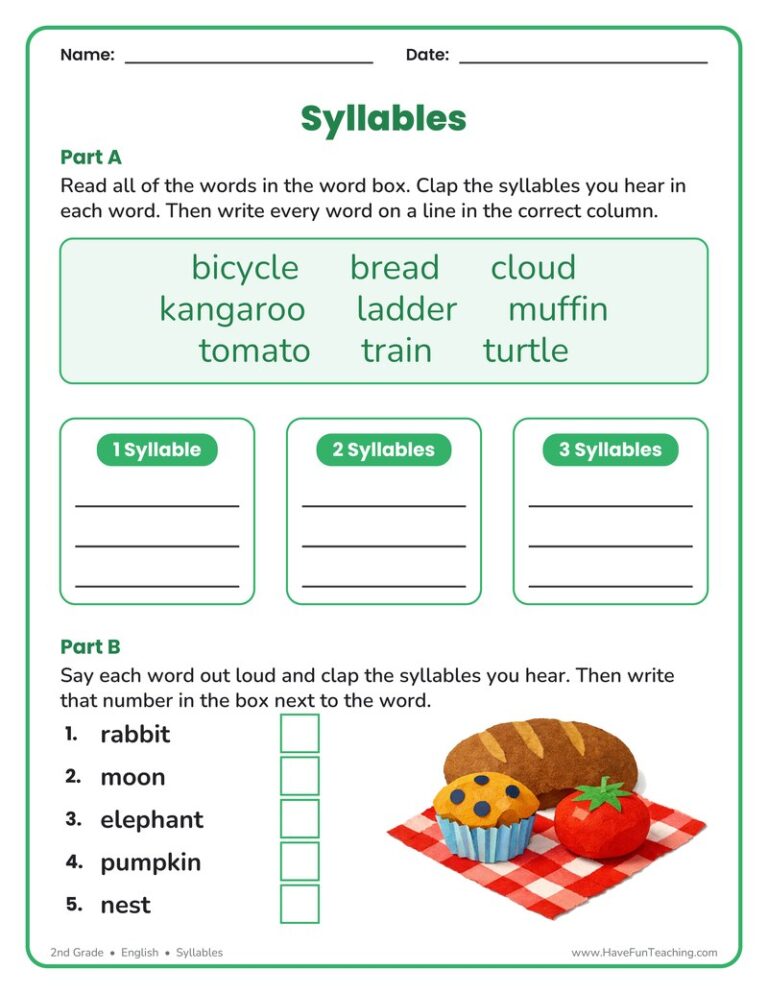
Worksheet2nd GradeSyllable Sort Worksheet

A hands-on Syllable Sort Worksheet where 2nd graders clap out twelve words and write each one in the one, two, or three syllable column. Answer key included, so students get instant practice hearing the beats inside longer words.

Worksheet
Worksheet3rd GradeHaiku Pictures Worksheet

This Haiku Pictures Worksheet gives 3rd Grade students syllable counting practice, a model poem, and a picture prompt for writing their own haiku. Answer key included, so poetry practice is ready in minutes.

Worksheet
Worksheet3rd GradeHaiku Blank Worksheet

This Haiku Blank Worksheet gives 3rd grade students syllable practice, a missing-line poem to solve, and a five-seven-five frame for writing their own haiku. An answer key is included.

Worksheet
Worksheet3rd GradeSyllables Detective Worksheet

This Syllables Detective Worksheet has 3rd Grade students split eight words into syllables and match five definitions, with an answer key to check their detective work.

Worksheet
Worksheet1st GradeCounting Syllables Worksheet

This counting syllables worksheet lets 1st grade students count the beats in picture words and fill in missing vowels. An answer key is included, making phonics practice quick to check.

Worksheet
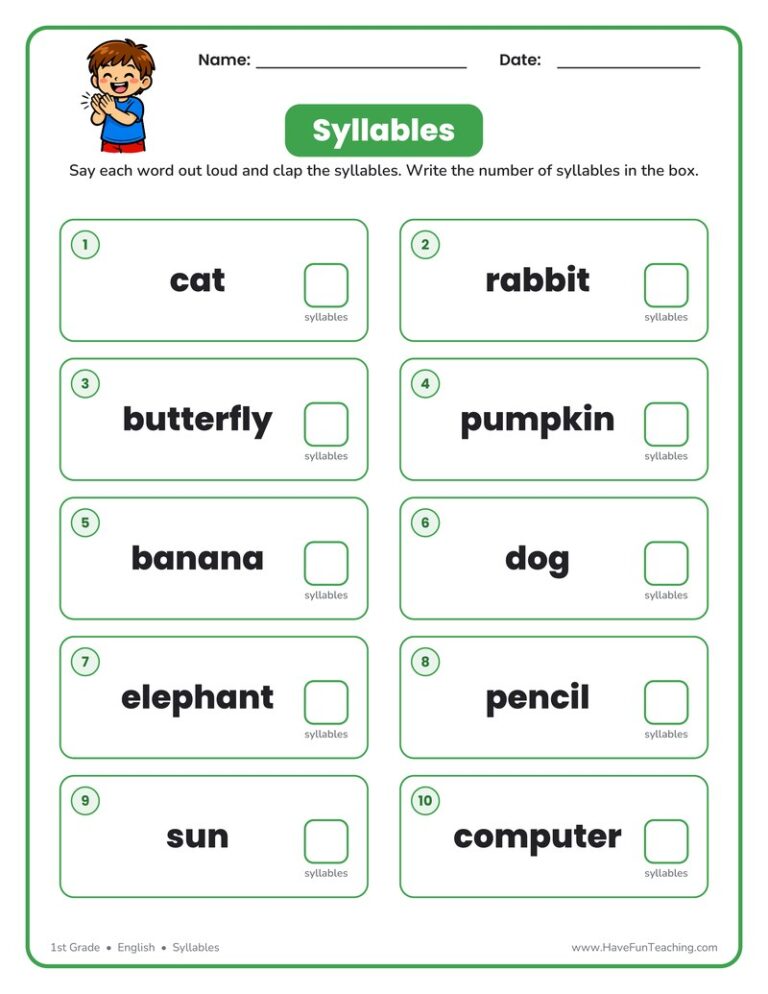
Worksheet1st GradeSyllable Count Worksheet

The Syllable Count Worksheet helps 1st graders clap and count the syllables in ten fun words, then write the number in each box. Includes an answer key — perfect for quick, no-prep phonological awareness practice at home or in class.

Worksheet
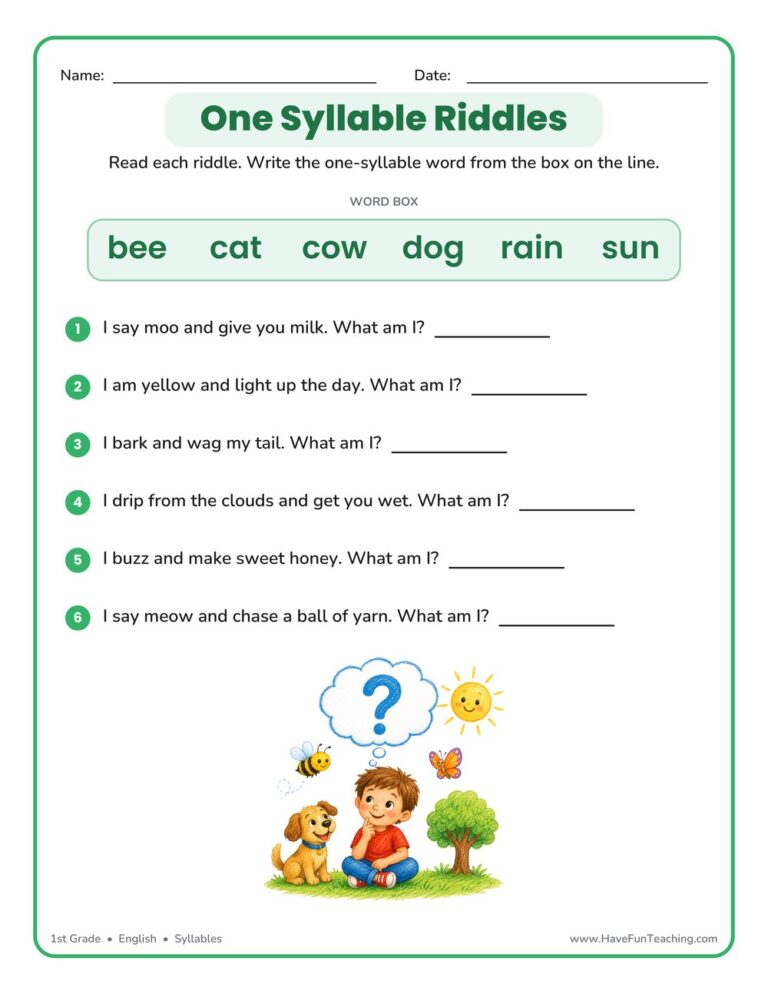
Worksheet1st GradeOne Syllable Riddles Worksheet

The One Syllable Riddles Worksheet lets first graders read clues and write the matching one-syllable word from a word box. This 1st grade vocabulary and syllables activity includes an answer key for easy checking.

Worksheet
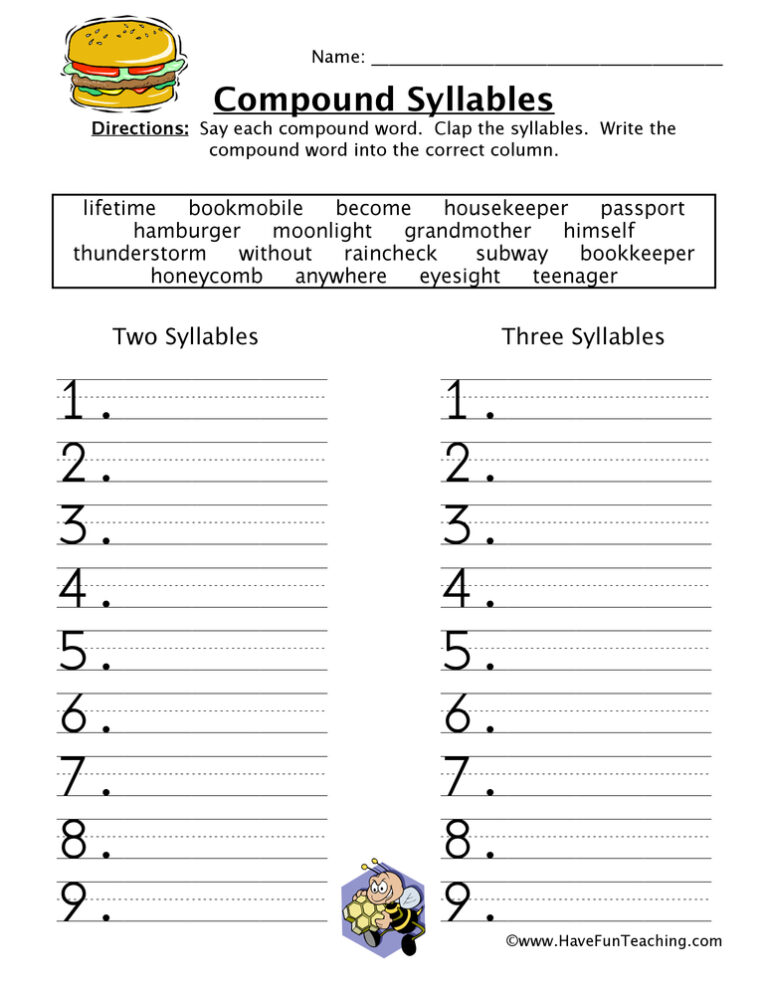
Worksheet2nd GradeSyllables Compound Words Worksheet

This syllables compound words worksheet has 2nd Grade students clap and sort compound words by syllables, then split new compound words into two smaller words. An answer key is included.

Worksheet
Worksheet2nd GradeSeparating Double Consonants Worksheet

This Separating Double Consonants Worksheet has 2nd grade students split six words between their double letters and rebuild three more from syllables, with an answer key for quick checking.

Worksheet
Worksheet2nd GradeSyllable Sorting Worksheet

This syllable sorting worksheet has 2nd Grade students clap out words and sort them into one, two, and three syllable columns. An answer key is included, so practice stays quick and independent.

Worksheet
Worksheet3rd GradeSyllables Separation Worksheet

This syllables separation worksheet has 3rd graders divide eight long words into syllables, then repair four words that are split wrong. Answer key included, so decoding practice takes no prep at all.

Worksheet
Worksheet1st GradeSchool Words Syllable Worksheet

This school words syllable worksheet helps 1st graders clap and count the beats in classroom words, then add missing vowels. An answer key is included, making it quick to check.

Worksheet
Worksheet2nd GradeCount the Compound Words Syllables Worksheet

In this Count the Compound Words Syllables Worksheet, 2nd grade students split compound words into their two parts, clap the syllables, and circle compound words in sentences. Answer key included.

Worksheet
Worksheet3rd GradeScience Syllables Worksheet

This science syllables worksheet has 3rd grade students divide science words like habitat and skeleton into syllables, then match words to meanings. An answer key is included for quick, confident checking.

Worksheet
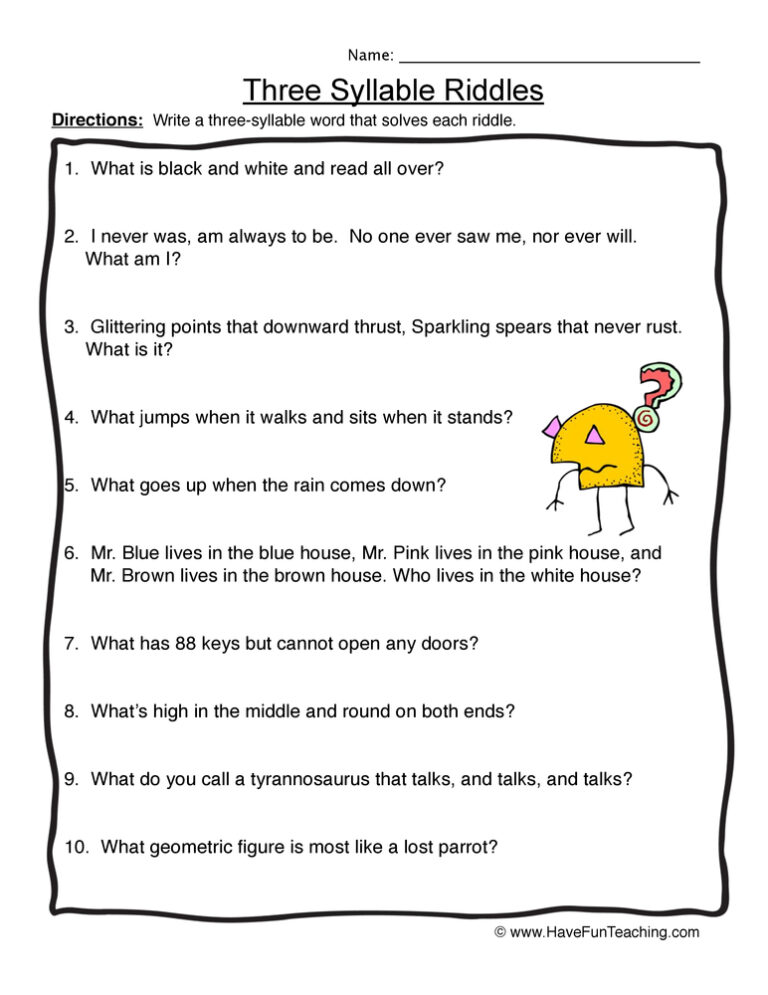
Worksheet4th GradeThree Syllable Riddles Worksheet

This three syllable riddles worksheet asks 4th graders to solve six riddles, then split each answer into its three syllables. An answer key is included, making syllable practice quick to check.

Worksheet
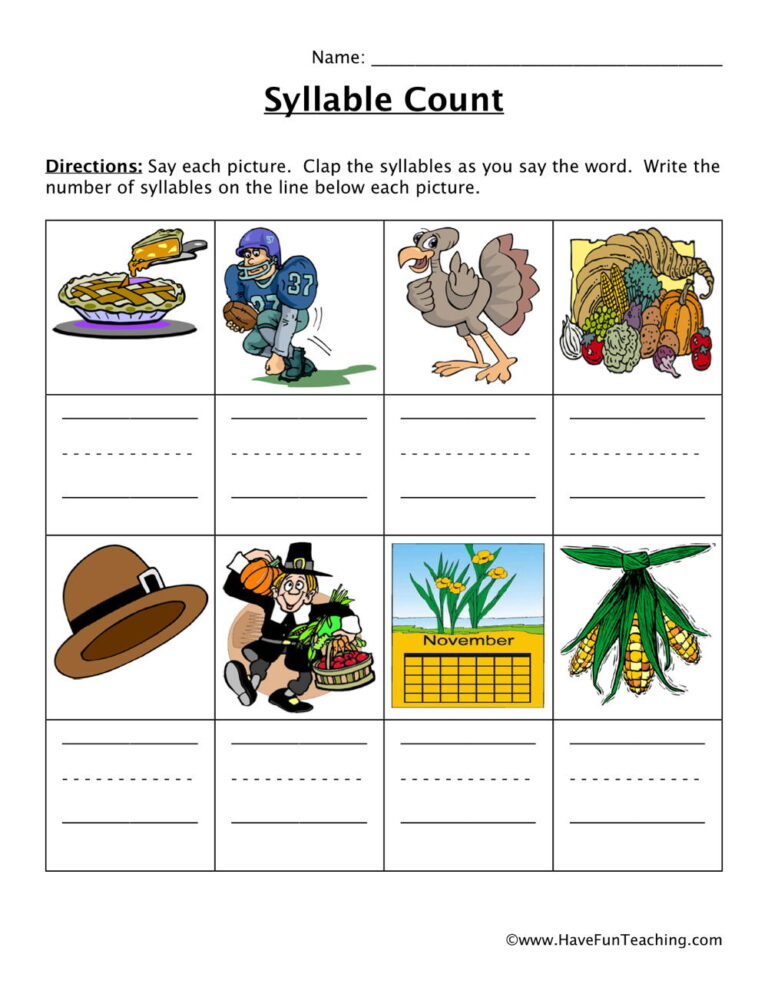
Worksheet1st GradeThanksgiving Syllables Worksheet

This Thanksgiving syllables worksheet helps 1st graders clap and count the beats in holiday words, then fill in missing vowels. An answer key is included so checking is fast and easy.

Worksheet
Worksheet4th GradeRolling for Syllables Worksheet

This rolling for syllables worksheet has 4th graders sort twelve words onto die-face cards by syllable count, then divide new words with slashes. An answer key is included for easy checking.

Worksheet
Worksheet1st GradeCareer Words Syllable Worksheet

This career words syllable worksheet lets 1st graders clap and count the beats in job words like pilot and farmer, then fill in missing vowels. An answer key is included for fast checking.

From our teachers' playbook

Clap it, count it, chunk it

What do kids learn about syllables?

A syllable is a beat in a word, and every syllable has one vowel sound. Little ones start by clapping the beats in their names: Ma-ri-a has three! In 1st and 2nd grade, kids count syllables in words, split compound words like sun-shine and read two-syllable words by breaking them into chunks. They learn that a word with double consonants usually splits between them, like rab-bit. Older kids use syllables to spell and read long words. The click comes when a child faces a big word and says, "I can just chunk it!"

Our favorite ways to teach syllables

Syllables are all about rhythm. These moves get kids moving to the beat of words.

Sort by beats

Give kids picture cards and mats labeled 1, 2 and 3. They say each word, clap the beats and place it on the right mat. Saying the word out loud is key, because kids feel the beats in their voices.

Why it works: the U.S. Department of Education's guide for teaching elementary math recommends moving from hands-on objects to drawings to numbers.

Syllable Sort WorksheetTry it withSyllable Sort WorksheetWorksheetsOpen it →

Toss the syllable snowballs

Kids crumple paper "snowballs" and toss one into a bucket for each syllable they hear in a word. Silly, quick and noisy, it gives kids dozens of practice rounds without a worksheet in sight.

Why it works: in a well-known study, a few short sessions of a simple number board game measurably boosted young children's number skills (Ramani and Siegler, 2008).

Syllable Snowballs ActivityTry it withSyllable Snowballs ActivityActivitiesOpen it →

Count a few every day

Start each phonics lesson with three quick syllable counts. Use student names, science words or holiday words. A minute a day keeps the skill sharp for reading longer words later.

Why it works: short practice spread over several days beats one long session, according to a large review of learning research (Dunlosky and colleagues, 2013).

Counting Syllables WorksheetTry it withCounting Syllables WorksheetWorksheetsOpen it →

Questions parents and teachers ask about syllables

What is a syllable?

A syllable is a part of a word with one vowel sound. "Cat" has one syllable, "tiger" has two and "elephant" has three.

How do you count syllables?

Clap the word as you say it, or put your hand under your chin and feel how many times your jaw drops. Each drop or clap is one syllable.

What age do kids learn syllables?

Kids start clapping syllables in preschool and kindergarten. In 1st and 2nd grade, they use syllables to read and spell longer words.

How do syllables help with reading?

Breaking a long word into syllables turns it into smaller chunks kids can read one at a time. "Fantastic" becomes "fan-tas-tic," and suddenly it is three easy parts.

Keep exploring



