Skip to content
Start My 3 Free Days $0 today · cancel anytime

Kindergarten Density Resources

1 kindergarten density resources: 1 activity. How teachers use these

Kindergarten Density Resources

1 kindergarten density resources: 1 activity. How teachers use these

Activity
ActivityKindergartenSink or Float Activity

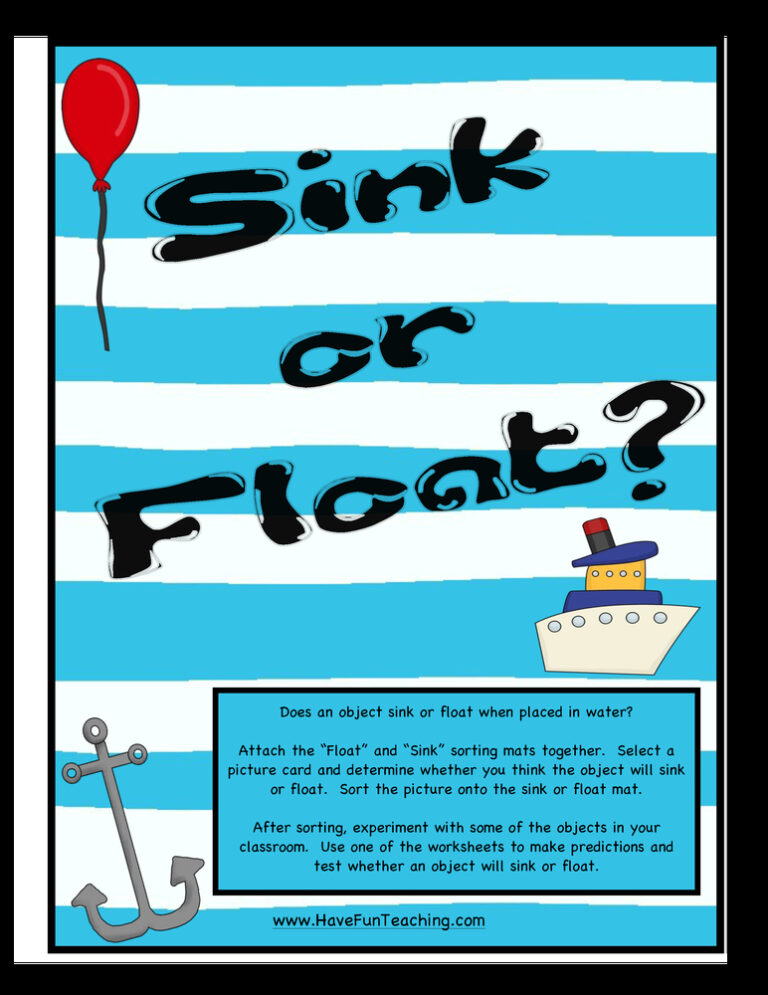
This sink or float activity has kindergarten and 1st grade scientists predict and sort 12 picture cards on a Float and Sink mat, then circle new floating objects. Answer key included.

From our teachers' playbook

Will it sink or will it float?

What do kindergartners learn about density?

Kindergartners don't need the word density yet, but they love the big question behind it: will it sink or float? They make a guess, drop an object in water, and watch what happens. Over time they notice that size alone doesn't decide it. A big wooden block floats, but a tiny metal paper clip sinks! They practice predicting, observing and sorting objects into two groups. The click comes when a child says, "I thought it would sink because it's big, but it floated!" That surprise is real science thinking.

Our favorite ways to explore sink or float in kindergarten

Little scientists learn by guessing, testing and talking. These moves keep it simple and splashy.

Guess, drop, sort

Set out a tub of water and a basket of objects: a cork, a rock, a crayon, a spoon. Kids guess first, then drop each one in and sort it onto a "sink" or "float" mat. Hands in the water is where the learning happens.

Why it works: the U.S. Department of Education's guide for teaching elementary math recommends moving from hands-on objects to drawings to numbers.
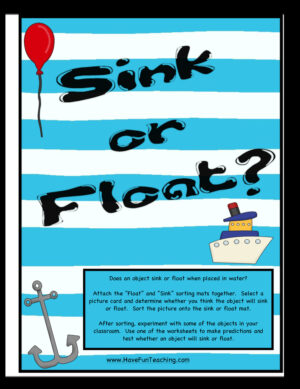
Sink or Float ActivityTry it withSink or Float ActivityActivitiesOpen it →
What do you think?

Hold up a new object and ask, "Sink or float?" Kids show a thumbs down for sink and thumbs up for float, then test it together. Predicting before every test keeps them thinking, not just splashing.

Why it works: pulling an answer out of memory makes it stick far better than rereading it, one of the strongest findings in learning research (Dunlosky and colleagues, 2013).

Science tub all week

Leave the water tub out for a few days and add two new objects each morning. Kids keep testing during centers. Coming back to it again and again turns guesses into real patterns.

Why it works: short practice spread over several days beats one long session, according to a large review of learning research (Dunlosky and colleagues, 2013).

What's on this page

Teacher favorites right now: Sink or Float Activity.

Questions parents and teachers ask about sink or float

How do you explain sink or float to a kindergartner?

Keep it simple: some things are heavy for their size and sink, and some are light for their size and float. You don't need the word density yet. Let them test lots of objects and talk about what they notice.

What objects are good for a sink or float activity?

Try corks, rocks, crayons, plastic spoons, coins, leaves, sponges, toy cars and apples. Mix big light things and small heavy things so kids see that size isn't the whole story.

Why do some big things float?

Because floating depends on how heavy something is for its size, not just how big it is. A big piece of wood is light for its size, so it floats, while a small rock is heavy for its size and sinks.

Can I do sink or float at home?

Yes! The bathtub or kitchen sink works perfectly. Gather a few safe objects, ask your child to guess, then test together. It is a great five-minute science break.