
Skip to content
Start My 3 Free Days $0 today · cancel anytime

Problem Solving Resources

5 problem solving resources: 4 worksheets and 1 activity. How teachers use these

Problem Solving Resources

5 problem solving resources: 4 worksheets and 1 activity. How teachers use these

Worksheet
Worksheet1st GradeAddition Problem Solving Addends to 40 Worksheet

This Addition Problem Solving Addends to 40 Worksheet gives 1st graders five short math stories to solve by adding tens and ones. An answer key is included, so checking work is quick and easy.

Worksheet
Worksheet1st GradeAddends to 20 Addition Problem Solving Worksheet

This Addends to 20 Addition Problem Solving Worksheet gives 1st Grade students five three-addend word problems with sums inside twenty, plus an answer key, so adding grows into confident problem solving.

Worksheet
Worksheet1st GradeAddends to 9 Problem Solving Worksheet

Use this Addends to 9 Problem Solving Worksheet so first graders can solve five short math stories by adding two numbers up to 9. An answer key is included for fast, easy checking.

Worksheet
Worksheet2nd GradeThree Addends Addition Problem Solving Worksheet

This three addends addition problem solving worksheet gives 2nd graders five word problems that add three two-digit numbers, with an answer key to make checking quick and easy.

Activity
ActivityKindergartenK.OA.4 Common Core Activity

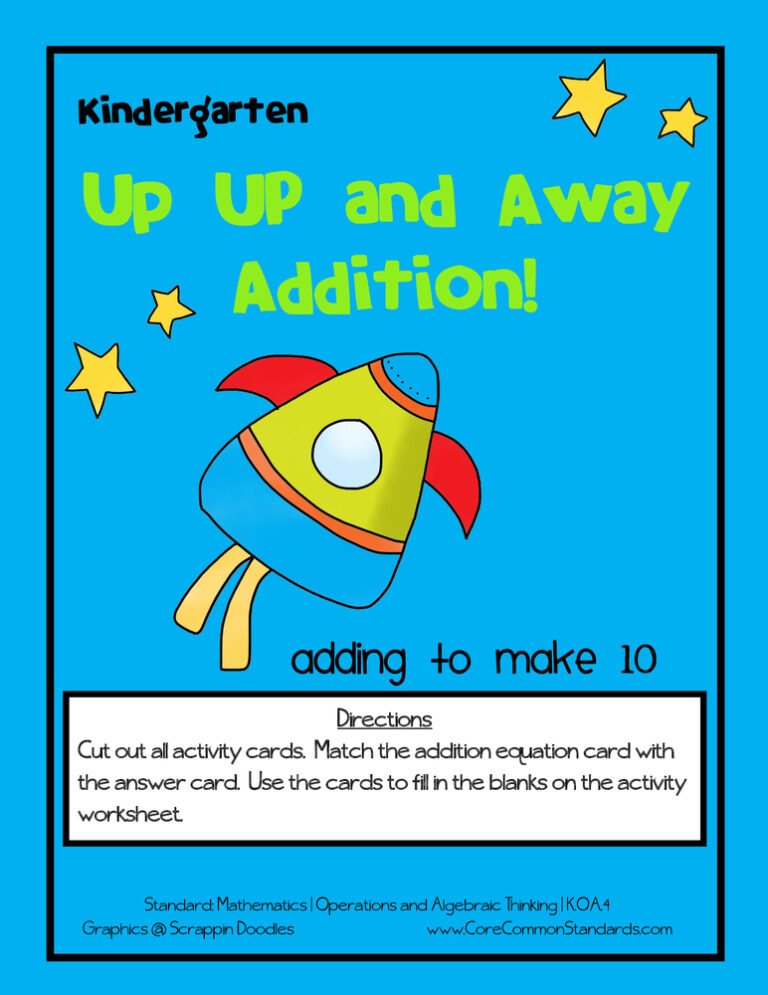
This K.OA.4 common core activity has kindergarten and 1st grade kids match ten frame launch cards to rocket cards to find the number that makes ten. Answer key included.

From our teachers' playbook

Read it, picture it, solve it!

How do kids learn problem solving in math?

Problem solving is where math meets real life. Kids learn to read a word problem carefully, figure out what is being asked, and pick a strategy: draw a picture, use objects, make a list or write a number sentence. For example, "Sam has 7 apples and gets 5 more" becomes 7 + 5 = 12. Then they check if the answer makes sense. The click comes when kids stop hunting for key words and start picturing what is actually happening in the story.

Our favorite ways to teach problem solving

Good problem solvers have a plan. These moves give kids one they can use on any problem.

Draw what is happening

Before any numbers, kids draw the story: apples in a basket, then more apples coming. A quick sketch shows whether to add or subtract. Pictures help kids understand the problem instead of guessing.

Why it works: children learn more from words and pictures together than from words alone (Mayer, 2009).

Addends to 20 Addition Problem Solving WorksheetTry it withAddends to 20 Addition Problem Solving WorksheetWorksheetsOpen it →

Explain your thinking

After solving, partners take turns explaining how they knew what to do. Ask, "Does your answer make sense? How do you know?" Talking through the steps builds careful thinkers.

Why it works: when kids say the precise math words, their understanding gets sharper, a recommendation of the U.S. Department of Education's elementary math guide.

Addition Problem Solving Addends to 40 WorksheetTry it withAddition Problem Solving Addends to 40 WorksheetWorksheetsOpen it →

Act it out with objects

Give kids counters and have them act out each problem. For "4 red birds, 3 blue birds and 2 yellow birds," they build all three groups and push them together. Hands-on models make the math real before it goes on paper.

Why it works: the U.S. Department of Education's guide for teaching elementary math recommends moving from hands-on objects to drawings to numbers.

Three Addends Addition Problem Solving WorksheetTry it withThree Addends Addition Problem Solving WorksheetWorksheetsOpen it →

Questions parents and teachers ask

How do you teach math problem solving?

Teach kids to read the problem, picture what is happening, choose a strategy and check their answer. Drawing a picture is often the most helpful first step.

Why do kids struggle with word problems?

Word problems require reading and math at the same time. Kids also struggle when they look for key words instead of understanding the story.

What are good problem solving strategies?

Draw a picture, act it out with objects, make a table or list, work backward and guess and check. Kids should try more than one.

How can I help my child with word problems at home?

Make up quick problems about everyday life, like snacks or toys. Ask your child to draw what is happening before solving.

Keep exploring



