
Skip to content
Start My 3 Free Days $0 today · cancel anytime

Kindergarten Addition Activities

21 kindergarten addition activities. Teacher favorites: Subtraction as an Unknown Addend Activity and Compose and Decompose Numbers 11-19 Activity. How teachers use these

Kindergarten Addition Activities

21 kindergarten addition activities. Teacher favorites: Subtraction as an Unknown Addend Activity and Compose and Decompose Numbers 11-19 Activity. How teachers use these

Activity
ActivityKindergartenSubtraction as an Unknown Addend Activity

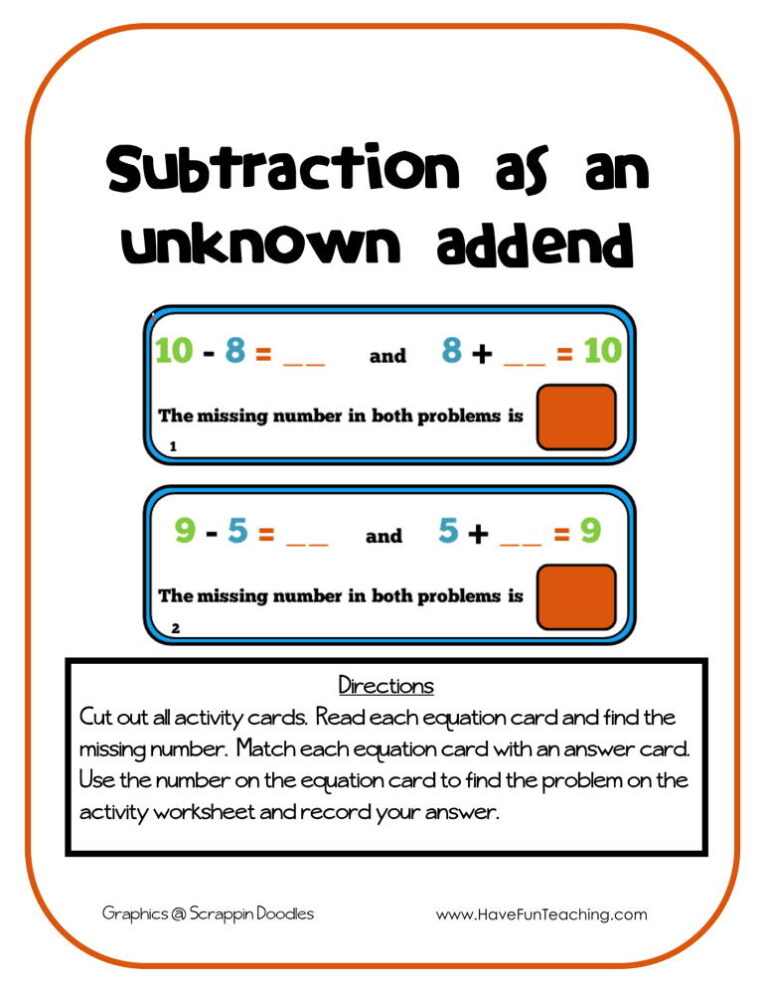
This subtraction as an unknown addend activity helps K through 2nd grade students solve subtraction within 20 by matching each fact to its addition fact card. Answer key included.

Activity
ActivityKindergartenCompose and Decompose Numbers 11-19 Activity

This compose and decompose numbers 11-19 activity has kindergarten and 1st grade children build teen numbers as ten and ones with ten-frames, counters and matching cards. Answer key included.

Activity
ActivityKindergartenTrue or False Equations Activity

While using our True or False Equations Activity, students sort each popcorn equation card under the true or false popcorn containers.

Activity
ActivityKindergartenDecomposing a Ten Frame Activity

This decomposing a ten frame activity helps kindergarten to 2nd grade students match ten frames to facts that make 10, with a practice page and answer key included.

Activity
ActivityKindergartenCommutative Property of Addition Activity

Using Commutative Property of Addition Activity, studentsmatch the popcorn cards to the matching popcorn container to show examples of the property.

Activity
ActivityKindergartenDoubles Addition Activity

This doubles addition activity has Kindergarten to 2nd Grade children match rocket fact cards to planet sum cards, with a dot practice page and an answer key included.

Activity
ActivityKindergartenSingle Digit Addition Word Problem Activity

Use this single digit addition word problem activity to help kindergarten and 1st grade students count two picture groups and write the number sentence on 12 self-checking task cards. Answer key included.

Activity
ActivityKindergartenMissing Number Addition and Subtraction Activity

This missing number addition and subtraction activity has K-2nd grade students match watermelon equation cards to their answers within 10 and 20. Answer key included for fun, hands-on fact practice.

Activity
ActivityKindergartenMissing Number Addition Activity

This missing number addition activity has children draw watermelon slices to find the unknown addend in 18 problems within 10. Made for kindergarten and 1st grade, with a practice page and answer key included.

Activity
ActivityKindergartenPlenty O' Pennies Counting Pennies Activity

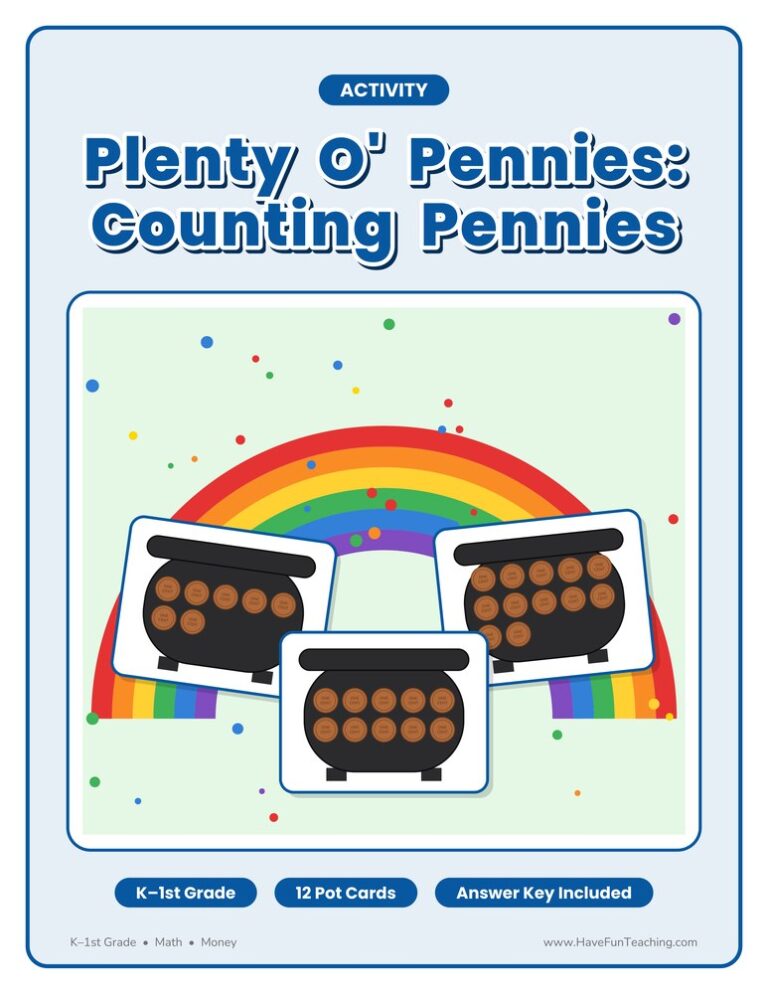
This Plenty O' Pennies counting pennies activity sends Kindergarten and 1st Grade students on a pot-of-gold hunt to count pennies to 20. Answer key included.

Activity
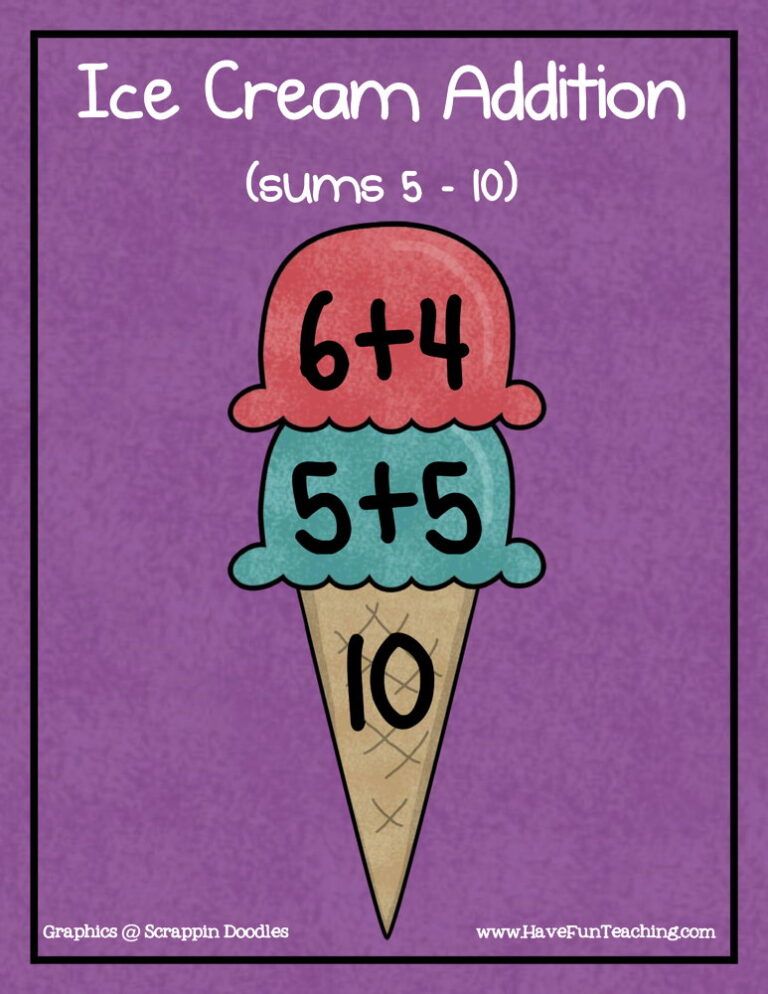
ActivityKindergartenIce Cream Addition Sums of 5-10 Activity

This ice cream addition sums of 5-10 activity has kindergarten and 1st grade students stack addition scoops on the cone with the matching sum. Answer key included.

Activity
ActivityKindergartenMarch Madness Basketball Addition Activity

Using March Madness Basketball Addition Activity, students compete in March Madness by playing rounds of addition basketball and scoring points for their team!

Activity
ActivityKindergartenCount on Number Line Addition Activity

This count on number line addition activity has children hop along a star number line to add within 10. Made for Kindergarten and 1st grade, with a practice page and answer key included.

Activity
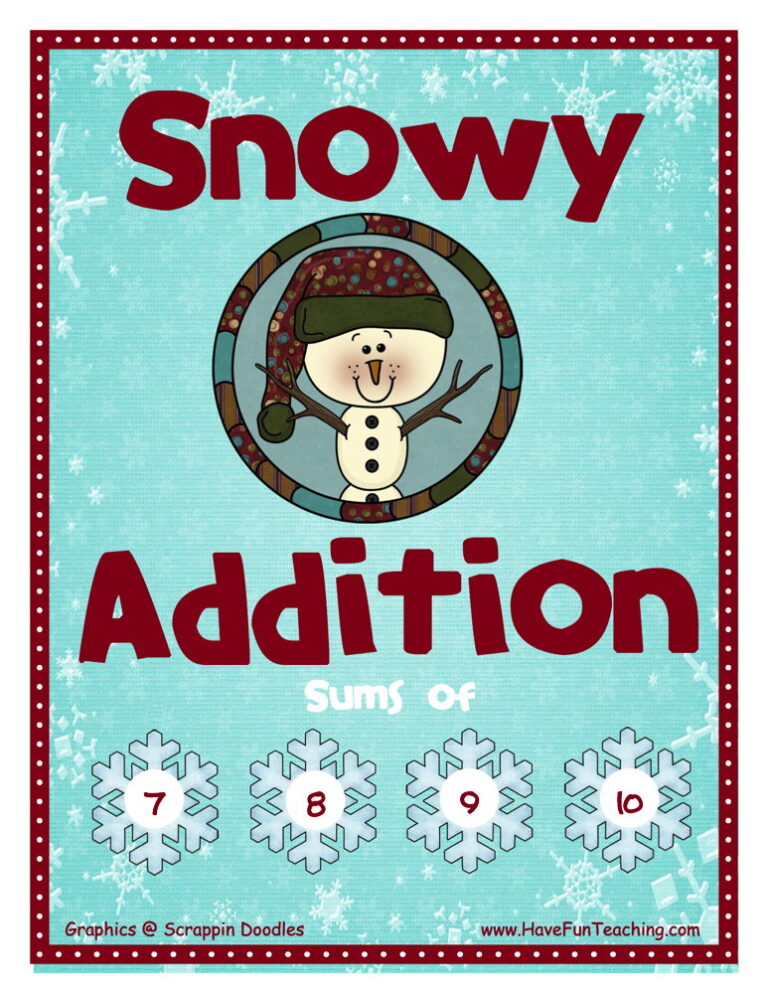
ActivityKindergartenSnowy Addition Activity

In this snowy addition activity, K-1st grade children add facts with sums of 7 to 10 and sort each snowflake under the right snowman. Answer key included for quick checking.

Activity
ActivityKindergartenSnowball Addition Activity

This snowball addition activity has kindergarten and 1st grade children draw snowballs to solve 18 lettered addition cards within 10, with a recording sheet and practice page. Answer key included.

Activity
ActivityKindergartenK.OA.4 Common Core Activity

This K.OA.4 common core activity has kindergarten and 1st grade kids match ten frame launch cards to rocket cards to find the number that makes ten. Answer key included.

Activity
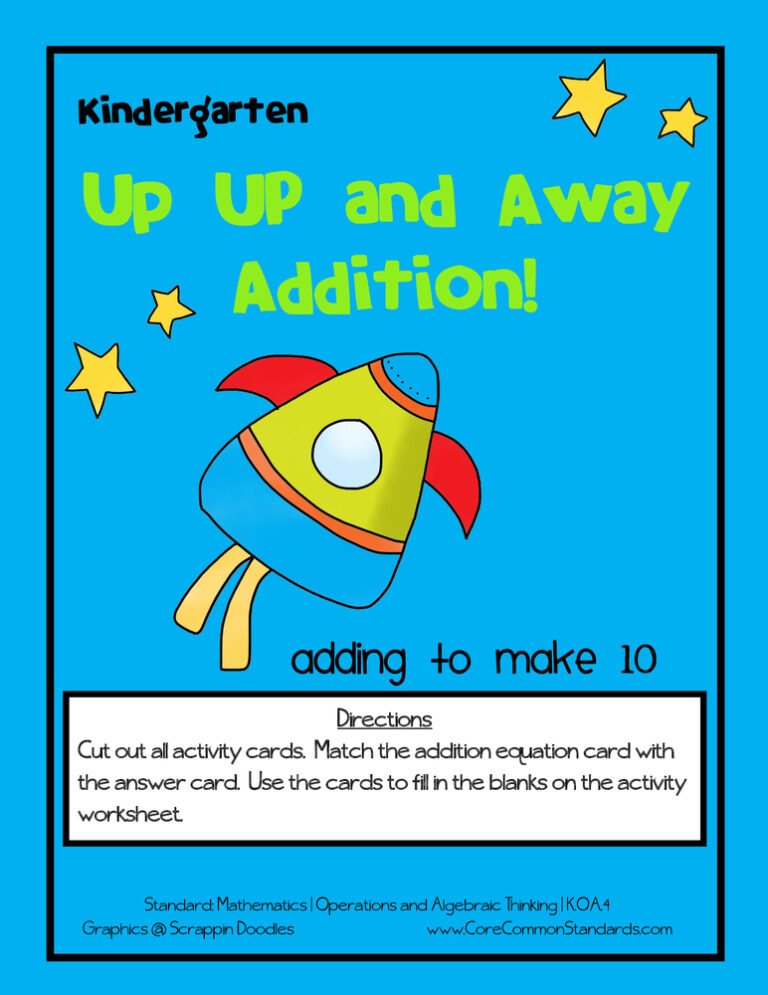
ActivityKindergartenAdding to Make 10 Activity

Using Adding to Make 10 Activity, students match addition equation cards with missing addend cards to show equations that make 10.

Activity
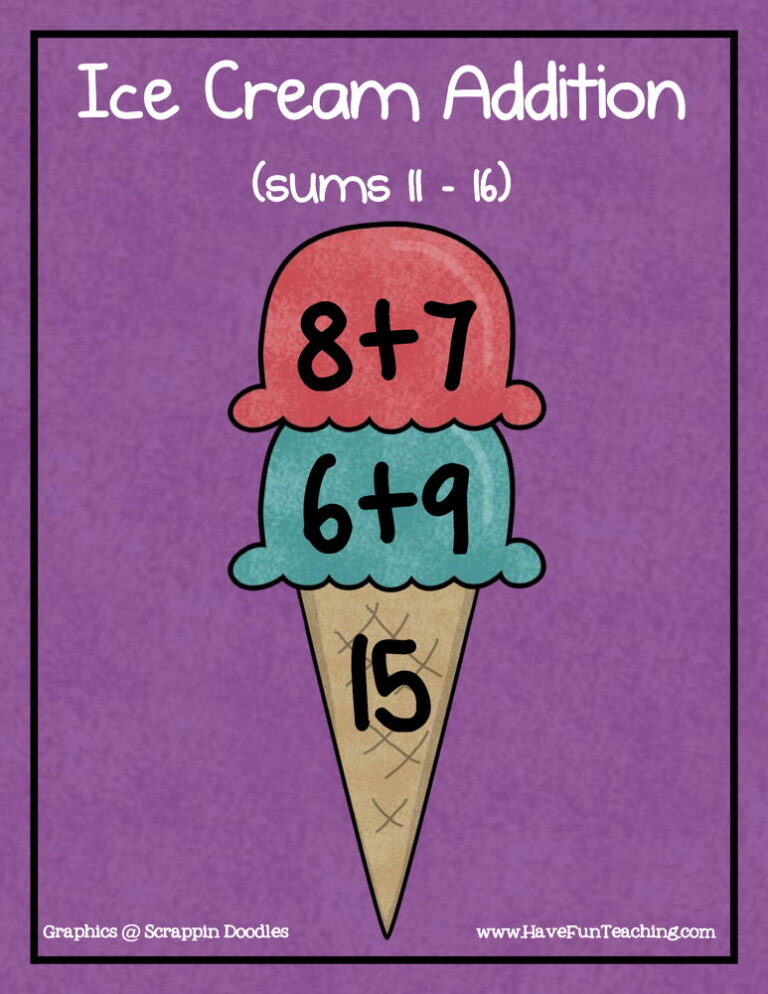
ActivityKindergartenIce Cream Addition Sums of 11-16 Activity

UsingIce Cream Addition Sums of 11-16 Activity, studentsmatch the addition problems on the ice cream to the sum on the cone to build their addition fluency.

Activity
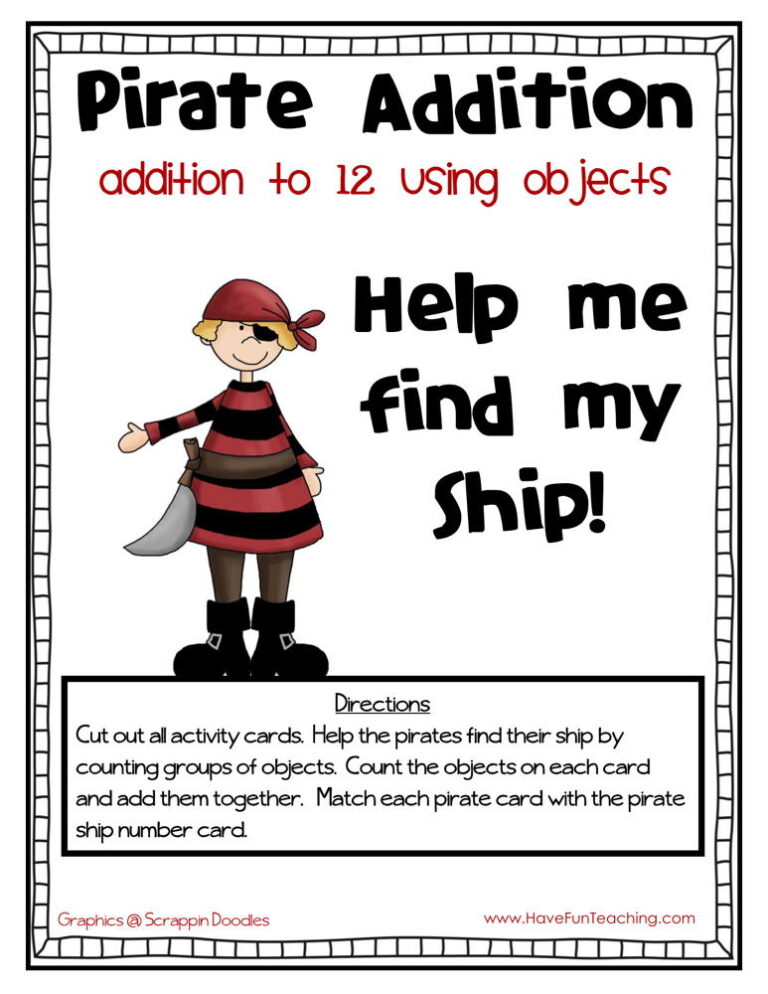
ActivityKindergartenPirate Addition to 12 Activity

This pirate addition to 12 activity helps kindergarten and 1st grade students count two groups of gems and match each sum to its ship. Cards, a recording sheet, practice and an answer key are included.

From our teachers' playbook

Put them together and count them all

What do kindergarteners learn about addition?

In kindergarten, addition means putting groups together. Kids join 2 bears and 3 bears and count them all to find 5. They act out little story problems, draw pictures and use fingers and ten frames to add within 10. They also learn to break numbers apart in different ways: 5 = 4 + 1 and 5 = 3 + 2. By the end of the year, most kindergarteners add and subtract within 5 quickly and find the number that makes 10 with any number from 1 to 9. The click is when a child says "3 and 2 is 5" without counting!

Our favorite ways to teach addition in kindergarten

Five-year-olds learn addition with their hands first. These moves start there.

Join the groups

Tell a story with toys: "Two ducks were swimming. One more duck came. How many now?" Kids push the groups together and count them all. Acting out the story gives the plus sign real meaning before kids ever write it.

Why it works: the U.S. Department of Education's guide for teaching elementary math recommends moving from hands-on objects to drawings to numbers.

Joining Groups to Add WorksheetsTry it withJoining Groups to Add WorksheetsWorksheetsOpen it →

Fill the ten frame

Give kids a ten frame and two colors of counters. Show 6 red and 4 yellow and ask, "How many? How many more to fill it?" Ten frames help kids see numbers in groups instead of counting one by one.

Why it works: pairing a picture with each word gives kids two ways to remember it, a well-tested principle of how people learn (Mayer, 2009).

Using a Tens Frame to Show Addition WorksheetTry it withUsing a Tens Frame to Show Addition WorksheetWorksheetsOpen it →

Sing the plus-one facts

Play an Adding 1 song during snack time and hold up fingers as you sing. Then ask "What is 6 plus 1?" Kids who sing the pattern quickly notice that adding one is just the next counting number.

Why it works: a catchy, repeating tune gives the brain a hook to hang words on, so sung text is remembered better (Wallace, 1994).

Adding 1 Song (Lyric Music Video)Try it withAdding 1 Song (Lyric Music Video)SongsOpen it →

Questions parents and teachers ask about kindergarten addition

What addition should a kindergartener know?

Kindergarteners add within 10 using objects, fingers or drawings, and they should add within 5 quickly. They also break numbers into parts and find the number that makes 10.

How do I teach addition to a 5-year-old?

Use real objects like snacks or toys and tell little stories: "You have 3 crackers and I give you 2 more." Let your child count them all. Move to pictures and numbers only after they understand the idea.

Should kindergarteners memorize addition facts?

Not yet. The goal in kindergarten is understanding. Kids should know facts within 5 quickly, but most memorizing comes in 1st and 2nd grade.

What is decomposing numbers?

Decomposing means breaking a number into parts. For example, 6 can be 5 and 1, 4 and 2, or 3 and 3. It helps kids see how numbers fit together.



