
Skip to content
Start My 3 Free Days $0 today · cancel anytime

Preschool Antonyms Resources

3 preschool antonyms resources: 2 activities and 1 worksheet. How teachers use these

Preschool Antonyms Resources

3 preschool antonyms resources: 2 activities and 1 worksheet. How teachers use these

Activity
ActivityPreschoolLeft and Right Simon Says Opposites Activity

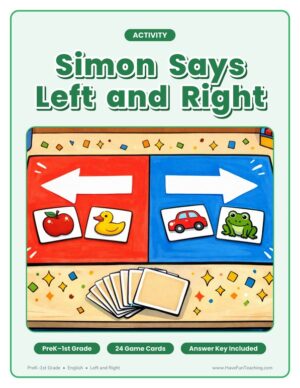
Play the Left and Right Simon Says Opposites Activity with preschool to 1st grade: move picture cards to the correct side of the mat. Practice page and answer key included.

Activity
ActivityPreschoolTop and Bottom Toys Edition Opposites Activity Board Game

This top and bottom toys edition opposites activity board game helps preschool to 1st grade students use top, middle and bottom with a toy shelf, spinner and cards. Answer key included.

From our teachers' playbook

Up, down, big, small, opposites!

What do preschoolers learn about opposites?

Preschoolers learn that some words are opposites, which means they are as different as can be: big and small, hot and cold, up and down. They learn opposites by doing them, stretching tall and crouching small, or putting a toy on top of a box and then on the bottom. Talking about opposites grows vocabulary and helps little ones describe the world around them. Many start with position words like top and bottom, left and right, in and out. The best moment is when a child says "This one is full, and this one is empty!" all on their own.

Our favorite ways to teach opposites

Little ones learn opposites with their whole bodies. These moves keep everyone moving, laughing and learning.

Simon says opposites

Play Simon Says with opposite pairs: "Simon says raise your left hand. Now your right!" Moving the body while hearing the words helps little ones feel the difference between the pair.

Why it works: playful practice with a clear goal keeps kids practicing longer, and simple learning games have been shown to build real skills (Ramani and Siegler, 2008).
Left and Right Simon Says Opposites ActivityTry it withLeft and Right Simon Says Opposites ActivityActivitiesOpen it →

Match the pair

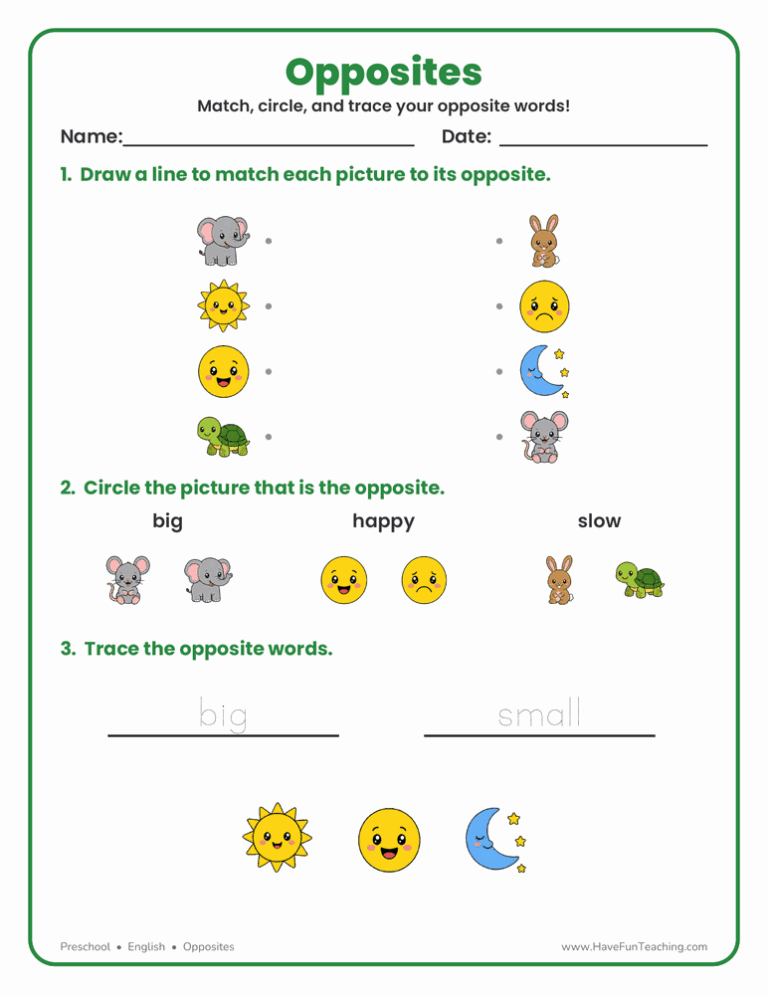
Show pictures of opposites, like a big dog and a small dog, and let kids draw a line to match them. Saying both words out loud while matching builds the vocabulary.

Why it works: children learn more from words and pictures together than from words alone (Mayer, 2009).

Opposites WorksheetTry it withOpposites WorksheetWorksheetsOpen it →

Questions parents and teachers ask

How do I teach opposites to preschoolers?

Use their bodies and real objects. Stretch tall, then crouch small. Put a toy in a box, then out. Saying the words while doing them helps the meaning stick.

What opposites should preschoolers know?

Start with big and small, hot and cold, up and down, in and out, open and closed, and happy and sad. Then add top and bottom, left and right, and fast and slow.

At what age do kids understand opposites?

Many children start to understand simple opposites around age 3 or 4. They often learn big and small first, then add more pairs through everyday play.

How can I practice opposites at home?

Point out opposites during the day: a full cup and an empty cup, a light room and a dark room. Ask your child to find the opposite of something you show them.



