
Skip to content
Start My 3 Free Days $0 today · cancel anytime

Preschool Synonyms Resources

3 preschool synonyms resources: 2 flash cards. How teachers use these

Preschool Synonyms Resources

3 preschool synonyms resources: 2 flash cards. How teachers use these

Flash Cards
Flash CardsPreschoolOpposites Flash Cards

Opposites flash cards for Preschool through 1st Grade: 12 fold-over picture cards teach 24 opposite words, with a practice page and answer key included for fun, hands-on vocabulary review.

Flash Cards
Flash CardsPreschoolShades of Meaning Flash Cards

These shades of meaning flash cards for preschool to 4th grade have children sort 24 words into groups and order them weakest to strongest. Answer key included.

PreschoolShades of Meaning Activity

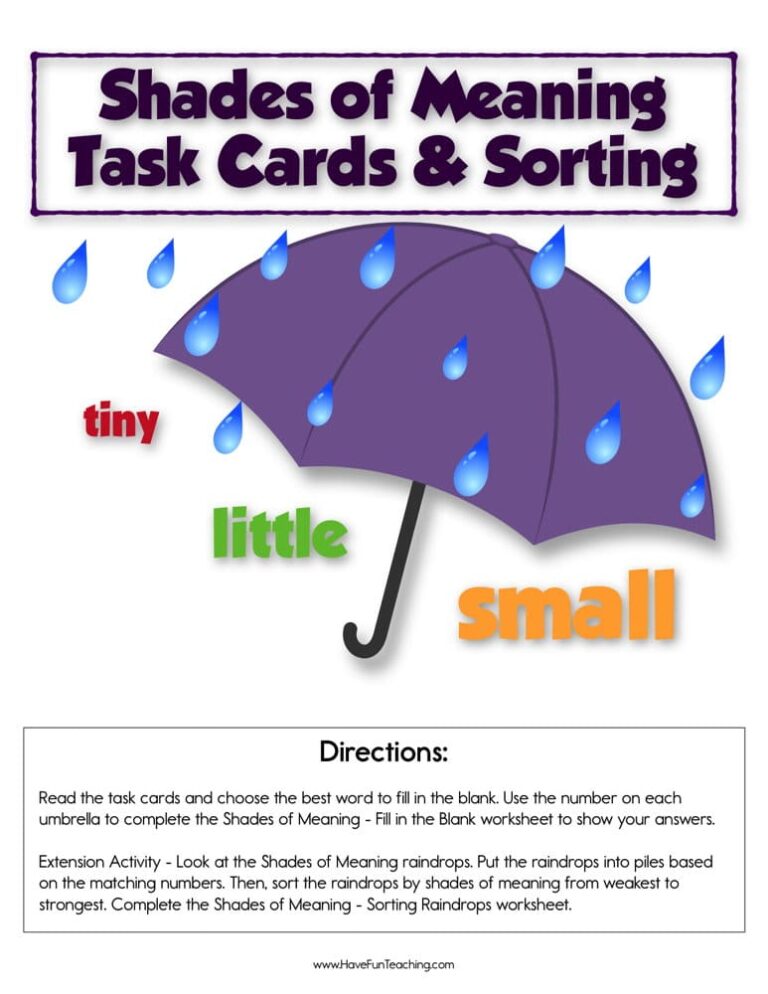
Using the Shades of Meaning Activity, your kids can read the task cards and choose the best word to fill in the blank. This is a fun synonyms activity!

From our teachers' playbook

Big, huge, GIGANTIC words!

What do preschoolers learn about synonyms?

Preschoolers do not need the word "synonym" yet. What they learn is that there is more than one way to say the same thing! Big can be huge or giant. Happy can be glad or cheerful. Little ones build this through talk, stories and play, and it grows their vocabulary fast. They often learn opposites at the same time, like big and small. The click moment comes when a four-year-old says "That dog is not just big, it's ENORMOUS!"

Playful ways to build synonyms in preschool

Word play for little ones is all about voices, pictures and big expressions.

Big, bigger, gigantic

Show a picture card and ask "What word fits?" Then stretch it: "Is it big? Is it huge? Is it gigantic?" Kids use bigger voices and bigger arms for each word. Feeling the difference helps them learn shades of meaning.

Why it works: pairing a picture with each word gives kids two ways to remember it, a well-tested principle of how people learn (Mayer, 2009).

Shades of Meaning Flash CardsTry it withShades of Meaning Flash CardsFlash CardsOpen it →

Same and opposite

Hold up an opposites card, like hot and cold, and ask for another word that means hot. Toasty! Boiling! Collecting words that mean the same thing is a great follow-up to opposites.

Why it works: using clear, consistent math words out loud is one of the U.S. Department of Education's recommendations for elementary math.

Opposites Flash CardsTry it withOpposites Flash CardsFlash CardsOpen it →

Swap the word

During a read-aloud, pause on a simple word and say "I could also say..." and offer a new one. Soon kids start jumping in with their own swaps. Hearing you do it shows them that words can be traded.

Why it works: showing first, practicing together, then letting kids try alone is the "gradual release" model teachers have relied on for decades (Pearson and Gallagher, 1983).

Shades of Meaning ActivityTry it withShades of Meaning ActivityOpen it →

Questions about synonyms for preschoolers

Should preschoolers learn synonyms?

Yes, in a playful way. Preschoolers do not need the word synonym, but learning that big and huge mean the same thing builds vocabulary. It happens best through talk and stories.

How do I teach synonyms to a 4-year-old?

Use the words in everyday talk: "You are so happy, you are glad, you are cheerful!" Point to pictures and offer two words for the same thing. Acting the words out helps a lot.

What are easy synonyms for preschoolers?

Big and huge, little and tiny, happy and glad, fast and quick, and sad and unhappy are good starters. Pick words kids already use and add one new word to each.

Why does vocabulary matter so much in preschool?

The words children hear and use now help them understand stories and, later, what they read. Talking with your child often and naming things in new ways is one of the best things you can do.



