
Skip to content
Start My 3 Free Days $0 today · cancel anytime

Preschool Fluency Resources

3 preschool fluency resources: 2 activities and 1 worksheet. How teachers use these

Preschool Fluency Resources

3 preschool fluency resources: 2 activities and 1 worksheet. How teachers use these

Activity
ActivityPreschoolI Like Colors Flip Book Activity

Using I Like Colors Flip Book Activity, students read the emergent reader with purpose and understanding to improve fluency and accuracy.

Activity
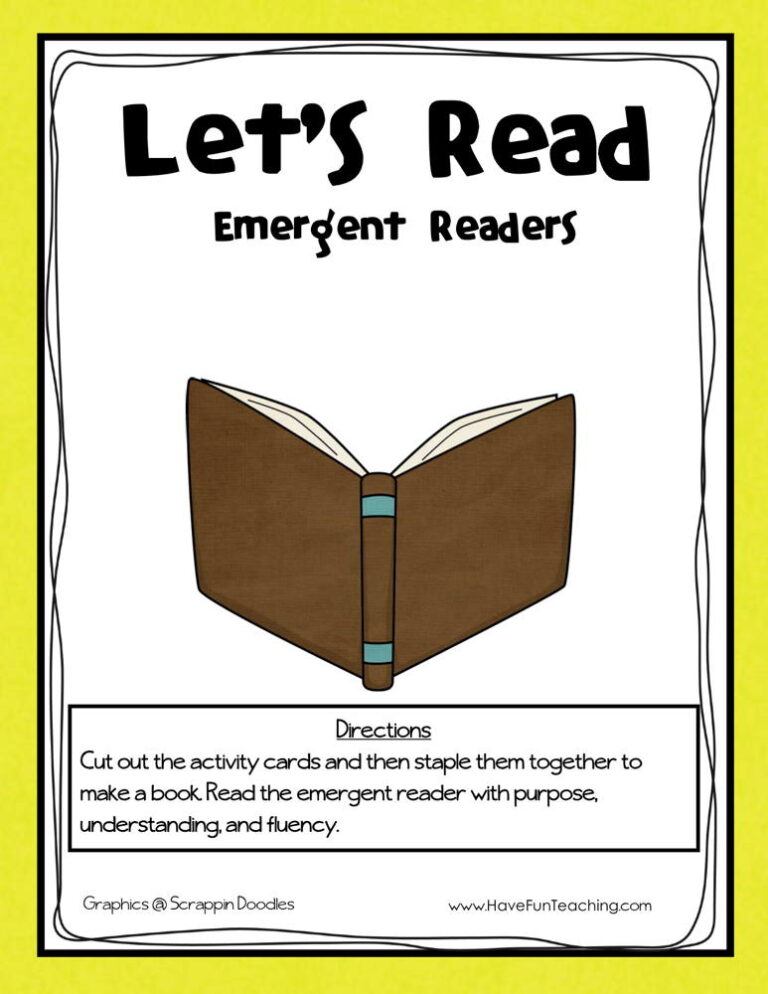
ActivityPreschoolLet's Read Emergent Readers Activity

This Let's Read emergent readers activity is a cut-and-tape mini book for PreK to 1st grade that builds sight word fluency. Answer key included for the practice page.

From our teachers' playbook

Smooth reading starts with little steps

What does fluency look like in preschool?

Preschool fluency isn't about speed. It's about getting the feel of reading! Kids "read" predictable books with a repeating line like I like red. I like blue., point to each word as they go and use their voice with expression. Many start to recognize a handful of sight words, like I, like and the, without sounding them out. They learn that print goes left to right and that each spoken word matches a written word. The click moment is a child "reading" a little book all by themselves to anyone who'll listen.

Our favorite ways to grow fluency in preschool

Short, repeated, joyful reading is the secret. Here's how we make it happen.

I read, we read, you read

Read a short emergent reader with lots of expression while kids listen. Read it again together, all pointing to the words. Then a child reads it to a friend. Hearing a fluent reader first gives them a model to copy.

Why it works: handing over the work step by step, from teacher to student, is one of the most widely used teaching frameworks (Pearson and Gallagher, 1983).

Let's Read Emergent Readers ActivityTry it withLet's Read Emergent Readers ActivityActivitiesOpen it →

Same book, all week

Send the same little book home Monday and read it every day. By Friday kids know it cold, and that confidence is exactly what fluency feels like. Repeated reading of easy text builds smooth, automatic reading.

Why it works: the brain holds on to what it meets again and again over time; spaced practice was rated among the very best methods (Dunlosky and colleagues, 2013).

I Like Colors Flip Book ActivityTry it withI Like Colors Flip Book ActivityActivitiesOpen it →

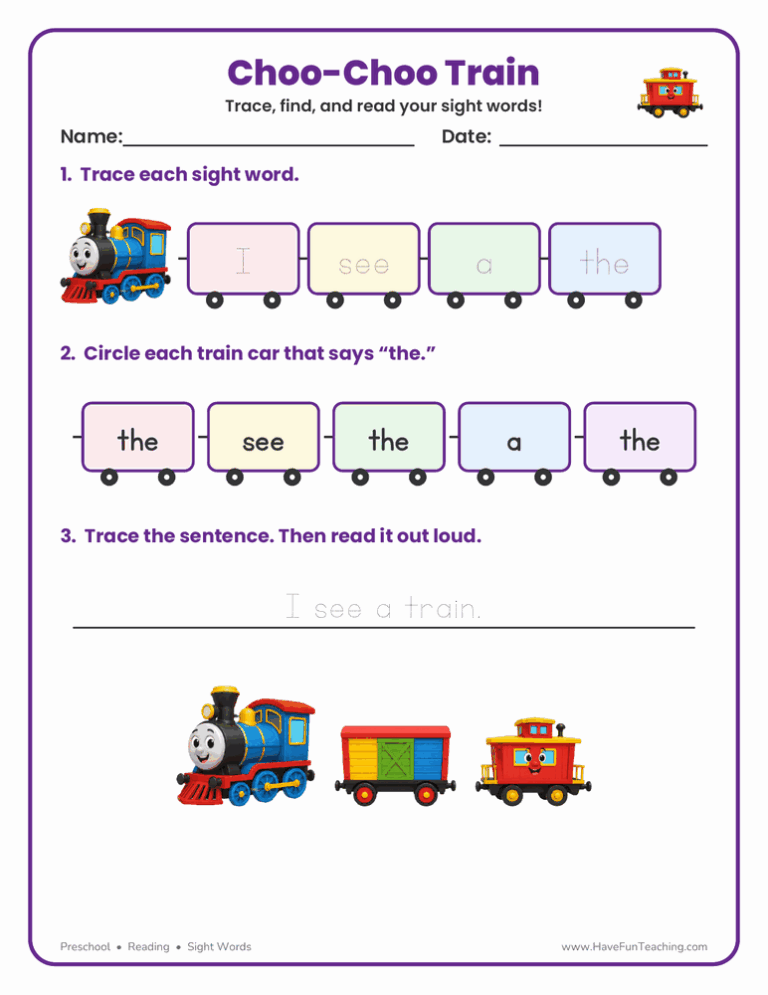
Sight word train

Line up sight word cards like train cars and "drive" a toy train over them as kids read each word. Speed up a little each round, and cheer when the train reaches the station.

Why it works: a big review of study methods ranked quick self-quizzing among the most powerful ways to remember (Dunlosky and colleagues, 2013).

Choo-Choo Train Sight Words WorksheetTry it withChoo-Choo Train Sight Words WorksheetWorksheetsOpen it →

Questions parents and teachers ask

What is reading fluency in preschool?

It's the early feel of reading: pointing to words, reading predictable lines smoothly and using expression. Real decoding speed comes later in kindergarten and first grade.

Can preschoolers read sight words?

Many can learn a few common ones, like I, a, the and like, through games and repeated books. Keep it playful and never pressure.

How do I build fluency with my preschooler at home?

Read the same short books over and over and let your child "read" the repeating line. Point to the words as you go. A few minutes a day is plenty.

Why does my child want the same book every night?

That's great news! Repetition helps kids memorize the words, notice patterns and feel like readers. It's one of the best fluency builders there is.



