
Skip to content
Start My 3 Free Days $0 today · cancel anytime

Food Chains Resources

3 food chains resources: 3 worksheets. How teachers use these

Food Chains Resources

3 food chains resources: 3 worksheets. How teachers use these

Worksheet
Worksheet4th GradeMatching Ecosystems Worksheet

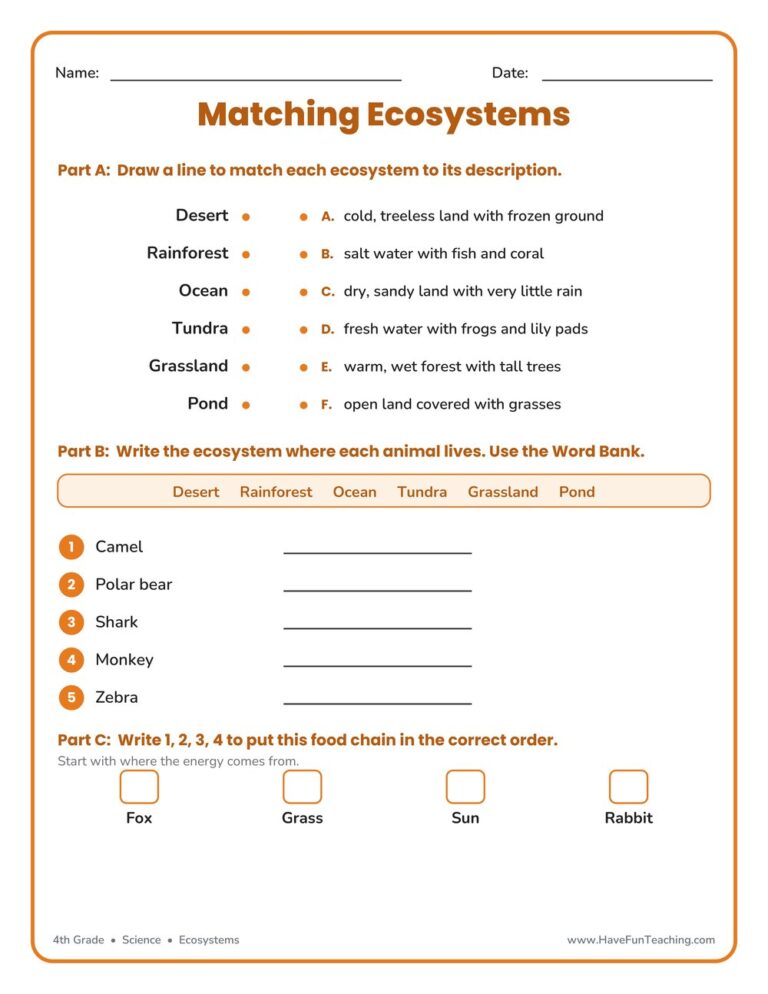
This matching ecosystems worksheet helps 4th grade students match ecosystems to descriptions, sort animals into habitats, and order a food chain. Includes an answer key for easy, no-prep science practice.

Worksheet
Worksheet4th GradeFood Chain Worksheet

This food chain worksheet asks 4th grade students to match a producer and three consumers to their pictures and explain how energy moves. An answer key is included to make checking quick.

Worksheet
Worksheet3rd GradeEnvironments Word Search Worksheet

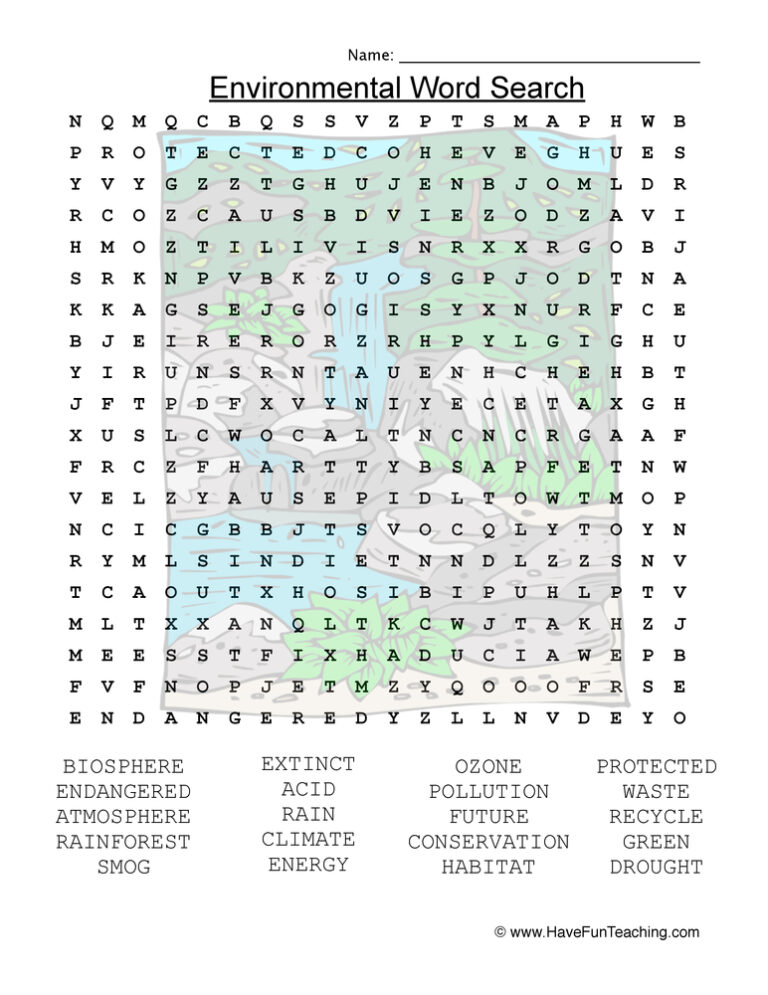
This Environments Word Search Worksheet gives 3rd graders a fun way to practice habitat, desert, forest, wetland, predator, and producer. An answer key is included, so review takes seconds.

From our teachers' playbook

Who eats whom? Follow the energy!

What do kids learn about food chains?

A food chain shows how energy moves from one living thing to the next when something eats something else. It almost always starts with the Sun and a producer, a plant that makes its own food. Then come the consumers: grass → grasshopper → frog → snake → hawk. Kids learn the arrows point toward the eater, showing where the energy goes, and that decomposers like worms and mushrooms break down what is left. Older students connect chains into food webs. The click moment is when a student realizes that if the grass disappears, the hawk is in trouble too.

Our favorite ways to make food chains stick

Food chains come alive when kids see the connections. These moves make the arrows make sense.

Draw the arrows right

The most common mix-up is arrows pointing the wrong way. Teach the phrase "the arrow points to the mouth," then have kids draw a chain and check each arrow with a partner. Say it every time and the mistake disappears.

Why it works: pairing a picture with each word gives kids two ways to remember it, a well-tested principle of how people learn (Mayer, 2009).

Food Chain WorksheetTry it withFood Chain WorksheetWorksheetsOpen it →
Match the habitat

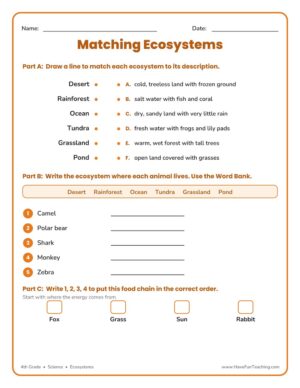
Before building chains, kids match animals and plants to their ecosystems, like ocean, desert and forest. Then they build one chain from each. A shark chain and a desert chain look very different, which shows why habitat matters.

Why it works: kids understand an idea best when they touch it, then draw it, then write it, the order the U.S. Department of Education recommends for elementary math.

Matching Ecosystems WorksheetTry it withMatching Ecosystems WorksheetWorksheetsOpen it →

Words a little at a time

Producer, consumer, predator, prey, decomposer: that is a lot of new words. Review two or three each day with a quick word game for a couple of weeks. Short, regular reviews make the vocabulary stick.

Why it works: spreading practice out over days is one of the two most effective study methods in a major research review (Dunlosky and colleagues, 2013).

Environments Word Search WorksheetTry it withEnvironments Word Search WorksheetWorksheetsOpen it →

Questions parents and teachers ask

What is a food chain for kids?

A food chain shows who eats whom in nature, and how energy passes from one living thing to the next. It starts with the Sun and a plant, then moves to animals that eat plants and animals that eat other animals.

Which way do the arrows go in a food chain?

The arrows point from the thing being eaten to the thing that eats it. They show the direction energy flows. A simple trick: the arrow points to the mouth.

What is the difference between a food chain and a food web?

A food chain is one straight path of who eats whom. A food web connects many food chains, showing that most animals eat and are eaten by more than one thing.

What are producers, consumers and decomposers?

Producers, like plants, make their own food from sunlight. Consumers eat plants or other animals. Decomposers, like worms, fungi and bacteria, break down dead things and return nutrients to the soil.

Keep exploring



