Skip to content
Start My 3 Free Days $0 today · cancel anytime

4th Grade Environments Resources

13 4th grade environments resources: 13 worksheets and 1 assessment. How teachers use these

4th Grade Environments Resources

13 4th grade environments resources: 13 worksheets and 1 assessment. How teachers use these

Worksheet
Worksheet4th GradeBiomes Worksheet

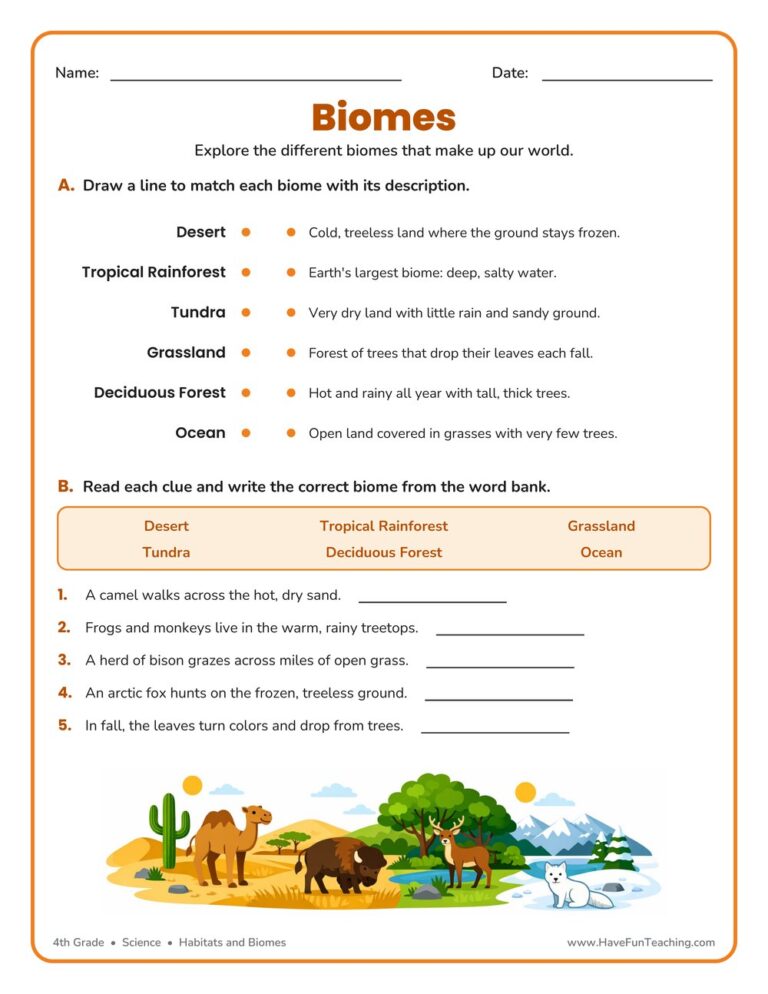
This Biomes Worksheet helps 4th grade students match major biomes to their climates and identify each one from real-world clues. Includes an answer key for fast, no-prep science practice at home or school.

Worksheet
Worksheet4th GradeMatching Ecosystems Worksheet

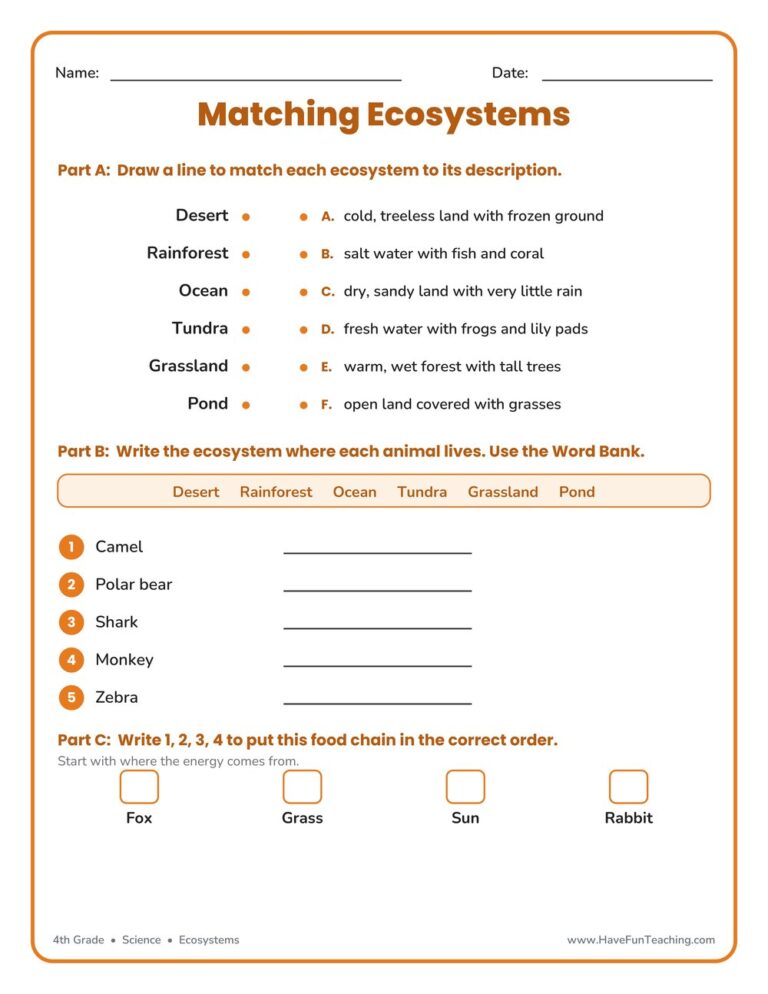
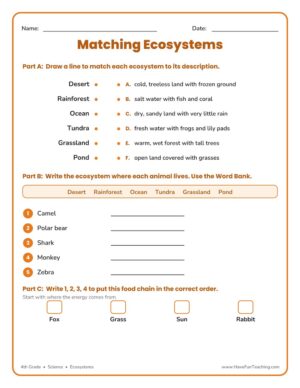
This matching ecosystems worksheet helps 4th grade students match ecosystems to descriptions, sort animals into habitats, and order a food chain. Includes an answer key for easy, no-prep science practice.

Worksheet
Worksheet4th GradeOur Natural Resources Worksheet

Our Natural Resources Worksheet asks 4th graders to sort eight resources into renewable and nonrenewable columns, then explain the difference in writing. Answer key included — easy no-prep Earth Science practice.

Worksheet
Worksheet4th GradeDrawing Ecosystems Worksheet

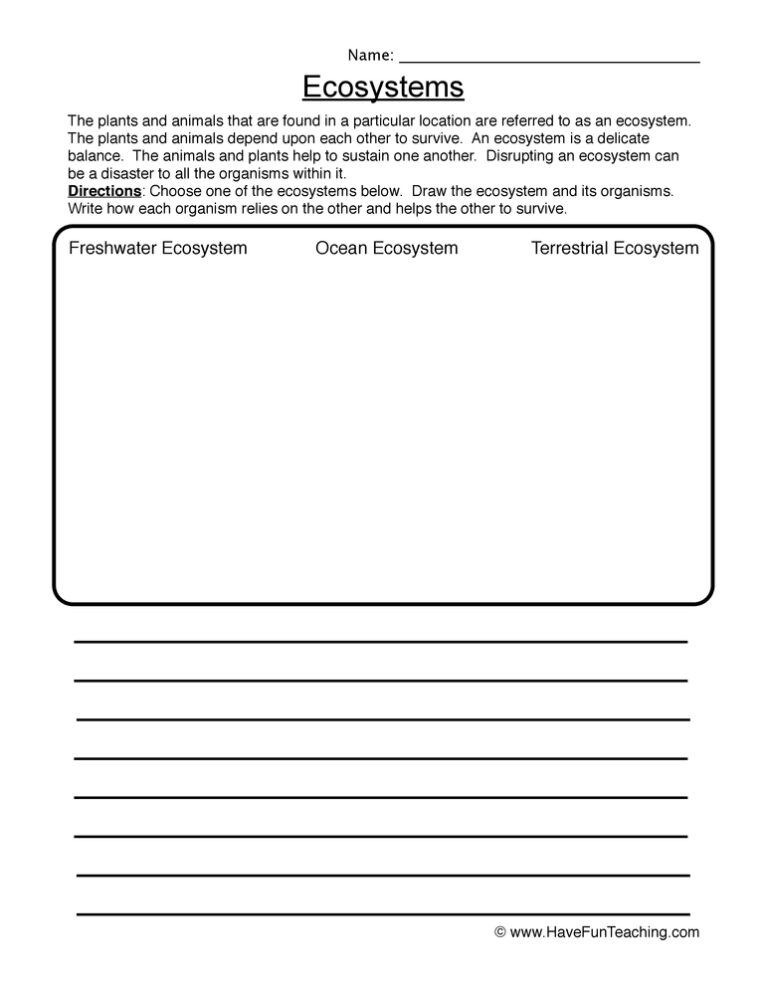
The Drawing Ecosystems Worksheet asks 4th grade students to name the freshwater, ocean and terrestrial ecosystems behind six clues, then explain one animal partnership. An answer key is included, so checking takes a minute.

Worksheet
Worksheet4th GradeNatural Resources Sorting Worksheet

The Natural Resources Sorting Worksheet has 4th graders sort a word bank of twelve resources into renewable and non-renewable columns, then write a sentence. Answer key included for easy Earth Science practice.

Worksheet
Worksheet4th GradeLandform Matching Worksheet

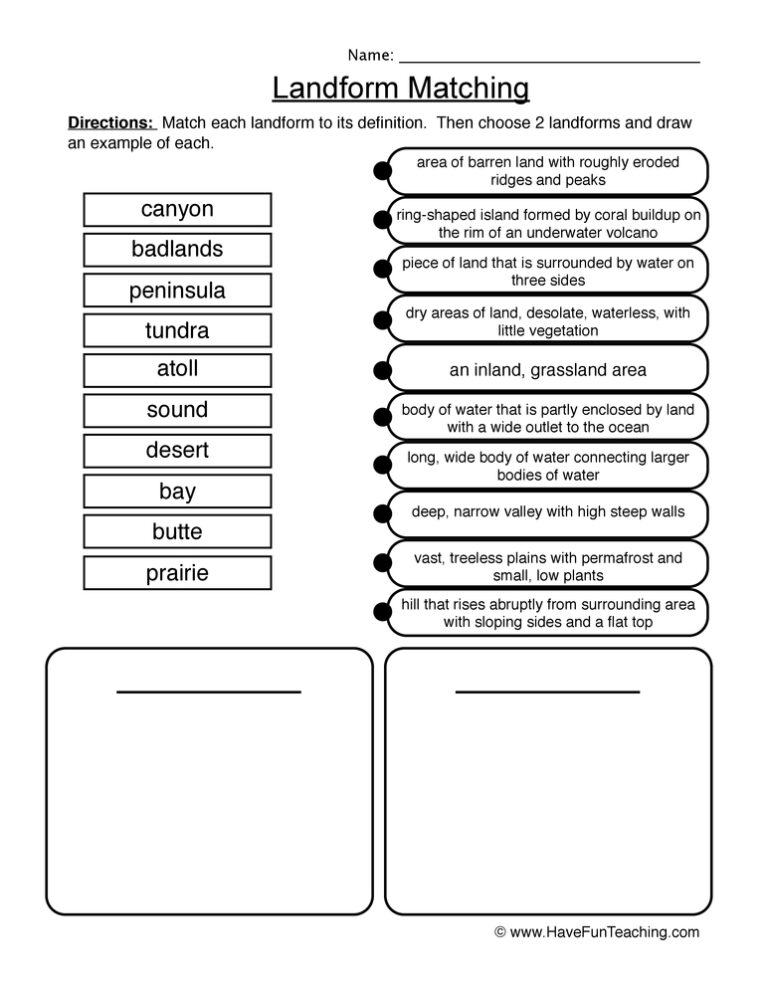
This landform matching worksheet helps 4th grade students match eight landforms to their meanings, then draw and describe two of them. An answer key is included to make checking quick and easy.

Worksheet
Worksheet4th GradeEnvironmental Health Worksheet

This environmental health worksheet asks 4th graders to sort real clues into air, water, soil, and noise pollution, then plan two ways their class can help. Answer key included for quick, no-prep science practice.

Worksheet
Worksheet4th GradeResources Worksheet

This Resources Worksheet lets 4th Grade students choose a natural resource from the land, list how people use it, and share ideas for protecting it for the future.

Worksheet
Worksheet4th GradeNatural Resources Writing Worksheet

This Natural Resources Writing Worksheet asks 4th graders four written questions on renewable and nonrenewable resources and how to conserve them. An answer key is included, so it is ready to print and teach.

Worksheet
Worksheet4th GradeDesert Map Worksheet

This Desert Map Worksheet asks 4th Grade students to read four clues, name each United States desert, and mark it on the map. An answer key is included, so checking work takes seconds.

Worksheet
Worksheet4th GradeLandform Definition Matching Worksheet

This landform definition matching worksheet has 4th grade students match clues to canyons, buttes, atolls, and more, then name two landforms on their own. An answer key is included.

Worksheet
Worksheet4th GradeArctic Research Worksheet

This Arctic Research Worksheet guides 4th grade students to look up facts about Arctic trees, seasons, animals and the tundra, then write full answers. An answer key is included for quick checking.

Assessment
Assessment4th GradeWelcome to the Oasis Reading Comprehension Worksheet

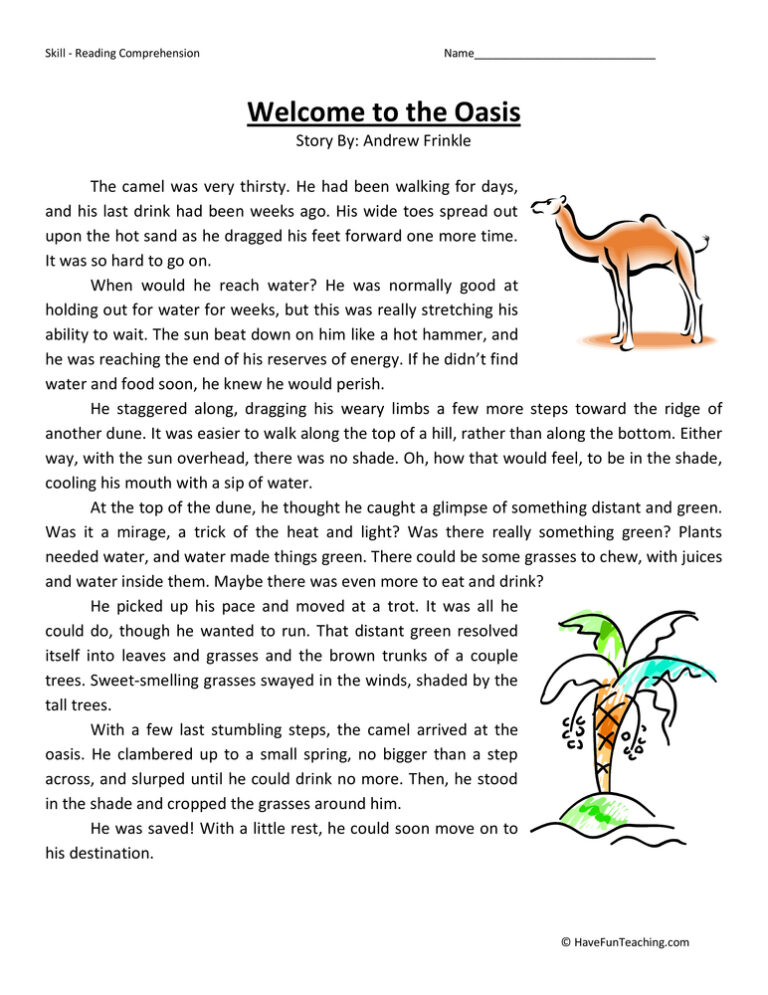
This Welcome to the Oasis reading comprehension worksheet gives 4th grade students a two-page passage about desert oases, four multiple-choice questions and a written response. An answer key is included.

From our teachers' playbook

Deserts, forests, oceans and everything alive in them

What do 4th graders learn about environments?

Fourth graders learn how living things and their environments are connected. They study biomes like deserts, rainforests, grasslands and the Arctic, and compare the plants and animals that survive in each. They learn about ecosystems and how a change, like a drought or pollution, affects everything living there. They also explore natural resources and how people can use them wisely. The click moment is when kids understand that a camel's hump or a polar bear's fur is a clue to where it lives.

Our favorite ways to teach environments

Environments come alive when kids compare, sort and draw them. These moves help.

Draw an ecosystem

Kids draw one ecosystem with its plants, animals, water and sun, then add arrows to show who needs what. Drawing connections makes the idea of an ecosystem clear, and it shows you misunderstandings fast.

Why it works: pairing a picture with each word gives kids two ways to remember it, a well-tested principle of how people learn (Mayer, 2009).

Drawing Ecosystems WorksheetTry it withDrawing Ecosystems WorksheetWorksheetsOpen it →

Sort the resources

Give kids cards for water, oil, trees, wind and sunlight and have them sort into renewable and nonrenewable. Then talk about which ones we should protect. Sorting builds vocabulary and big-picture thinking.

Why it works: the U.S. Department of Education's guide for teaching elementary math recommends moving from hands-on objects to drawings to numbers.

Natural Resources Sorting WorksheetTry it withNatural Resources Sorting WorksheetWorksheetsOpen it →

Match it to its home

Show a plant or animal and ask, "Which environment is its home? What clue tells you?" A quick matching round reviews biomes and adaptations together.

Why it works: pulling an answer out of memory makes it stick far better than rereading it, one of the strongest findings in learning research (Dunlosky and colleagues, 2013).

Matching Ecosystems WorksheetTry it withMatching Ecosystems WorksheetWorksheetsOpen it →
Environment questions parents and teachers ask

What do 4th graders learn about environments?

They learn about biomes and ecosystems, how plants and animals are adapted to where they live, how environments change, and how people use and protect natural resources.

What is the difference between a biome and an ecosystem?

A biome is a large region with a similar climate, like a desert or rainforest. An ecosystem is a community of living things and their surroundings, and it can be as small as a pond.

What are natural resources?

Natural resources are things from nature that people use, like water, soil, trees, oil and sunlight. Some are renewable and some will run out.

How can I teach environments at home?

Visit a park, pond or zoo and talk about why animals live where they do. Watch nature documentaries together and compare different places.