
Skip to content
Start My 3 Free Days $0 today · cancel anytime

2nd Grade Division Resources

6 2nd grade division resources: 5 activities, 1 song and 1 video. How teachers use these

2nd Grade Division Resources

6 2nd grade division resources: 5 activities, 1 song and 1 video. How teachers use these

Activity
Activity2nd GradeMystery Monster Math Unknown Factors Activity

Using this Mystery Monster Math Unknown Factors Activity, students understand division as an unknown factor problem to build multiplication fact fluency.

Activity
Activity2nd GradeBe the Baker Multiplication Activity

Using this Be the Baker Multiplication Activity, students interpret products of whole numbers into equal groups.

Activity
Activity2nd GradeSharing with Whole Numbers Division Activity

Using this Sharing with Whole Numbers Division Activity, students interpret whole numbers as the number of objects in each share.

Activity
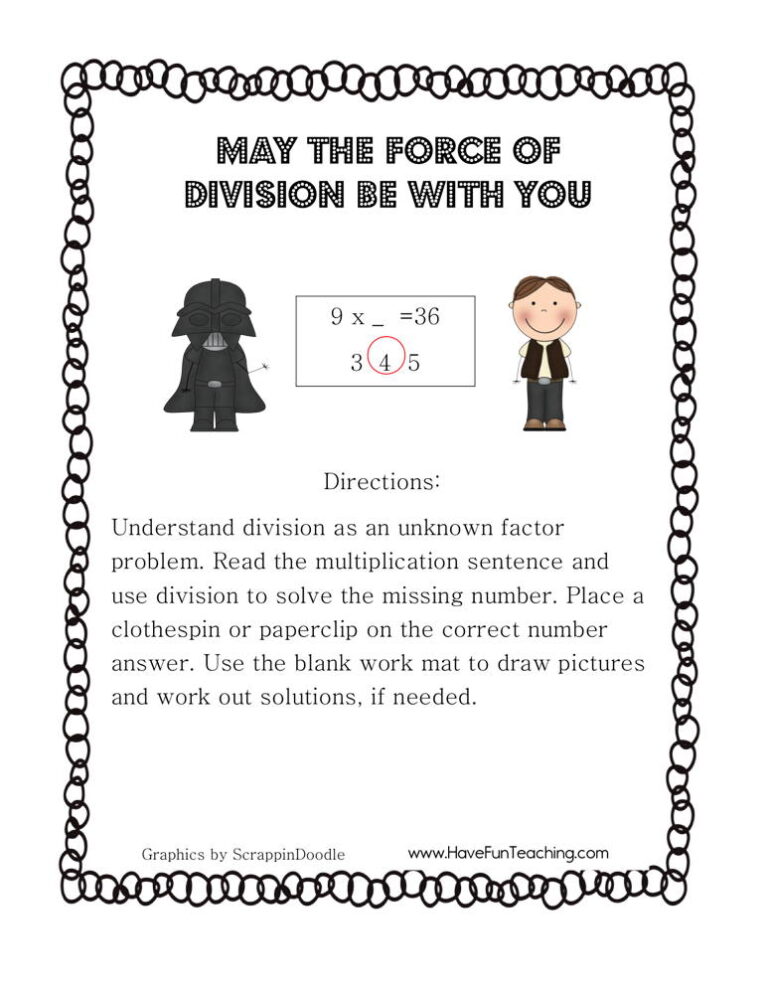
Activity2nd GradeMay the Force of Division Be With You Activity

Using this May the Force of Division Be With You Activity, students understand division as an unknown factor problem to build multiplication fact fluency.

Activity
Activity2nd GradeMonsters Mixed Up Math Unknown Factors Puzzle Activity

Using this Monsters Mixed Up Math Unknown Factors Puzzle Activity, students understand division as an unknown factor problem to build multiplication fact fluency.

From our teachers' playbook

Fair shares and equal groups

What do 2nd graders learn about division?

Second grade lays the groundwork for division, even before the ÷ sign shows up. Kids practice fair sharing: 12 cookies shared by 3 friends means each friend gets 4. They make equal groups, build arrays in rows and columns, and skip count to find totals. Many classes start to see that sharing and grouping are the flip side of repeated addition: 4 + 4 + 4 = 12, so 12 split into 3 groups is 4. That idea is exactly what makes 3rd grade multiplication and division feel easy.

Our favorite ways to build division sense

Real objects and real stories come first. These moves turn sharing into math kids can explain.

Share it out, one by one

Give each table a cup of counters and a few paper plates. Say "Share 15 between 3 plates," and kids deal them out one at a time like playing cards. Then they draw the plates and write how many on each.

Why it works: the U.S. Department of Education's guide for teaching elementary math recommends moving from hands-on objects to drawings to numbers.

Sharing with Whole Numbers Division ActivityTry it withSharing with Whole Numbers Division ActivityActivitiesOpen it →
What's missing?

Put up "3 groups of ? make 12" and let partners argue it out with counters before anyone writes an answer. Asking kids to explain how they know is where the real thinking happens.

Why it works: when kids say the precise math words, their understanding gets sharper, a recommendation of the U.S. Department of Education's elementary math guide.

Mouses Missing Numbers Multiplication Division ActivityTry it withMouses Missing Numbers Multiplication Division ActivityActivitiesOpen it →
Five sharing stories a week

Start each math block with one quick sharing story: pencils for teams, stickers for friends. One story a day, all week long, keeps the idea fresh far better than a single big lesson.

Why it works: short practice spread over several days beats one long session, according to a large review of learning research (Dunlosky and colleagues, 2013).

May the Force of Division Be With You ActivityTry it withMay the Force of Division Be With You ActivityActivitiesOpen it →

Questions parents and teachers ask about division in 2nd grade

Do 2nd graders learn division?

Second graders don't usually learn formal division with the ÷ sign. They build the foundation with fair sharing, equal groups, arrays and skip counting, which leads straight into division in 3rd grade.

How do I explain division to a 7-year-old?

Call it fair sharing. Give them a pile of snacks and a few bowls and ask them to make it fair, so every bowl has the same amount. That's division!

What's the difference between sharing and grouping?

Sharing asks how many each group gets (12 shared by 3 friends). Grouping asks how many groups you can make (12 in groups of 4). Both are division, and kids should try both kinds of story.

How can I practice division at home?

Use everyday moments: splitting crackers, dealing cards or sorting socks into pairs. Ask "Is it fair? How many does each person get?" A few minutes a day builds strong number sense.



