
Skip to content
Start My 3 Free Days $0 today · cancel anytime

2nd Grade Fantasy and Realism Resources

1 2nd grade fantasy and realism resources: 1 worksheet and 1 assessment. How teachers use these

2nd Grade Fantasy and Realism Resources

1 2nd grade fantasy and realism resources: 1 worksheet and 1 assessment. How teachers use these

Assessment
Assessment2nd GradeFantasy and Reality Reading Comprehension Worksheet

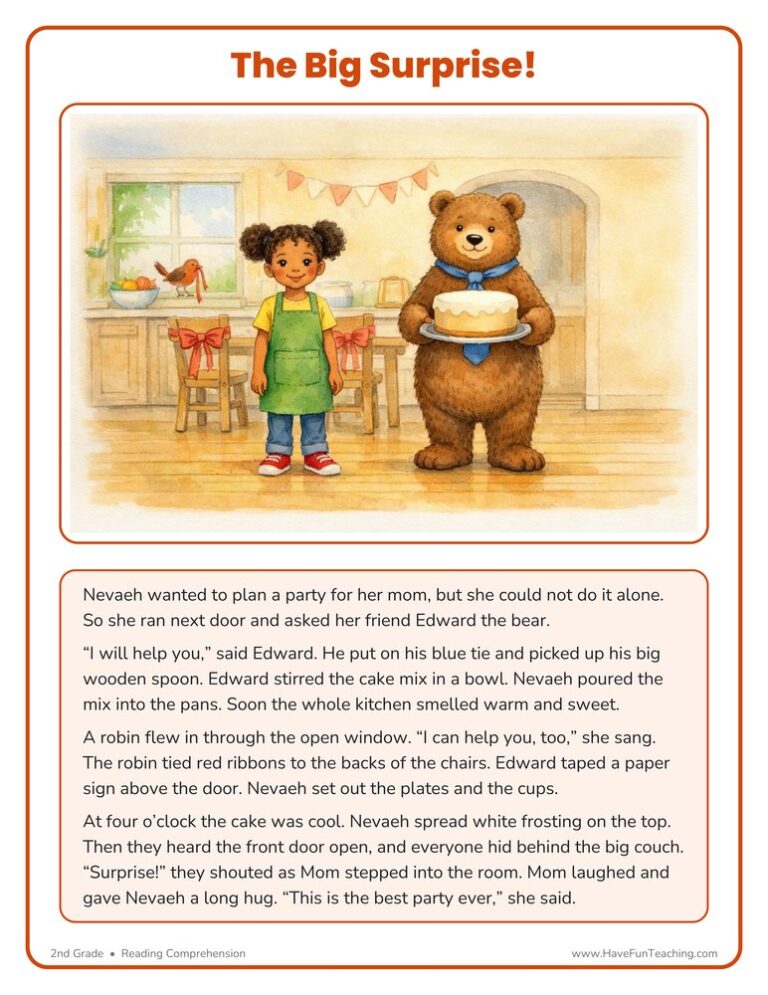
A Fantasy and Reality Reading Comprehension Worksheet where 2nd graders read a birthday story and sort what could really happen from what is make-believe. Answer key included, so genre practice takes no prep.

From our teachers' playbook

Could it really happen?

What do 2nd graders learn about fantasy and realism?

Second graders learn to sort stories into two big groups. Realistic fiction is made up, but it could really happen: a girl loses her tooth, a boy learns to ride a bike. Fantasy could never happen in real life: talking animals, magic wands, a dragon who bakes cupcakes! Kids look for clues in the words and pictures to decide. The click is when they realize a story can feel real and still be fantasy, just because one pig wears a hat and talks.

How we teach fantasy and realism

Kids love being story detectives. These moves sharpen their eye for clues.

Think aloud the clues

Read a short story aloud and stop when you hit a clue: "Wait, the dog said good morning! Dogs can't talk, so this part is fantasy." Model one or two clues, then let kids raise a hand when they spot the next one.

Why it works: showing first, practicing together, then letting kids try alone is the "gradual release" model teachers have relied on for decades (Pearson and Gallagher, 1983).

Fantasy and Reality Reading Comprehension WorksheetTry it withFantasy and Reality Reading Comprehension WorksheetWorksheetsOpen it →

Real or make-believe? sort

Write simple sentences on cards, like "The cat chased a mouse" and "The cat flew to the moon." Kids sort them into two baskets and explain each choice. Two minutes of sorting builds quick, confident thinking.

Why it works: playful practice with a clear goal keeps kids practicing longer, and simple learning games have been shown to build real skills (Ramani and Siegler, 2008).

Picture clue check

Show illustrations from a few books without reading the words. Ask "Real or fantasy? How do you know?" Pictures often give it away, and kids learn to use them as evidence.

Why it works: children learn more from words and pictures together than from words alone (Mayer, 2009).

Questions parents and teachers ask

What is fantasy vs reality in 2nd grade?

Fantasy stories have things that could never happen, like talking animals or magic. Realistic stories are made up but could really happen. Second graders look for clues to tell the difference.

Is realistic fiction true?

No. Realistic fiction is made up, but the events could happen in real life. A true story about a real event is nonfiction.

How do I teach fantasy and reality?

Read a mix of stories and ask "Could this really happen?" after each one. Have kids point to the exact word or picture that gave them the answer.

What are examples of fantasy books for 2nd graders?

Any story with animals that talk and wear clothes, wizards, fairies, dragons or magical objects is fantasy. Many favorite picture books fall into this group.


