Skip to content
Start My 3 Free Days $0 today · cancel anytime

Lines Resources

7 lines resources: 2 test prep, 2 assessments, 2 workbooks and more. How teachers use these

Lines Resources

7 lines resources: 2 test prep, 2 assessments, 2 workbooks and more. How teachers use these

Video
VideoPreschoolShapes Song

Using the Shapes Song, students learn all about shapes, including Shape Names and Shape Recognition. The Shapes Song by Have Fun Teaching is a song that teaches the shapes. Shapes have names their made of angles and lines, there are flat shapes and solid shapes we see them all the…

Workbook
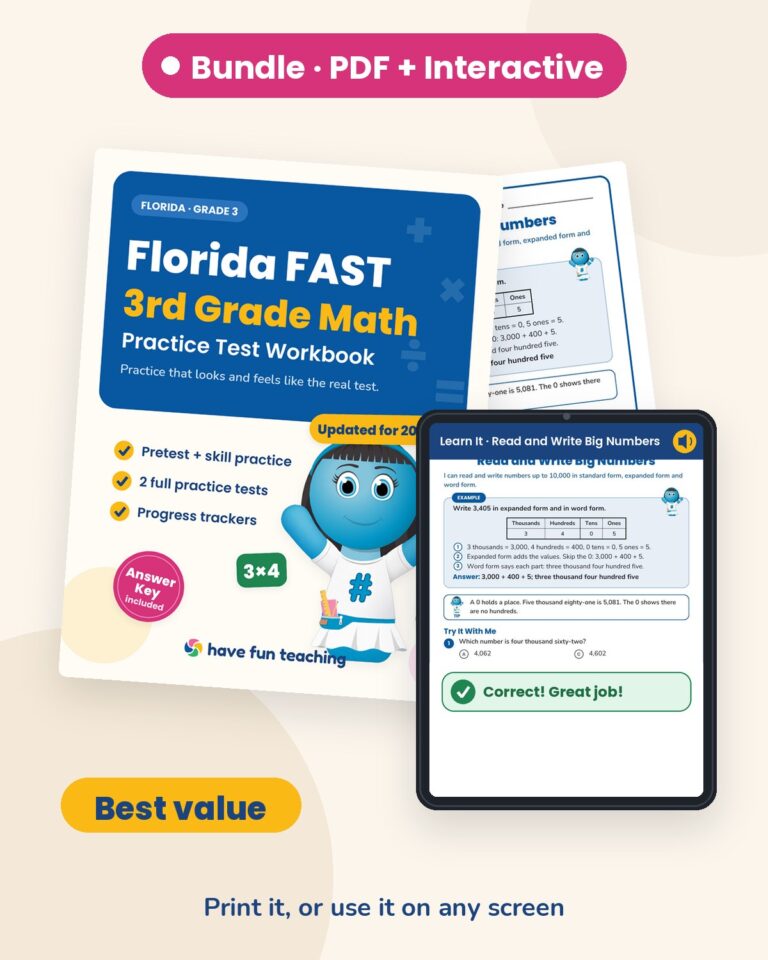
Workbook3rd GradeFlorida FAST 3rd Grade Math Practice Test Workbook

A Florida FAST 3rd grade math practice test workbook for teachers, with a pretest, skill practice for all 34 benchmarks, mixed review and 2 full-length practice tests. Answer key included, so test prep is ready to go.

Worksheet
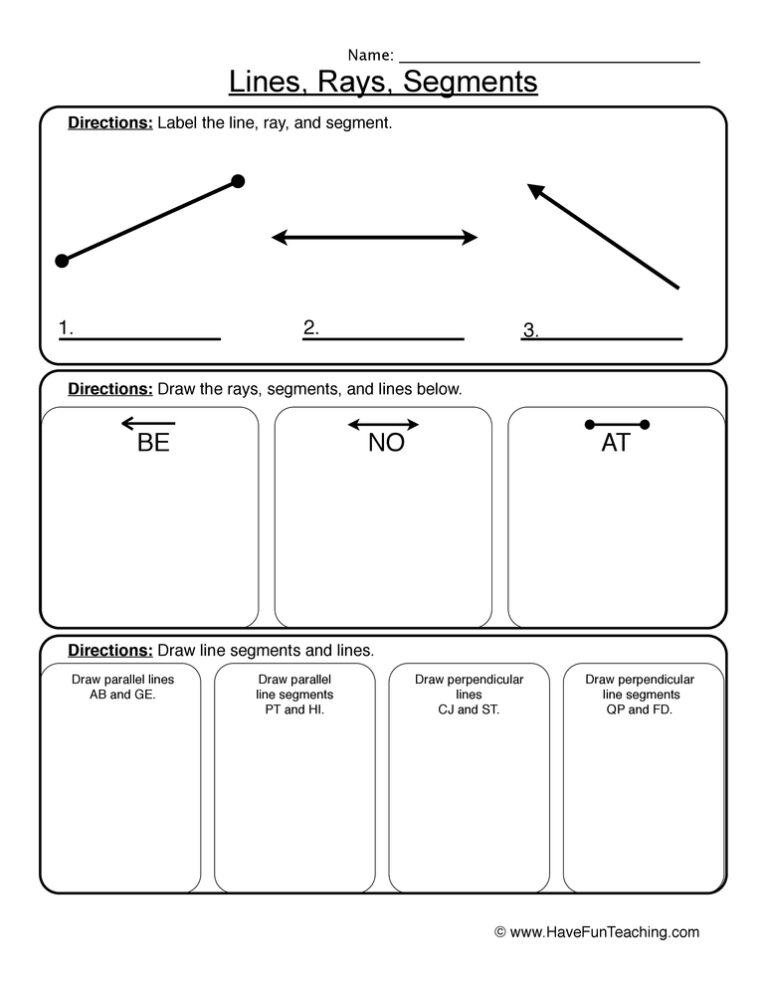
Worksheet4th GradeAngles Rays and Segments Worksheet

This angles rays and segments worksheet gives 4th graders practice naming and drawing lines, rays, segments, and parallel lines. An answer key is included, so checking work takes seconds.

Workbook
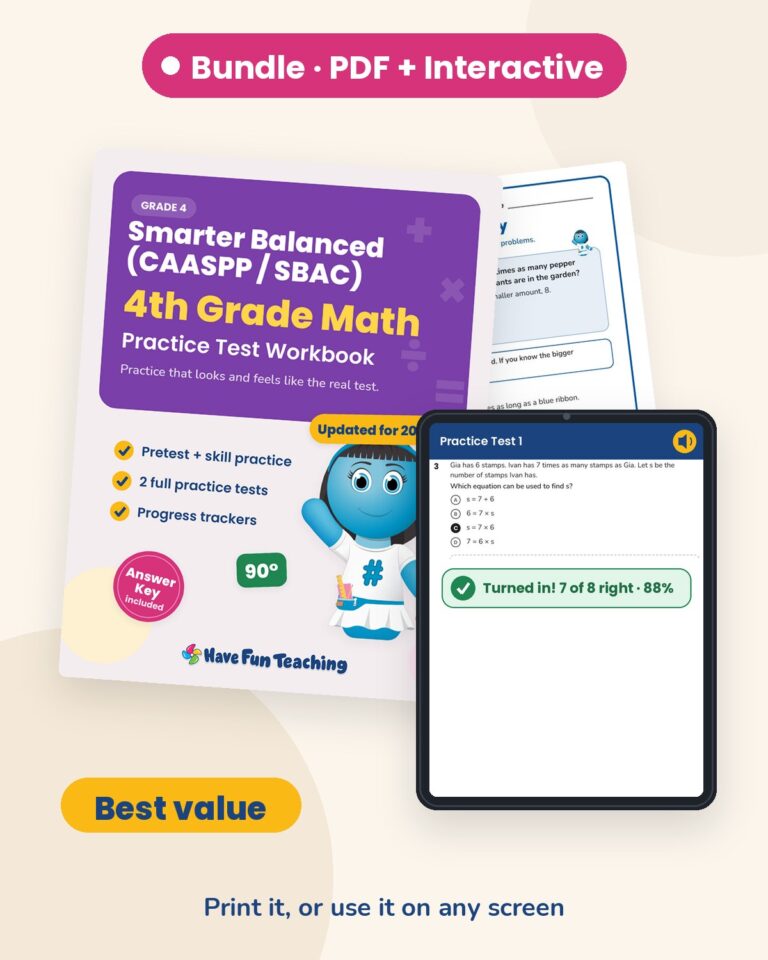
Workbook4th GradeSmarter Balanced (CAASPP / SBAC) 4th Grade Math Practice Test Workbook

A Smarter Balanced (CAASPP / SBAC) 4th grade math practice test workbook for teachers, with a pretest, skill practice for all 38 standards, mixed review and 2 full-length practice tests. Answer key included, so test prep is ready to go.

Common Core Lesson
Common Core Lesson4th Grade4.G.1 Fourth Grade Common Core Lesson

In this 4.G.1 Fourth Grade Common Core Lesson, students identify points, lines, line segments, rays, angles, perpendicular and parallel lines.

Common Core Lesson
Common Core Lesson4th Grade4.G.2 Fourth Grade Common Core Lesson

In this 4.G.2 Fourth Grade Common Core Lesson, students classify shapes based on presence or absence of specific lines and angles.

Activity
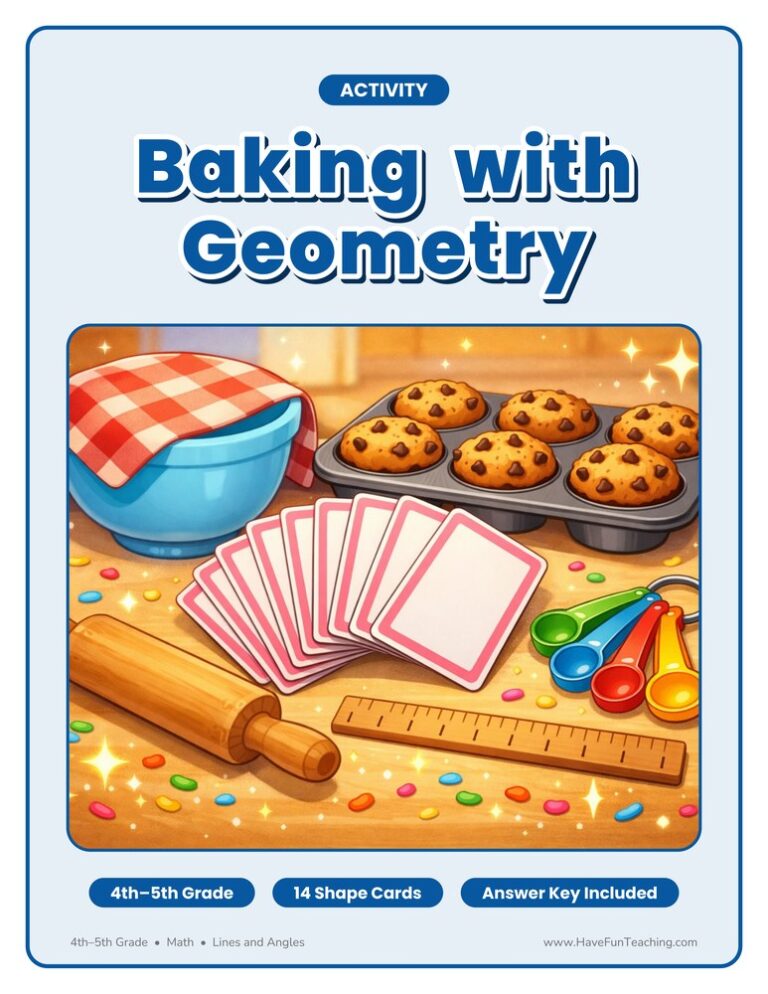
Activity4th GradeBaking with Geometry Activity

This baking with geometry activity helps 4th and 5th grade students sort points, lines, line segments, rays and angles on a fun bake sale mat. A practice page and an answer key are included.

From our teachers' playbook

Straight, curved, and going forever

What do kids learn about lines in math?

Lines are one of the first building blocks of geometry. Little learners start by spotting straight and curved lines in shapes and letters. By 4th grade, kids learn the exact vocabulary: a line goes on forever in both directions, a line segment has two endpoints, and a ray starts at one point and goes on forever in one direction. They also find parallel lines that never meet, like railroad tracks, and perpendicular lines that cross to make a square corner. The click moment is when kids start pointing out parallel and perpendicular lines all over the classroom.

Our favorite ways to teach lines

Lines are everywhere, so we teach them with hands, bodies and real objects. These are the moves we love.

Build with snacks

Use pretzel sticks for segments and string for lines that keep going. Kids build parallel and perpendicular pairs on a paper plate, then label each one. It's geometry you can eat when you're done!

Why it works: the U.S. Department of Education's guide for teaching elementary math recommends moving from hands-on objects to drawings to numbers.

Baking with Geometry ActivityTry it withBaking with Geometry ActivityActivitiesOpen it →

Sing the shapes

Start a geometry lesson with a shapes song, then pause to ask how many straight lines each shape has. Music warms kids up and gets them counting sides and lines without any pressure.

Why it works: words set to a repeating melody are easier to recall than the same words spoken (Wallace, 1994).

Shapes SongTry it withShapes SongSongsOpen it →

Arms as lines

Model each term with your arms: both arms out for a line, fists closed for a segment, one fist and one pointing hand for a ray. Kids copy you, then you call out terms faster and faster.

Why it works: showing first, practicing together, then letting kids try alone is the "gradual release" model teachers have relied on for decades (Pearson and Gallagher, 1983).

4.G.1 Fourth Grade Common Core LessonTry it with4.G.1 Fourth Grade Common Core LessonCommon Core LessonsOpen it →

Questions parents and teachers ask about lines

What is the difference between a line, a ray and a line segment?

A line goes on forever in both directions. A ray has one endpoint and goes on forever in one direction. A line segment has two endpoints, so it has a set length.

What are parallel and perpendicular lines?

Parallel lines stay the same distance apart and never meet, like railroad tracks. Perpendicular lines cross to form a right angle, like the corner of a book.

What grade do kids learn about lines and rays?

Kids notice straight and curved lines in early grades. Points, lines, segments, rays, and parallel and perpendicular lines are usually taught in 4th grade.

How can I practice lines at home?

Go on a line hunt around the house: window frames, tiles, a ladder. Ask your child to point out parallel and perpendicular lines and explain how they know.

Keep exploring