Skip to content
Start My 3 Free Days $0 today · cancel anytime

4th Grade Angles Resources

22 4th grade angles resources: 9 worksheets, 5 activities, 5 Common Core Lessons and more. How teachers use these

4th Grade Angles Resources

22 4th grade angles resources: 9 worksheets, 5 activities, 5 Common Core Lessons and more. How teachers use these

Worksheet
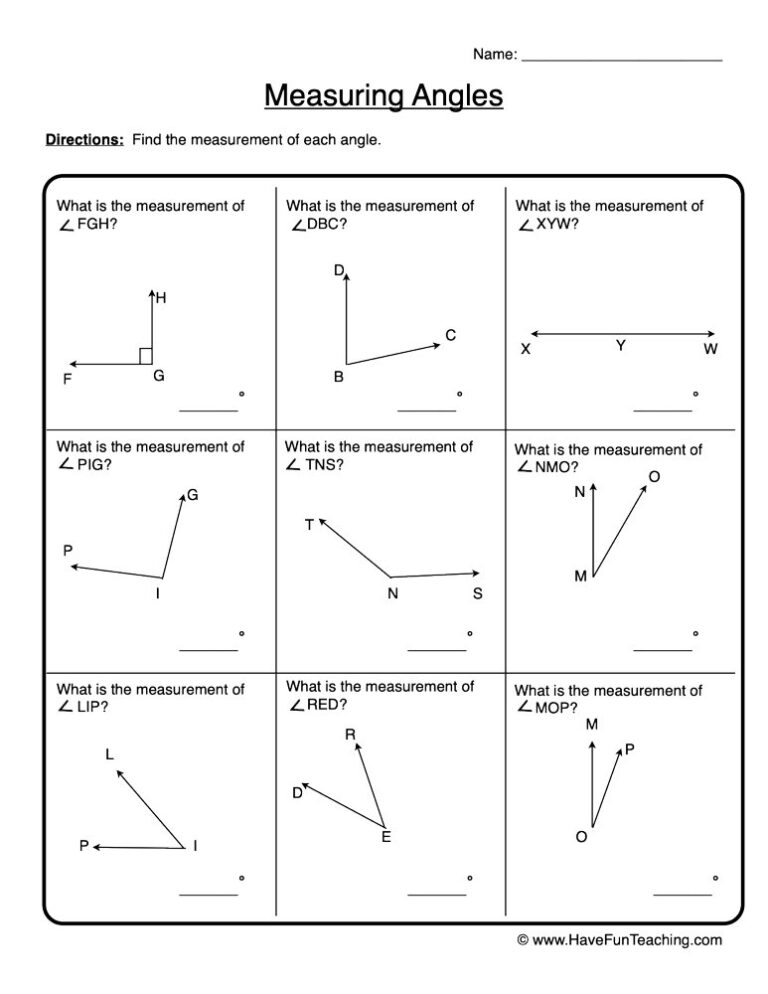
Worksheet4th GradeMeasuring Angles Worksheet

This measuring angles worksheet gives 4th graders hands-on practice using a protractor to measure angles in degrees and to name acute, right, obtuse, and straight angles. Answer key included for fast, no-prep geometry practice.

Workbook
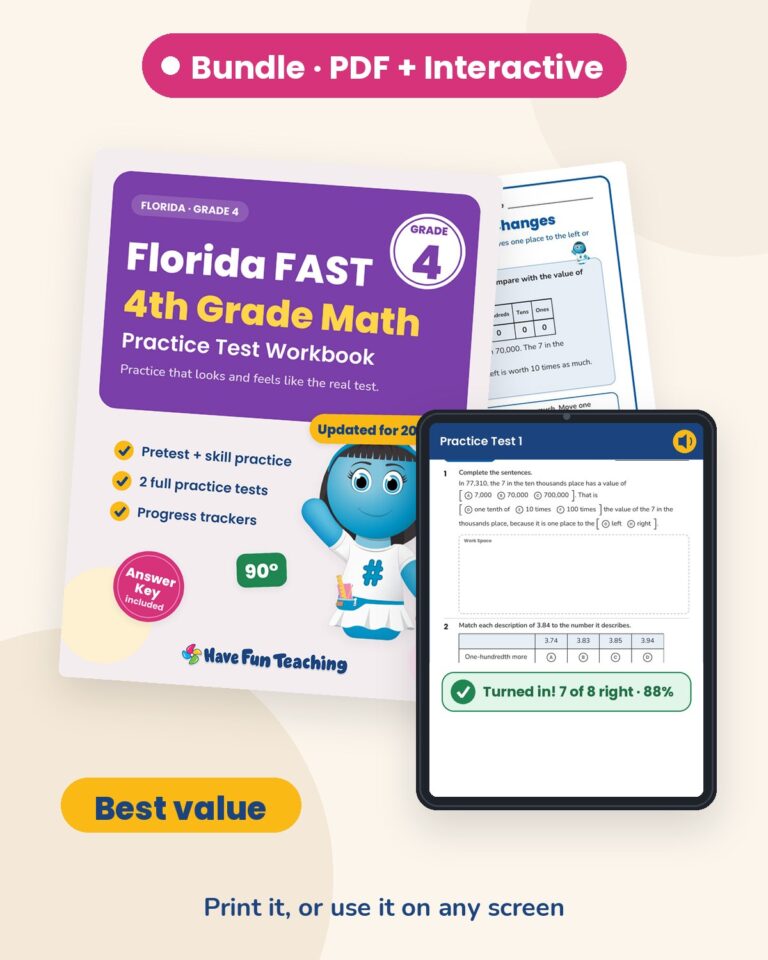
Workbook4th GradeFlorida FAST 4th Grade Math Practice Test Workbook

A Florida FAST 4th grade math practice test workbook for teachers, with a pretest, skill practice for all 39 benchmarks, mixed review and 2 full-length practice tests. Answer key included, so test prep is ready to go.

Worksheet
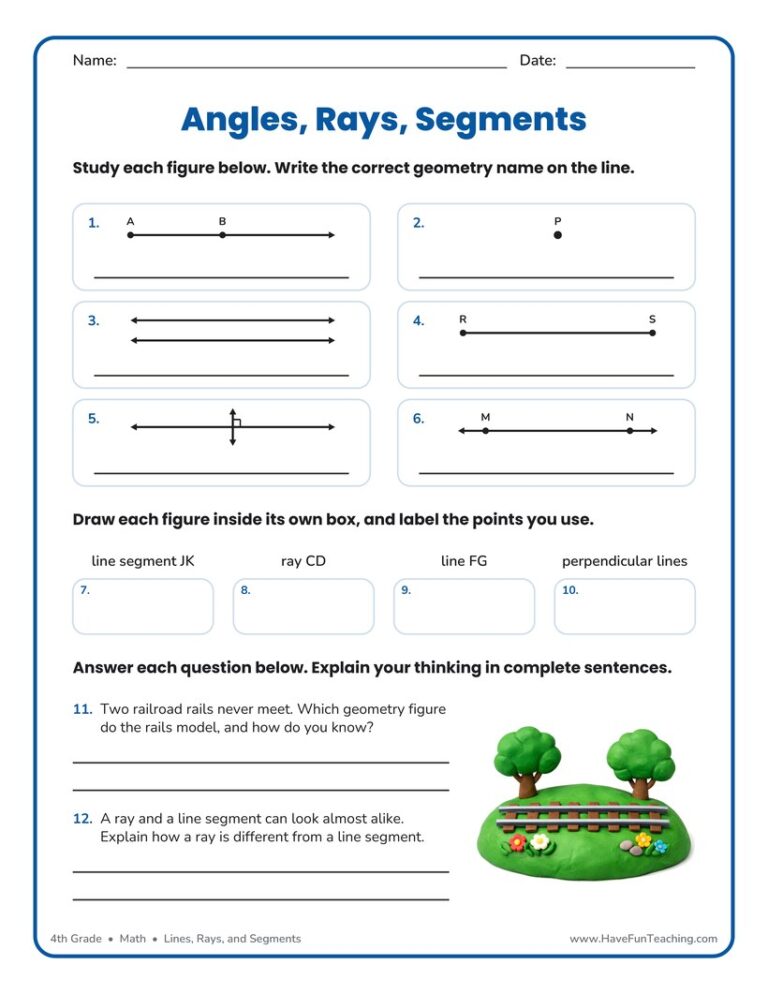
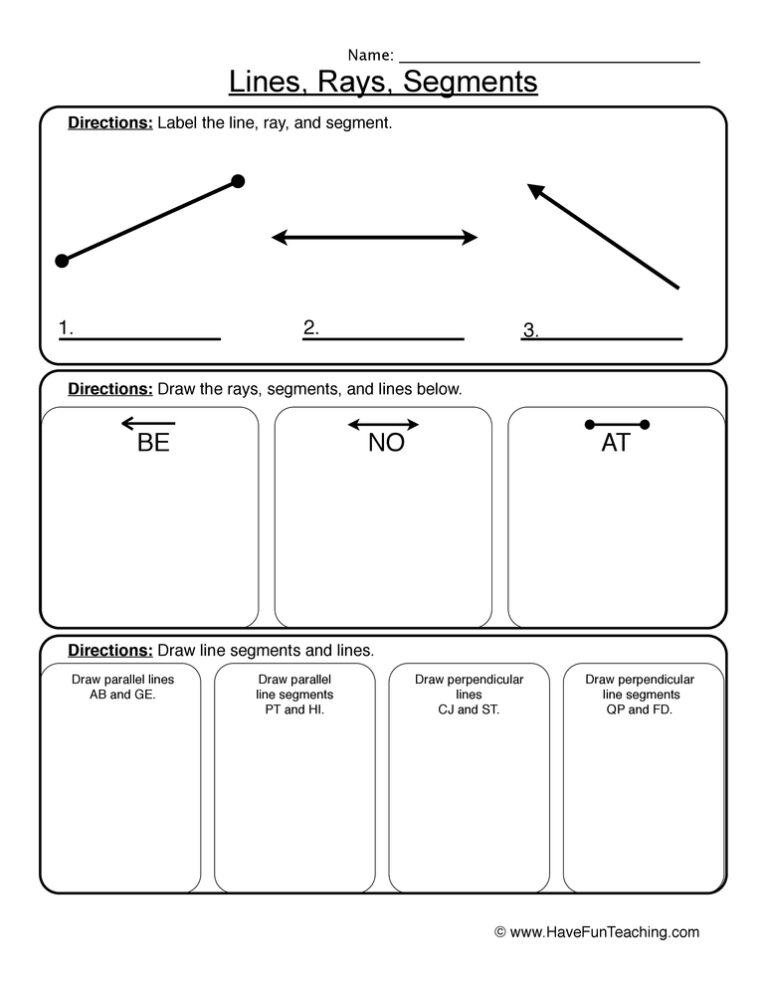
Worksheet4th GradeLines Rays and Segments Worksheet

Students use this Lines Rays and Segments Worksheet to name, draw, and explain points, lines, segments, rays, and parallel and perpendicular lines. Built for 4th Grade with an answer key included, so checking takes seconds.

Worksheet
Worksheet4th Grade4.MD.7 Common Core Worksheet

This 4.MD.7 Common Core Worksheet gives 4th graders practice finding unknown complementary and supplementary angles using right angles and straight lines. Includes a complete answer key — perfect for no-prep angle measurement practice.

Worksheet
Worksheet4th GradeAngles Rays and Segments Worksheet

This angles rays and segments worksheet gives 4th graders practice naming and drawing lines, rays, segments, and parallel lines. An answer key is included, so checking work takes seconds.

Worksheet
Worksheet4th GradeRays Worksheet

This rays worksheet has 4th graders tell rays from lines and line segments on six labeled figures, draw ray MN from two given points, and explain the difference in writing. Answer key included.

Worksheet
Worksheet4th GradeAngles Measuring Worksheet

This angles measuring worksheet has 4th graders measure six angles with a protractor and label each one acute, obtuse, right, or straight. An answer key is included, so protractor practice checks itself in minutes.

Worksheet
Worksheet4th GradeFinding Angles Worksheet

This finding angles worksheet has 4th graders classify angles as acute, right, obtuse, or straight, estimate angle sizes, and hunt for real angles in the classroom. An answer key is included for quick checking.

Worksheet
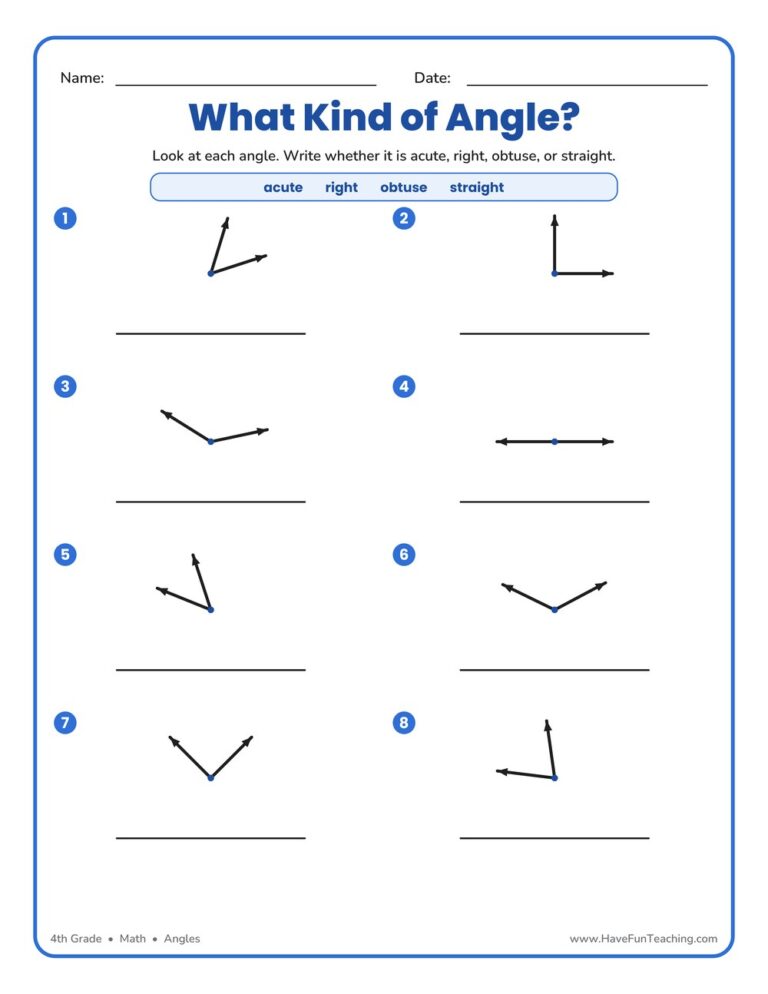
Worksheet4th GradeWhat Kind of Angle Worksheet

The What Kind of Angle worksheet gives 4th graders eight angles to sort as acute, right, obtuse, or straight. Answer key included for quick, no-prep geometry practice.

Workbook
Workbook4th GradeSmarter Balanced (CAASPP / SBAC) 4th Grade Math Practice Test Workbook

A Smarter Balanced (CAASPP / SBAC) 4th grade math practice test workbook for teachers, with a pretest, skill practice for all 38 standards, mixed review and 2 full-length practice tests. Answer key included, so test prep is ready to go.

Activity
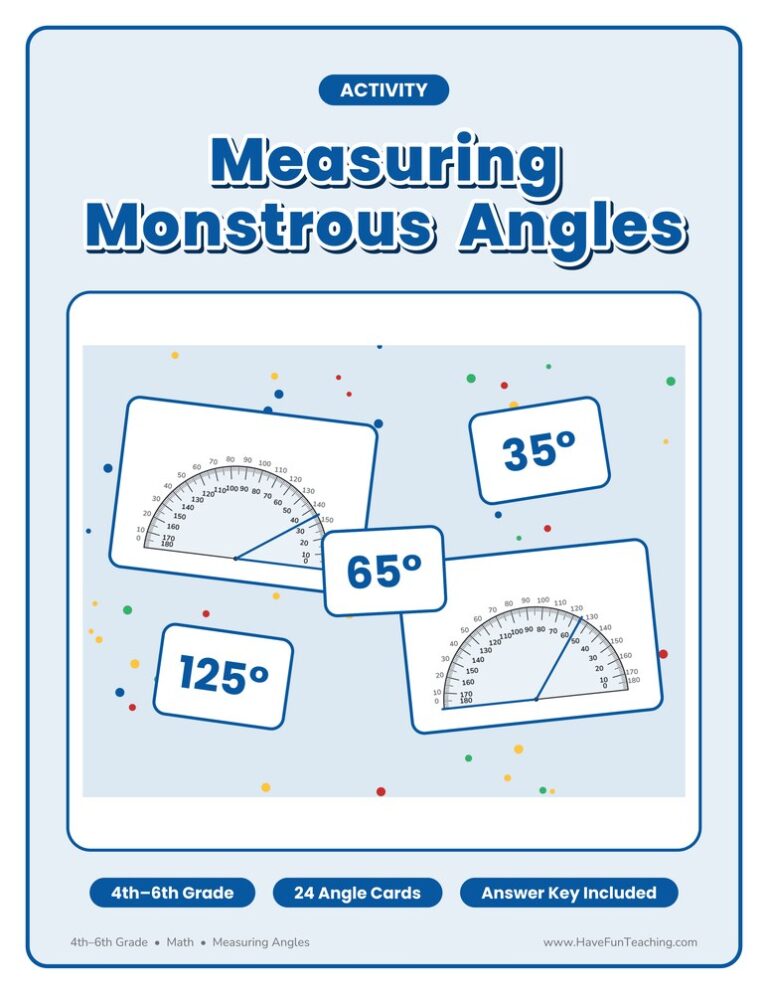
Activity4th GradeMeasuring Monstrous Angles Activity

This measuring monstrous angles activity helps 4th to 6th grade students read a protractor and match angles to their measures. Answer key included for quick checking at a math center.

Activity
Activity4th GradeStar Wars Rays and Angles Edition Activity

In this Star Wars Rays and Angles Activity, students recognize angles as obtuse, acute or right by playing War!

Activity
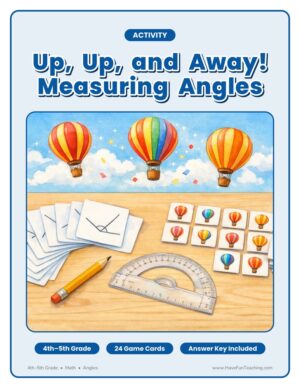
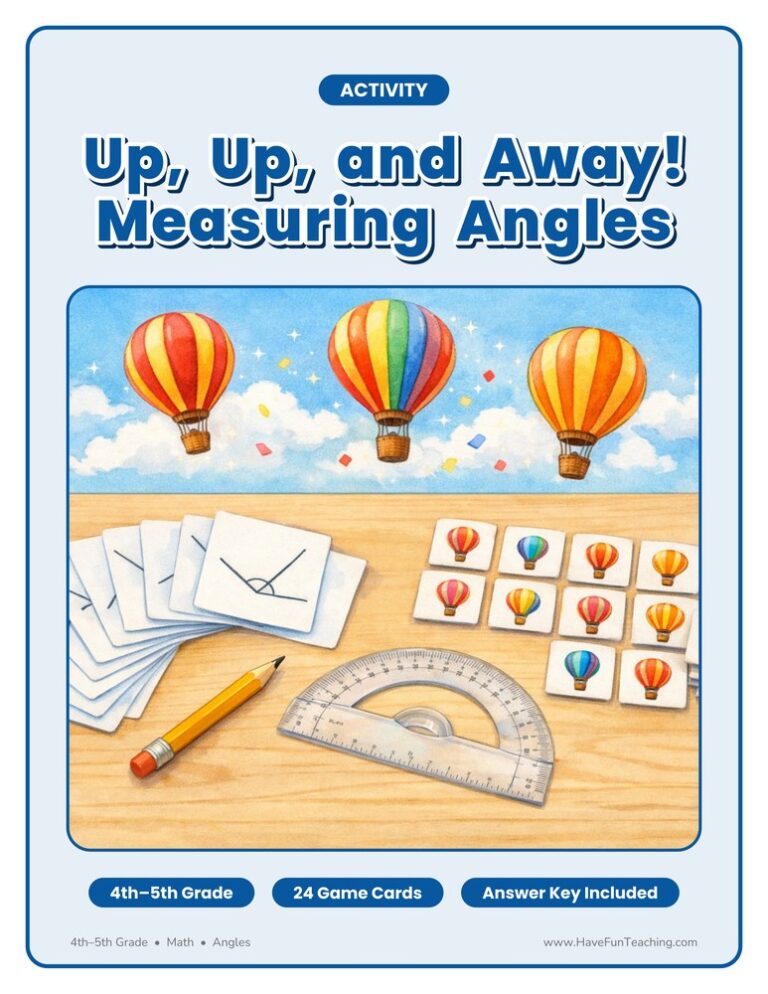
Activity4th GradeUp, Up, and Away! Measuring Angles Activity

This measuring angles activity has 4th and 5th grade students add or subtract angle parts to find missing angles and match them to balloon cards. Answer key included.

Workbook
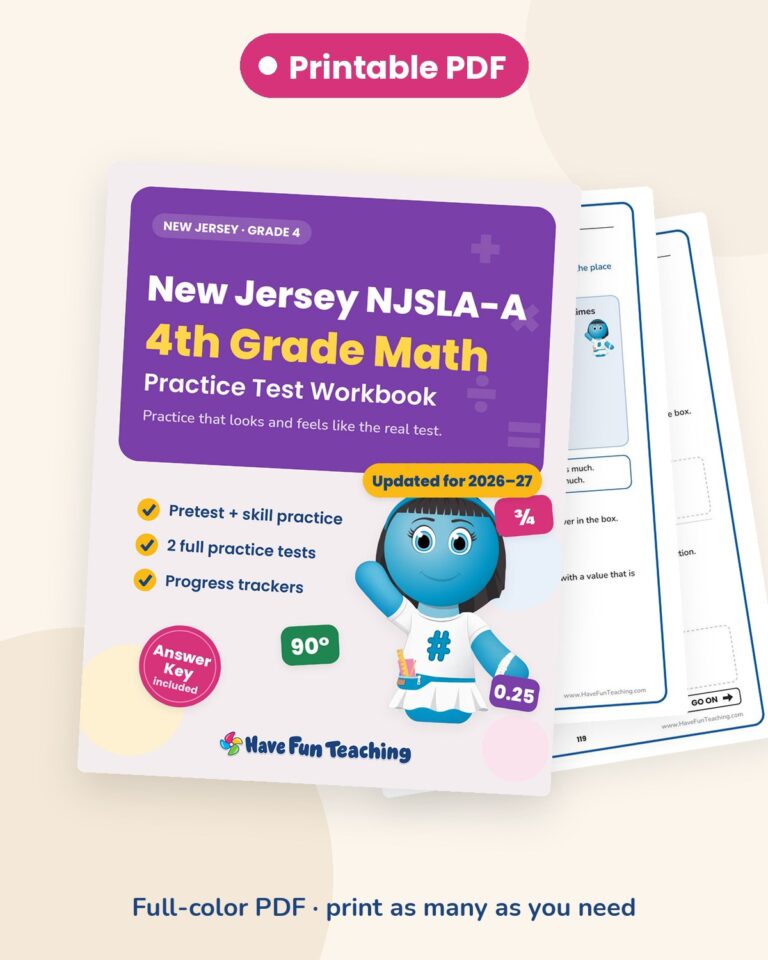
Workbook4th GradeNew Jersey NJSLA-A 4th Grade Math Practice Test Workbook

A NJSLA-A 4th grade math practice test workbook for teachers, with a pretest, skill practice for all 30 standards, mixed review and 2 full-length practice tests. Answer key included, so test prep is ready to go.

Common Core Lesson
Common Core Lesson4th Grade4.MD.7 Fourth Grade Common Core Lesson

In this 4.MD.7 Fourth Grade Common Core lesson students solve addition and subtraction problems to find unknown angles on a diagram.

Common Core Lesson
Common Core Lesson4th Grade4.MD.6 Fourth Grade Common Core Lesson

In this 4.MD.6 Fourth Grade Common Core Lesson, students measure angles in whole-number degrees using a protractor.

Worksheet
Worksheet4th GradeWhen Two Rays Meet Worksheet

This when two rays meet worksheet helps 4th grade students name angles with three letters, draw rays from a vertex, and explain angle names. An answer key is included.

Common Core Lesson
Common Core Lesson4th Grade4.G.1 Fourth Grade Common Core Lesson

In this 4.G.1 Fourth Grade Common Core Lesson, students identify points, lines, line segments, rays, angles, perpendicular and parallel lines.

Common Core Lesson
Common Core Lesson4th Grade4.G.2 Fourth Grade Common Core Lesson

In this 4.G.2 Fourth Grade Common Core Lesson, students classify shapes based on presence or absence of specific lines and angles.

Common Core Lesson
Common Core Lesson4th Grade4.MD.5 Fourth Grade Common Core Lesson

In this 4.MD.5 Fourth Grade Common Core Lesson, students recognize angles as obtuse, acute or right by playing War!

From our teachers' playbook

Degrees, protractors and turning rays

What do 4th graders learn about angles?

Fourth grade is the big angle year. Kids learn that an angle is made of two rays sharing an endpoint, and that it's measured in degrees as part of a circle: a quarter turn is 90° and a full turn is 360°. They measure and draw angles with a protractor, classify them as acute, right or obtuse, and solve missing-angle problems by adding or subtracting: if two angles make a right angle and one is 35°, the other is 55°. The click moment is when kids see a protractor as half a circle cut into tiny turns.

Our favorite ways to teach angles in 4th grade

Fourth graders need to measure angles and reason about them. These moves build both skills.

Inner or outer numbers?

The protractor's two scales trip kids up. Model it: always start at the zero where your first ray sits, then count up. Estimate first: "This looks a bit less than a right angle, so about 80°, not 100°."

Why it works: handing over the work step by step, from teacher to student, is one of the most widely used teaching frameworks (Pearson and Gallagher, 1983).

Angles Measuring WorksheetTry it withAngles Measuring WorksheetWorksheetsOpen it →

Rays build angles

Have kids draw a ray, then a second ray from the same endpoint, opening it a little at a time. Label each new angle as acute, right or obtuse. Watching an angle grow shows that degrees measure the turn.

Why it works: pairing a picture with each word gives kids two ways to remember it, a well-tested principle of how people learn (Mayer, 2009).

Angles Rays and Segments WorksheetTry it withAngles Rays and Segments WorksheetWorksheetsOpen it →

Find the missing piece

Draw a right angle split by a ray and label one part. Kids figure out the other part by subtracting from 90°. Then try straight angles and 180°. Angles that add up are a great way to practice mental math.

Why it works: kids understand an idea best when they touch it, then draw it, then write it, the order the U.S. Department of Education recommends for elementary math.

Finding Angles WorksheetTry it withFinding Angles WorksheetWorksheetsOpen it →

Questions teachers and parents ask about 4th grade angles

What angle skills do 4th graders learn?

They learn what an angle is, measure and draw angles in whole degrees with a protractor, classify acute, right and obtuse angles, and find missing angles by adding or subtracting.

Why is a full circle 360 degrees?

By agreement, mathematicians split a full turn into 360 equal parts called degrees. That makes a quarter turn 90° and a half turn 180°.

How do I find a missing angle?

If smaller angles make up a larger known angle, subtract the known parts from the total. Two angles that form a right angle add to 90°, and two that form a straight line add to 180°.

Why does my child get the wrong reading on a protractor?

They're likely reading the wrong scale. Have them estimate first. If the angle looks smaller than a square corner, the answer must be less than 90°.