
Skip to content
Start My 3 Free Days $0 today · cancel anytime

3rd Grade Antonyms Resources

5 3rd grade antonyms resources: 4 worksheets and 1 activity. How teachers use these

3rd Grade Antonyms Resources

5 3rd grade antonyms resources: 4 worksheets and 1 activity. How teachers use these

Worksheet
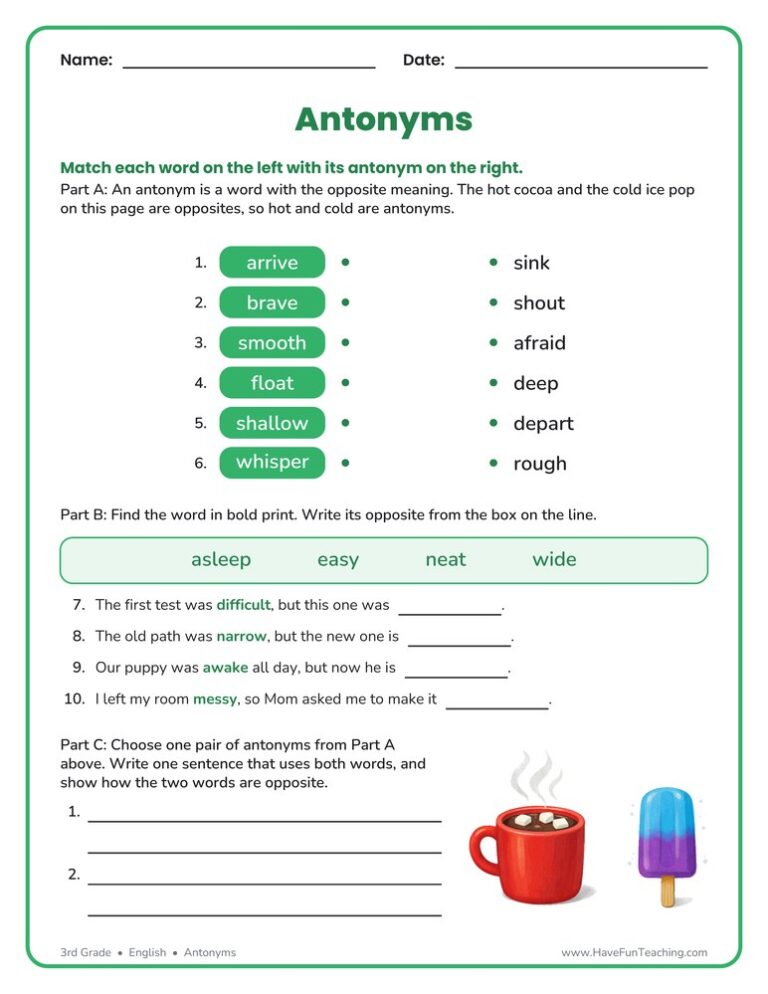
Worksheet3rd GradeAntonyms Match Worksheet

The Antonyms Match Worksheet gives 3rd grade students practice matching opposites, using them in sentences, and writing their own. An answer key is included, so checking work is fast and easy.

Worksheet
Worksheet3rd GradeAntonyms List Worksheet

This antonyms list worksheet helps 3rd grade students sort words under their opposites and find antonyms in sentences. An answer key is included, making it easy to check vocabulary growth.

Worksheet
Worksheet3rd GradeAntonyms Word Search Worksheet

This Antonyms Word Search Worksheet has 3rd graders find six opposite words in a puzzle, then write the right one to complete six sentences. Answer key included for no-prep vocabulary practice.

Activity
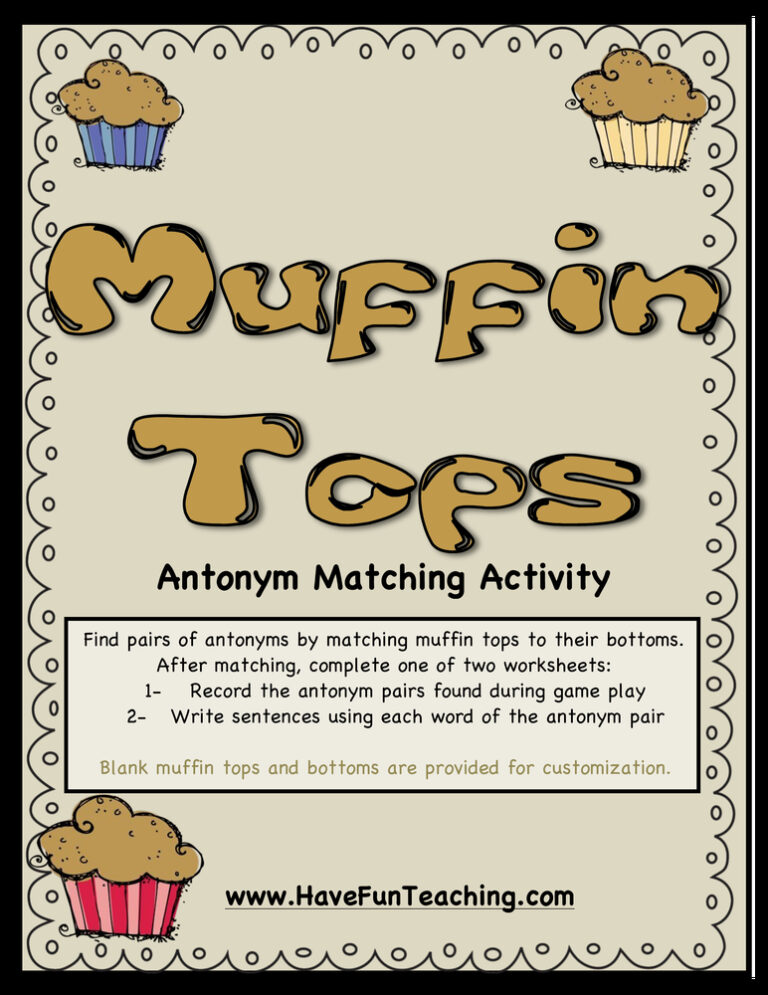
Activity3rd GradeMuffin Tops Antonyms Activity

Using this Muffin Tops Antonyms Activity, students match the cards to make antonym pairs of opposite meanings.

Worksheet
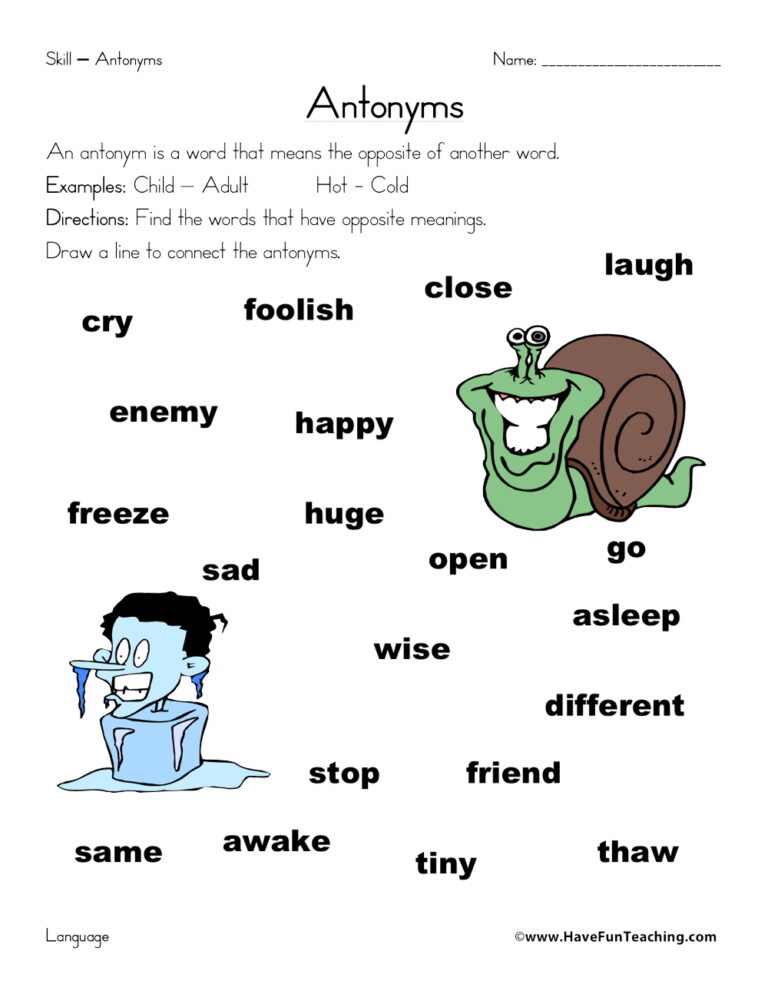
Worksheet3rd GradeAntonym Matching Worksheet

This antonym matching worksheet has 3rd graders find six hidden pairs of opposites, circle antonyms, and write a sentence. An answer key is included for quick, easy checking.

From our teachers' playbook

Hot and cold, fast and slow, opposites attract!

What do 3rd graders learn about antonyms?

Third graders already know easy opposites like up / down and hot / cold. Now they stretch to richer word pairs like ancient / modern, generous / selfish and expand / shrink. They also learn that prefixes can build an antonym, like happy → unhappy or agree → disagree, and that some words have opposites by degree: chilly is not the same as freezing. The big click is when kids use an antonym in the next sentence to figure out a word they have never seen before.

How we teach antonyms in 3rd grade

Opposites are a vocabulary superpower. These moves help kids learn new words in pairs.

Match in a minute

Give kids a one-minute challenge to match as many opposite pairs as they can, then check together. Add two or three new, harder pairs every day. Quick, low-stakes matching builds a vocabulary bank faster than a long list to memorize.

Why it works: researchers who compared ten study methods found practice testing is one of the two that work best (Dunlosky and colleagues, 2013).
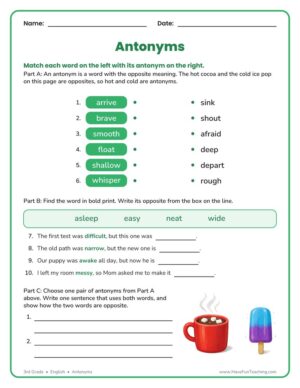
Antonyms Match WorksheetTry it withAntonyms Match WorksheetWorksheetsOpen it →

Build a word line

Pick an antonym pair like hot and cold and stretch a line of words between them: hot, warm, mild, cool, chilly, cold. Kids place word cards in order and argue about where each one goes. It teaches that opposites have shades in between.

Why it works: the U.S. Department of Education's guide for teaching elementary math recommends moving from hands-on objects to drawings to numbers.

Antonyms List WorksheetTry it withAntonyms List WorksheetWorksheetsOpen it →

Pairs all week long

Post a "word pair of the day" and ask kids to use both words in a sentence. On Friday, mix up all five pairs for a quick review. Seeing the same pairs again a few days later is what moves them into kids' writing.

Why it works: short practice spread over several days beats one long session, according to a large review of learning research (Dunlosky and colleagues, 2013).

Antonym Matching WorksheetTry it withAntonym Matching WorksheetWorksheetsOpen it →

Questions parents and teachers ask

What is an antonym for 3rd graders?

An antonym is a word that means the opposite of another word, like brave and afraid or arrive and leave. Third graders learn to find antonyms and use them to understand new words.

What is the difference between synonyms and antonyms?

Synonyms mean the same or almost the same, like big and huge. Antonyms mean the opposite, like big and small. A quick trick: "antonym" and "anti" both start with "ant" and point the other way.

Can a prefix make an antonym?

Yes! Prefixes like un-, dis- and in- often turn a word into its opposite: kind becomes unkind, like becomes dislike, and complete becomes incomplete. It is a great way to connect antonyms and word parts.

How do I practice antonyms at home?

Play "opposites" in the car: say a word and have your child name the opposite. Make it harder with less common words like "noisy" or "rough." Reading together and pointing out opposites helps too.



