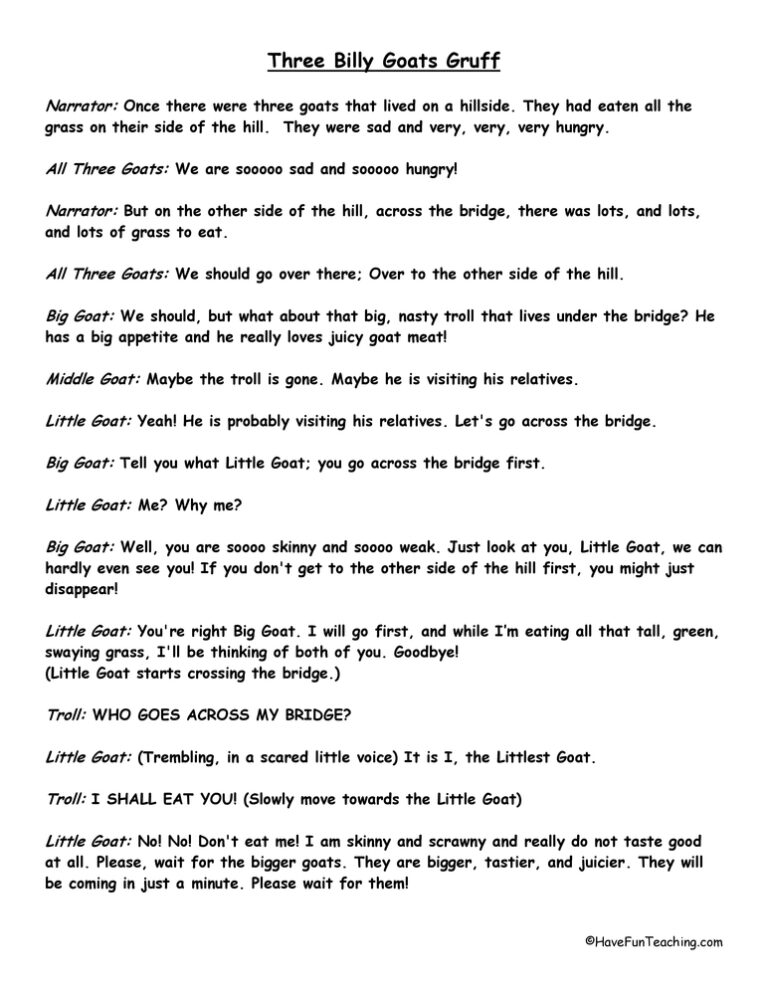
This three billy goats gruff reader's theater worksheet gives 3rd Grade groups a five-part script with twenty-four short speaking turns, so every reader practices fluency and expression aloud.
This Three Little Pigs Reader's Theater gives a 3rd grade group a five-part script to read aloud and perform, with short lines that build fluency and expression in one class period.
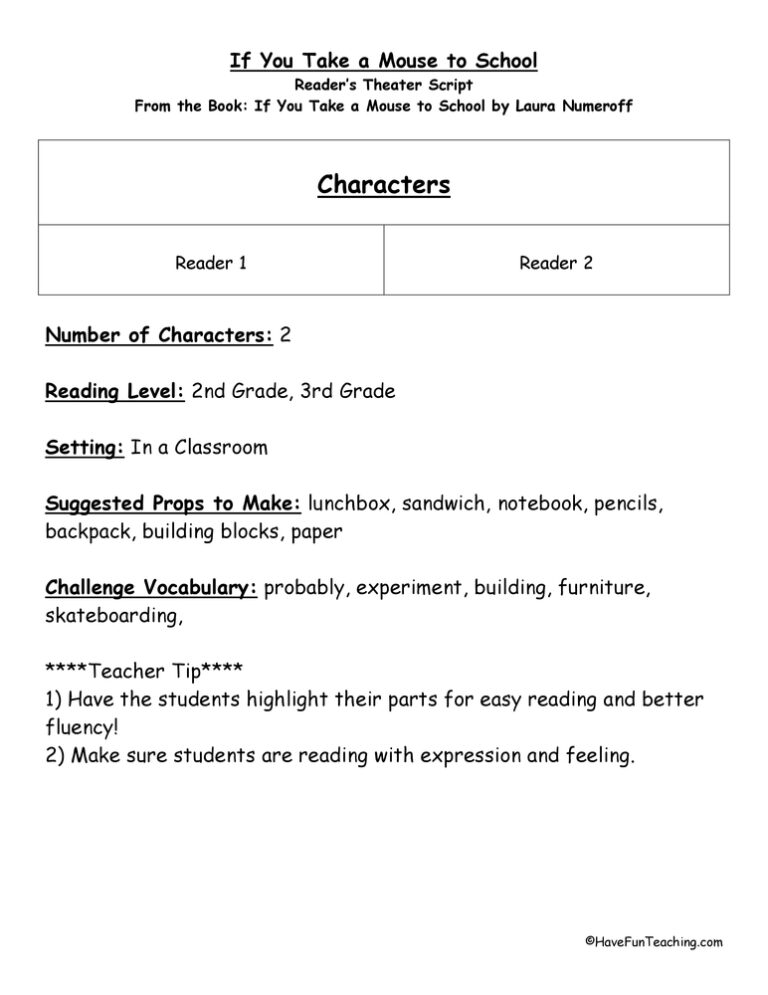
Using If You Take A Mouse To School Reader's Theater, students act out different parts in the story in this beloved story to build their reading fluency and accuracy skills.
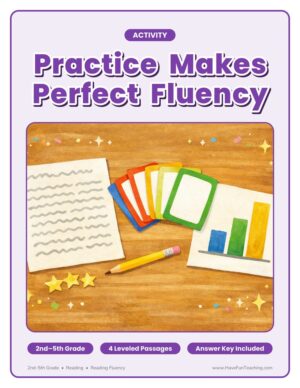
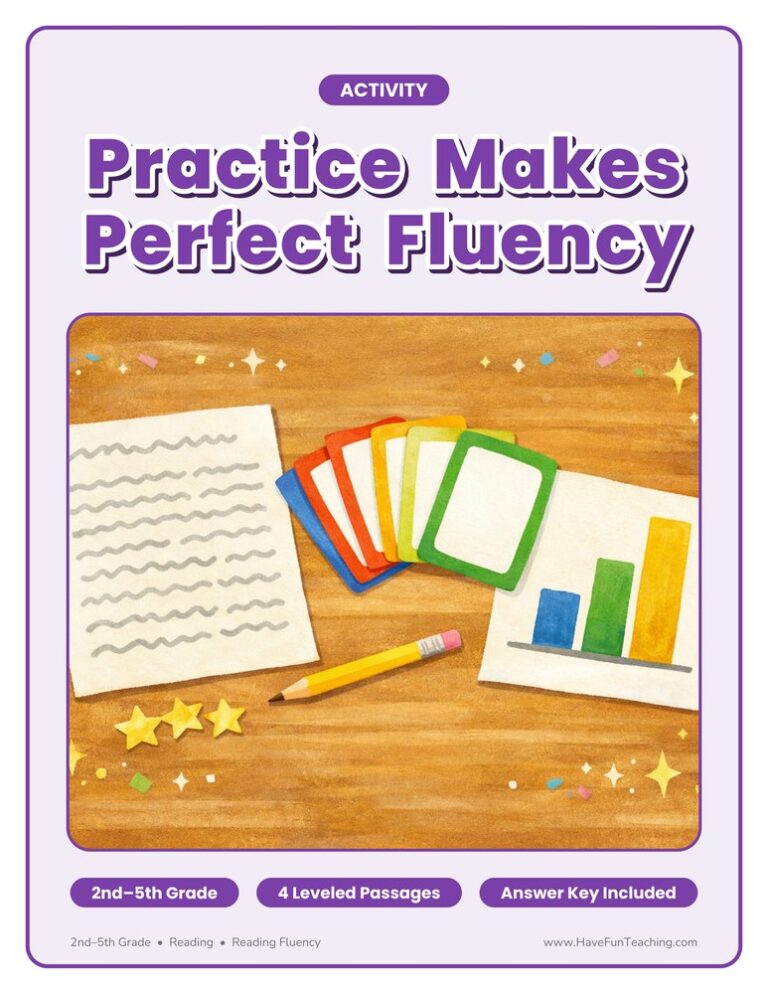
This practice makes perfect fluency activity gives 2nd to 5th grade readers leveled passages, coach cards and a tracker for repeated reading. Answer key included for easy scoring.
Using RF.3.4 Third Grade Common Core Lesson, students read with sufficient accuracy and fluency to support comprehension to improve fluency and accuracy.
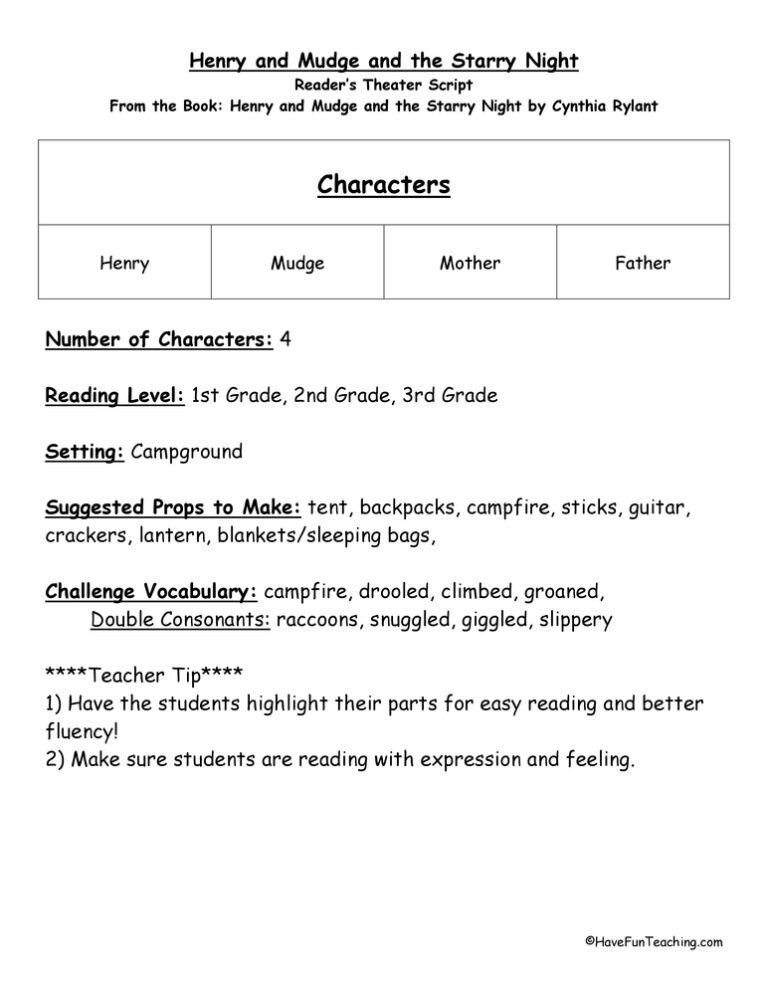
Using Henry and Mudge and the Starry Night Reader's Theater, students act out different parts in the story in this beloved story to build their reading fluency and accuracy skills.
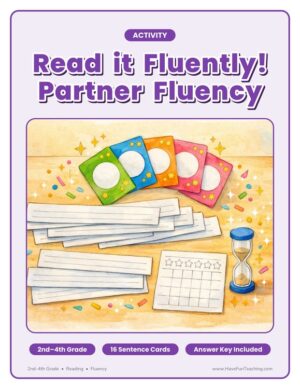
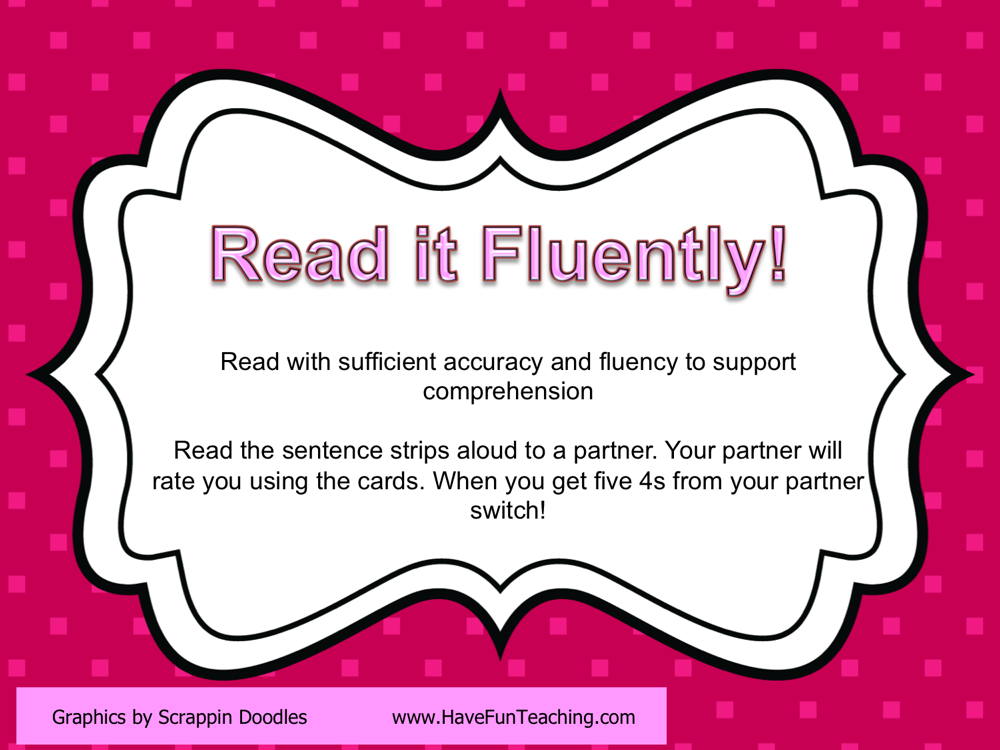
This read it fluently cooperative learning activity has 2nd-4th grade partners read sentence cards aloud and rate each other from 1 to 4. Answer key included.
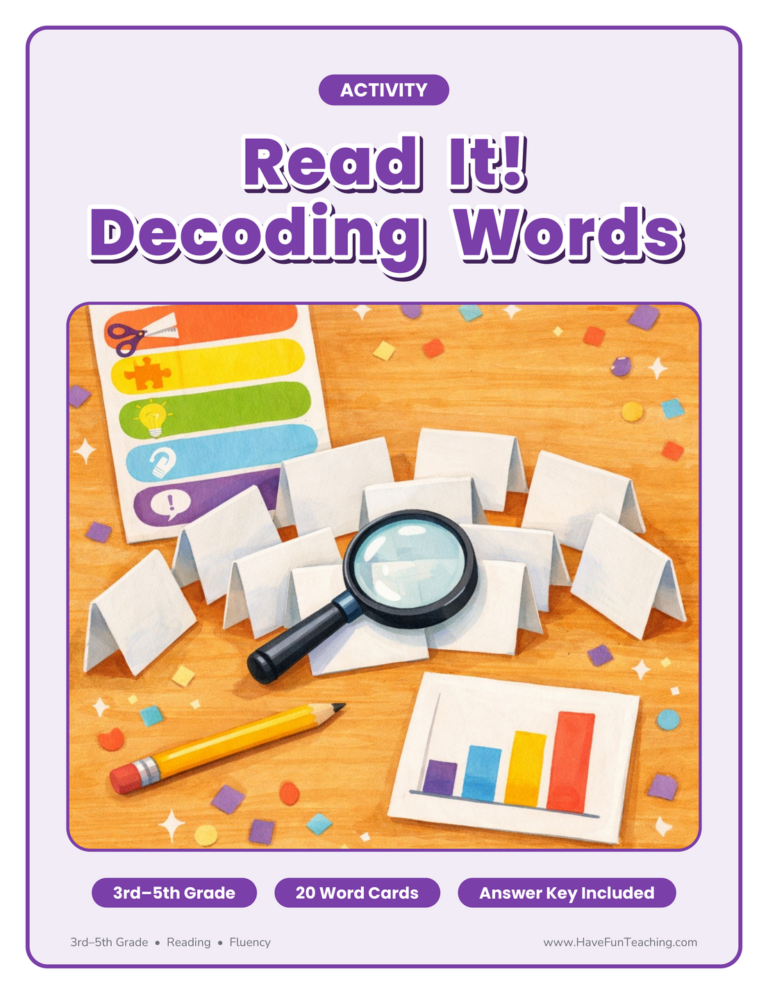
This read it decoding words activity gives 3rd to 5th Grade readers six tips, 20 self-checking word cards and a progress graph for reading long words. Answer key included.
Fluency is reading accurately, at a good pace and with expression, so it sounds like talking. In 3rd grade, kids are moving from learning to read to reading to learn, and fluency is the bridge. They practice decoding multisyllable words, reading in phrases instead of word by word, and changing their voice for questions, exclamations and characters. They reread texts to build speed and confidence. The click moment comes when a reader stops sounding out every word and starts noticing the story, because their brain finally has room to think about meaning.
Our favorite ways to build fluent readers
Fluency grows with repeated, purposeful reading. These are the moves we lean on in 3rd grade.
Echo read with expression
Read one sentence with lots of expression, then have the class echo it right back. Next read it like a robot and ask what changed. Hearing a fluent model again and again is how 3rd graders learn what good reading sounds like.
Why it works: handing over the work step by step, from teacher to student, is one of the most widely used teaching frameworks (Pearson and Gallagher, 1983).
Give each reader a short passage for the week. Monday they read it to themselves, Wednesday to a partner, Friday to you. Each read gets smoother, and kids can feel their own progress.
Why it works: the brain holds on to what it meets again and again over time; spaced practice was rated among the very best methods (Dunlosky and colleagues, 2013).
Group readers in fours with one short text and assign parts. They practice together, coach each other on tricky words and perform for the class. Working toward a shared goal keeps rereading from ever feeling boring.
Why it works: in a well-known study, a few short sessions of a simple number board game measurably boosted young children's number skills (Ramani and Siegler, 2008).
It is reading accurately, at a steady pace and with expression. Fluent 3rd graders read in phrases, pause at punctuation and sound natural, which frees their brains to understand what they read.
How many words per minute should a 3rd grader read?
Expectations rise across the year, roughly from the 70s in the fall to around 100 or more words per minute by spring. Your school's benchmark assessment will give the exact targets it uses.
How can I help my child read more fluently at home?
Have them reread a favorite book aloud, take turns reading pages with you, or read jokes and poems with expression. Short, repeated reading a few times a week makes a big difference.
What is reader's theater?
Students read a story script aloud, each taking a character's part. Because they practice the same lines several times before performing, reader's theater builds speed, accuracy and expression all at once.
Written by the Have Fun Teaching team of elementary teachers and homeschoolers. Research: Pearson, P. D., & Gallagher, M. C. (1983). The instruction of reading comprehension. Contemporary Educational Psychology, 8(3). Dunlosky, J., Rawson, K. A., Marsh, E. J., Nathan, M. J., & Willingham, D. T. (2013). Improving Students' Learning With Effective Learning Techniques. Psychological Science in the Public Interest, 14(1). Ramani, G. B., & Siegler, R. S. (2008). Promoting broad and stable improvements in low-income children's numerical knowledge through playing number board games. Child Development, 79(2).
3 days free
2:39Ready to print!
Printables · Songs · Games
Loved by 2 million teachers & families
Where learning feels like play.
Printables, songs and games for every subject, Preschool through 6th. Ready to teach today, and kids beg for more.
$0due today
then $39.97$35.97for your first year, and $39.97 a year after that.


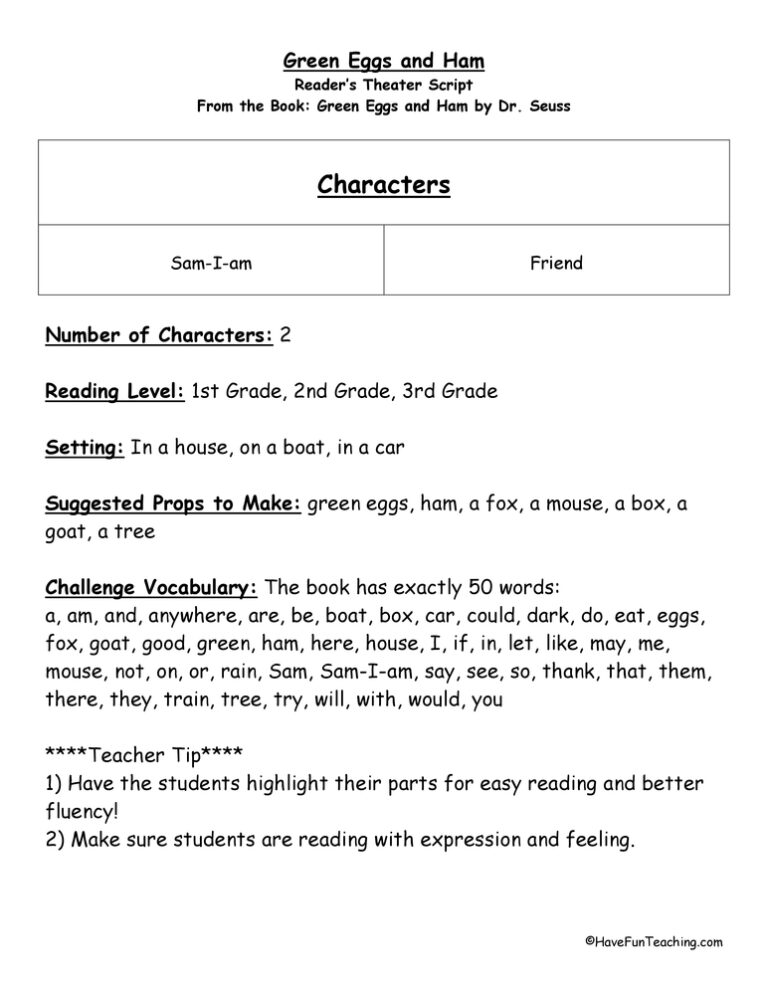


 Try it withRF.3.4 Third Grade Common Core LessonCommon Core LessonsOpen it →