Skip to content
Start My 3 Free Days $0 today · cancel anytime

3rd Grade Landforms Resources

5 3rd grade landforms resources: 3 worksheets, 3 assessments, 1 flash card and more. How teachers use these

3rd Grade Landforms Resources

5 3rd grade landforms resources: 3 worksheets, 3 assessments, 1 flash card and more. How teachers use these

Assessment
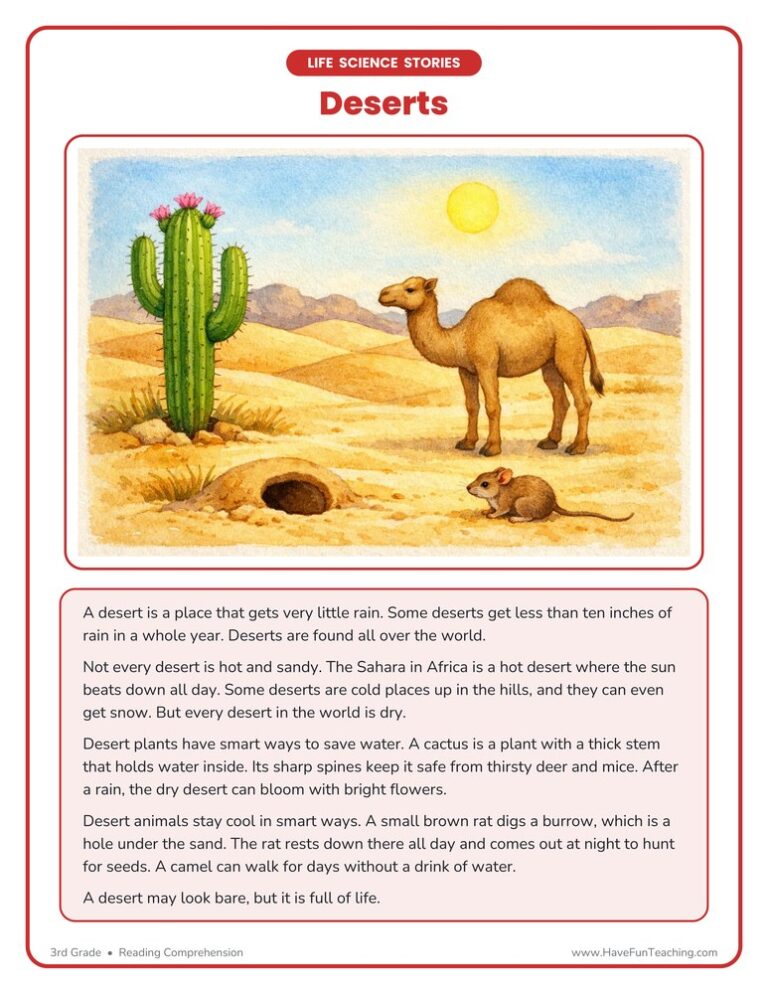
Assessment3rd GradeDeserts Life Science Reading Comprehension Worksheet

This Deserts Life Science Reading Comprehension Worksheet gives 3rd Grade readers a short nonfiction passage about hot and cold deserts, with comprehension questions and an answer key included, so science reading practice takes minutes to prep.

Flash Cards
Flash Cards3rd GradeLandforms Flash Cards

Learn fifteen landforms with these landforms flash cards for kindergarten to 4th grade: painted picture fronts, words and meanings inside, a practice page and an answer key included.

Assessment
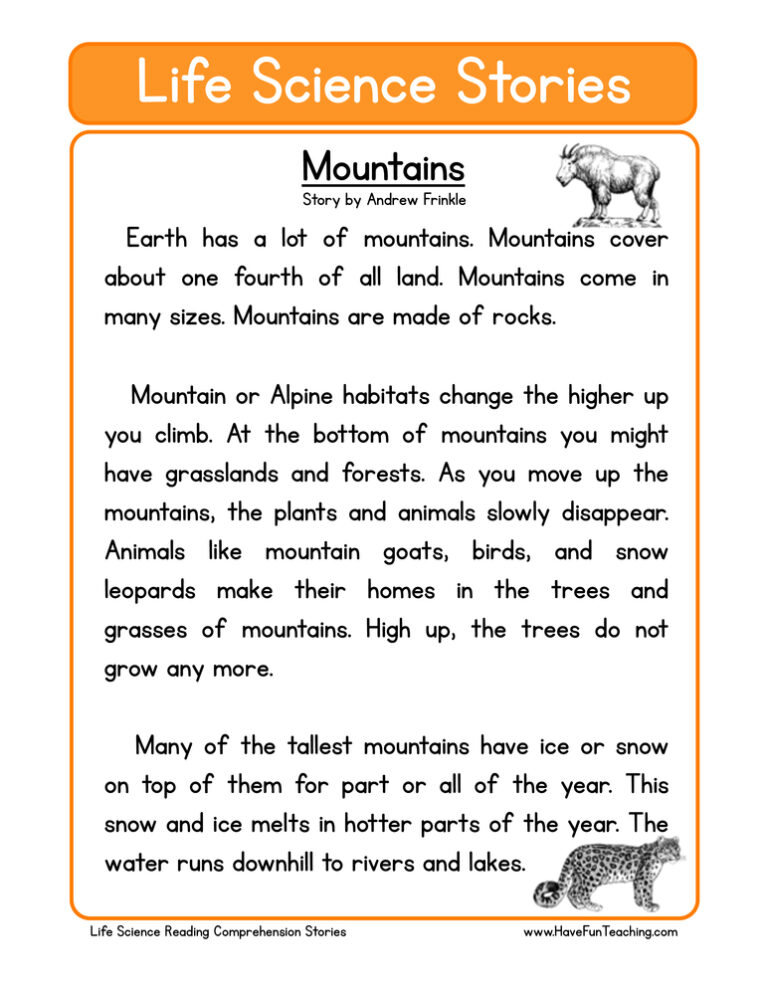
Assessment3rd GradeMountains Life Science Reading Comprehension Worksheet

Climb from grassy foothills to a snowy peak with this Mountains Life Science Reading Comprehension Worksheet. 3rd Grade readers answer multiple-choice and written questions about mountain habitats. Answer key included.

Activity
Activity3rd GradeName That Landform Smartboard Game

Using Name That Landform Smartboard Game, students look at each picture and decide what type of landform is shown

Assessment
Assessment3rd GradeArctic and Tundra Life Science Reading Comprehension Worksheet

This Arctic and Tundra Life Science Reading Comprehension Worksheet gives 3rd graders a nonfiction passage on tundra habitats and animal adaptations, plus four multiple-choice and two written questions. Answer key included for no-prep science reading practice.

From our teachers' playbook

Where the land shapes life

What do 3rd graders learn about landforms?

Third graders go beyond naming landforms to asking how they affect the plants, animals and people that live there. They compare regions like deserts, mountains and the Arctic tundra, and describe how each one's shape and climate shape life. A cactus stores water for the dry desert, and a mountain goat has hooves made for steep rock. Kids also read maps with landform symbols and learn how weathering and erosion slowly change the land. The big idea: where you live depends a lot on what the land is like!

Our favorite ways to teach landforms in 3rd grade

Third graders love comparing places. These moves turn landforms into a study of how the world works.

Landform look-alikes

Show two landform flash cards that are easy to confuse, like plateau and mesa, or hill and mountain. Kids list how they are alike and different. Comparing look-alikes sharpens their eye for the details that matter.

Why it works: pairing a picture with each word gives kids two ways to remember it, a well-tested principle of how people learn (Mayer, 2009).

Landforms Flash CardsTry it withLandforms Flash CardsFlash CardsOpen it →

Read, then recall

After reading about deserts, kids write three facts from memory before rereading. Then they check and fix their notes. Retrieval practice like this makes nonfiction facts stick far longer than rereading alone.

Why it works: pulling an answer out of memory makes it stick far better than rereading it, one of the strongest findings in learning research (Dunlosky and colleagues, 2013).

Deserts Life Science Reading Comprehension WorksheetTry it withDeserts Life Science Reading Comprehension WorksheetAssessmentsOpen it →

Think aloud about life

Read a short passage about mountains and model connecting land to life: "It is cold and steep here, so animals need thick fur and strong legs." Then kids try the same thinking with a new landform.

Why it works: handing over the work step by step, from teacher to student, is one of the most widely used teaching frameworks (Pearson and Gallagher, 1983).

Mountains Life Science Reading Comprehension WorksheetTry it withMountains Life Science Reading Comprehension WorksheetWorksheetsOpen it →

Questions about teaching landforms in 3rd grade

What landforms do 3rd graders study?

Third graders study mountains, hills, valleys, plains, plateaus, deserts, canyons and islands. They also learn how landforms and climate affect the plants, animals and people in each region.

How do landforms affect living things?

Landforms shape the climate, water and food in an area, so plants and animals adapt to them. Desert plants store water, and mountain animals are built for cold and steep ground.

What is the difference between weathering and erosion?

Weathering breaks rock into smaller pieces, and erosion moves those pieces to a new place. Wind, water and ice cause both.

How can I teach landforms in a fun way?

Have kids build landforms with clay or sand, play landform guessing games, and create travel brochures. Connecting landforms to animals and real places keeps it interesting.