Skip to content
Start My 3 Free Days $0 today · cancel anytime

Landforms Resources

18 landforms resources: 16 worksheets, 7 assessments, 1 flash card and more. How teachers use these

Landforms Resources

18 landforms resources: 16 worksheets, 7 assessments, 1 flash card and more. How teachers use these

Worksheet
Worksheet4th GradeLandform Definitions Worksheet

A landform definitions worksheet where 4th graders match six landforms to their meanings, complete clue sentences, and explain their thinking in writing. Answer key included for fast, no-prep geography review.

Worksheet
Worksheet4th GradeWeathering Worksheet

A weathering worksheet that helps 4th graders sort mechanical and chemical weathering, master key earth science vocabulary, and explain their thinking. Answer key included for fast, no-prep review.

Worksheet
Worksheet2nd GradeErosion Writing Worksheet

This erosion writing worksheet has 2nd grade students read a short fact box, answer four questions, and explain how plants slow erosion. An answer key is included for easy checking.

Worksheet
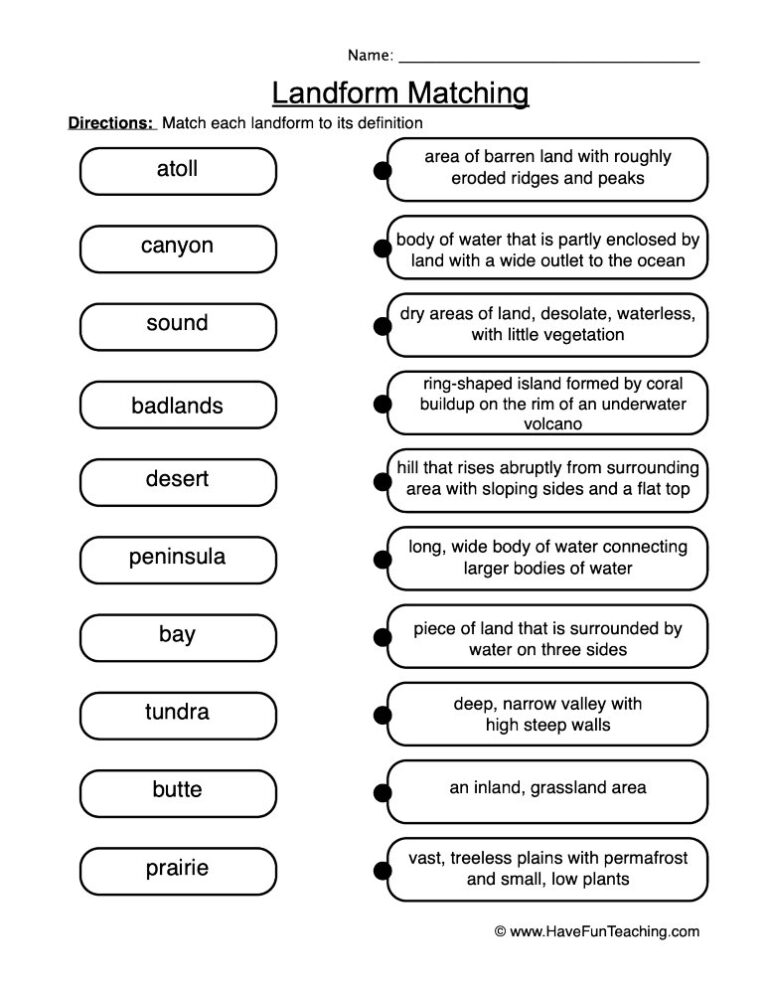
Worksheet4th GradeLandform Matching Worksheet

This landform matching worksheet helps 4th grade students match eight landforms to their meanings, then draw and describe two of them. An answer key is included to make checking quick and easy.

Assessment
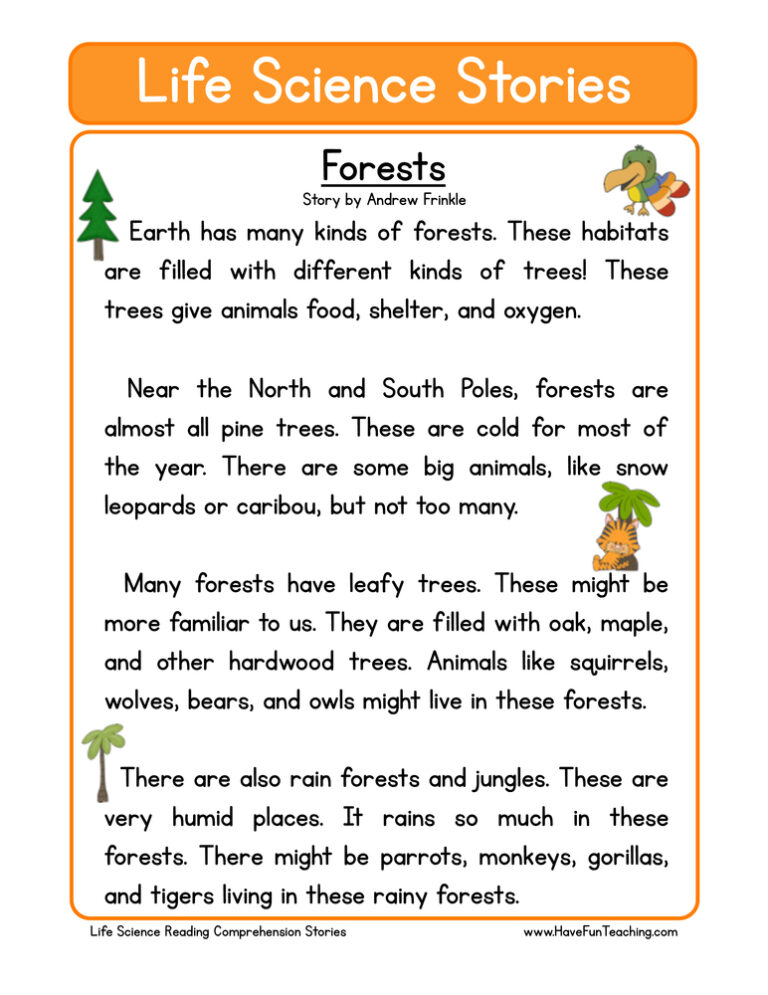
Assessment2nd GradeForests Life Science Reading Comprehension Worksheet

This Forests Life Science Reading Comprehension Worksheet gives 2nd graders a short non-fiction passage about pine, leafy, and rain forests, plus questions and an answer key. Great no-prep practice for main idea and key details.

Worksheet
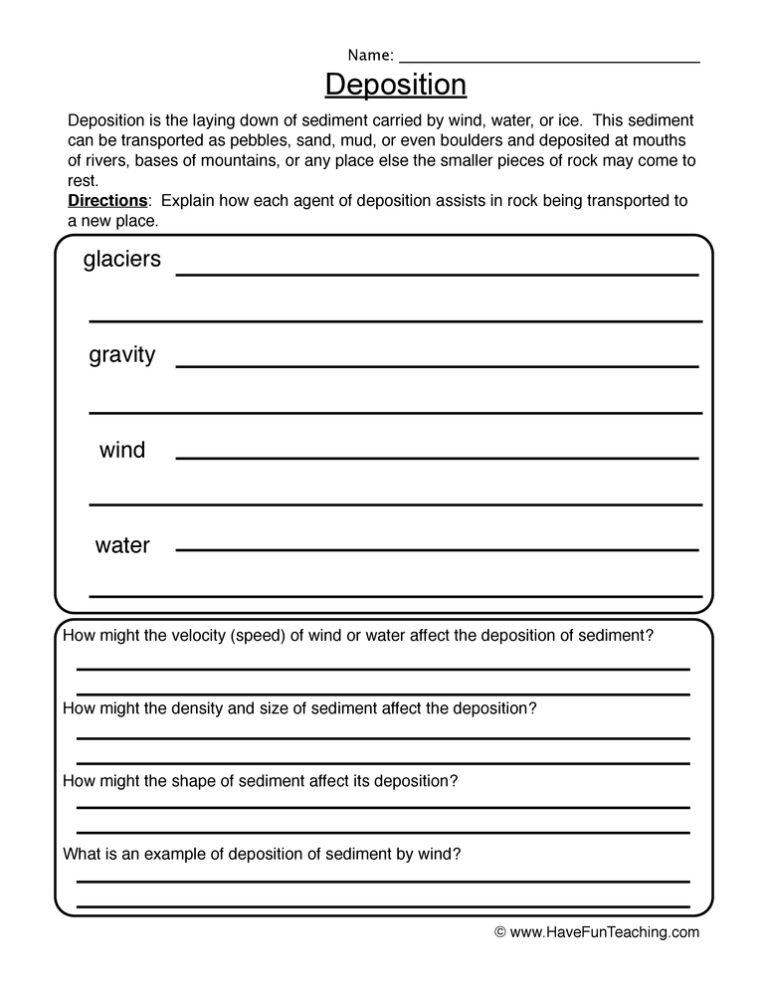
Worksheet4th GradeDeposition Worksheet

This deposition worksheet has 4th grade students name the agent that drops sediment in six sentences and explain why it settles. An answer key is included for quick, easy checking.

Assessment
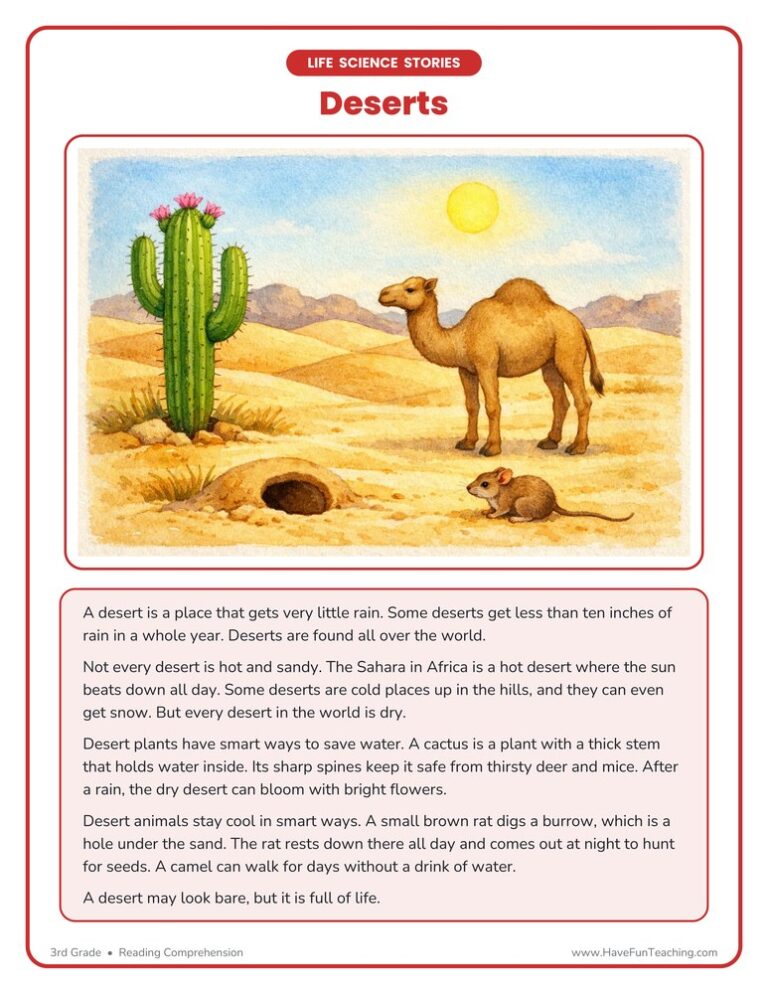
Assessment3rd GradeDeserts Life Science Reading Comprehension Worksheet

This Deserts Life Science Reading Comprehension Worksheet gives 3rd Grade readers a short nonfiction passage about hot and cold deserts, with comprehension questions and an answer key included, so science reading practice takes minutes to prep.

Assessment
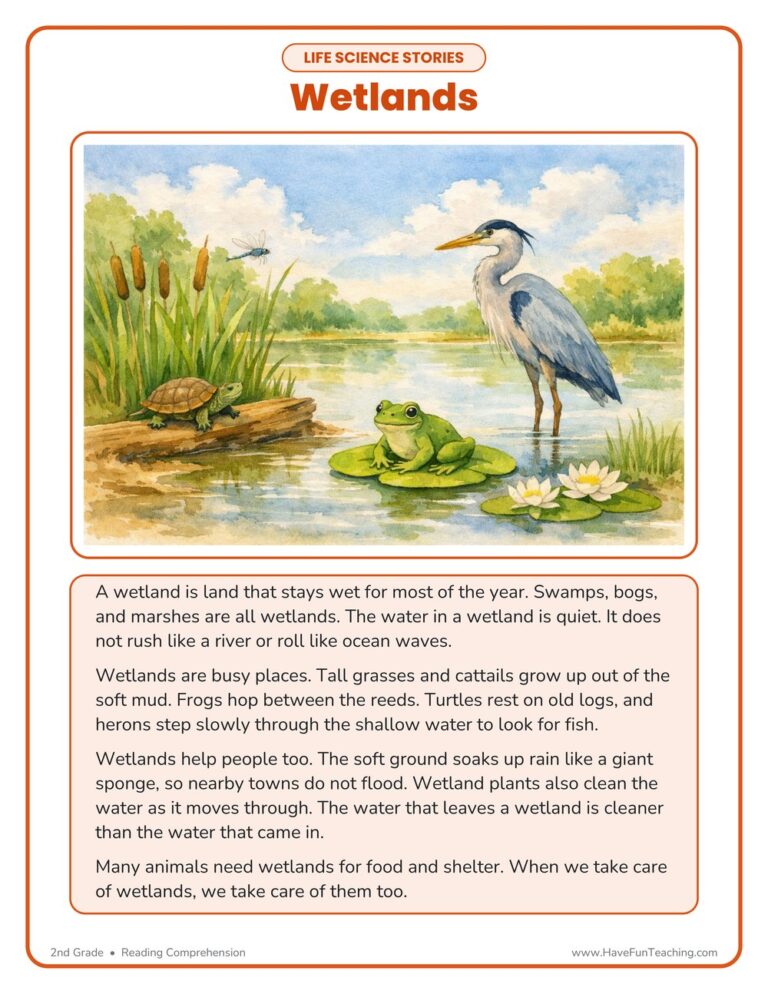
Assessment2nd GradeWetlands Life Science Reading Comprehension Worksheet

Explore swamps, bogs, and marshes with this wetlands life science reading comprehension worksheet. Second graders read a short nonfiction passage and answer six questions, and an answer key is included, so learning about habitats stays easy and fun.

Assessment
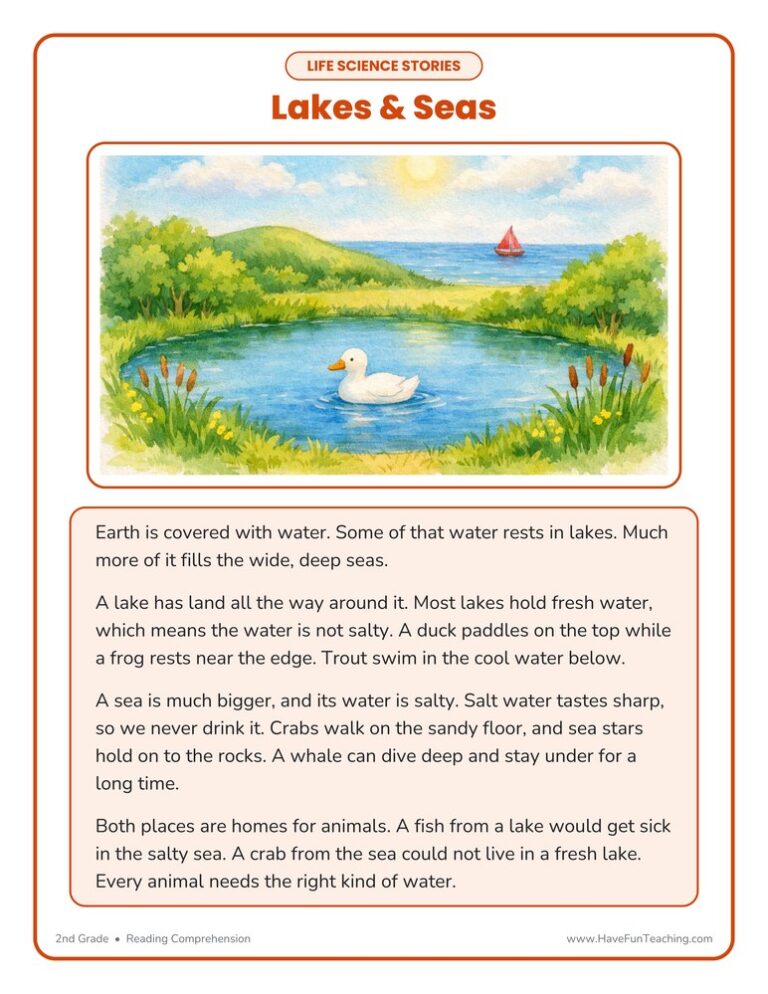
Assessment2nd GradeLakes and Seas Life Science Reading Comprehension Worksheet

This Lakes and Seas Life Science Reading Comprehension Worksheet gives 2nd Grade students an original passage about fresh water and salt water habitats, with bubble, fill-in, and writing questions. Answer key included.

Worksheet
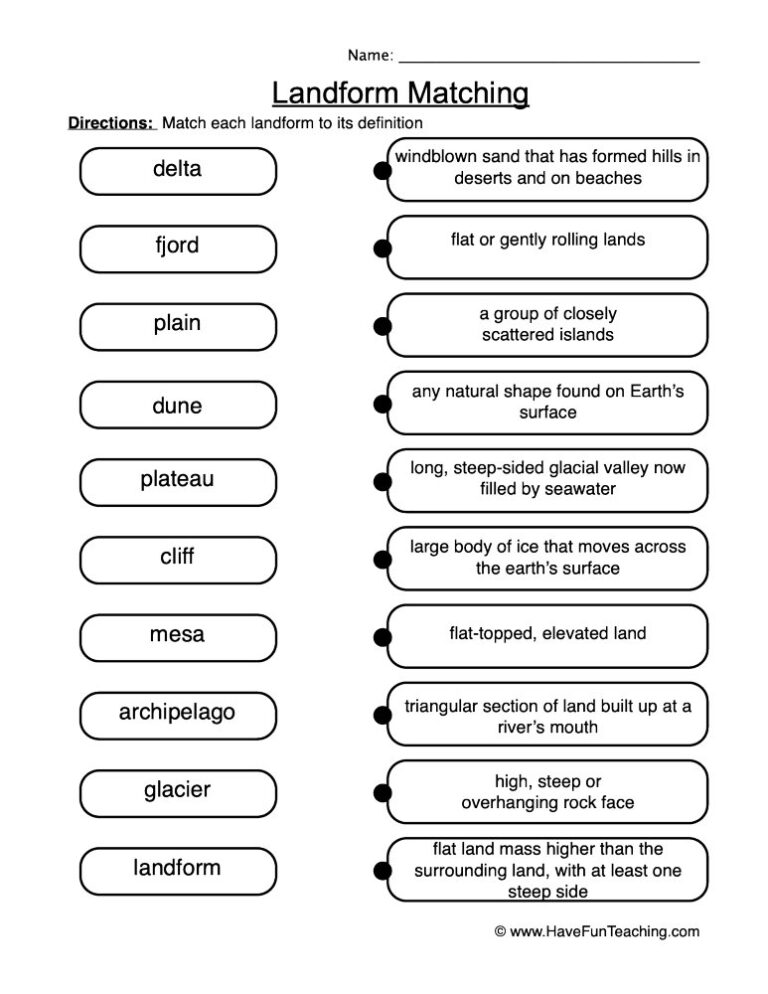
Worksheet4th GradeLandform Matching Definitions Worksheet

This Landform Matching Definitions Worksheet asks 4th graders to pair six landform words with their meanings, name three pictured landforms, and defend one answer in writing. Answer key included for fast, no-prep geography review.

Flash Cards
Flash CardsKindergartenLandforms Flash Cards

Learn fifteen landforms with these landforms flash cards for kindergarten to 4th grade: painted picture fronts, words and meanings inside, a practice page and an answer key included.

Worksheet
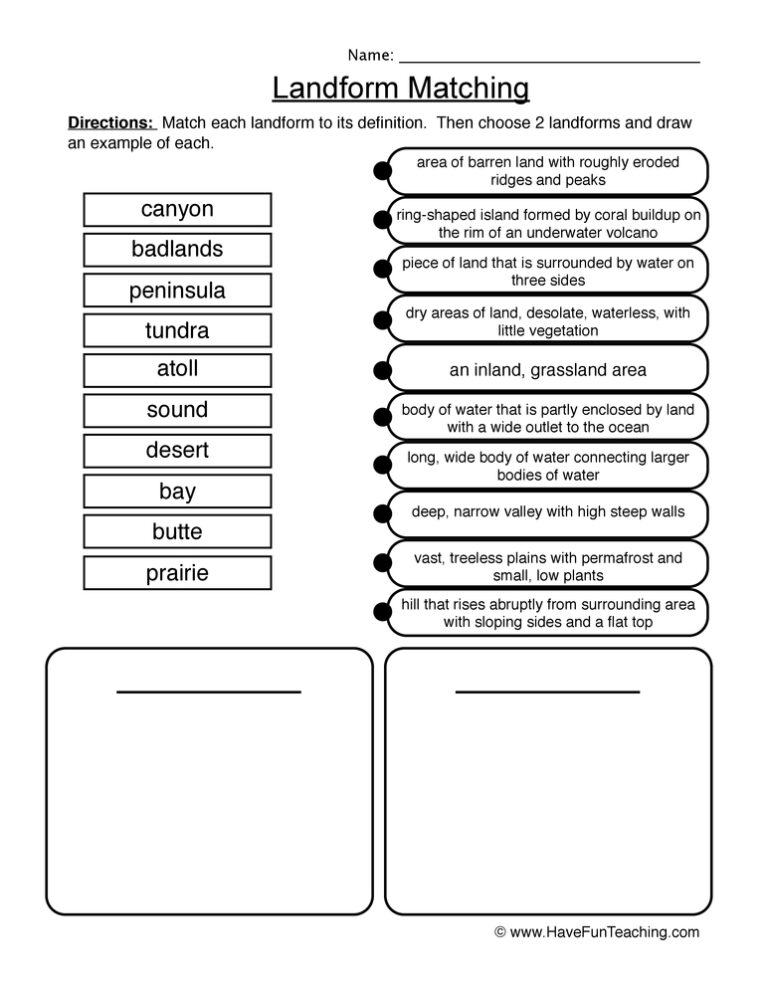
Worksheet4th GradeLandform Definition Matching Worksheet

This landform definition matching worksheet has 4th grade students match clues to canyons, buttes, atolls, and more, then name two landforms on their own. An answer key is included.

Worksheet
Worksheet4th GradeRiver Systems Worksheet

Use this river systems worksheet to help 4th graders label the parts of a river, match river landforms, and explain their thinking. An answer key is included for quick, easy checking.

Assessment
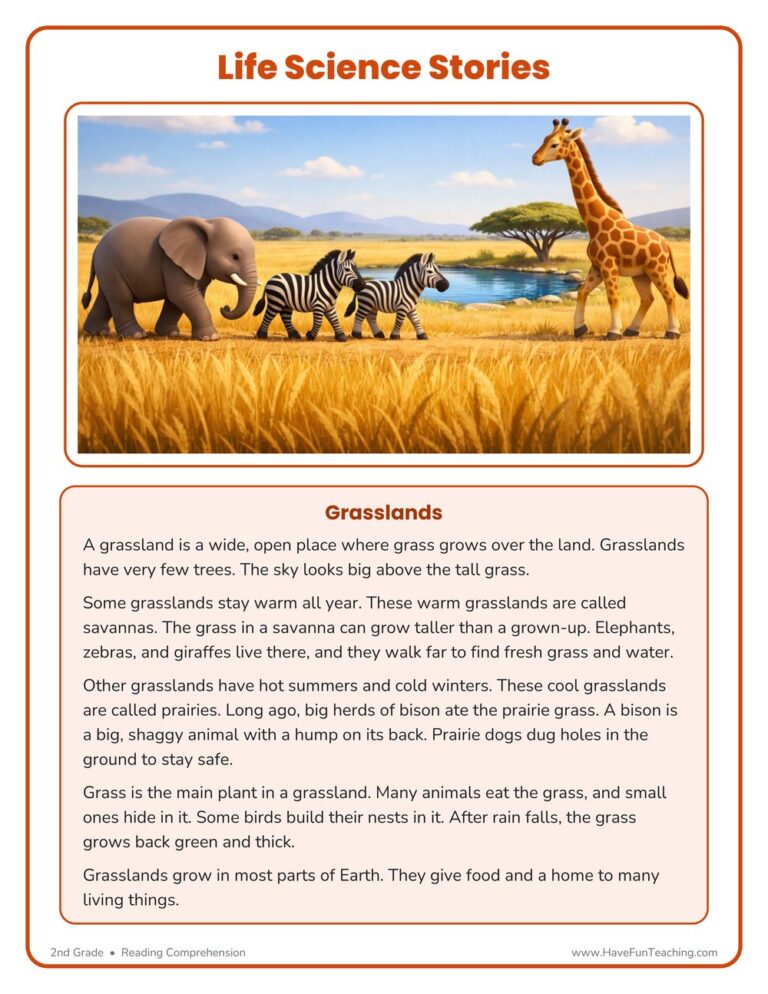
Assessment2nd GradeGrasslands Life Science Reading Comprehension Worksheet

This Grasslands Life Science Reading Comprehension Worksheet gives 2nd Grade readers a nonfiction passage about savannas and prairies, seven text-based questions, and an answer key included for fast checking.

Assessment
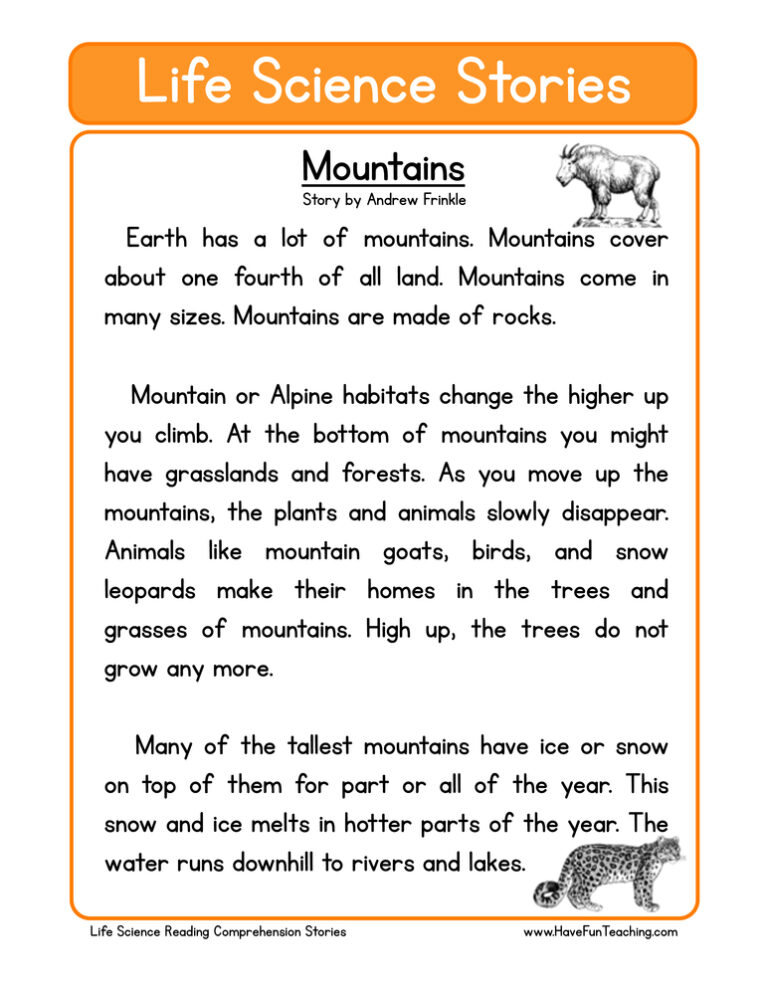
Assessment3rd GradeMountains Life Science Reading Comprehension Worksheet

Climb from grassy foothills to a snowy peak with this Mountains Life Science Reading Comprehension Worksheet. 3rd Grade readers answer multiple-choice and written questions about mountain habitats. Answer key included.

Activity
Activity3rd GradeName That Landform Smartboard Game

Using Name That Landform Smartboard Game, students look at each picture and decide what type of landform is shown

Worksheet
Worksheet4th GradeRiver Settlements Worksheet

This River Settlements Worksheet has 4th grade students match river features to settler needs, research New Amsterdam and explain why towns grew by rivers. An answer key is included.

Assessment
Assessment3rd GradeArctic and Tundra Life Science Reading Comprehension Worksheet

This Arctic and Tundra Life Science Reading Comprehension Worksheet gives 3rd graders a nonfiction passage on tundra habitats and animal adaptations, plus four multiple-choice and two written questions. Answer key included for no-prep science reading practice.

From our teachers' playbook

Mountains, valleys, and everything in between!

What do kids learn about landforms?

Landforms are the natural shapes of the Earth's surface. Younger kids learn to name and picture them: a mountain is tall and pointy, a valley is the low land between hills, a plateau is high and flat on top, and an island has water all around. Older kids learn how landforms change over time through weathering (rock breaking down), erosion (wind and water carrying it away) and deposition (dropping it somewhere new). That's how rivers carve canyons and build deltas. The click comes when kids look at a hill and wonder how long it took to form.

Our favorite ways to make landforms stick

Landforms are easy to see and fun to build. These moves help kids remember them.

Show and say

Flash a landform card and have kids show it with their hands: a pointy mountain, a flat plateau, a scooped valley. Adding a hand motion to each word helps young kids remember the difference.

Why it works: pairing a picture with each word gives kids two ways to remember it, a well-tested principle of how people learn (Mayer, 2009).

Landforms Flash CardsTry it withLandforms Flash CardsFlash CardsOpen it →

Weathering in a jar

Shake a few sugar cubes or soft rocks in a jar of water and watch them break down. Then connect it to how wind, water and ice wear down mountains. A quick demo makes weathering real.

Why it works: kids understand an idea best when they touch it, then draw it, then write it, the order the U.S. Department of Education recommends for elementary math.

Weathering WorksheetTry it withWeathering WorksheetWorksheetsOpen it →

Match it fast

Give kids a landform matching page and a timer. After they finish, they check with a partner and fix any mix-ups. Quick retrieval practice beats rereading definitions.

Why it works: researchers who compared ten study methods found practice testing is one of the two that work best (Dunlosky and colleagues, 2013).

Landform Matching WorksheetTry it withLandform Matching WorksheetWorksheetsOpen it →

Questions about teaching landforms

What are the main landforms kids learn?

Mountains, hills, valleys, plains, plateaus, canyons, islands, peninsulas and bodies of water like lakes, rivers and oceans.

What is the difference between weathering and erosion?

Weathering breaks rock into smaller pieces. Erosion moves those pieces somewhere else using wind, water or ice. Deposition is when the pieces are dropped in a new place.

What grade learns about landforms?

Kids often name landforms in 1st and 2nd grade. In 3rd through 5th grade they study how landforms form and change through weathering, erosion and deposition.

How can I teach landforms at home?

Build landforms in a sandbox or with clay, then pour water over them and watch erosion happen. Point out hills, rivers and valleys on road trips.

Keep exploring