
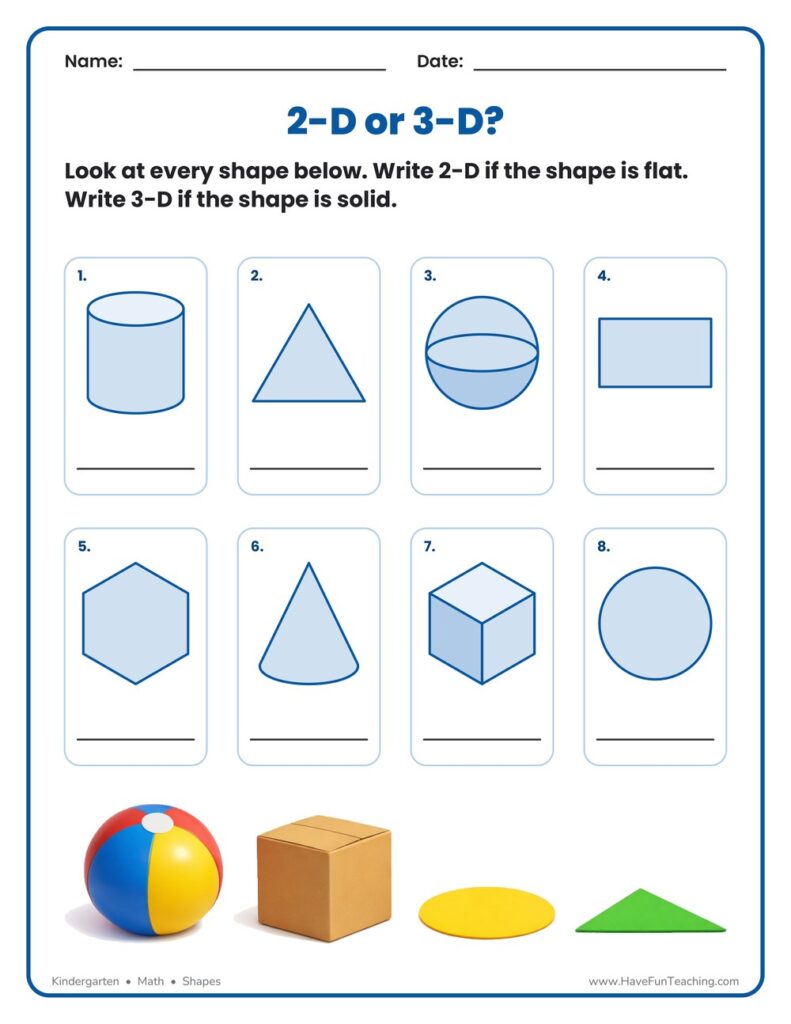
2D or 3D Shapes Worksheet
This 2D or 3D shapes worksheet asks Kindergarten students to look at eight shapes and write 2-D or 3-D on the line. An answer key is included, so flat-versus-solid practice takes no prep at all.
$6.97
Want this one free?
Tell us where to send it and it’s yours — no card, no catch.
One free resource per teacher. We’ll also send free teaching ideas each week — unsubscribe anytime.
Free teacher account · no credit card
Membership
Get every game, song, & printable
- Every game, on any device
- 10,000+ printables
- Assign online with HFT Classroom
Then $39.97/year · cancel anytime · See plans
- Instant digital download
- Printable PDF + answer key
- Made by real teachers
Teacher / Family membership
Teaching is easier with every resource
One membership for your whole year: 10,000+ worksheets, games, songs and videos for Preschool–6th, for your classroom or homeschool.
- Unlimited printables & downloads
- Every game, on any device
- Assign online with HFT Classroom
- Cancel anytime
Teacher / Family membership · 3 days free
Yearly
Monthly would be $119.64 a year
$3.33/month
Billed $39.97 once a year
You save $79.67 every year
Start My 3 Free Days$0 today · cancel anytime
Monthly
$9.97/month
Flexible, month to month
Yearly is just $3.33/mo. Switch and save $79.67
Start My 3 Free Days$0 today · cancel anytime
About this resource
Description
Telling flat shapes apart from solid shapes is one of the first big ideas in geometry, and this 2D or 3D shapes worksheet gives Kindergarten students a clear, hands-on way to practice it. A two-dimensional shape is flat, like a circle or a triangle drawn on paper. A three-dimensional shape is solid, like a ball you can hold or a box you can stack. Once children can name that difference, they start noticing shapes everywhere — in blocks, in food cans, in party hats, and in the tiles on the floor. This 2D or 3D shapes worksheet builds that noticing habit one picture at a time.
This kindergarten geometry worksheet shows eight carefully drawn shapes, one to a card. Students look at each shape, decide whether it is flat or solid, and write 2-D or 3-D on the writing line below the picture. The shapes include a circle, a triangle, a rectangle and a hexagon for the flat side, plus a cylinder, a sphere, a cone and a cube for the solid side, so children meet the whole Kindergarten shape vocabulary in a single page. Every card is the same size with the same writing line, so the layout never gives the answer away — children have to look at the shape itself. Use it as morning work, as a small-group warm-up, as homework, or as a quick check before you move on to sorting and building activities.
What’s Included
- 1 print-ready PDF worksheet
- Answer key
- 8 write-the-answer shape cards covering four flat shapes and four solid shapes
There are three reasons this resource helps children learn the skill. First, it separates the two ideas cleanly: flat versus solid is a single decision on every card, so nothing competes for a young learner’s attention. Second, the pictures are drawn to real geometric form rather than sketched, so a cylinder really looks like a cylinder and a cone really looks like a cone — children build an accurate mental picture instead of a fuzzy one. Third, writing the answer instead of circling it turns recognition into recall, which is what makes the vocabulary stick. The answer key lets you check the whole page in seconds.
Teachers and parents can stretch this skill well past the page. Take a shape walk around the classroom or the kitchen and name every solid you find: a soup can is a cylinder, a die is a cube, an orange is a sphere. Trace the flat face of a block onto paper and talk about why the tracing is 2-D while the block is 3-D. Build solids out of clay or marshmallows and toothpicks. Sort a basket of household objects into a flat pile and a solid pile. Sing a shapes song together and pause to point at each shape as it is named.
Related Resources
What teachers say
Reviews
You must be logged in to post a review.
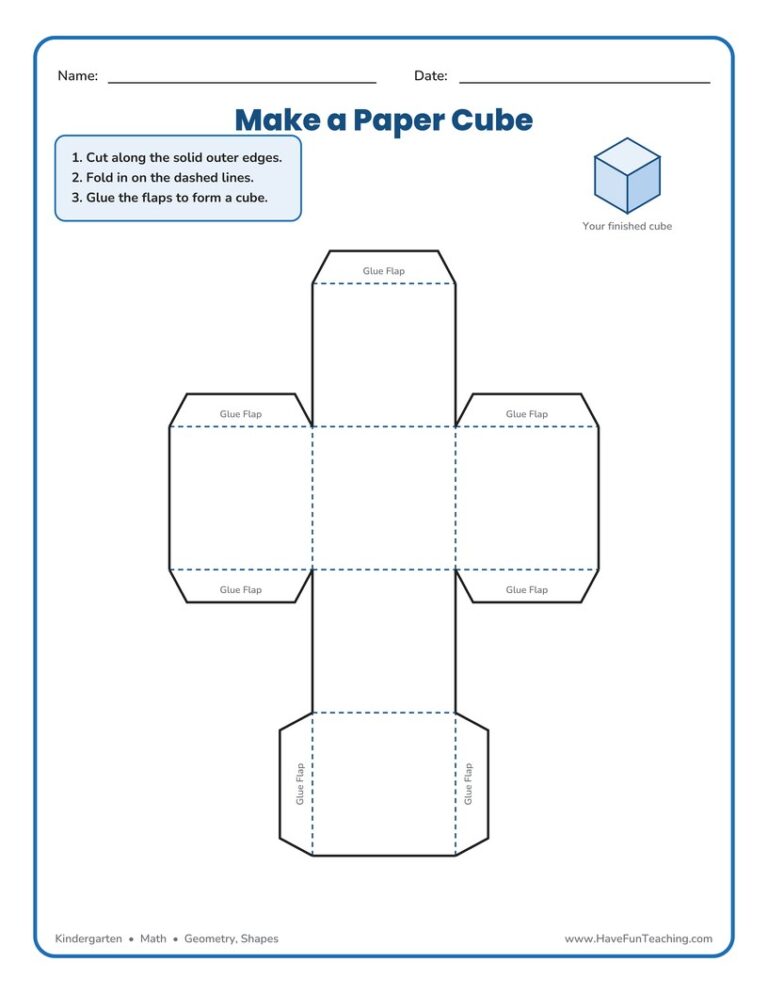
A hands-on paper cube template worksheet for Kindergarten geometry. Students cut, fold, and glue a printable cube net into a real 3D cube — a fun, no-prep way to explore solid shapes and build fine motor skills.
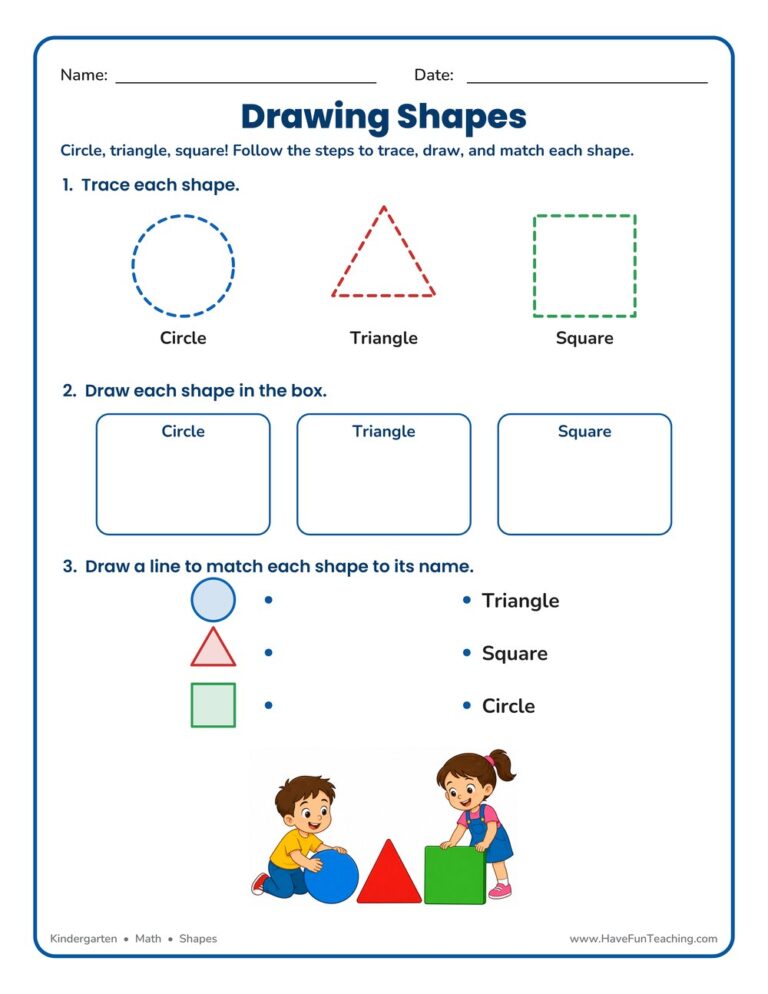
A Kindergarten drawing circle, triangle, square shapes worksheet where children trace, draw, and match a circle, triangle, and square. Includes an answer key — a simple, no-prep way to build early shape skills.

Using the Shapes Song, students learn all about shapes, including Shape Names and Shape Recognition. The Shapes Song by Have Fun Teaching is a song that teaches the shapes. Shapes have names their made of angles and lines, there are flat shapes and solid shapes we see them all the…
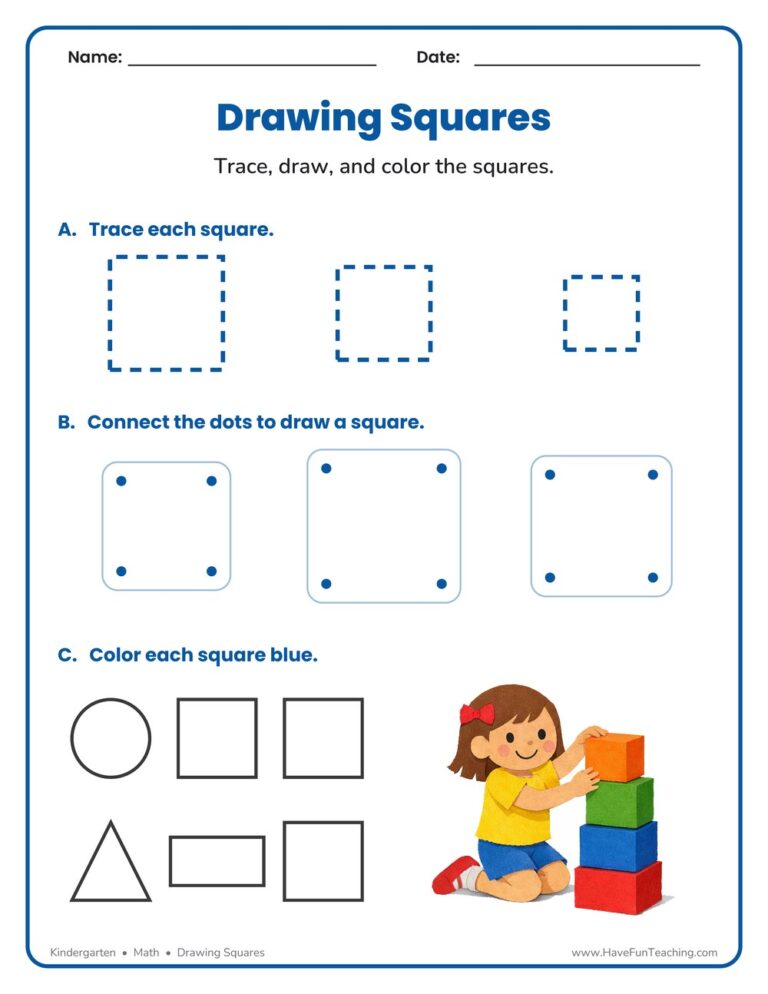
A Kindergarten drawing squares worksheet where students trace three squares, connect the dots to draw their own, and color the squares blue. Answer key included for quick, no-prep shape practice.

This Drawing Triangles Worksheet gives Kindergarten students dotted triangles to trace, open boxes to draw in, and real-world pictures to sort. Answer key included, so shape practice is ready in one print.
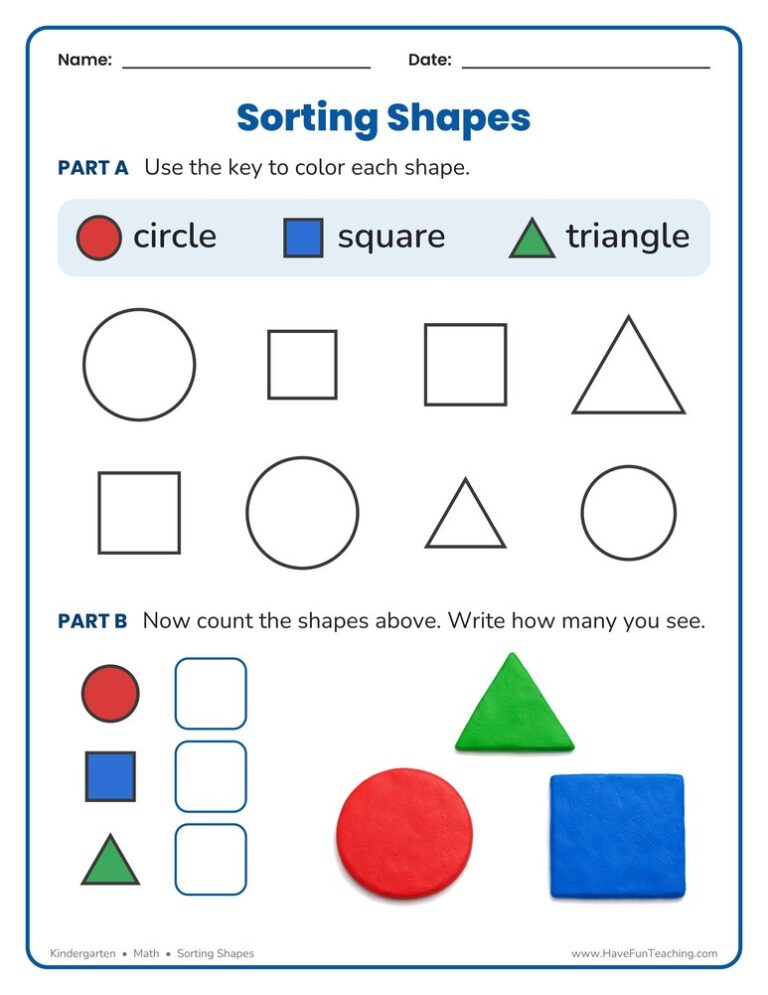
This Sorting Shapes Worksheet gives Kindergarten students eight shapes to color by category and three groups to count, using a simple red, blue and green key. An answer key is included, so shape practice is ready to print and go.
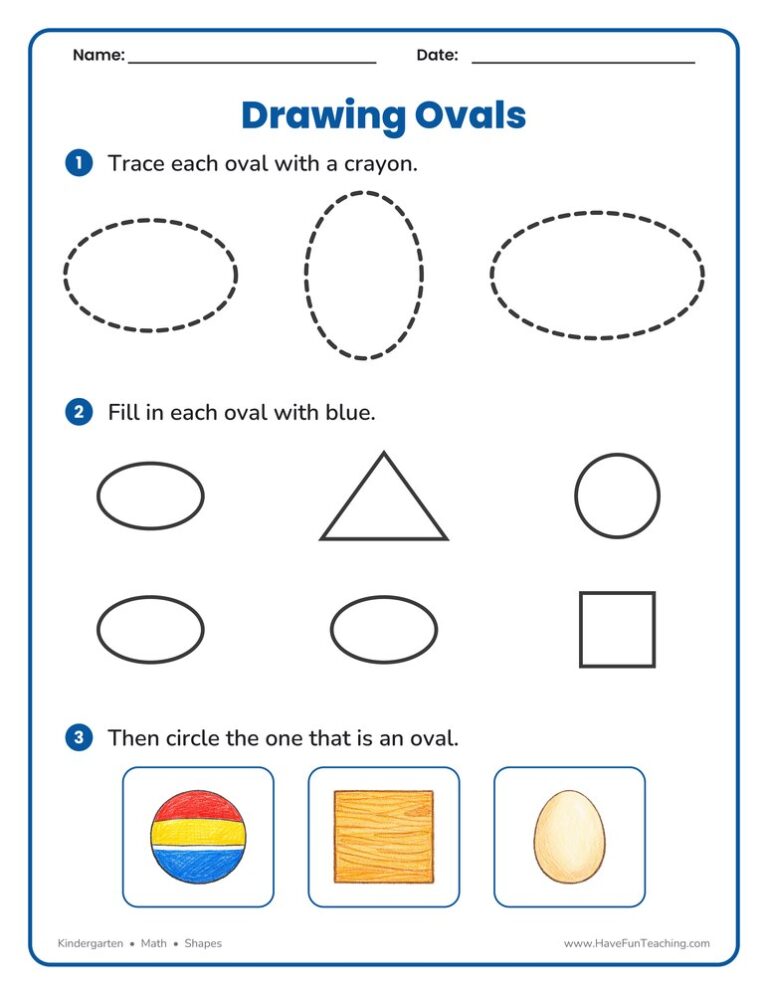
This Drawing Ovals Worksheet has kindergarten students trace three ovals, color the ovals in a mixed shape sort, and find an oval in real life. Answer key included for quick, no-prep shape practice.

Using the Circle Song, students will learn all about circles. A circle is a shape that goes around and around. It's like a pizza, and a cookie, a ring, and a coin. A circle is a shape that goes around and around. In this song, your kids will also draw…

Using the Square Song (MP3), students learn all about squares, including Shape Names and Shape Recognition through a catchy song!
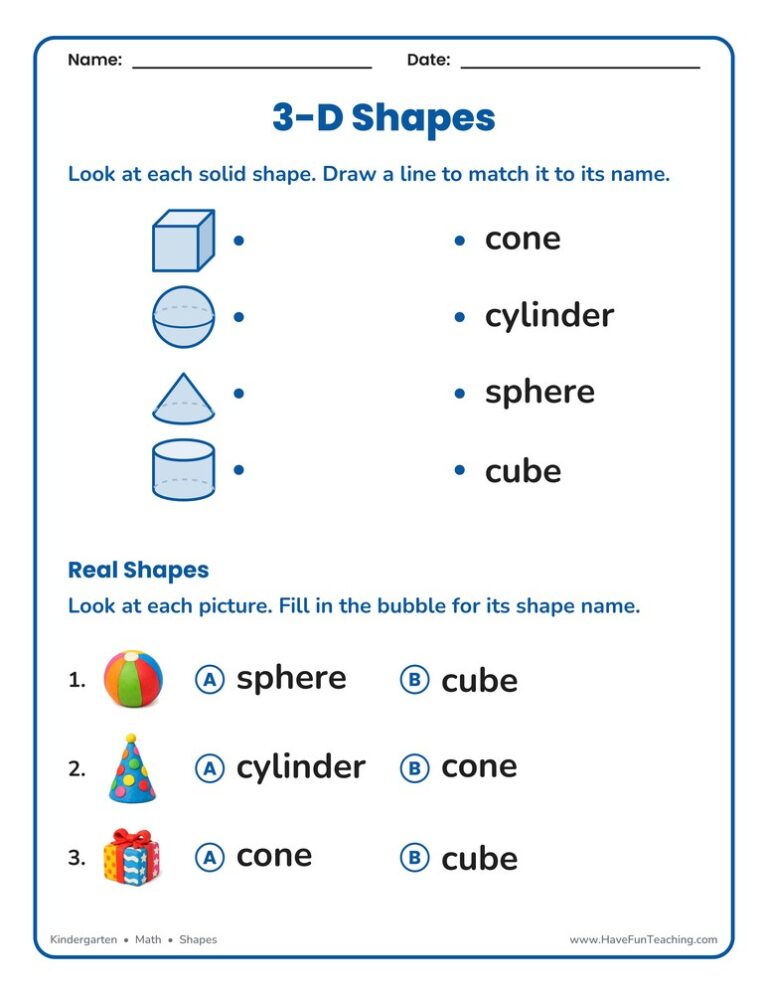
This 3D Shapes Matching Worksheet has kindergarten students match cubes, spheres, cones and cylinders to their names, then spot each solid in a real object. Answer key included for fast, no-prep geometry practice.

This Drawing Diamonds Worksheet gives Kindergarten students three ways to master the diamond shape: trace it, find it, and draw it. An answer key is included, so shape practice is ready to hand out with no prep.

Using the Shape Songs (MP3 Album), students learn all about shapes, including Shape Names and Shape Recognition through a catchy song!




Reviews
There are no reviews yet