
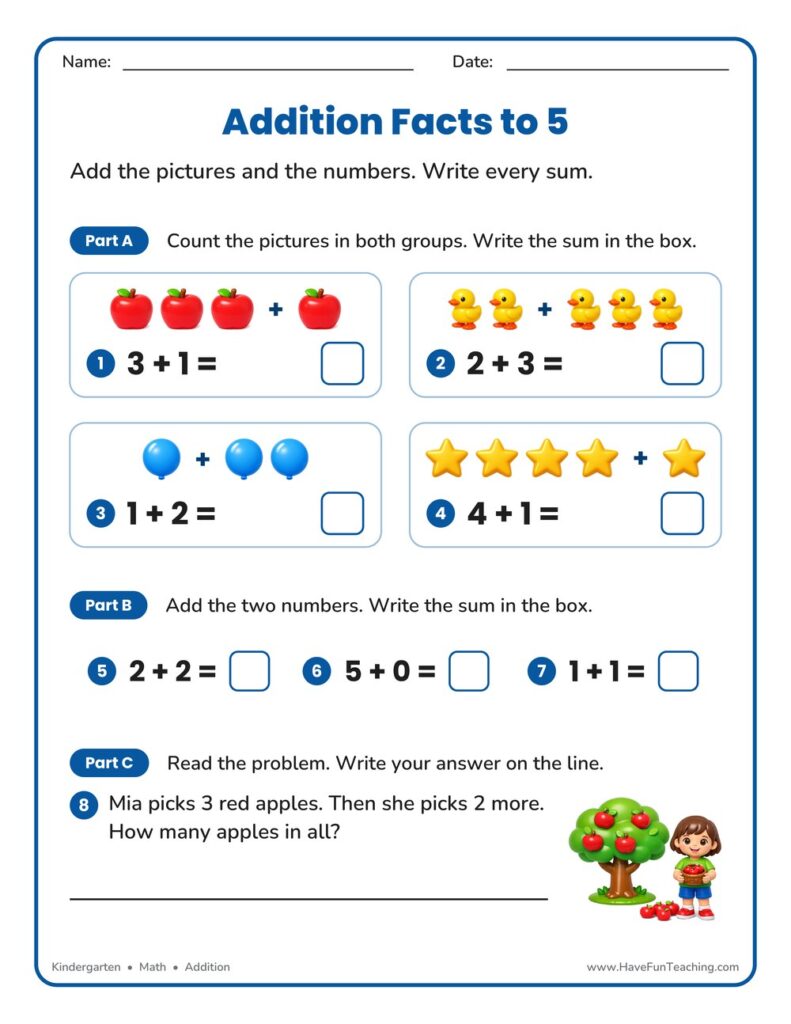
Adding Facts to 5 Worksheet
This Adding Facts to 5 Worksheet gives Kindergarten students picture addition, quick equations, and one apple-picking word problem to solve. An answer key is included, so checking every sum takes seconds.
$6.97
Want this one free?
Tell us where to send it and it’s yours — no card, no catch.
One free resource per teacher. We’ll also send free teaching ideas each week — unsubscribe anytime.
Free teacher account · no credit card
Membership
Get every game, song, & printable
- Every game, on any device
- 10,000+ printables
- Assign online with HFT Classroom
Then $39.97/year · cancel anytime · See plans
- Instant digital download
- Printable PDF + answer key
- Made by real teachers
Teacher / Family membership
Teaching is easier with every resource
One membership for your whole year: 10,000+ worksheets, games, songs and videos for Preschool–6th, for your classroom or homeschool.
- Unlimited printables & downloads
- Every game, on any device
- Assign online with HFT Classroom
- Cancel anytime
Teacher / Family membership · 3 days free
Yearly
Monthly would be $119.64 a year
$3.33/month
Billed $39.97 once a year
You save $79.67 every year
Start My 3 Free Days$0 today · cancel anytime
Monthly
$9.97/month
Flexible, month to month
Yearly is just $3.33/mo. Switch and save $79.67
Start My 3 Free Days$0 today · cancel anytime
About this resource
Description
Learning to add small numbers quickly is one of the first big milestones in Kindergarten math, and this Adding Facts to 5 Worksheet gives children a friendly place to practice it. Adding facts to 5 means knowing every pair of numbers that comes together to make 2, 3, 4, or 5 — 3 + 1, 2 + 3, 4 + 1, and all the rest. When those facts become automatic, students stop counting on their fingers for every single problem and start seeing numbers as parts that fit together. That is exactly the foundation they need before they move on to adding within 10 and within 20 in first grade.
This kindergarten addition worksheet moves through three short parts, so a young learner never faces a wall of problems. In Part A, four picture cards show two groups of objects — apples, ducklings, balloons, and stars — beside the matching equation, so children can count what they see and write the sum in the box. Part B takes the pictures away and asks students to add the two numbers on their own. Part C finishes with a simple apple-picking word problem and a wide writing line. Read the directions aloud, work the first card together, then let students finish the page independently.
What’s Included
- 1 print-ready PDF worksheet
- 1 complete answer key page
- 4 picture addition problems with countable objects
- 3 write-the-sum equations
- 1 addition word problem with a writing line
There are three reasons this adding facts to 5 worksheet helps children learn. First, it moves from pictures to numbers in one page, so students build a mental image of each fact before the symbols stand on their own. Second, every sum stays at five or below, which keeps the number range small enough that children can check their own work by counting the objects again. Third, the final word problem asks students to use a fact in a real situation, which is how addition actually shows up outside of math class.
Teachers and parents can stretch the practice in a few easy ways. Build each equation with counters, buttons, or dry beans before writing the sum, and say the whole sentence out loud: “three and one make four.” Cover one part of a group of five objects and ask how many are hiding. Play a quick game where one player claps a number, the other claps a second number, and both call out the total. Finally, hang the answer key nearby so children can check a row themselves and feel the confidence that comes from being right.
Related Resources
What teachers say
Reviews
You must be logged in to post a review.

This Adding Within 5 Worksheet gives kindergarten students eight quick addition problems with sums to 5, plus an answer key included, to build confident math fact fluency.
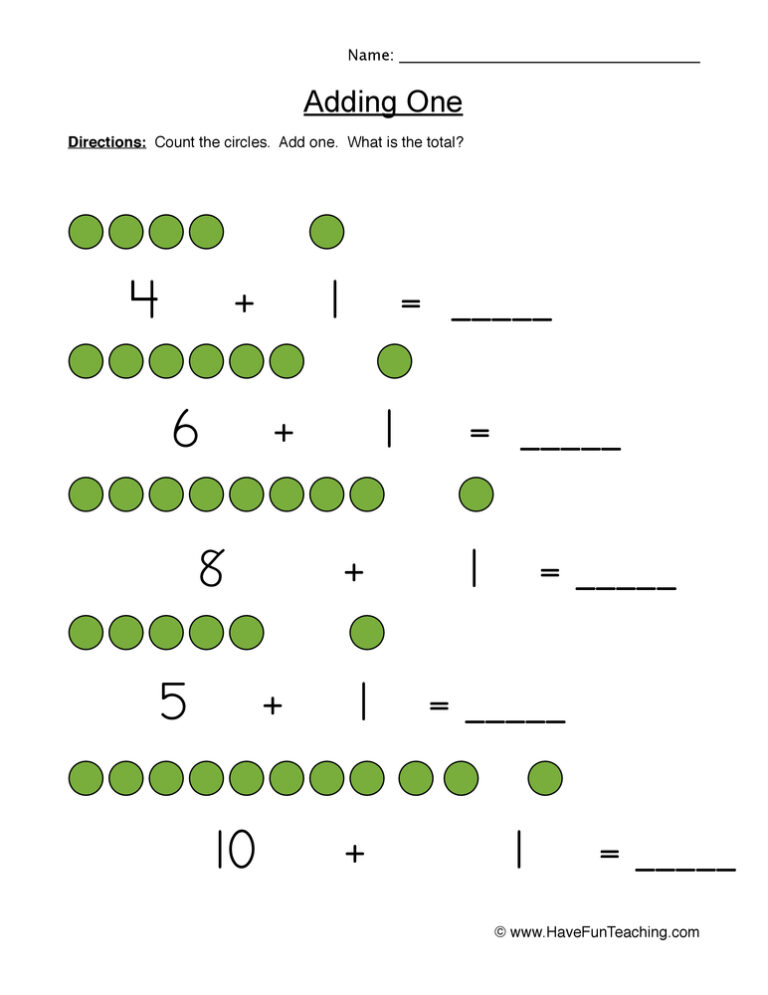
This Adding One Using Pictures Worksheet gives Kindergarten students six picture problems and four number sentences for adding one, with an answer key, so counting on becomes something they can see.

This decomposing numbers 10-20 worksheet gives Kindergarten students five ten-frame problems that break each teen number into ten and some more, with an answer key included so practice checks itself in seconds.

Use the Adding Songs (Lyric Video Collection) to practice adding and addition facts by singing and adding these 15 addition songs. Great for addition facts!

Numbers that Make 10 Worksheet gives kindergarten students six ten-frames to count, then a big box for the number that finishes each one. An answer key is included, so making ten checks itself.

These Joining Groups to Add Worksheets give Kindergarten students four picture problems to count, join, and total within 10. An answer key is included, so first addition practice is quick to check.

This Using a Tens Frame to Show Addition Worksheet gives kindergarten students practice drawing counters and writing totals within ten, with an answer key included for fast checking.
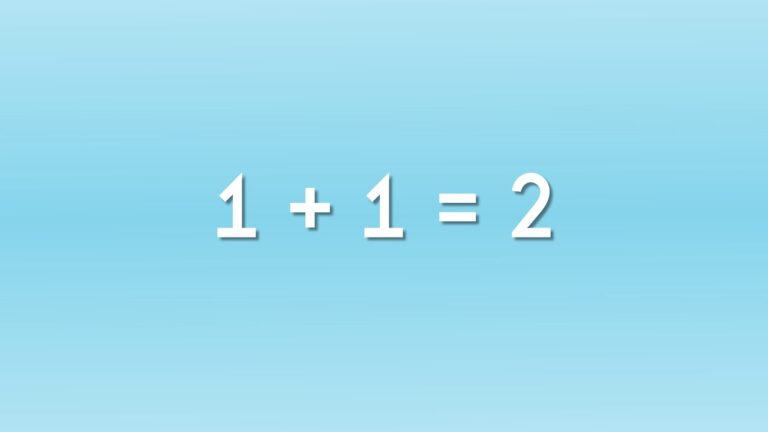
Using the Adding 1 Song (Lyric Mjusic Video), students sing and practice adding 1 with all addition facts 1-15. Your kids will learn how to add 1.

This Adding Using Pictures Worksheet gives Kindergarten learners six picture problems to count and add within 10. An answer key is included, so totals are checked in seconds.
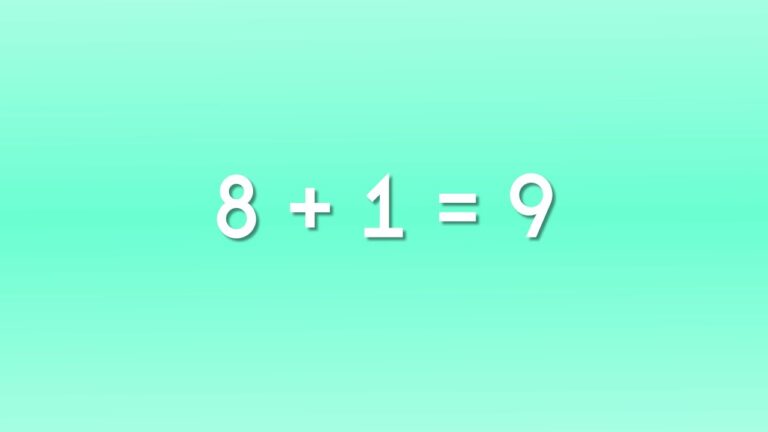
Using the Adding 8 Song (Lyric Mjusic Video), students sing and practice adding 8 with all addition facts 1-15. Your kids will learn how to add 8.
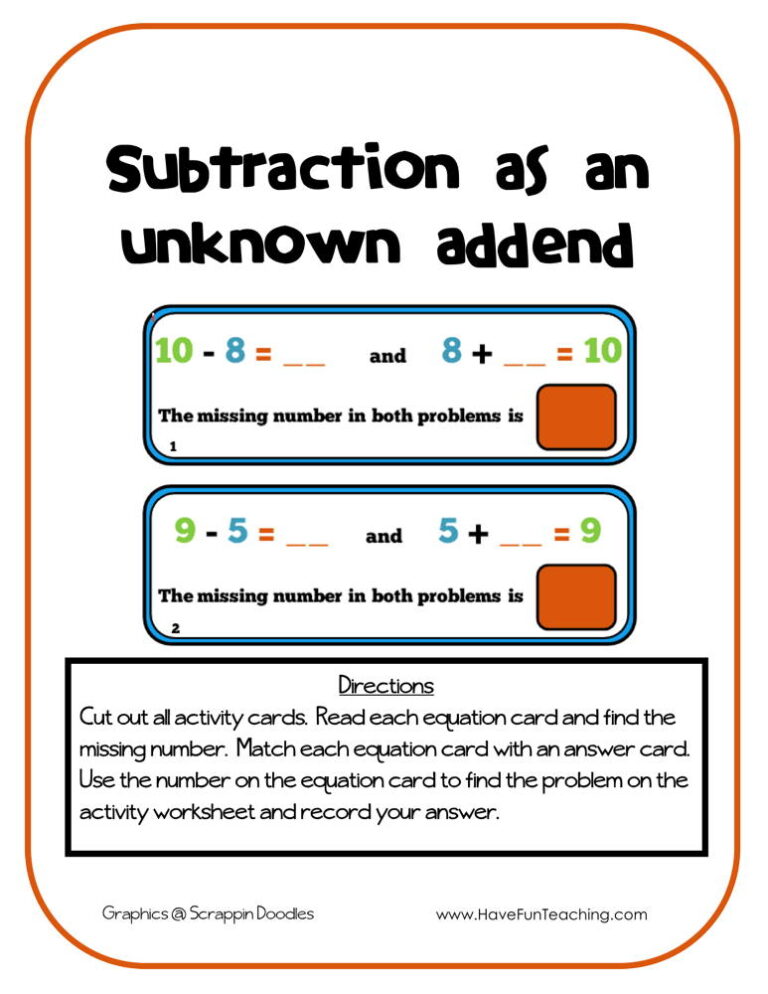
This subtraction as an unknown addend activity helps K through 2nd grade students solve subtraction within 20 by matching each fact to its addition fact card. Answer key included.
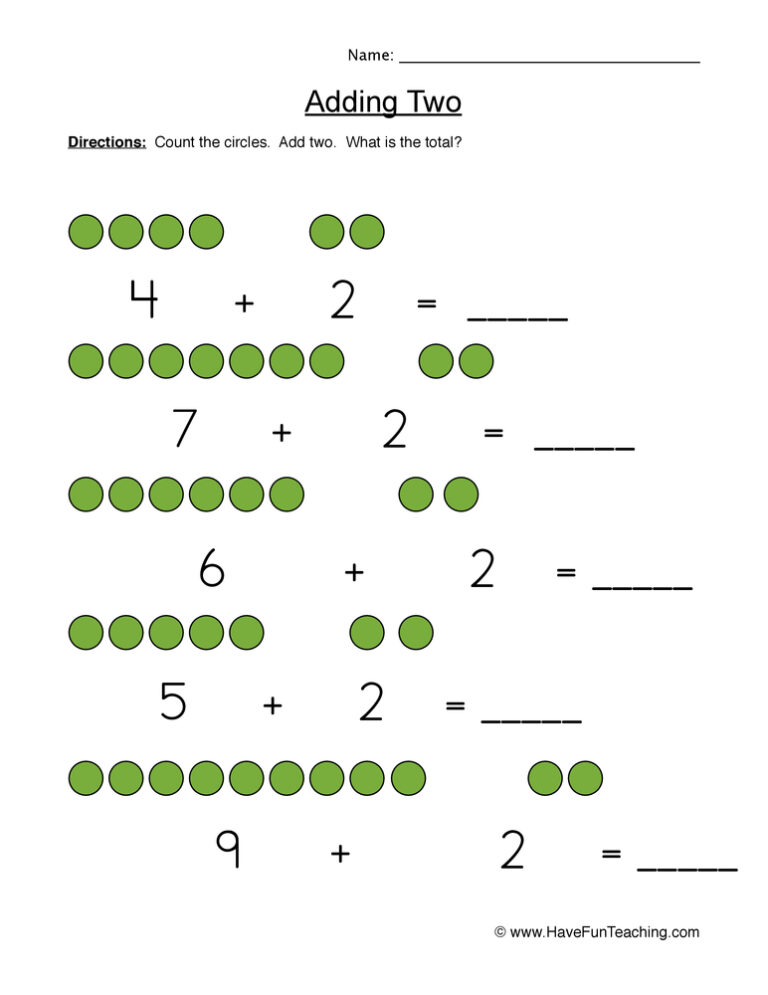
The Adding Two Using Pictures Worksheet gives Kindergarten students six picture cards and four number sentences for adding two within ten, with an answer key, so counting on becomes automatic.




Reviews
There are no reviews yet