
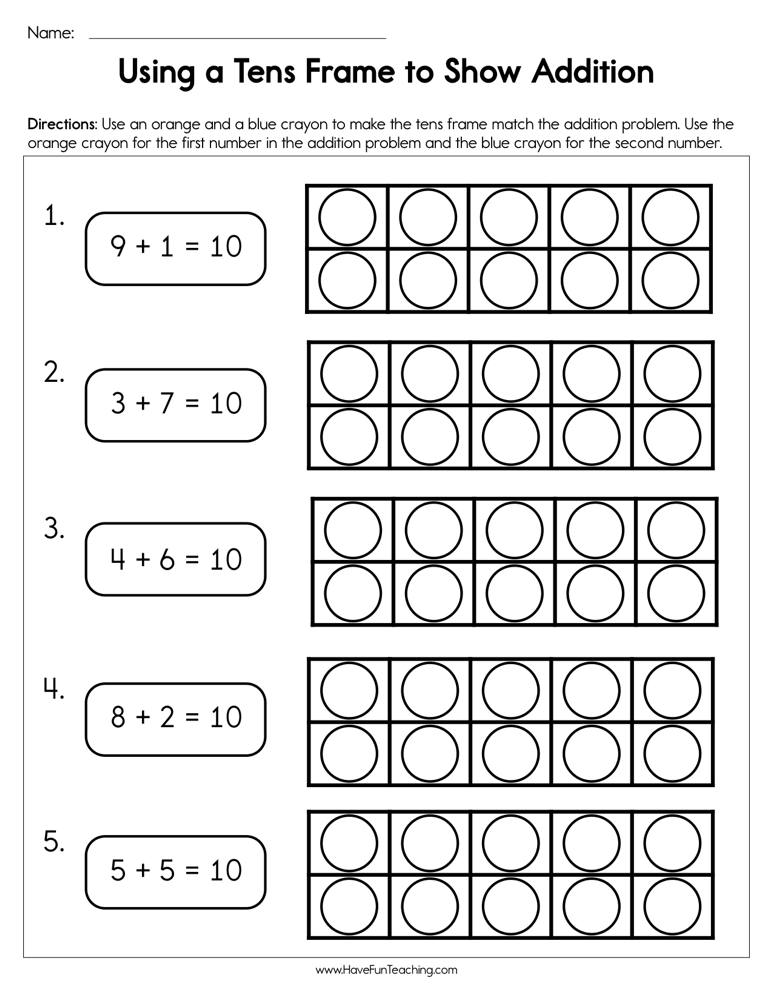
Using a Tens Frame to Show Addition Worksheet
This Using a Tens Frame to Show Addition Worksheet gives kindergarten students practice drawing counters and writing totals within ten, with an answer key included for fast checking.
$6.97
Or free with a membership — members pay $3.33/mo for all 10,000+ resources. See plans
Want this one free?
Tell us where to send it and it’s yours — no card, no catch.
One free resource per teacher. We’ll also send free teaching ideas each week — unsubscribe anytime.
Teaching is easier with a membership
Unlimited printables, games & videos for PreK–6th — for your classroom or homeschool. Cancel anytime.
Start your 3-day free trial$0 today · cancel anytime · Instant access to 10,000+ resources
About this resource
Description
A ten frame is the first picture of number that most children ever trust, and this Using a Tens Frame to Show Addition Worksheet puts it to work on addition within ten. Two rows of five cells give a child somewhere to see a total instead of guessing at it: four counters and three more counters are plainly seven, and the empty cells at the end quietly show how far away ten still is. That is the whole reason kindergarten teachers reach for the frame before they reach for a number line.
Each of the four problems on this page starts with the first number already drawn in the frame. Students read the addition sentence, draw the counters for the second number, and then write how many there are in all on the line. Filling the frame the proper way — left to right, finishing the top row before starting the bottom — is part of the practice, because that habit is what makes a total readable at a glance later on. A complete answer key is included, so this Using a Tens Frame to Show Addition Worksheet works for independent practice, a math center, small-group work, or a quick check before you move on. It is a kindergarten addition worksheet you can hand out with no set-up at all.
What’s Included
- One printable worksheet page with four ten-frame addition problems
- The first addend already drawn in every frame, so the child adds on
- Roomy writing lines sized for kindergarten handwriting
- A complete answer key page showing both colors of counters
- Original artwork and a clean, uncluttered layout
Three Reasons This Helps Kids
- It makes the total visible. A child who can see four counters and three counters in one frame stops counting from one and starts counting on, which is the real kindergarten milestone.
- It builds a sense of ten. Every problem sits in the same ten cells, so students begin to feel how close each total is to a full frame.
- It joins the picture to the number sentence. Drawing the counters and then writing the total ties the model and the symbols together in one step.
Teacher and Parent Ideas
Work the first problem together with real two-color counters before anyone picks up a pencil, and say the fill rule out loud: top row first, left to right. Ask “how many more would fill the frame?” after each answer, which turns every problem into free practice with making ten. Hide the frame with your hand and have the child tell you the total from memory. For an extension, let students invent a fifth problem for a partner and draw it in a blank frame. At home, the answer key makes checking quick, and a handful of buttons or coins works just as well as classroom counters.
Related Resources
What teachers say
Reviews
You must be logged in to post a review.

This Adding Within 5 Worksheet gives kindergarten students eight quick addition problems with sums to 5, plus an answer key included, to build confident math fact fluency.

This Adding Facts to 5 Worksheet gives Kindergarten students picture addition, quick equations, and one apple-picking word problem to solve. An answer key is included, so checking every sum takes seconds.
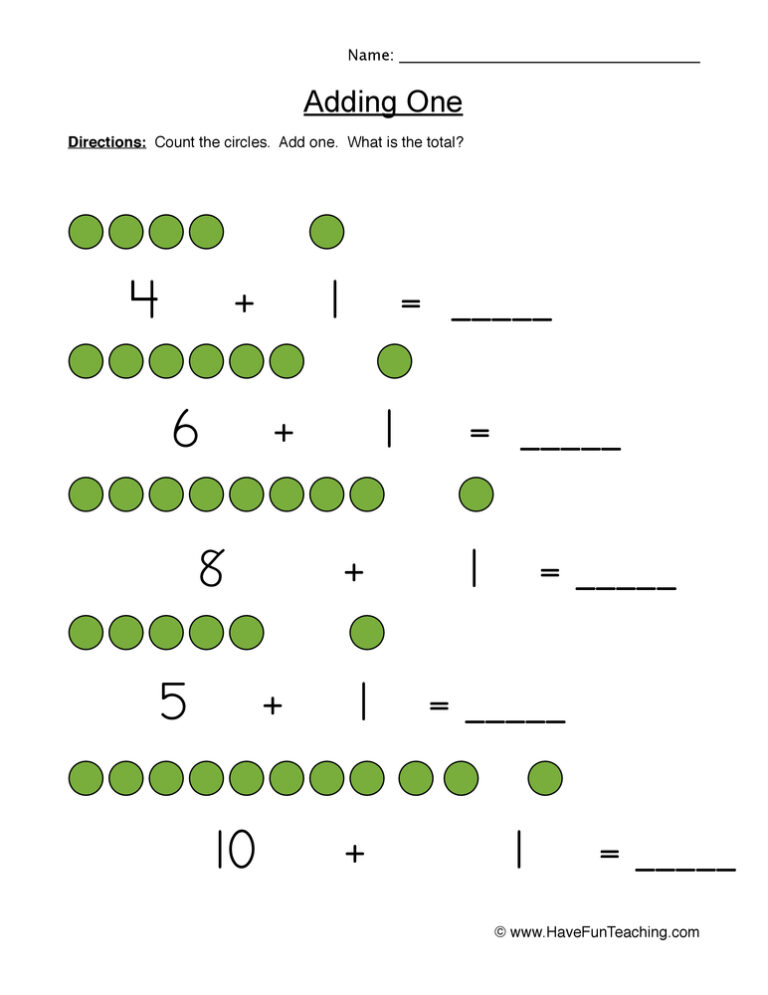
This Adding One Using Pictures Worksheet gives Kindergarten students six picture problems and four number sentences for adding one, with an answer key, so counting on becomes something they can see.

These Joining Groups to Add Worksheets give Kindergarten students four picture problems to count, join, and total within 10. An answer key is included, so first addition practice is quick to check.
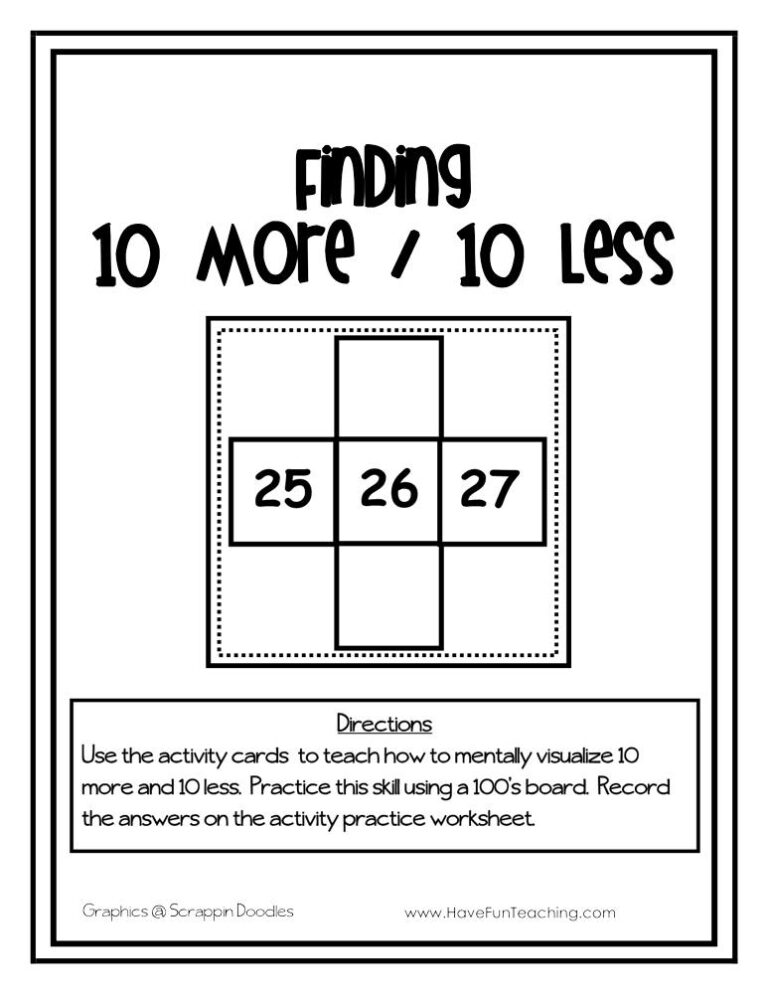
In this Finding 10 More 10 Less Activity, students practice finding 10 more and less than a given number to build skip counting and base ten skills.

This decomposing numbers 10-20 worksheet gives Kindergarten students five ten-frame problems that break each teen number into ten and some more, with an answer key included so practice checks itself in seconds.
Using the Adding 8 Song (Lyric Mjusic Video), students sing and practice adding 8 with all addition facts 1-15. Your kids will learn how to add 8.

This Adding Using Pictures Worksheet gives Kindergarten learners six picture problems to count and add within 10. An answer key is included, so totals are checked in seconds.

Use the Adding Songs (Lyric Video Collection) to practice adding and addition facts by singing and adding these 15 addition songs. Great for addition facts!
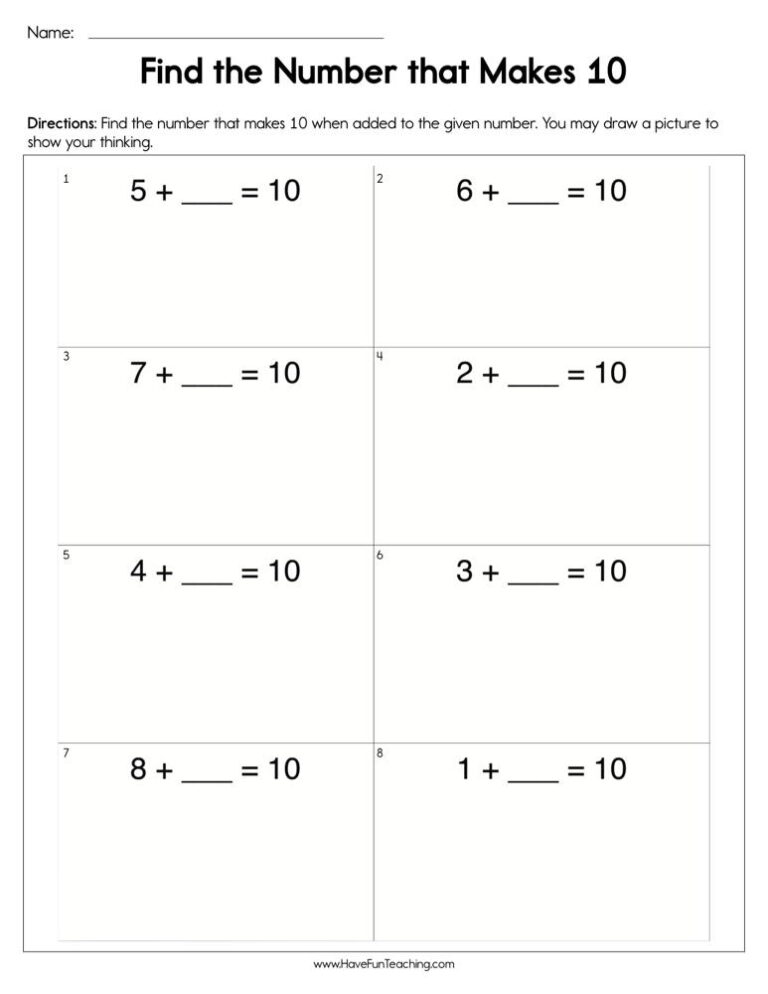
Use this find the number that makes 10 worksheet to help Kindergarten students complete six addition equations and three number bonds. An answer key is included, so it is an easy no-prep way to build make-ten fluency.
Using the Adding 1 Song (Lyric Mjusic Video), students sing and practice adding 1 with all addition facts 1-15. Your kids will learn how to add 1.

Numbers that Make 10 Worksheet gives kindergarten students six ten-frames to count, then a big box for the number that finishes each one. An answer key is included, so making ten checks itself.




Reviews
There are no reviews yet