
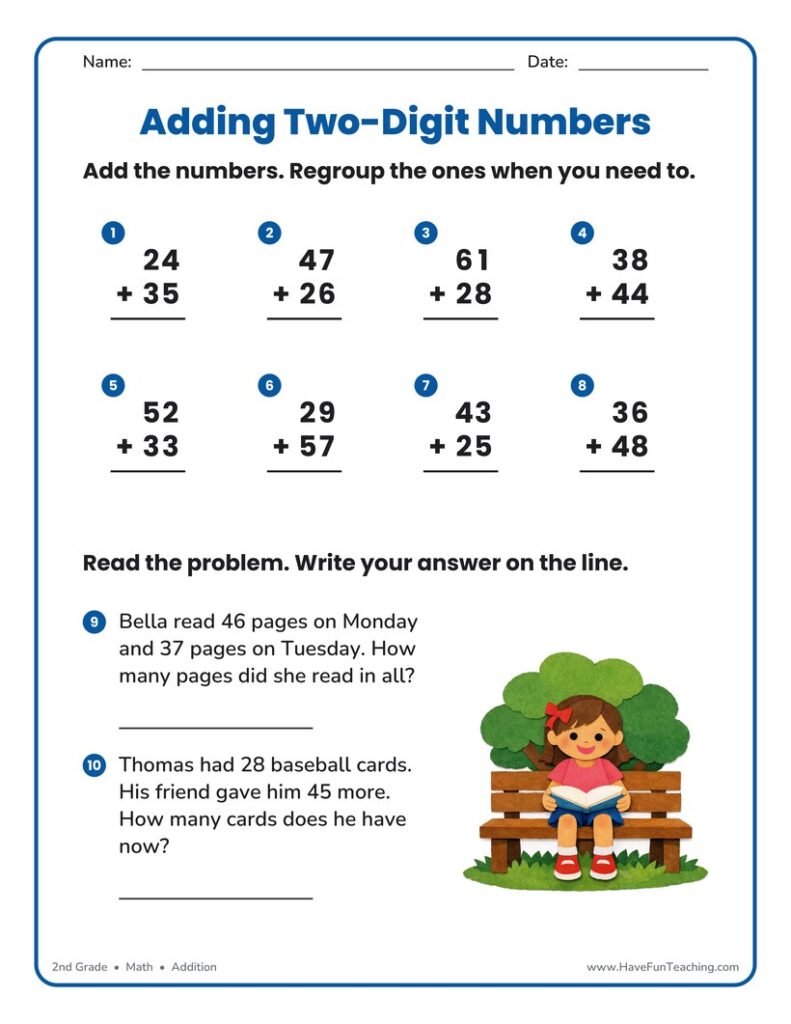
Adding Two Digit Numbers Worksheet
A second grade adding two digit numbers worksheet with eight column-addition problems and two word problems, mixing sums with and without regrouping. An answer key is included, so practice is ready to print and quick to check.
$6.97
Or free with a membership — members pay $3.33/mo for all 10,000+ resources. See plans
Want this one free?
Tell us where to send it and it’s yours — no card, no catch.
One free resource per teacher. We’ll also send free teaching ideas each week — unsubscribe anytime.
Teaching is easier with a membership
Unlimited printables, games & videos for PreK–6th — for your classroom or homeschool. Cancel anytime.
Start your 3-day free trial$0 today · cancel anytime · Instant access to 10,000+ resources
About this resource
Description
Adding two-digit numbers is the moment addition grows up. In second grade, students stop counting one by one and start thinking in tens and ones, lining the places up and trading ten ones for a fresh ten whenever the ones column overflows. This adding two digit numbers worksheet gives them steady, focused practice with sums within 100, both with and without regrouping, so the strategy becomes automatic instead of something they rebuild from scratch every time.
The page opens with eight column-addition problems arranged in a clean four-by-two grid, each one numbered in a bright blue circle with plenty of room to write the sum below the equation bar. Four of the eight require regrouping and four do not, so students have to actually look at the ones column before they decide what to do rather than falling into a pattern. Two word problems follow, asking students to carry the same skill into a real situation. Use this two digit addition worksheet as morning work, as a quick check after a place-value lesson, as a math-center task, or as homework that a parent can score in seconds with the included key.
What’s Included
- 1 print-ready PDF worksheet
- Answer key
- 8 column-addition problems and 2 addition word problems
Three things make this adding two digit numbers worksheet especially useful. First, the problems are set in true place-value columns, so the ones sit under the ones and the tens under the tens — students see the structure that makes regrouping make sense. Second, the mix of regrouping and non-regrouping problems forces a decision on every single item, which is what builds real number sense instead of a memorized routine. Third, the two word problems ask students to pull the numbers out of a sentence themselves, the exact move their state assessment will ask for later in the year.
Teachers and parents can stretch the skill well past the page. Build the two addends with base-ten blocks or bundled straws and physically trade ten ones for a ten rod so regrouping stops being a rule and starts being a trade. Roll two dice twice to make a pair of two-digit numbers and race to the sum. Ask students to estimate first — “is 47 plus 26 closer to 60 or 70?” — then add to check. Keep a running classroom total of books read or minutes exercised and add the new two-digit number each day. Finally, have students write their own word problem for a friend to solve, then trade papers and compare answers.
Related Resources
What teachers say
Reviews
You must be logged in to post a review.

This addition and subtraction word problems worksheet gives 2nd graders four real-world number stories to solve within 100. It includes a complete answer key, making it perfect for no-prep math practice at home or in the classroom.
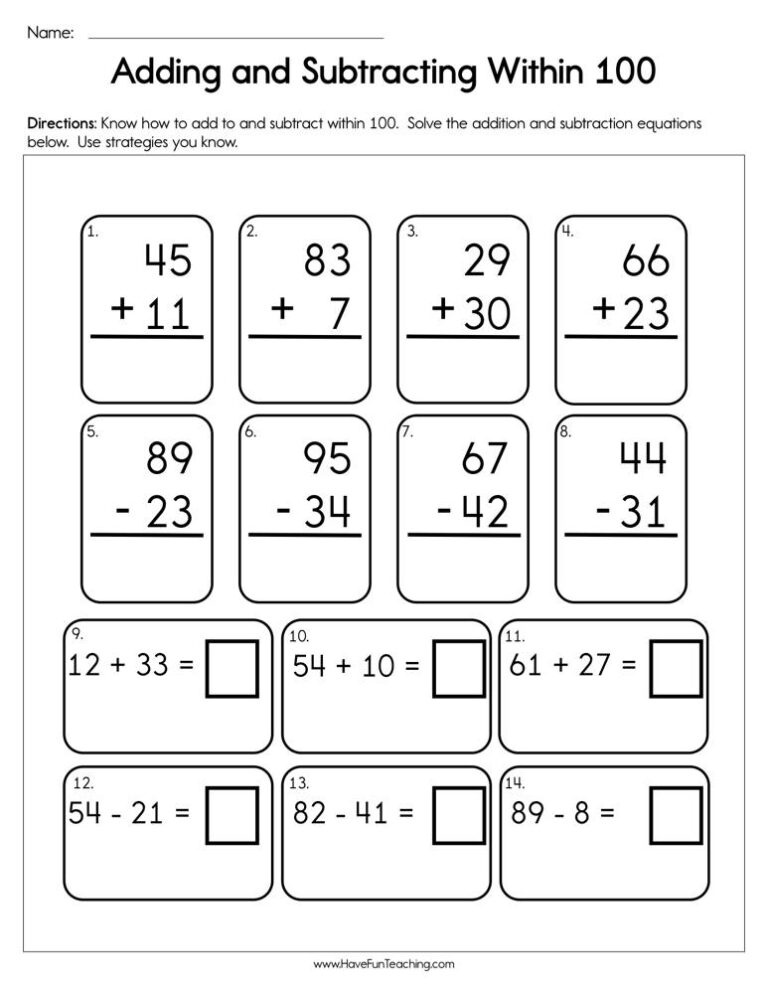
An adding and subtracting within 100 worksheet that helps 2nd graders solve two-digit problems in both stacked and horizontal form. Includes a complete answer key—great for quick, no-prep math practice at home or school.
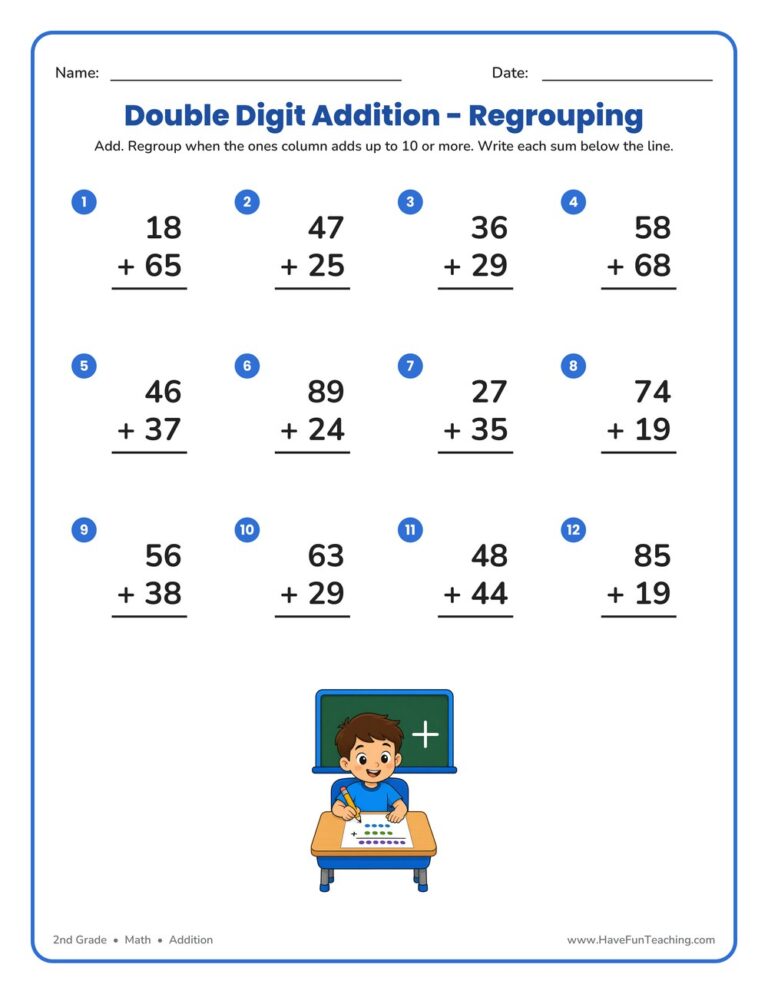
This double digit addition with regrouping worksheet gives 2nd graders twelve column-addition problems that practice carrying from the ones to the tens place. Includes a complete answer key—perfect for no-prep math practice at home or in class.

This Adding and Arrays Worksheet asks 2nd grade students to write a number sentence for six arrays and two story problems. An answer key is included, so practice with equal rows takes only minutes.

This Add and Subtract 10 and 100 Worksheet gives 2nd Grade students mental math practice with tens and hundreds, number patterns, and two word problems. An answer key is included, so checking work takes seconds.

This Word Problems With 3 Numbers Worksheet asks 2nd graders to draw a picture and then add three addends inside real stories. An answer key is included, so checking work takes only seconds.
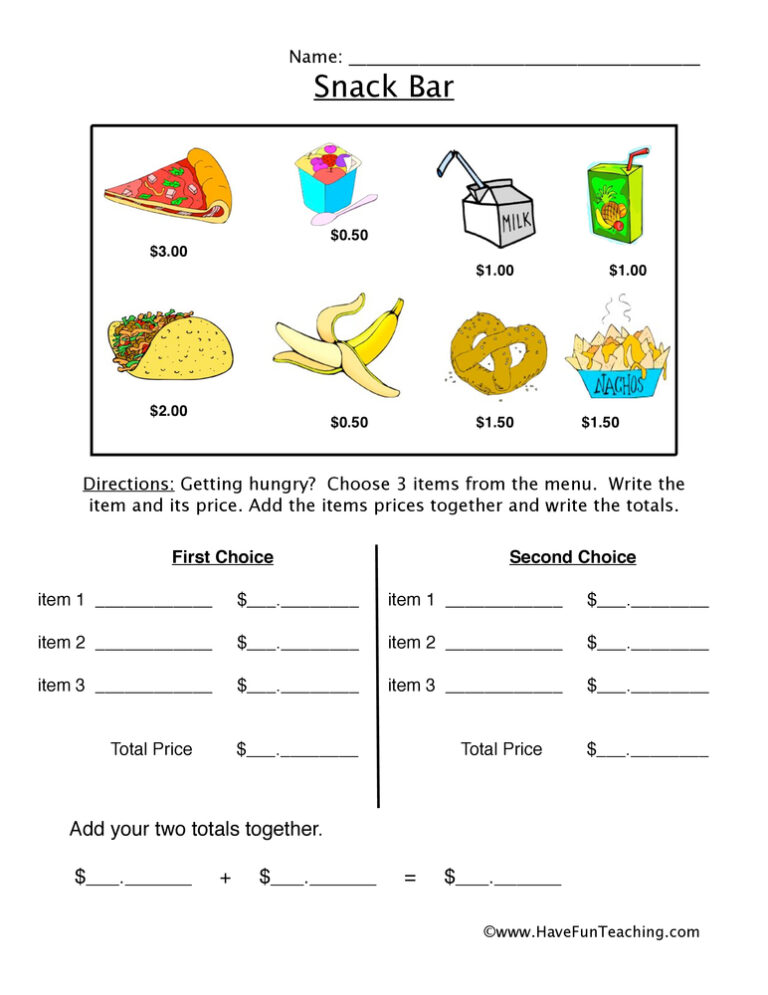
Students use the Ordering from a Snack Bar Worksheet to read a six-item menu, write two snack prices, and add them to find each total. Built for 2nd grade with an answer key included, it makes money practice feel like lunchtime.

Practice this add and subtract 10 and 100 word problems worksheet with three number stories and a 10 more, 10 less, 100 more, 100 less chart. Built for 2nd Grade with an answer key included, so mental math clicks fast.
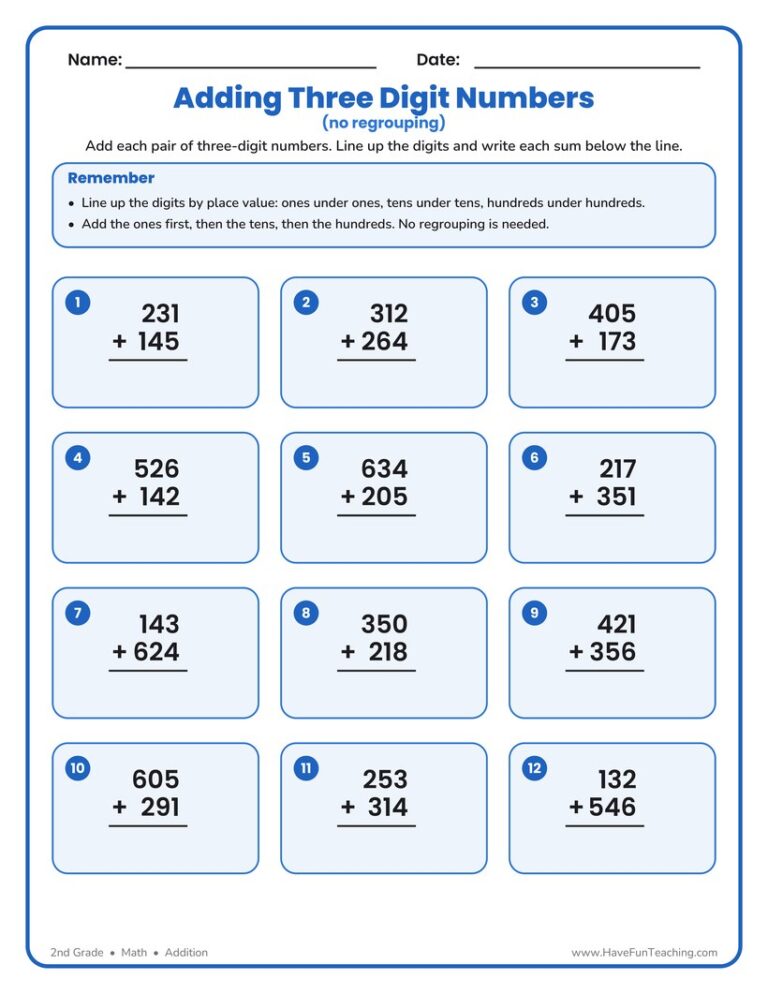
Practice adding three-digit numbers with this triple digit addition no regrouping worksheet for 2nd grade. Twelve column-addition problems with an answer key included — perfect for building place-value fluency with no-prep math practice.

This Adding and Subtracting with Number Line Worksheet helps 2nd graders solve addition and subtraction within 100 and mark each answer on a number line. Includes a complete answer key for no-prep math practice.
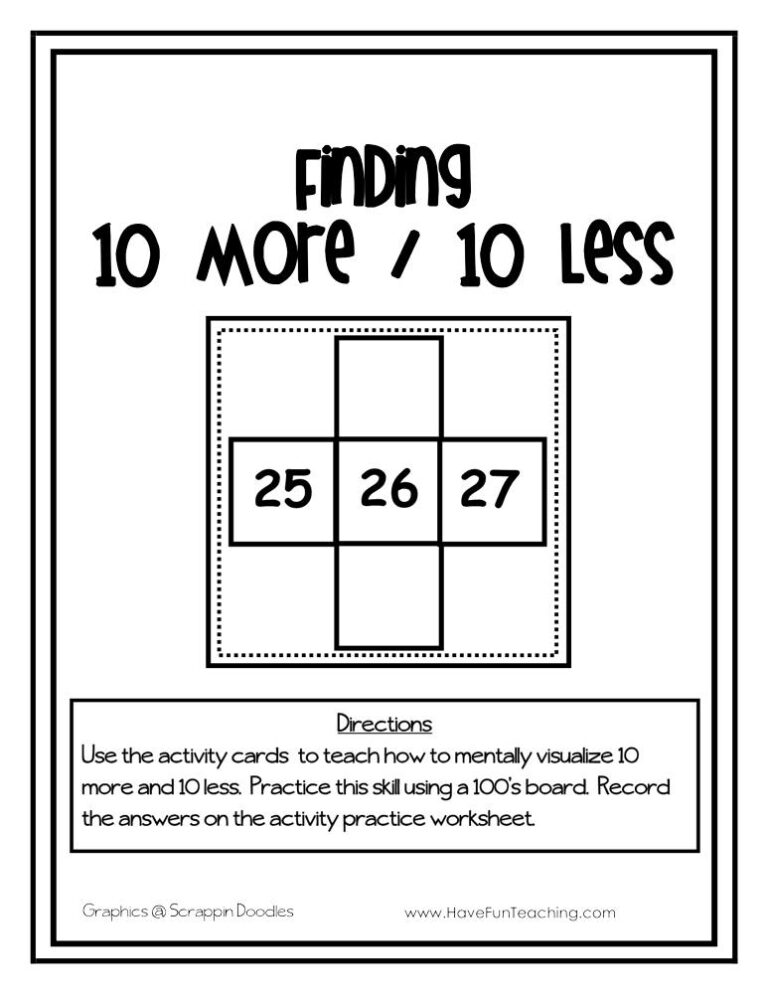
In this Finding 10 More 10 Less Activity, students practice finding 10 more and less than a given number to build skip counting and base ten skills.

This double digit addition with regrouping worksheet gives 2nd graders eight column-form problems that all trade ten ones for a new ten, plus a word problem. Answer key included for fast, no-prep practice.




Reviews
There are no reviews yet