

Balanced Scale Worksheet
This Balanced Scale Worksheet has 3rd graders read four level balance scales in grams and kilograms to find each missing weight. An answer key is included, so weight practice takes no prep at all.
$6.97
Or free with a membership — get this and 10,000+ resources. See plans
Want this one free?
Tell us where to send it and it’s yours — no card, no catch.
One free resource per teacher. We’ll also send free teaching ideas each week — unsubscribe anytime.
Teaching is easier with a membership
Unlimited printables, games & videos for PreK–6th — for your classroom or homeschool. Cancel anytime.
Start your 3-day free trialNo commitment · Cancel anytime · Instant access to 10,000+ resources
About this resource
Description
Reading a balance scale is one of the first times a child sees an equation in the real world: whatever sits on one pan has to weigh exactly as much as whatever sits on the other, or the beam tips. This Balanced Scale Worksheet uses that idea to teach weight and missing addends at the same time. Students look at a level beam, add up the masses they can see on one side, and work out the single mass that is missing from the other. Because the beam is drawn level, the child always has a rule to reason from, and the answer is never a guess.
This balanced scale worksheet is built for 3rd Grade and works as a quick, no-prep 3rd grade measurement worksheet for a math block, a small group, or homework. Part A gives four balance scales in grams and kilograms; each one is multi-step, because the student must total one side before finding the missing part on the other. Part B is a two-step word problem about weighing a backpack against a set of known weights, and Part C asks the student to explain in writing how they found that weight. Print it, hand it out, and use the included answer key to check the work in seconds.
What’s Included
- 1 print-ready PDF worksheet
- Answer key
- 4 balance scale problems in grams and kilograms, 1 two-step word problem, and 1 written explanation prompt
This resource helps kids in three ways. First, it turns weight into reasoning instead of memorizing: the child has to decide what the level beam is telling them before touching a number. Second, every problem is multi-step, so students practice combining masses and then finding a missing part, which is exactly the thinking a 3rd grade measurement standard asks for. Third, the written explanation in Part C makes the strategy visible, so a teacher can see who understands the balance and who is only copying numbers.
Teachers and parents can extend this skill quickly. Put a real balance scale or a coat-hanger balance on a table and let students test whether two handfuls of blocks truly weigh the same. Weigh classroom objects on a kitchen scale and record each one in grams, then challenge students to build two piles that balance. Ask children to estimate first and then measure, which builds a feel for what a gram and a kilogram really are. At home, a bathroom scale and a full backpack make the same lesson personal.
Related Resources
What teachers say
Reviews
You must be logged in to post a review.
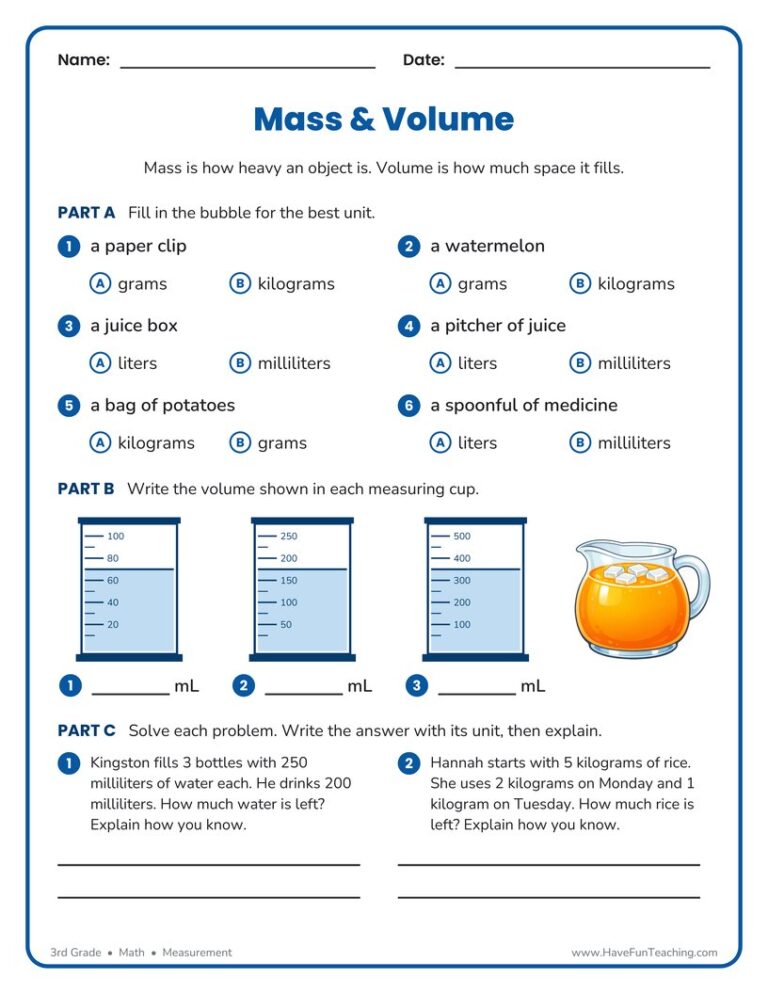
This mass volume worksheet gives 3rd grade students practice choosing metric units, reading measuring cups, and solving two-step word problems. An answer key is included, so checking work takes seconds.
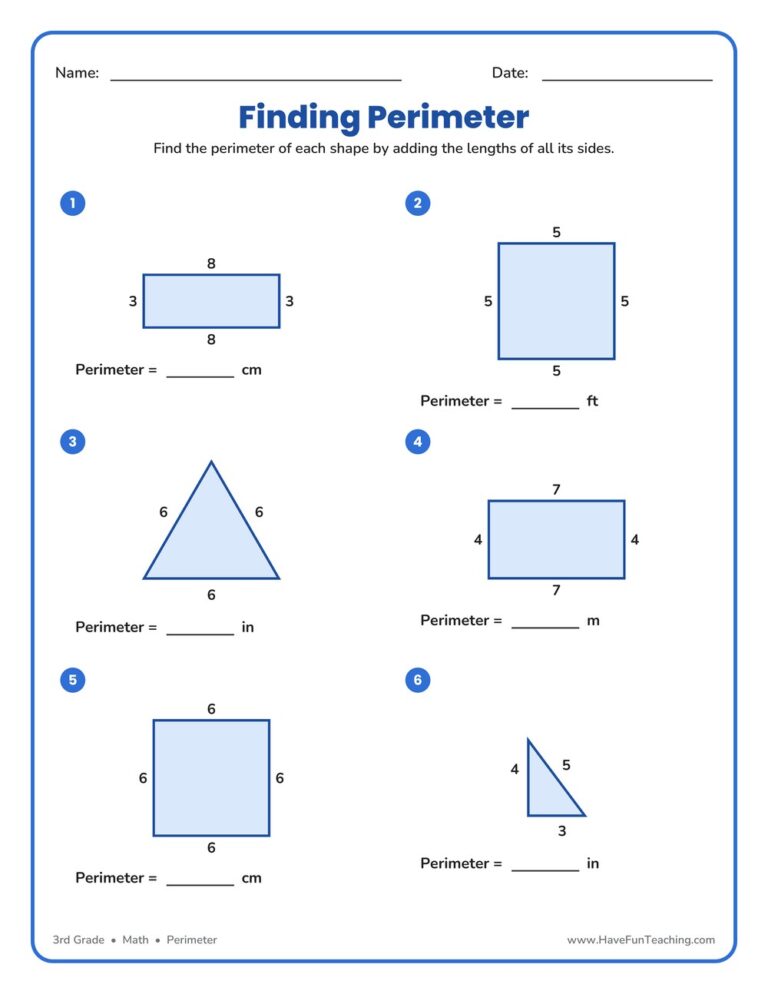
A 3rd grade finding shape perimeter worksheet where students add the side lengths of rectangles, squares, and triangles to find each shape’s perimeter. Includes a complete answer key for quick, no-prep geometry practice.

A third grade perimeter shape problems worksheet where students find the perimeter of eight labeled polygons by adding the side lengths. Includes a complete answer key for fast, no-prep measurement practice at home or school.

A read a thermometer worksheet for 3rd Grade: students find the temperature on four Fahrenheit scales, then solve multi-step temperature problems. Answer key included, so measurement practice is ready to print and quick to check.

This Density and Volume in Metric Worksheet asks 3rd graders to choose the best metric unit—grams, kilograms, milliliters, or liters—for ten everyday objects. Answer key included for fast, no-prep measurement practice.

A Solving Perimeter Word Problems Worksheet that gives 3rd graders five real-world problems, including one missing-side challenge with a written explanation. Answer key included for fast, no-prep perimeter practice.

This Perimeter Word Problems Worksheet gives 3rd graders five real-world story problems for finding the perimeter of rectangles, squares, and triangles. Includes an answer key—great for hands-on measurement practice.
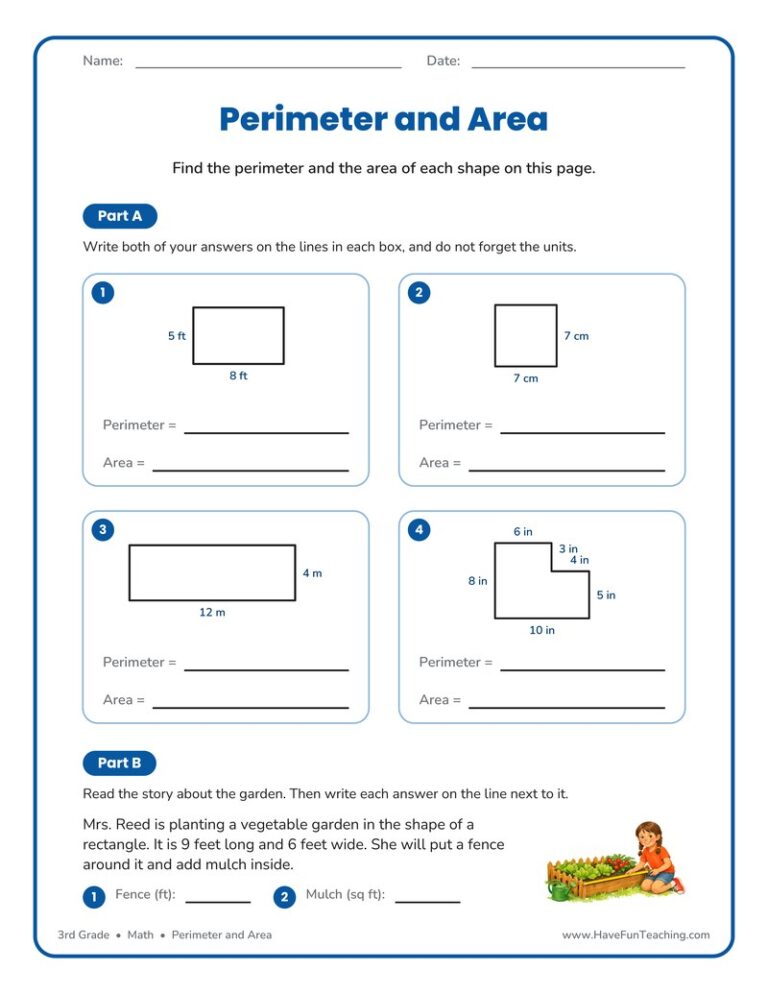
This perimeter area worksheet gives 3rd graders four labeled figures and a garden word problem for finding perimeter and area. An answer key is included, so measurement practice is ready to print and go.
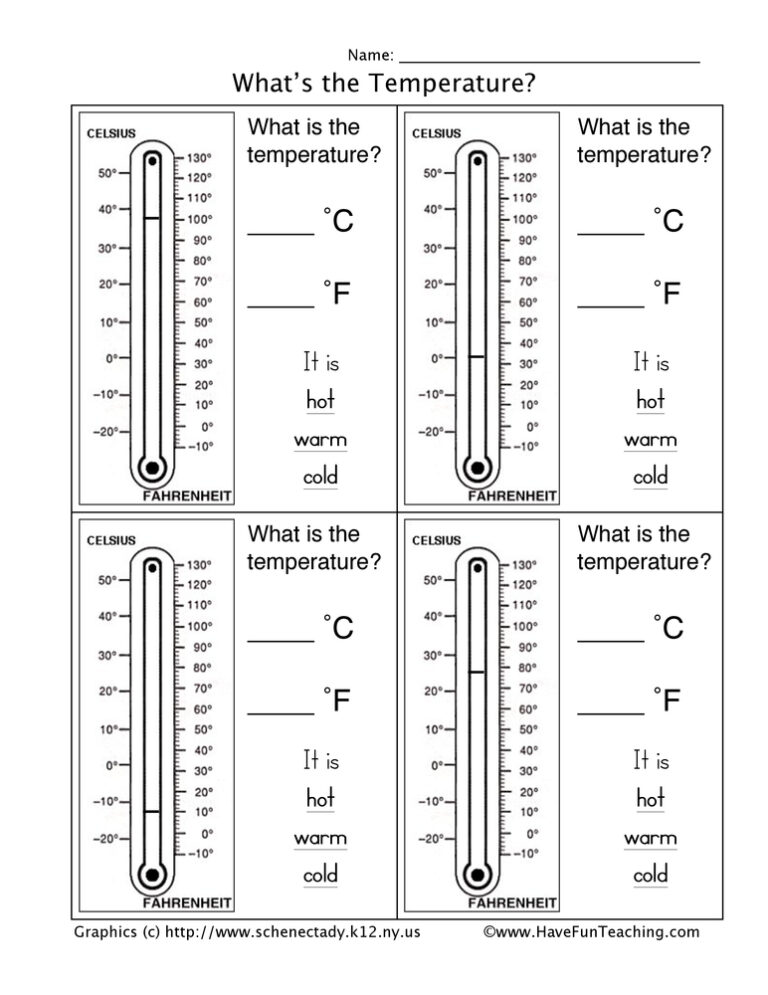
This what's the temperature worksheet gives 3rd grade students four Fahrenheit thermometers to read and three temperature word problems, with an answer key included, so reading a scale finally clicks.
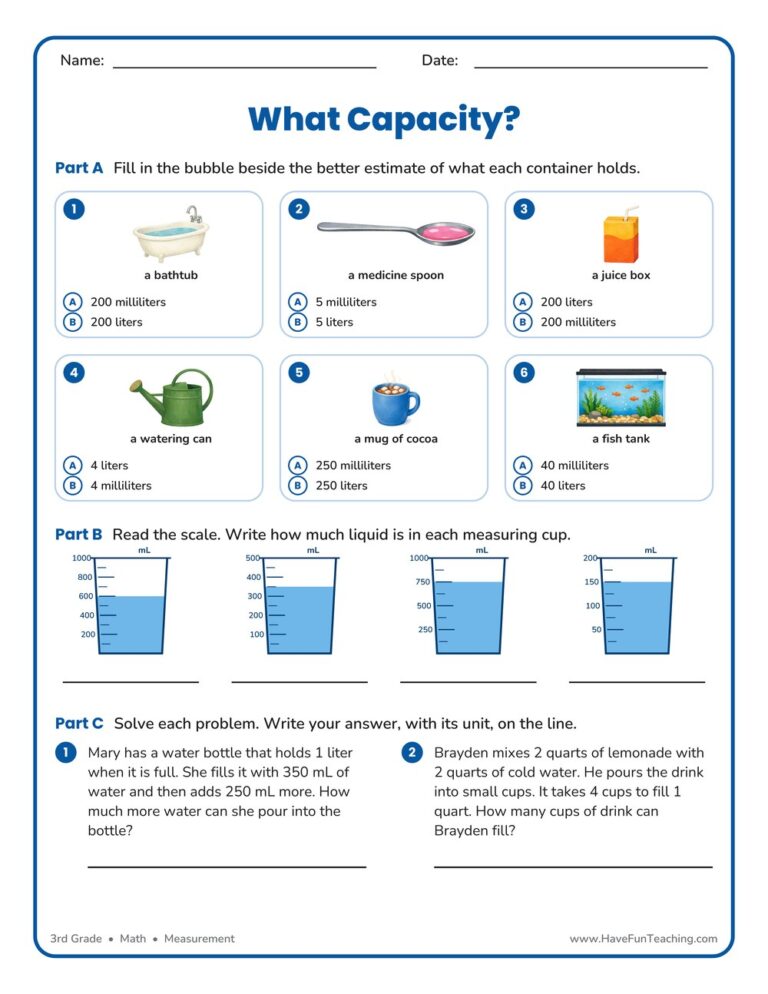
This What Capacity Worksheet gives 3rd Grade students practice estimating units, reading measuring cup scales, and solving liquid volume word problems. An answer key is included, so measurement practice takes no prep at all.

UsingDegrees on a Thermometer Worksheet, students practice reading the temperature on a thermometer to solve real life temperature problems.
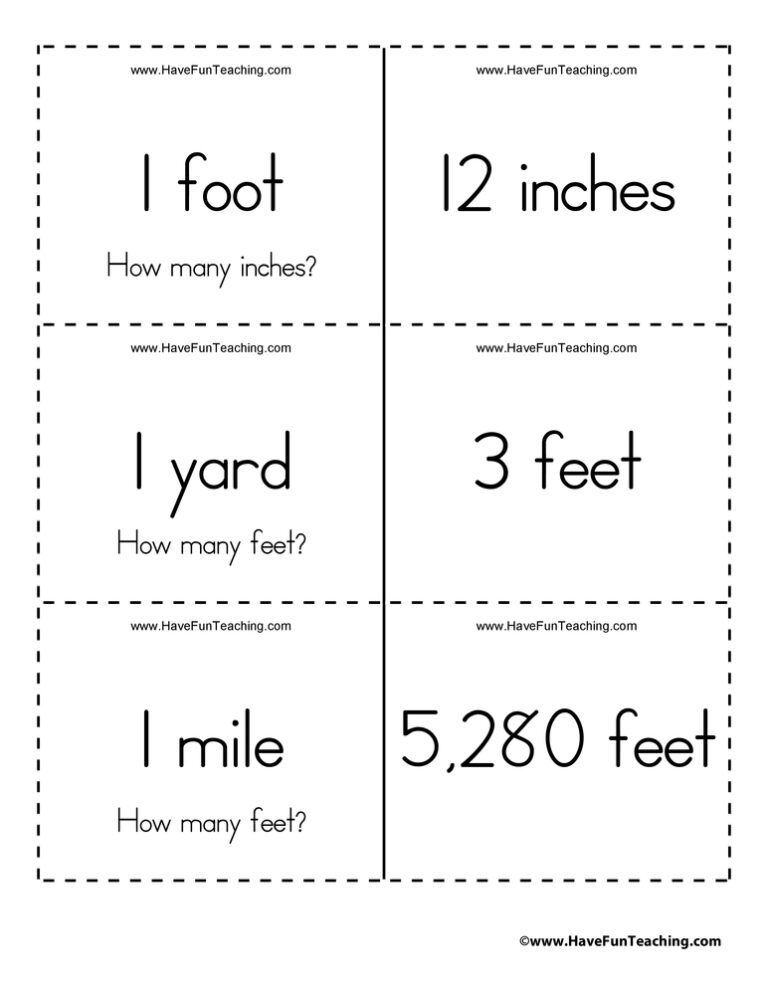
Using Measurement Flash Cards, students build their understanding of unit conversions by matching two units.
Reviews
There are no reviews yet