
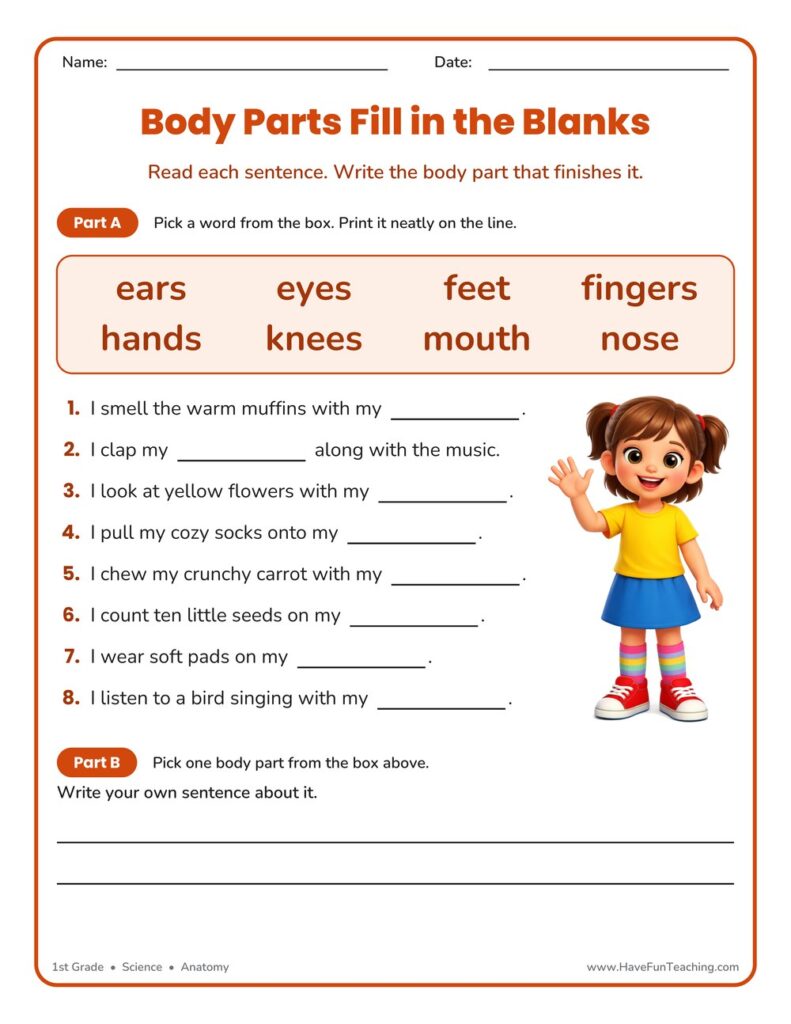
Body Parts Fill in the Blanks Worksheet
Students use a word box to complete eight sentences with the body parts fill in the blanks worksheet, then write one of their own. Built for 1st Grade with an answer key included, it makes naming body parts simple.
$6.97
Or free with a membership — members pay $3.33/mo for all 10,000+ resources. See plans
Want this one free?
Tell us where to send it and it’s yours — no card, no catch.
One free resource per teacher. We’ll also send free teaching ideas each week — unsubscribe anytime.
Teaching is easier with a membership
Unlimited printables, games & videos for PreK–6th — for your classroom or homeschool. Cancel anytime.
Start your 3-day free trial$0 today · cancel anytime · Instant access to 10,000+ resources
About this resource
Description
Naming the parts of the body is one of the first science skills a young student masters, and this body parts fill in the blanks worksheet gives first graders a friendly way to practice it. Children already use their eyes, ears, nose, mouth, hands, fingers, knees, and feet all day long. Putting the right word into a sentence helps them connect each body part to the job it does, which is the foundation of every later anatomy and health lesson.
This body parts fill in the blanks worksheet opens with a word box holding eight body part words. Students read eight short sentences, decide which body part completes each one, and print the word neatly on the line. A final section asks them to choose one body part and write an original sentence of their own. Use it as morning work, as a science center activity, as homework after a five senses lesson, or as a quick check before a unit test. The included answer key makes grading fast.
What’s Included
- One printable first grade body parts worksheet in PDF format
- A word box with eight body part words: ears, eyes, feet, fingers, hands, knees, mouth, and nose
- Eight fill in the blank sentences that link each body part to what it does
- A write-your-own-sentence activity for extra practice
- A complete answer key
Three reasons this activity helps children. First, it builds the science vocabulary that students will reuse in every human body lesson. Second, it strengthens reading comprehension, because a child has to understand the whole sentence before choosing a word. Third, it gives handwriting practice inside a real sentence instead of an isolated drill, so the writing feels purposeful.
Teachers and parents can stretch the activity in easy ways. Read the sentences aloud together first so early readers can focus on meaning. Have children point to each body part on themselves as they write the word. Turn the word box into a movement game by calling out a body part and asking students to touch it. At home, ask your child to add two more body part sentences on the back of the page.
Related Resources
What teachers say
Reviews
You must be logged in to post a review.
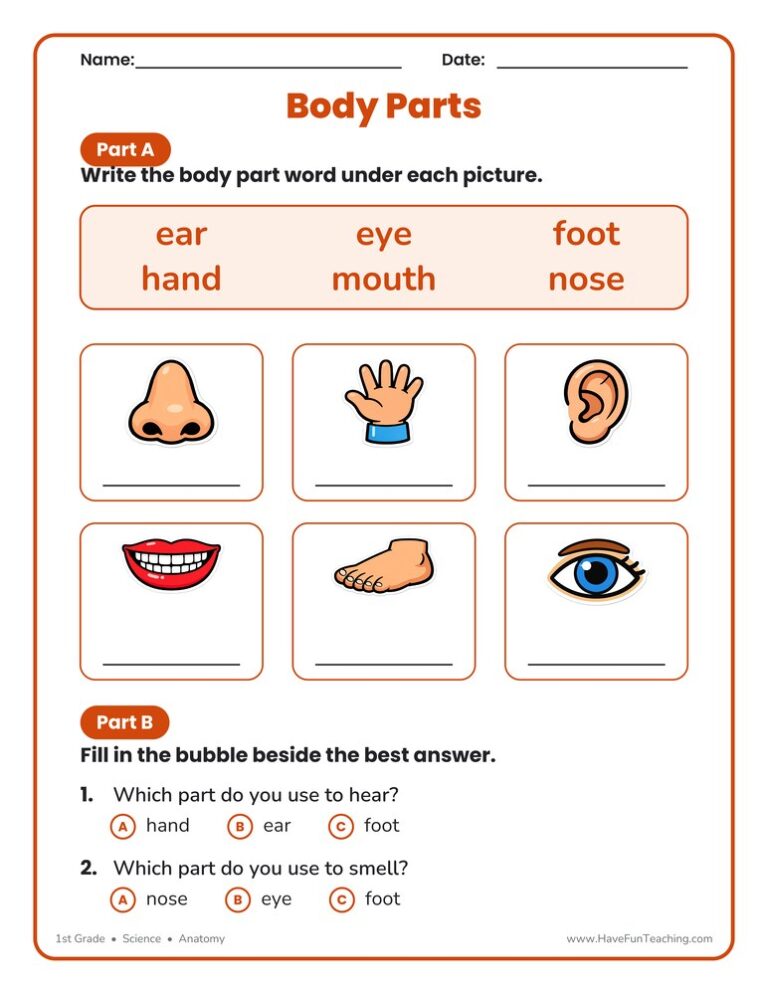
This Body Parts Worksheet helps 1st Grade students name the nose, hand, ear, mouth, foot, and eye with a picture word bank, then show what each part does. Answer key included.
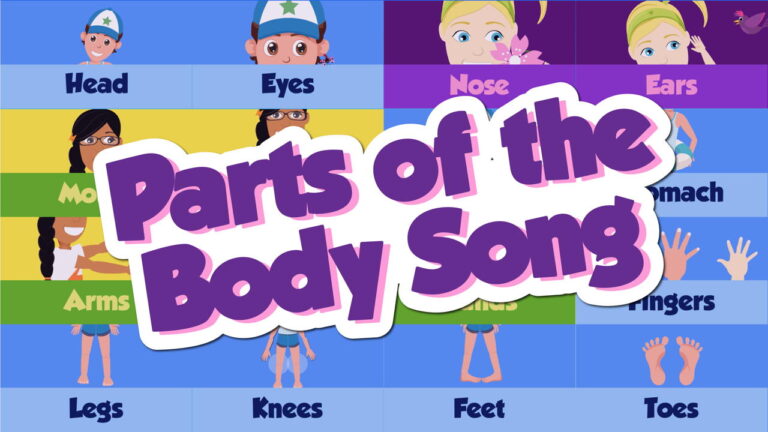
While Parts of the Body Song (Animated Music Video), students learn about the different parts of the body while listening to catchy lyrics.
While Parts of the Body Song (MP3), students learn about the different parts of the body while listening to catchy lyrics.
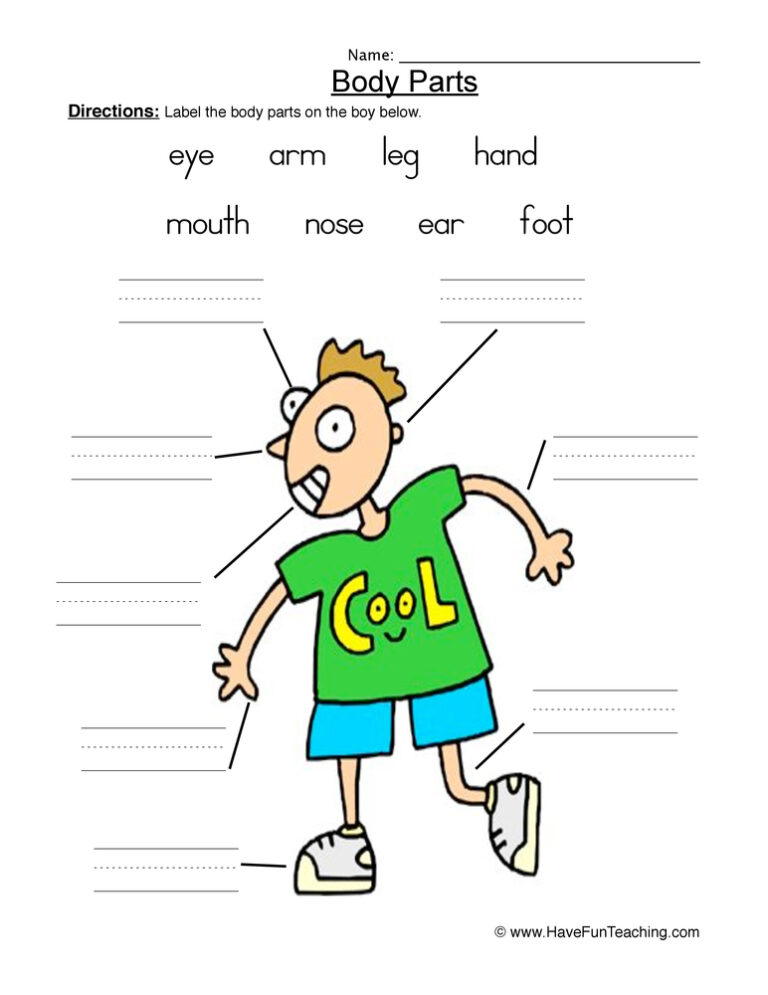
This Boy Body Parts Worksheet asks first grade students to use a word box and label six parts on a drawing of a boy. An answer key is included, so science vocabulary practice is ready to print and go.

This senses touch worksheet has first grade students circle the objects that feel soft, then write texture words to finish three sentences. An answer key is included, so checking the work takes seconds.
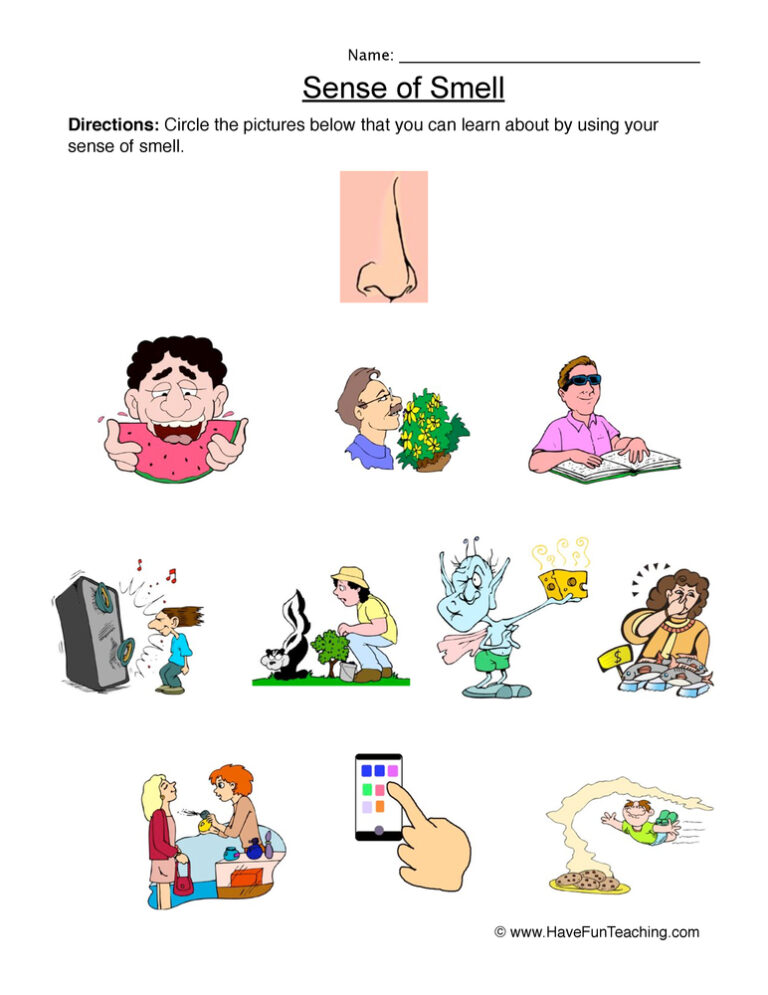
This senses smell worksheet asks 1st graders to circle the things that carry a strong smell, then finish three sentences from a word box. Answer key included for teachers and homeschool parents.

This Basic Fish Parts Worksheet asks 1st graders to label six numbered parts on a big, friendly fish using a word box. An answer key is included, so science practice takes no prep at all.
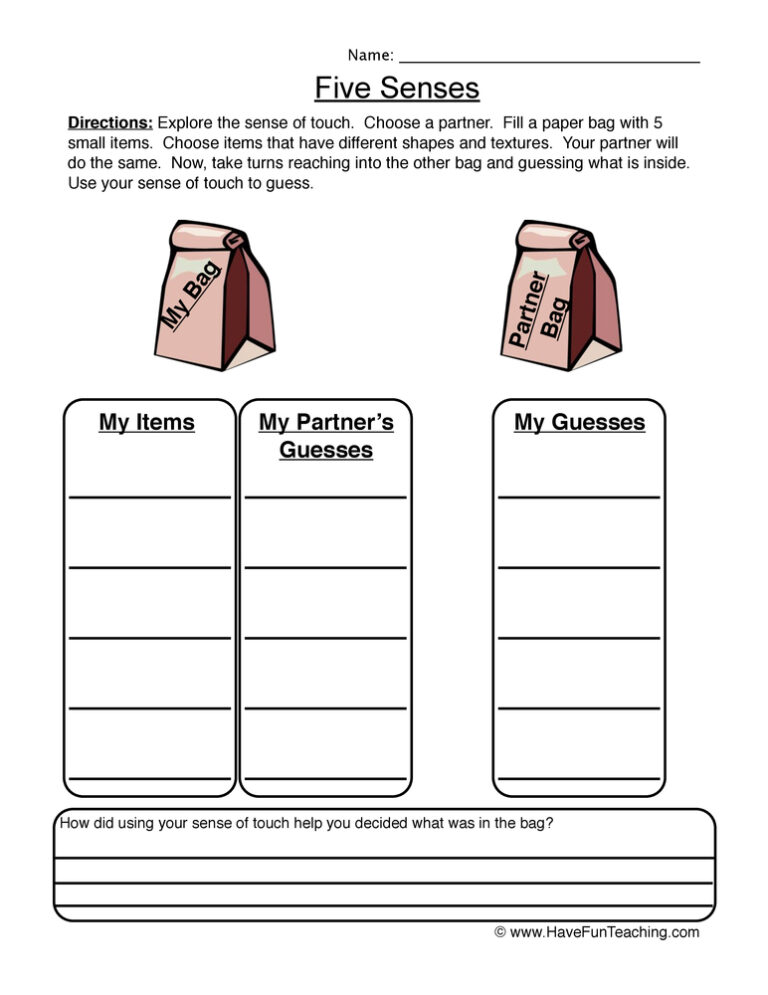
Using What is in the Bag? Five Senses Worksheet, students guess what object is in the bag using the provided Five Sense clues with a partner.
Using Senses Draw and Write Worksheet, students draw pictures of using 2 of your senses, then write sentences about them.

This Girl Body Parts Worksheet has first grade students read a word box and label six body parts on a picture of a girl. An answer key is included for easy checking.
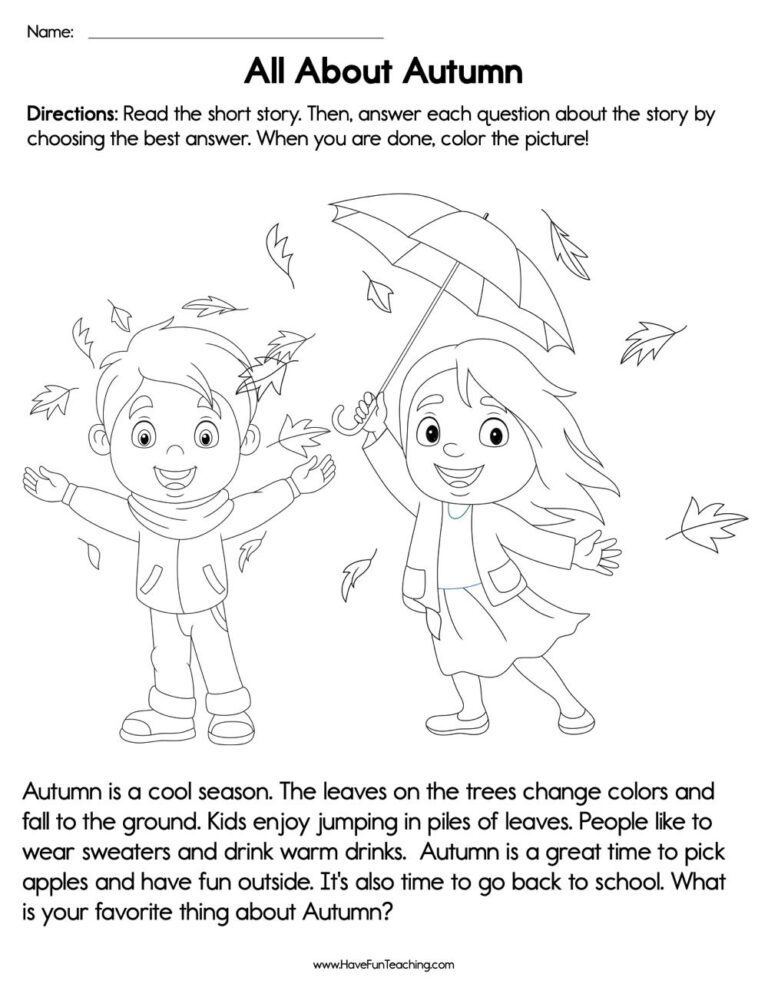
The All About Autumn Reading Comprehension Worksheet gives 1st graders a short fall passage and multiple-choice questions to build reading comprehension. An answer key is included for quick, no-prep practice at home or school.

The Matter Song teaches all about matter and the states of matter. With this states of matter song, students learn about solid, liquid, and gas, as well as the phases of matter, properties of matter, physical changes, chemical changes, and so much more. Matter has mass and takes up space.…




Reviews
There are no reviews yet