
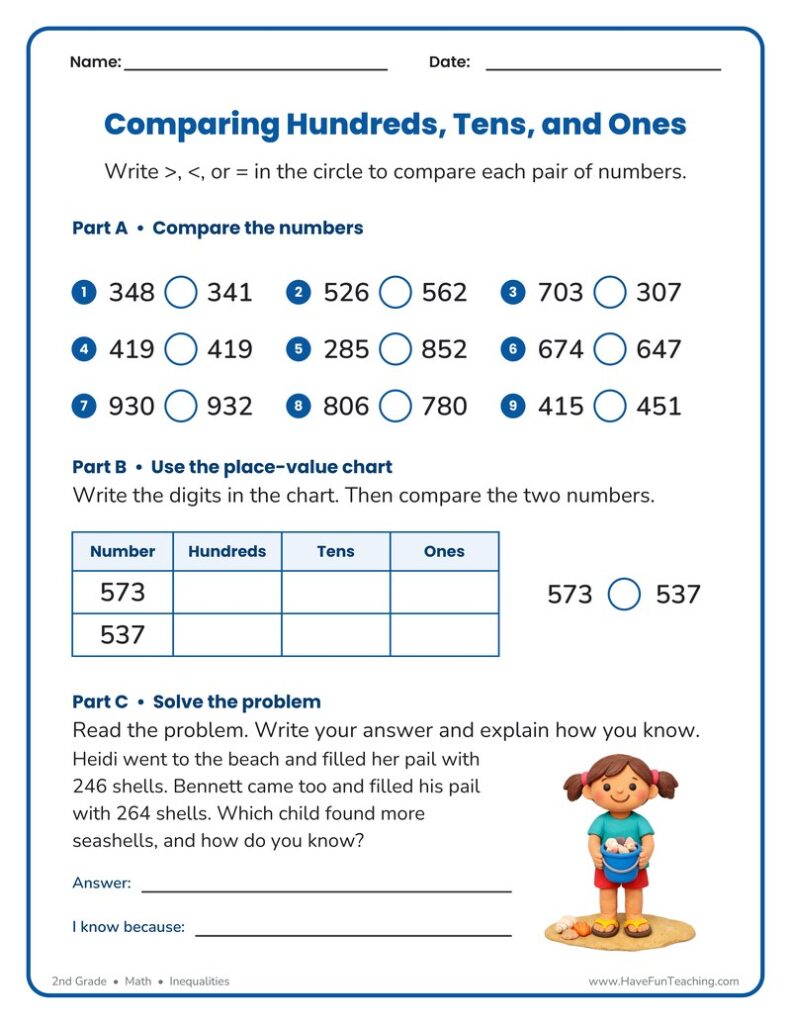
Comparing Hundreds, Tens, and Ones Worksheet
This Comparing Hundreds, Tens, and Ones Worksheet gives 2nd graders nine number pairs, a place-value chart, and a beach word problem to solve. Answer key included, so checking work takes seconds.
$6.97
Or free with a membership — members pay $3.33/mo for all 10,000+ resources. See plans
Want this one free?
Tell us where to send it and it’s yours — no card, no catch.
One free resource per teacher. We’ll also send free teaching ideas each week — unsubscribe anytime.
Teaching is easier with a membership
Unlimited printables, games & videos for PreK–6th — for your classroom or homeschool. Cancel anytime.
Start your 3-day free trial$0 today · cancel anytime · Instant access to 10,000+ resources
About this resource
Description
Comparing three-digit numbers is one of the biggest place-value milestones in second grade. Once a child can look at 348 and 341 and explain that the hundreds match, the tens match, and the ones digit decides the answer, numbers stop being long strings of digits and start being quantities that can be ordered. This comparing hundreds, tens, and ones worksheet walks students through exactly that reasoning, one place at a time, so that the greater-than, less-than, and equal-to symbols become tools for describing what they already understand rather than shapes to memorize.
This 2nd grade inequalities worksheet is built in three parts that move from quick practice to real explanation. Part A gives nine pairs of three-digit numbers with an open circle between them, and the student writes >, <, or = in each circle. Part B slows the thinking down with a place-value chart: the child writes the hundreds, tens, and ones digits of 573 and 537 into the chart, then compares the two numbers using what the chart shows. Part C finishes with a beach word problem about Heidi and Bennett and their pails of seashells, where the student writes an answer and then explains how they know. Print it, hand it out, and let students talk through their reasoning as they go.
What’s Included
- 1 print-ready PDF worksheet
- Answer key
- 9 compare-the-pair problems, 1 place-value chart activity, and 1 explain-your-thinking word problem
There are three reasons this comparing hundreds, tens, and ones worksheet helps children learn to compare numbers with confidence. First, the pairs are chosen so that a different place value decides each answer — sometimes the hundreds settle it immediately, sometimes the hundreds and tens are identical and only the ones digit matters — which forces students to check places in order instead of guessing from the size of the digits. Second, the place-value chart makes the invisible structure of a number visible, so a child can see at a glance why 573 is greater than 537 even though both numbers use the very same digits. Third, the word problem asks for an explanation, not just a symbol, which turns a quick recognition task into the kind of reasoning that shows up on second grade assessments.
Teachers and parents can stretch this skill well past the page. Write two three-digit numbers on index cards, hand them to two students, and have the class vote on which symbol belongs between them. Build both numbers with base-ten blocks and let a child physically stack the hundreds flats side by side before deciding. Play a card game where each player flips three digit cards, arranges them into the largest number they can, and compares. Compare real numbers around you: page numbers in a chapter book, house numbers on a walk, the number of steps two people took today. The more often children practice saying the whole sentence — “264 is greater than 246 because 6 tens is more than 4 tens” — the more natural the symbols become.
Related Resources
What teachers say
Reviews
You must be logged in to post a review.

A comparing three digit numbers worksheet for 2nd grade that has students write >, <, or = and put numbers in order from least to greatest. Includes an answer key for fast, no-prep place-value practice.

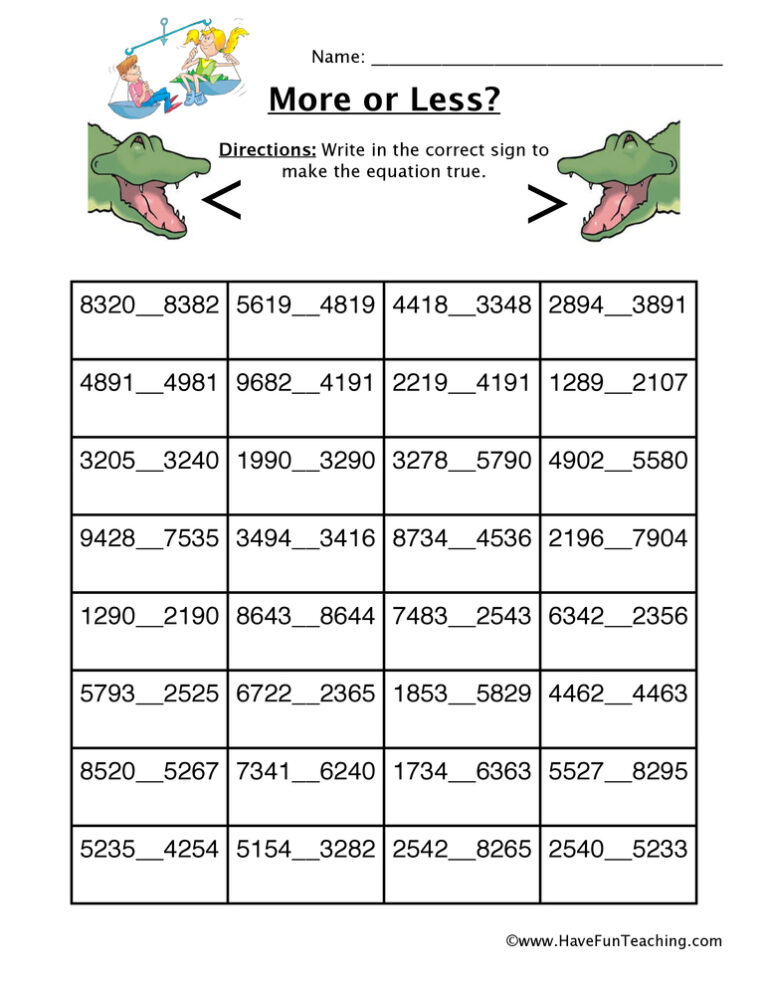
Using Thousands More or Less Worksheet, students use inequality symbols to show what numbers have less and more to build their number sense skills.
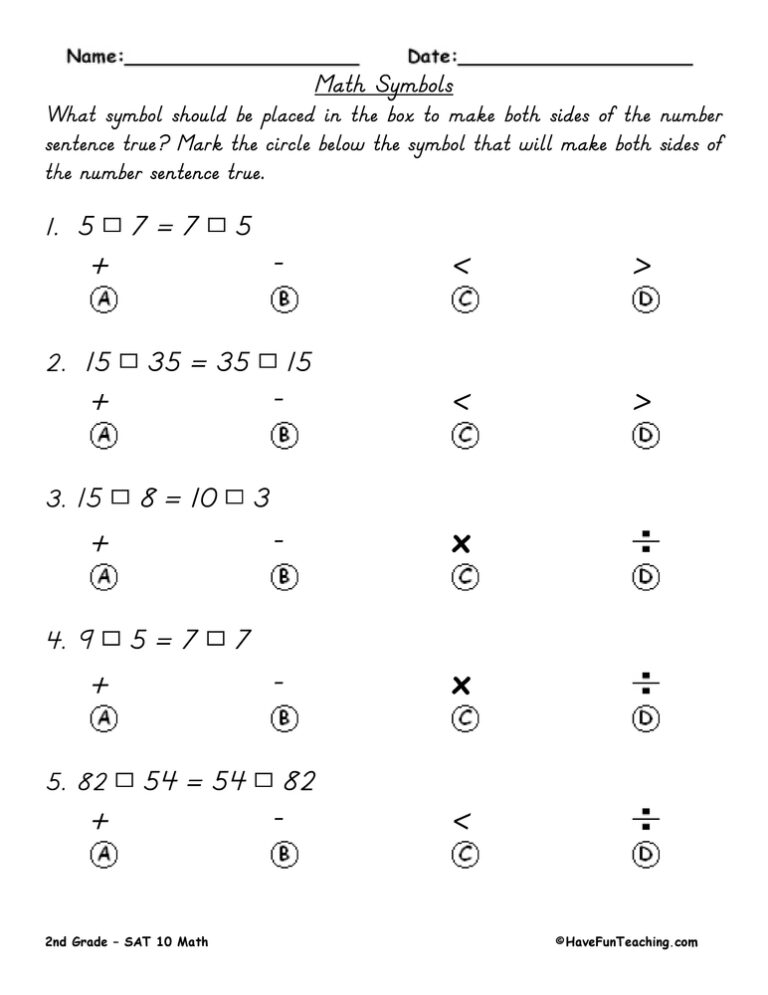
This second grade math skills test practice worksheet asks students to choose the plus, minus, greater than, less than, or equal sign that makes each number sentence true. An answer key is included, so checking work takes seconds.
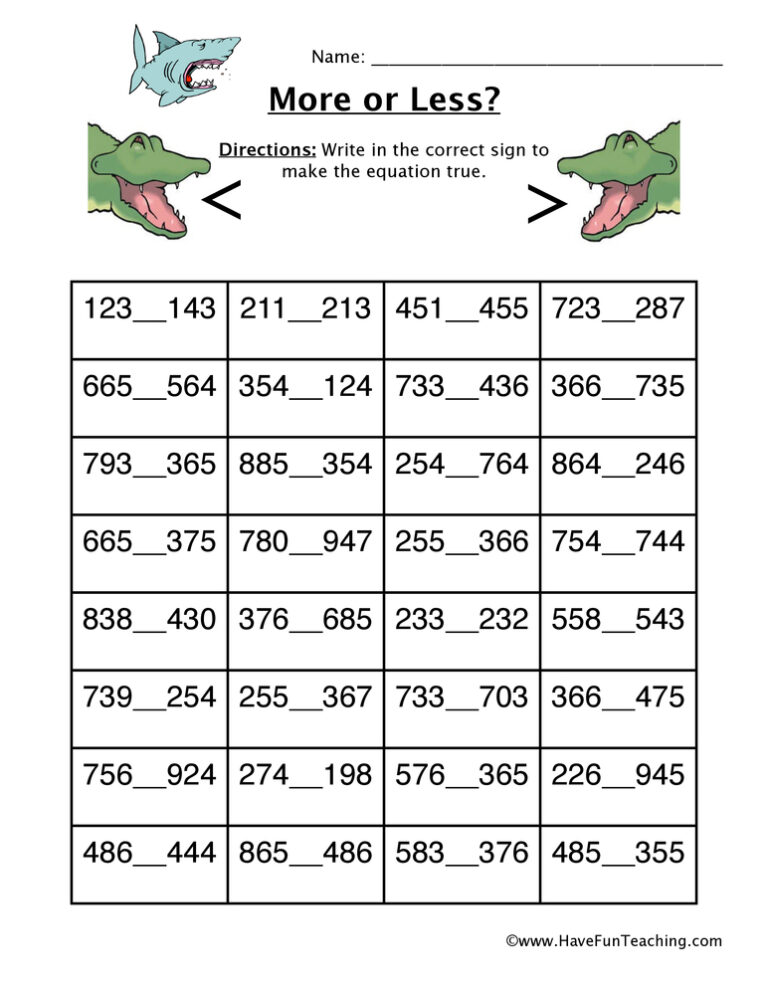
The Three Digit More or Less Worksheet gives 2nd grade students eight comparisons to mark with a greater than, less than or equal sign, three ordering items, and a complete answer key.

This Tell How You Compare Numbers Worksheet has 2nd graders compare three-digit numbers with symbols and name the place that proves it. An answer key is included for quick checking.
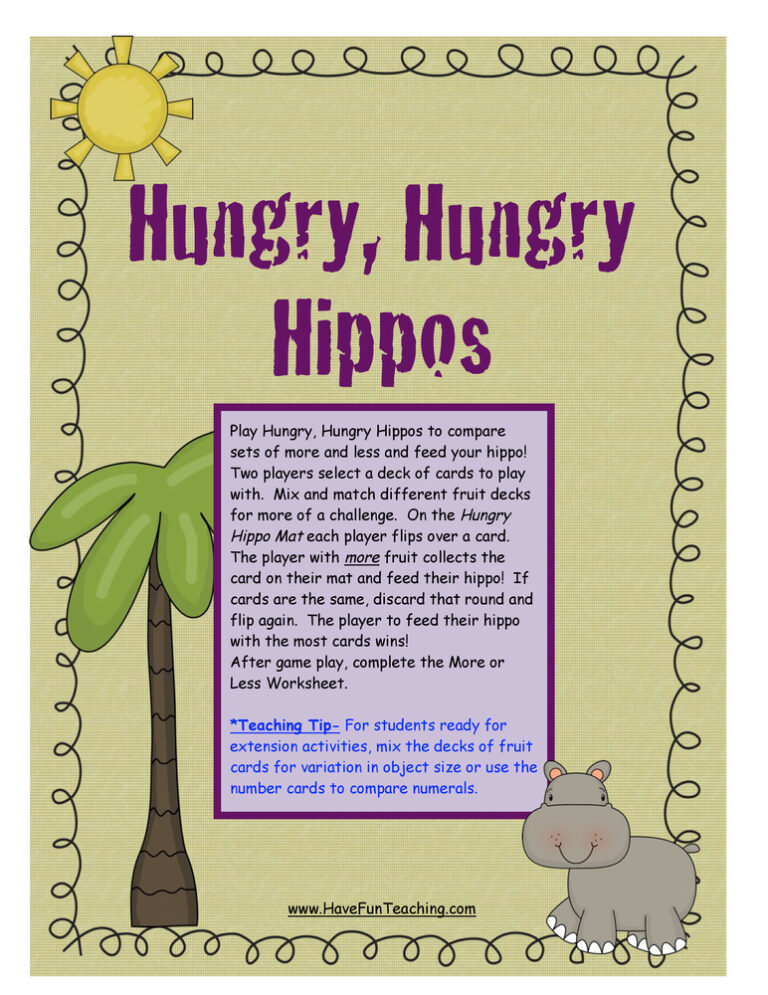
Using More Fewer Activity, studentscompare sets of more and less and feed your hippo to build their number sense skills.
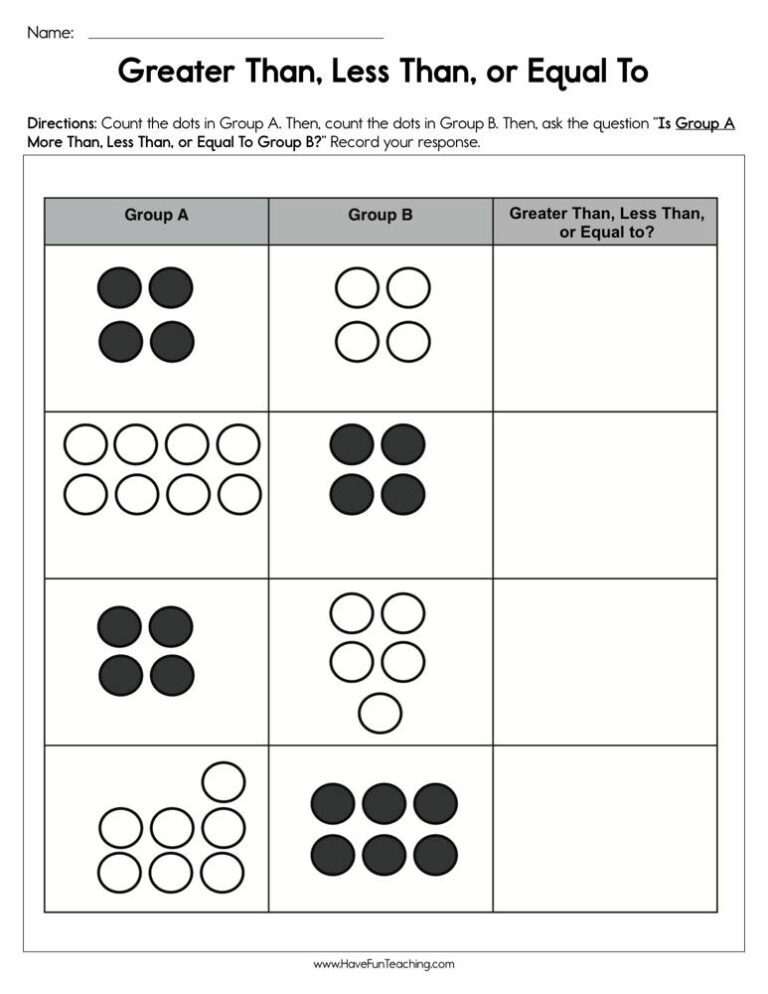
Using Greater Than, Less Than, or Equal To Worksheet, students compare the dots in each group to determine if they are greater than, less than, or equal to each other.
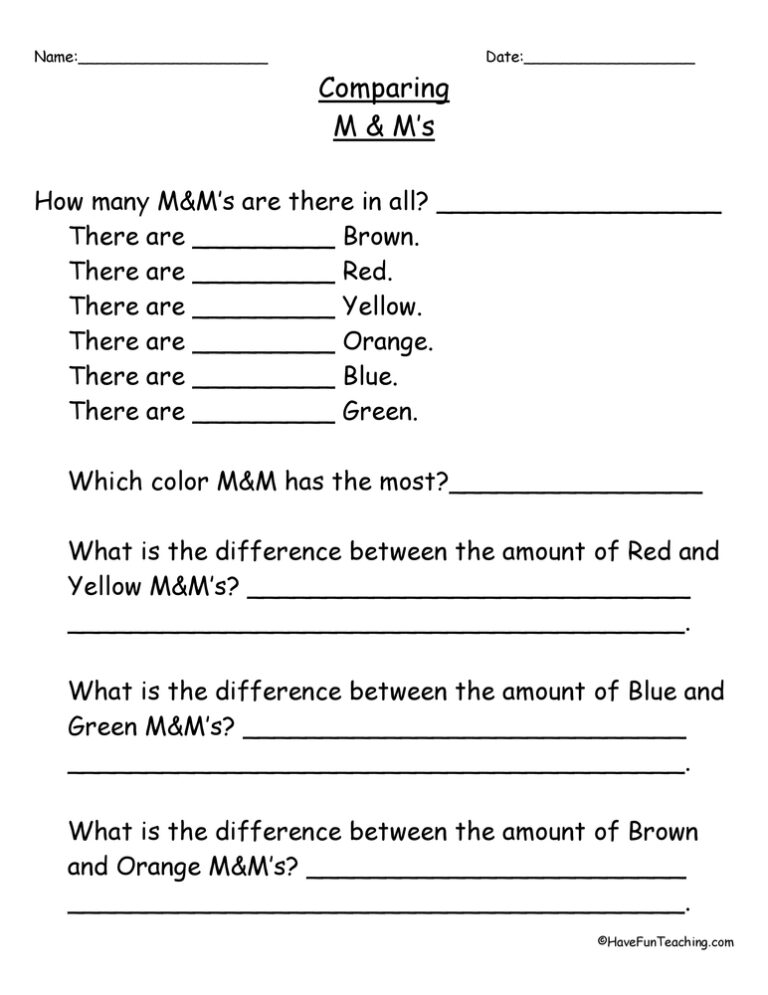
Using thisComparing Numbers M&M's Subtraction Worksheet, students compare the amounts of different color M&M's in their group.
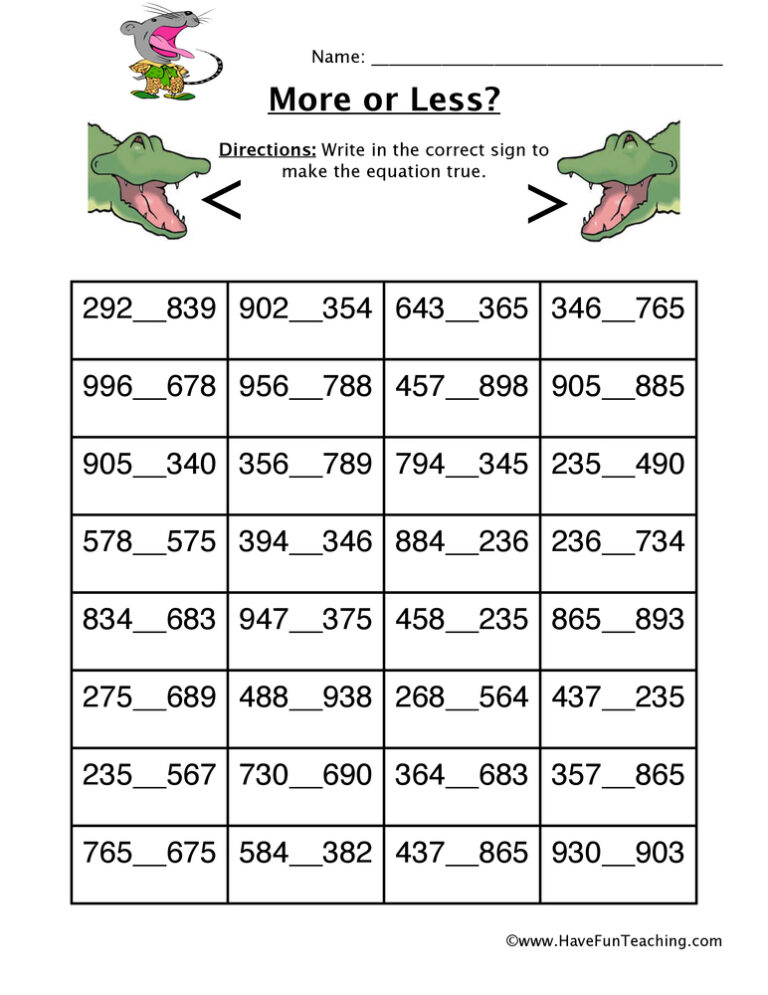
Using Hundreds More or Less Worksheet, students use inequality symbols to show what numbers have less and more to build their number sense skills.

Using this Comparing and Ordering Numbers 1-10 Activity, students use the lion number cards to compare each number and sort them into the categories that they belong.
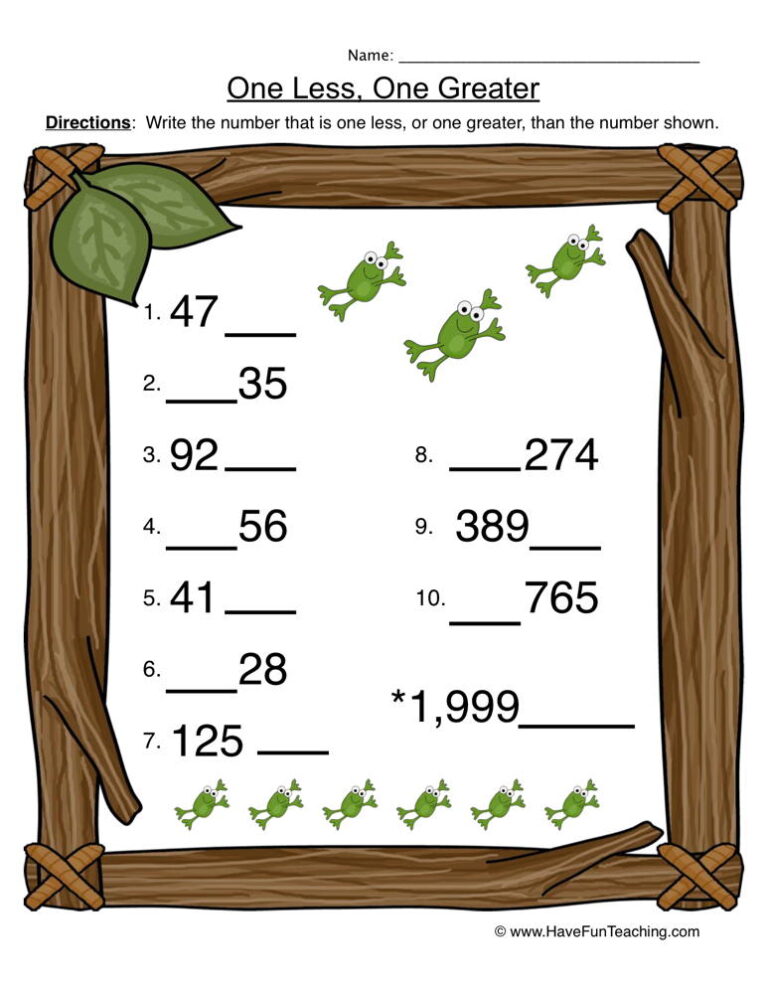
Using One Less One Greater Worksheet, students write the number that is one less, or one greater, than the number shown to build their number sense skills.




Reviews
There are no reviews yet