

Greater Than, Less Than, or Equal To Assessment Worksheet
This greater than, less than, or equal to assessment worksheet helps kindergarten teachers record ten hands-on trials of comparing two groups of objects, plus the matching or counting strategy each child uses.
$6.97
Or free with a membership — members pay $3.33/mo for all 10,000+ resources. See plans
Want this one free?
Tell us where to send it and it’s yours — no card, no catch.
One free resource per teacher. We’ll also send free teaching ideas each week — unsubscribe anytime.
Teaching is easier with a membership
Unlimited printables, games & videos for PreK–6th — for your classroom or homeschool. Cancel anytime.
Start your 3-day free trial$0 today · cancel anytime · Instant access to 10,000+ resources
About this resource
Description
Comparing two groups is one of the first big number ideas in kindergarten. Before children ever write a symbol, they learn to look at two sets of objects and decide which group has more, which has fewer, or whether the two groups are the same. This greater than, less than, or equal to assessment worksheet gives teachers a simple, organized way to check that skill one student at a time, using real objects the child can touch, line up, and count.
How to Use This Worksheet
Build two small groups of counters, blocks, or other objects, up to ten in each group. Write how many objects are in Group 1 and Group 2, then ask the student to compare them by matching the objects one to one or by counting each group. The student tells you whether Group 1 is greater than, less than, or equal to Group 2. Record the response, check the strategy you saw, and mark the trial as correct or not yet. A filled example row shows exactly how to record a trial.
What’s Included
- A student, date, and objects-used form row
- An assessment record with a worked example and ten numbered trials
- Group 1, Group 2, and response columns for each trial
- Strategy check boxes for matching and counting
- Correct and not yet check boxes for quick scoring
- A summary strip for the score out of 10, the strategy used most, and notes or next steps
Why This Assessment Helps Kids
First, it measures understanding with hands-on objects, so the teacher sees what the child really knows about more, fewer, and the same. Second, the strategy column shows how a student thinks, whether they match objects in pairs or count each set, which tells you what to teach next. Third, ten short trials give a clear, repeatable score that makes progress easy to track across the year. This kindergarten comparing numbers assessment keeps the focus on reasoning, not on guessing.
Ideas for Teachers and Parents
Use the greater than, less than, or equal to assessment worksheet at the start of a unit to find each child’s starting point, then again at the end to show growth. Mix in trials with equal groups so students cannot assume one side is always bigger. At home, parents can use snacks, toys, or buttons to make the two groups. For extra practice, have children build their own groups and explain their thinking out loud.
Related Resources
What teachers say
Reviews
You must be logged in to post a review.
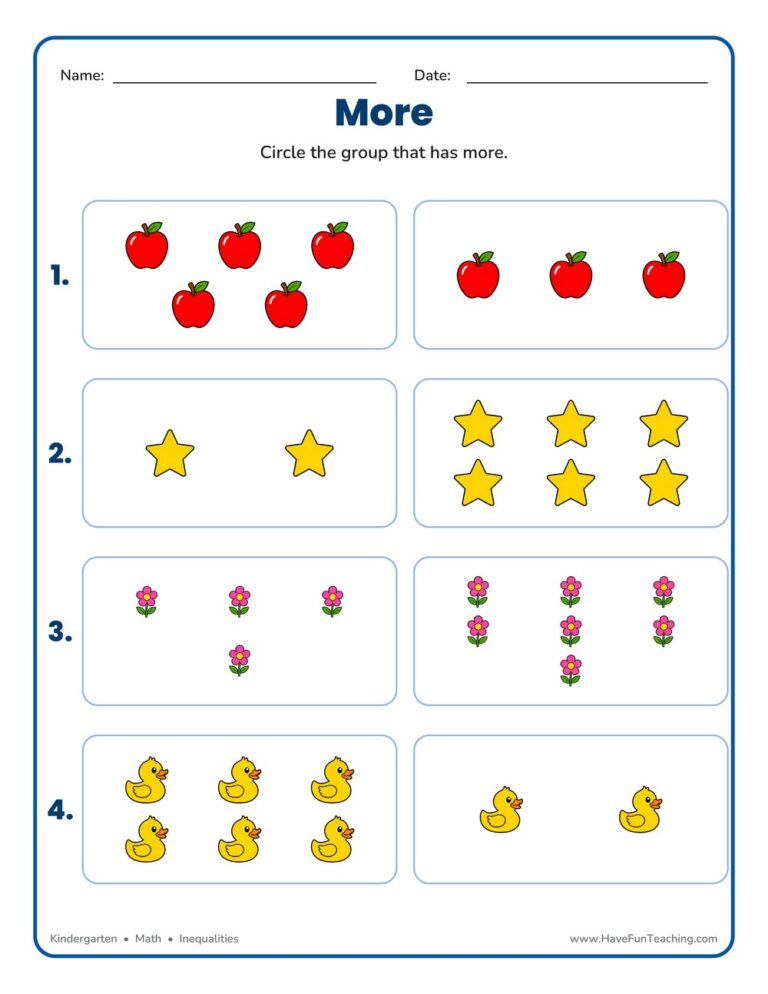
This Circling Groups with More Worksheet lets kindergarten students count two picture groups and circle the one with more. Includes an answer key — a fun, no-prep way to build early number sense.
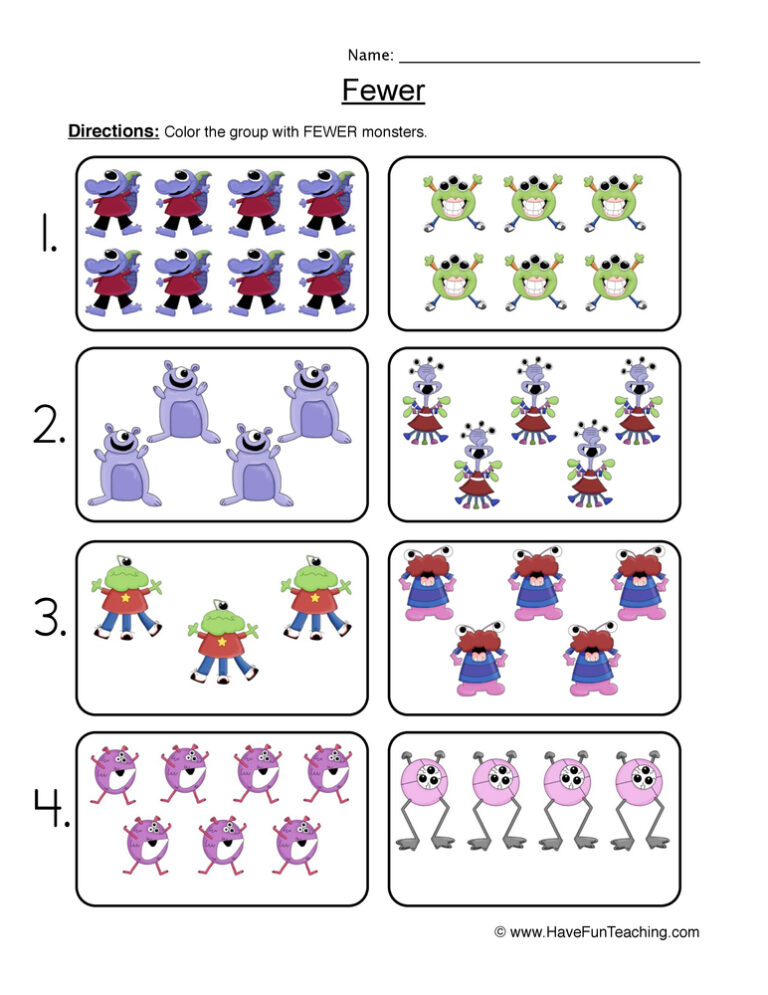
The Circling Groups with Fewer Worksheet gives Kindergarten students four picture pairs to count and compare. Children circle the group with fewer, building early number sense. Answer key included.

This Bigger Smaller and Same Numbers Worksheet gives Kindergarten students nine number pairs to compare, circling the bigger number, the smaller number, or both when they match. Answer key included, so checking work takes seconds.
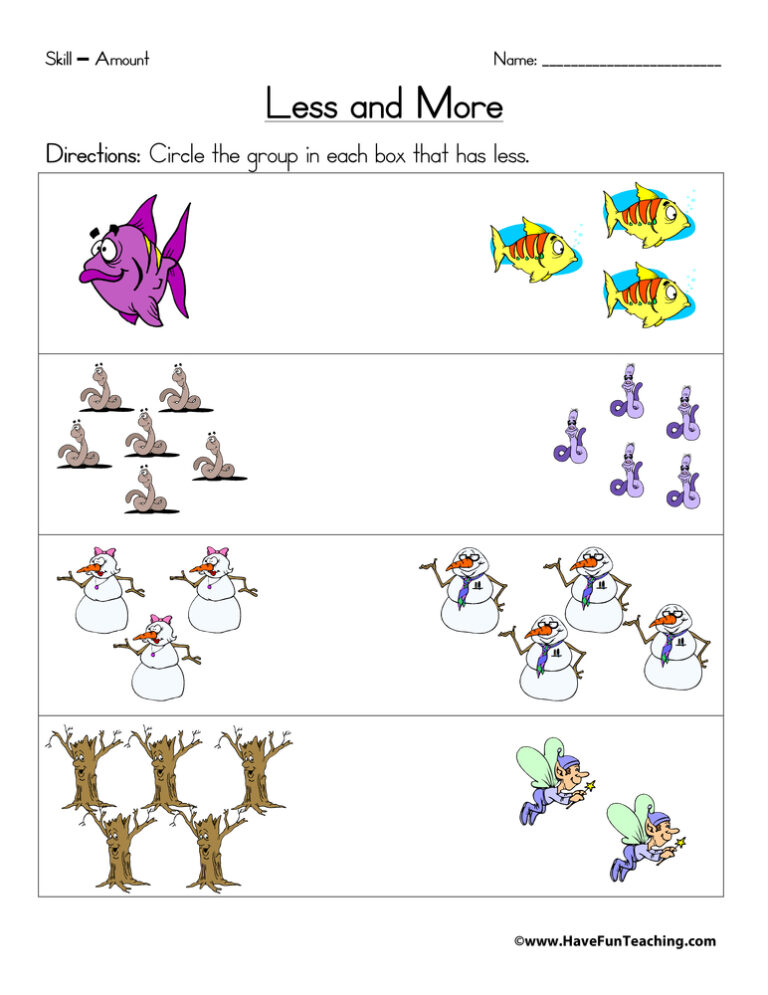
This Less and More Worksheet asks Kindergarten students to count two picture groups and circle the side with less, then the side with more, and it comes with an answer key.

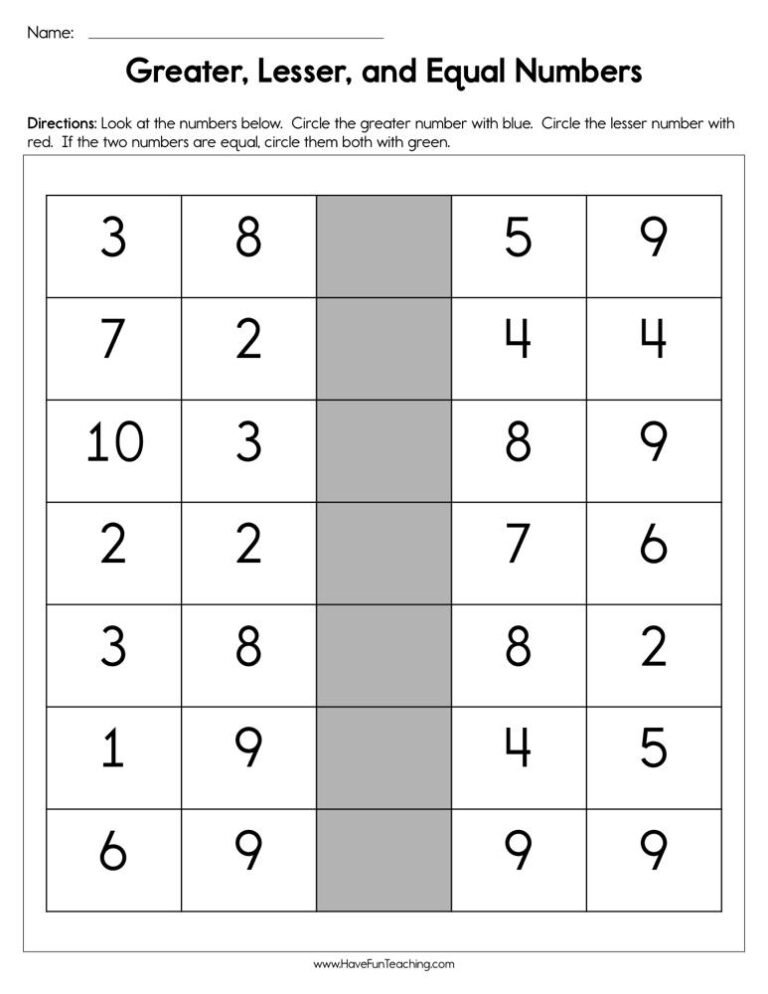
Kindergarten students compare numbers 1 to 10 on this greater lesser and equal numbers worksheet, circling the greater, the lesser, or both when equal. An answer key is included for quick checking.
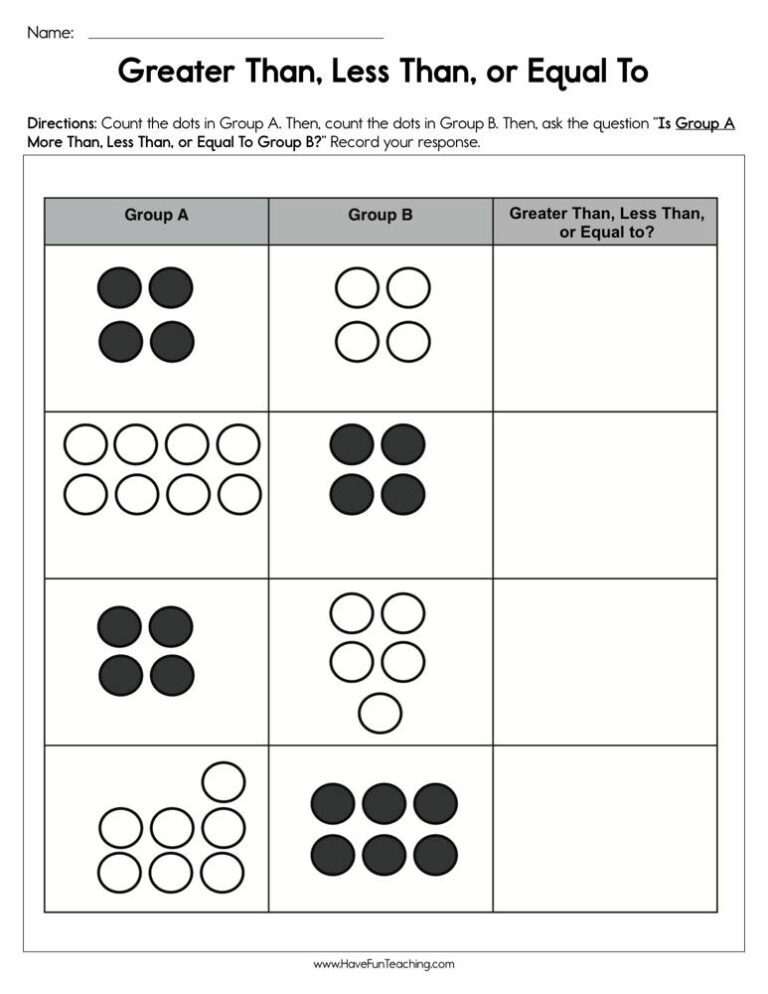
Using Greater Than, Less Than, or Equal To Worksheet, students compare the dots in each group to determine if they are greater than, less than, or equal to each other.
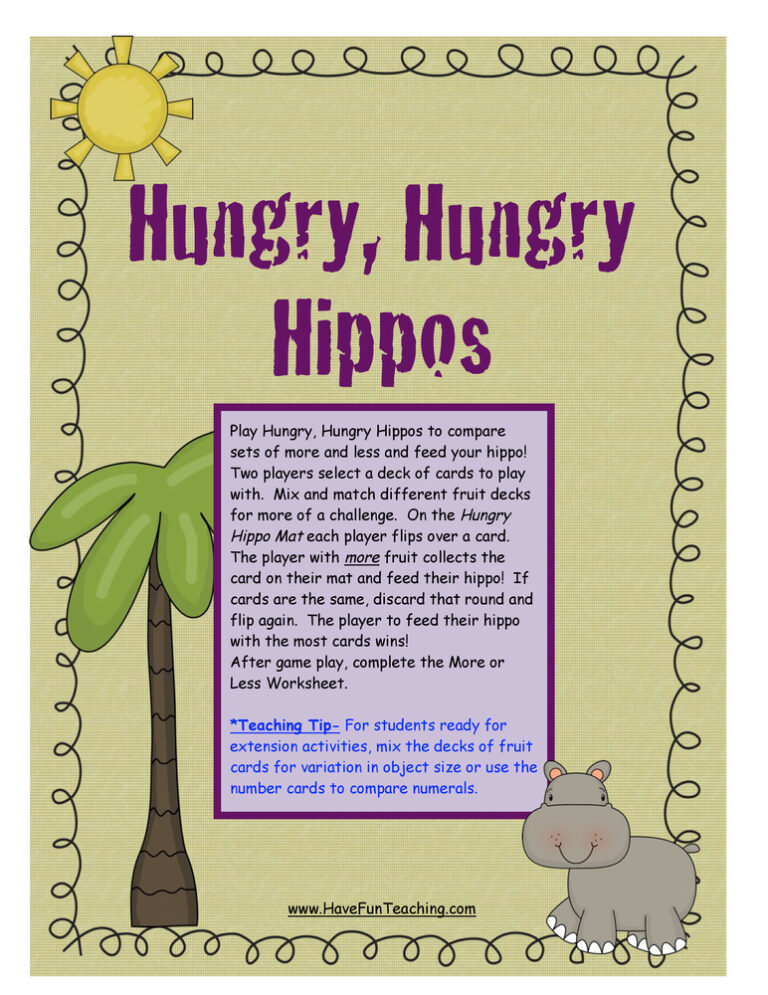
Using More Fewer Activity, studentscompare sets of more and less and feed your hippo to build their number sense skills.
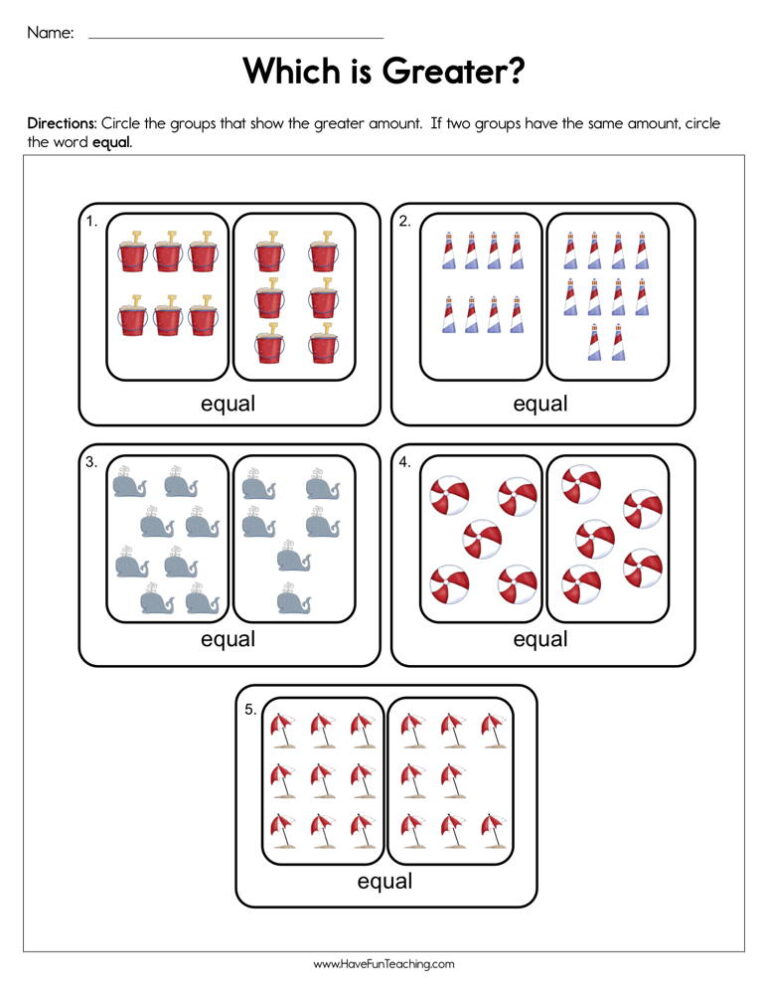
This which is greater worksheet has kindergarten students count two groups of beach objects and circle the group with more or circle equal. An answer key is included for quick, easy checking.

Using this Comparing and Ordering Numbers 1-10 Activity, students use the lion number cards to compare each number and sort them into the categories that they belong.
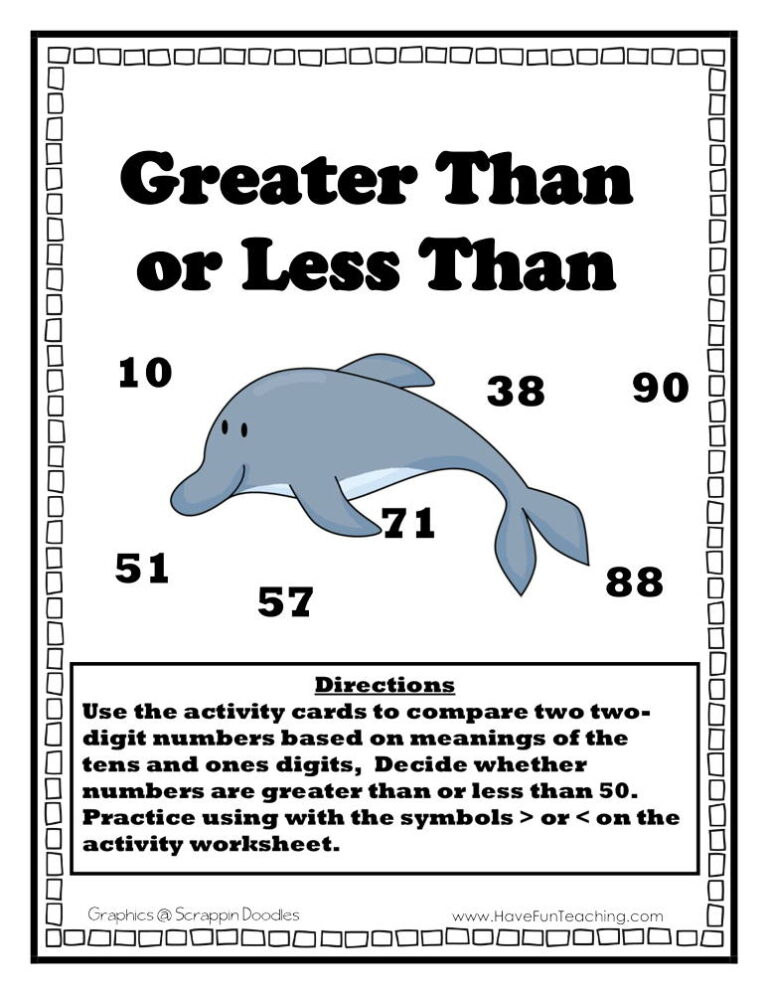
Using this Greater Than Less Than Dolphin Activity, students sort numbers into categories by deciding whether numbers are greater than or less than 50.
UsingK.CC.7 Kindergarten Common Core Lesson, students sort number cards into two categories in order to compare numbers.
Reviews
There are no reviews yet