
Counting Objects Worksheet
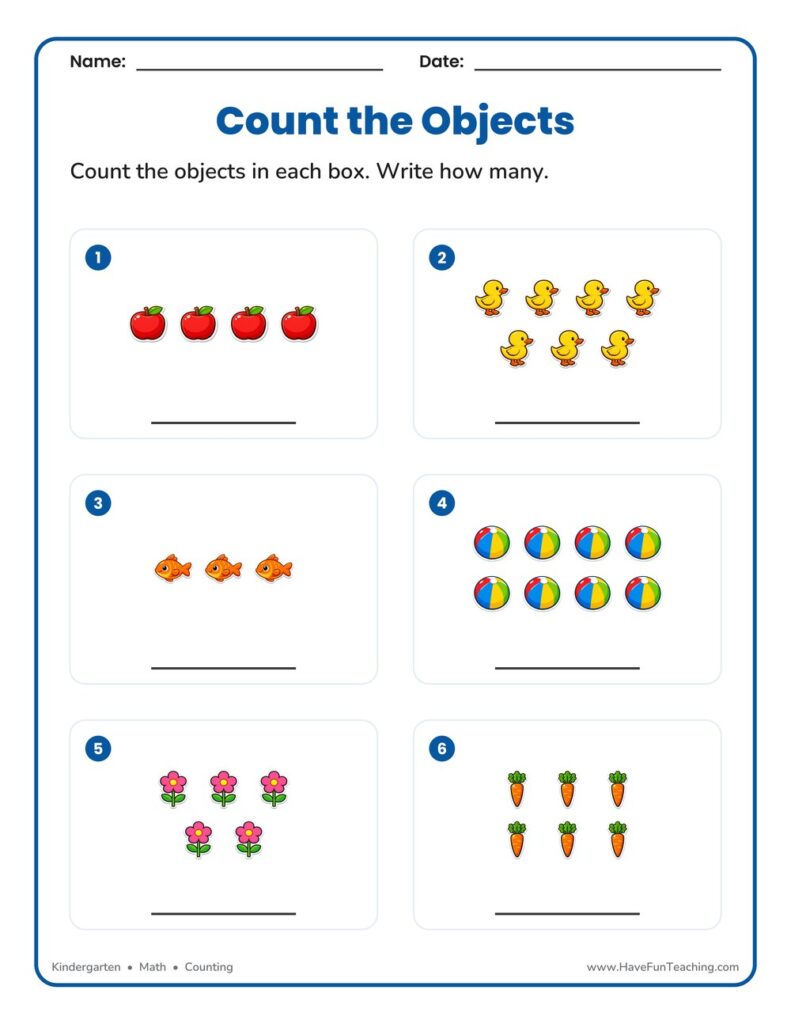
This Counting Objects Worksheet gives kindergarten students six sets of 3 to 8 objects to count and write the number for, with a full answer key included. Simple, no-prep practice that builds real counting confidence.
$6.97
Or free with a membership — members pay $3.33/mo for all 10,000+ resources. See plans
Want this one free?
Tell us where to send it and it’s yours — no card, no catch.
One free resource per teacher. We’ll also send free teaching ideas each week — unsubscribe anytime.
Teaching is easier with a membership
Unlimited printables, games & videos for PreK–6th — for your classroom or homeschool. Cancel anytime.
Start your 3-day free trial$0 today · cancel anytime · Instant access to 10,000+ resources
About this resource
Description
Counting is the very first math skill, and it is bigger than reciting number names in order. A child has to touch or track each object exactly once, say one number for each one, and understand that the last number said tells how many are in the whole group. That last idea is called cardinality, and it is the piece young children take the longest to build. This Counting Objects Worksheet gives kindergarteners six small sets to count and a line to write the answer on, so counting and numeral writing are practiced in the same moment.
This kindergarten counting worksheet is a two page printable with the answer key on page two. Each numbered box holds one kind of object — apples, ducks, fish, beach balls, flowers and carrots — in a set of three to eight. Ask your child to point to each object as they count it out loud, then write the number on the line below the box. Sets larger than four are arranged in two neat rows, which is exactly how kindergarten assessments present them, so the practice matches the test.
What’s Included
- 1 print-ready PDF worksheet
- Answer key
- 6 counting boxes with sets of 3 to 8 objects and a write-the-number line
Three things make this sheet work. First, the sets are small and the objects inside each box are identical, so nothing distracts from the one thing being practiced. Second, the counts do not run in order down the page, so a child cannot guess the next answer from a pattern — every box has to be counted. Third, the Counting Objects Worksheet asks for a written numeral rather than a circled choice, which rehearses number formation at the same time as counting. Every writing line is the same length, so the page never hints at which answer is coming.
Counting practice works best when it leaves the paper. Count the stairs on the way up to bed, the grapes on a plate, or the cars parked on one side of the street. Lay out buttons or blocks in a line and have your child move each one across as they count it, which makes one-to-one matching visible. Hide a small set under a cup, count them together, then cover them and ask how many are still there — that question is cardinality in disguise. For classroom use, laminate the sheet and let students mark each object with a dry-erase dot as they count, then wipe and repeat.
Related Resources
What teachers say
Reviews
You must be logged in to post a review.
Using the Counting Songs (Classic Video Collection), students practice skip counting by all of the numbers by singing and counting along to these thirteen videos.

Using the Counting By Fives Song (Original Music Video), students practice skip counting by 5s by singing and counting along to this fun and engaging video!
Using the Counting By Ones Song (Original Music Video), students practice counting by 1s by singing and counting along to this fun and engaging video!
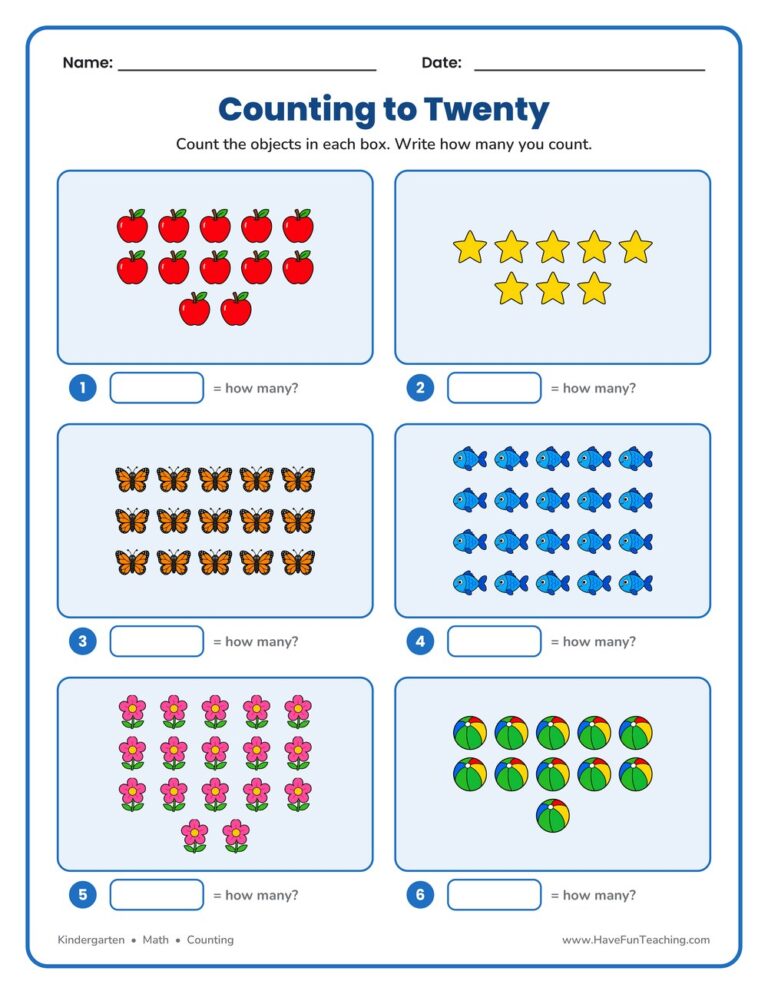
The Count to 20 Objects Worksheet lets kindergarten students count sets of fun pictures up to twenty and write how many. Includes a complete answer key for a colorful, no-prep way to build counting confidence.
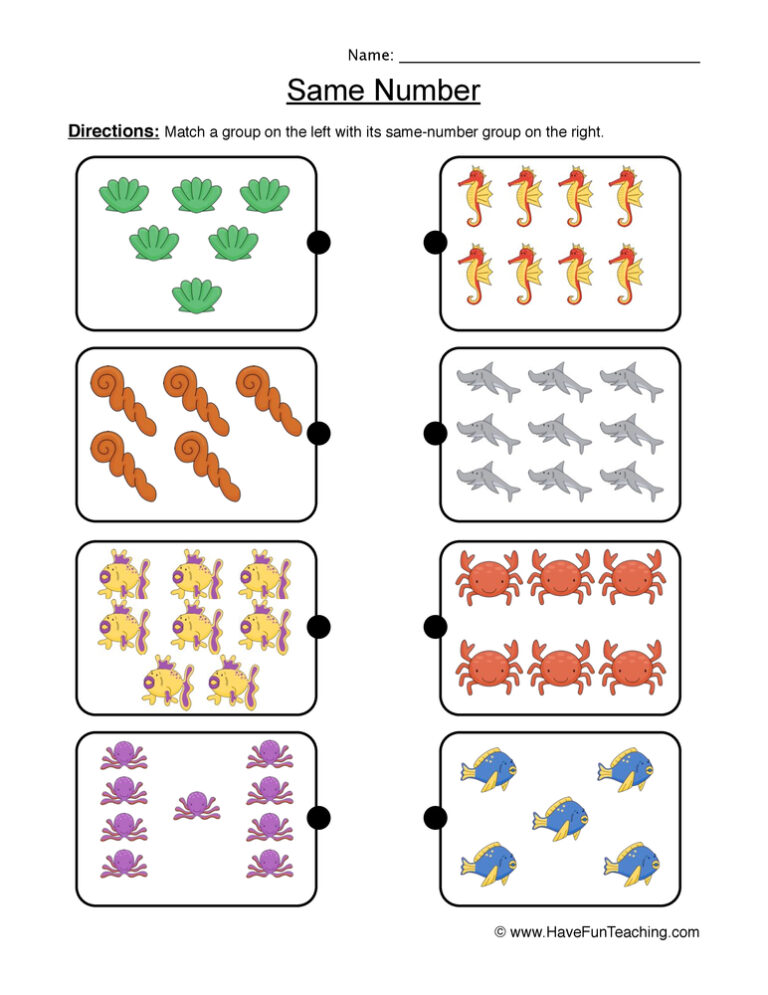
This same number picture representations worksheet has Kindergarten students count ten picture groups and match the pairs that hold the same amount. Answer key included, so counting practice is ready to print and check in seconds.

This Counting to 100 Assessment Worksheet asks kindergarten students to fill in the missing numbers on a hundreds chart, all the way to 100. Includes an answer key for quick, no-prep number check-ins.
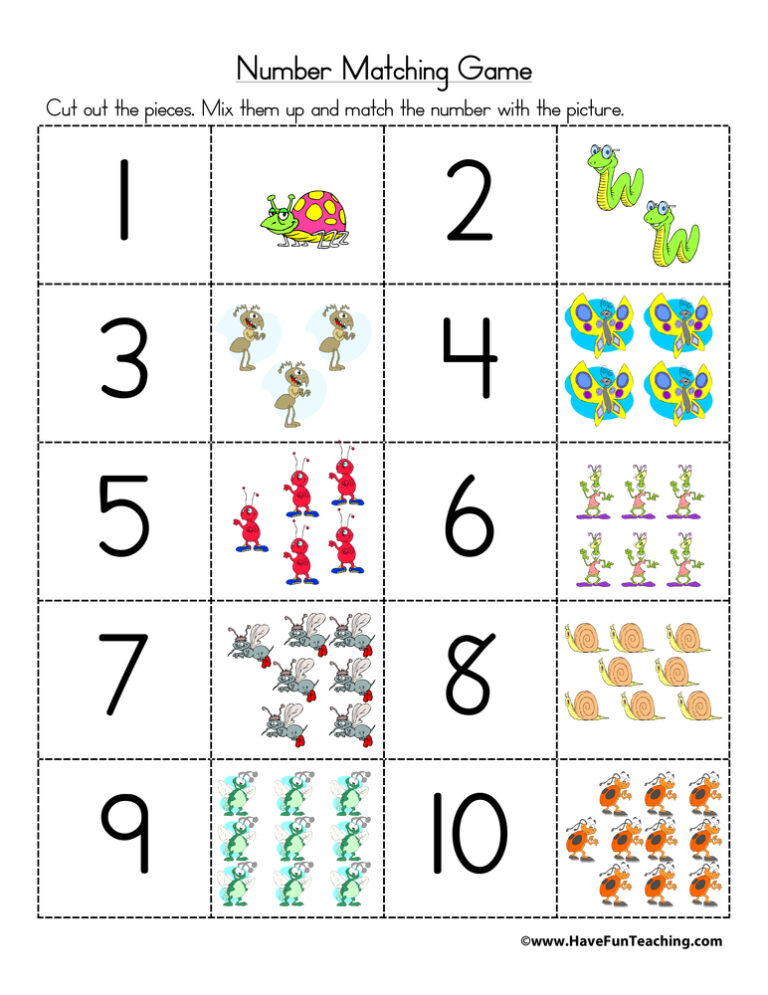
Using Number Matching Puzzle Activity, students match the number with the number picture in order to build their counting fluency.

Using the Counting By Ones Song, students practice counting by ones to fifty by singing and counting along to this fun and engaging video!
Using the Counting Songs (MP3 Album), students practice skip counting by all of the numbers by singing and counting along to these thirteen songs.
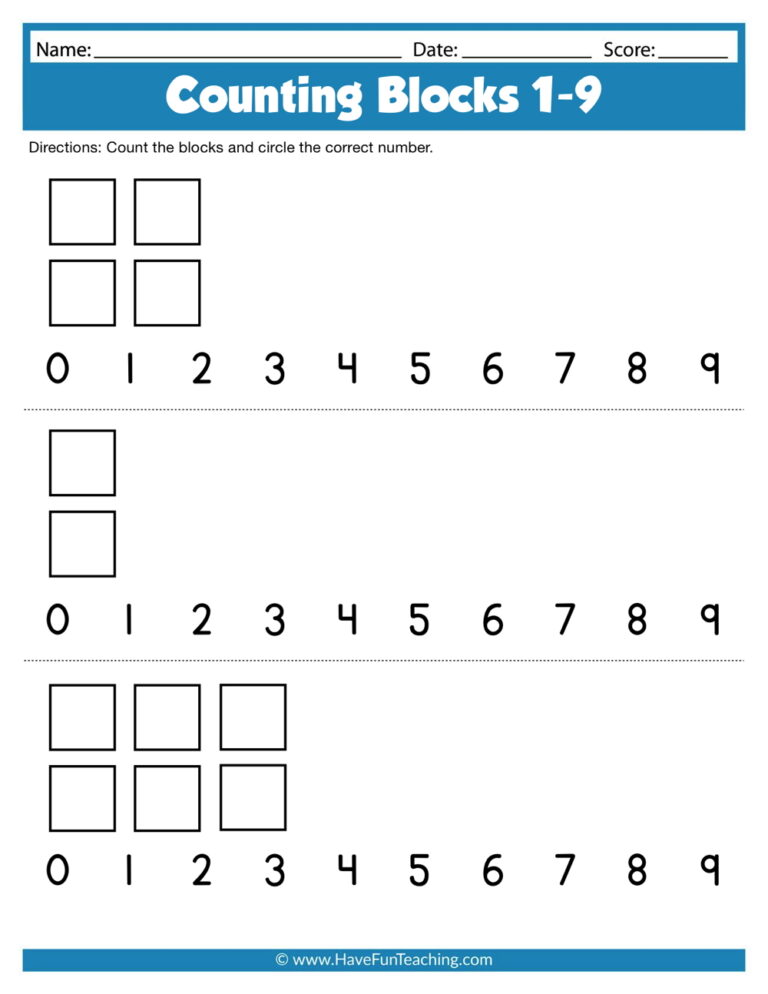
Counting Blocks 1-9 Worksheets ask Kindergarten students to count blocks, write the number, and draw sets of their own. An answer key is included, so counting practice takes no prep at all.
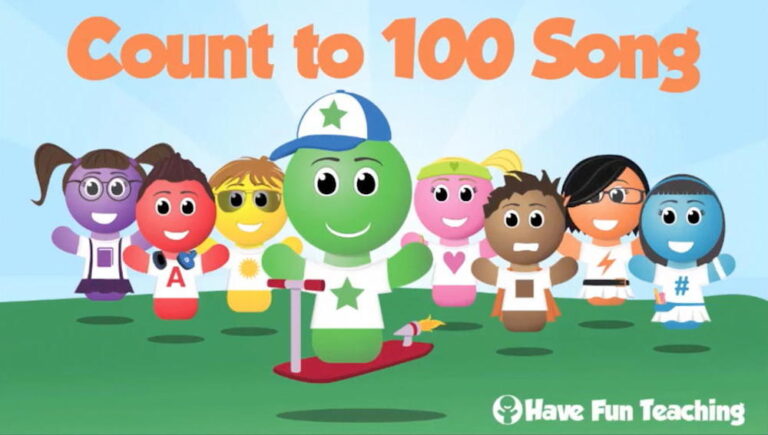
Using theCount to 100 Song (MP3), students practice counting to 100 by singing and counting along to this fun and engaging song!
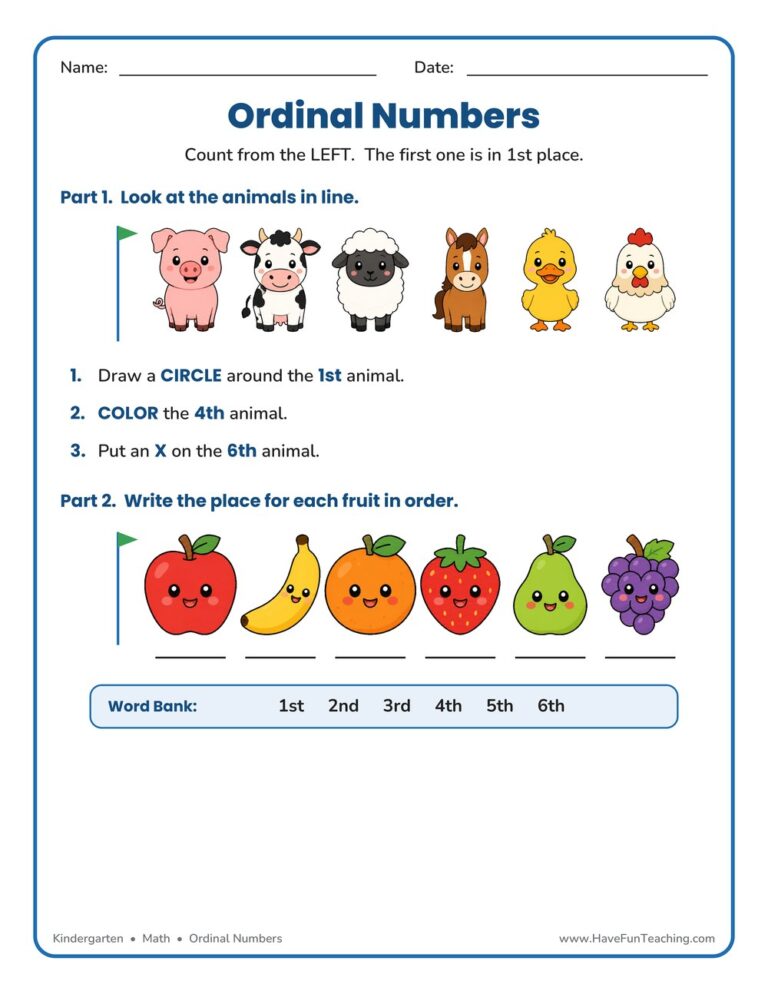
A picture-based labeling ordinal numbers worksheet that helps kindergarten students count from the left and name positions from first to sixth using farm animals and fruit. Answer key included for quick, no-prep math practice.
Reviews
There are no reviews yet