
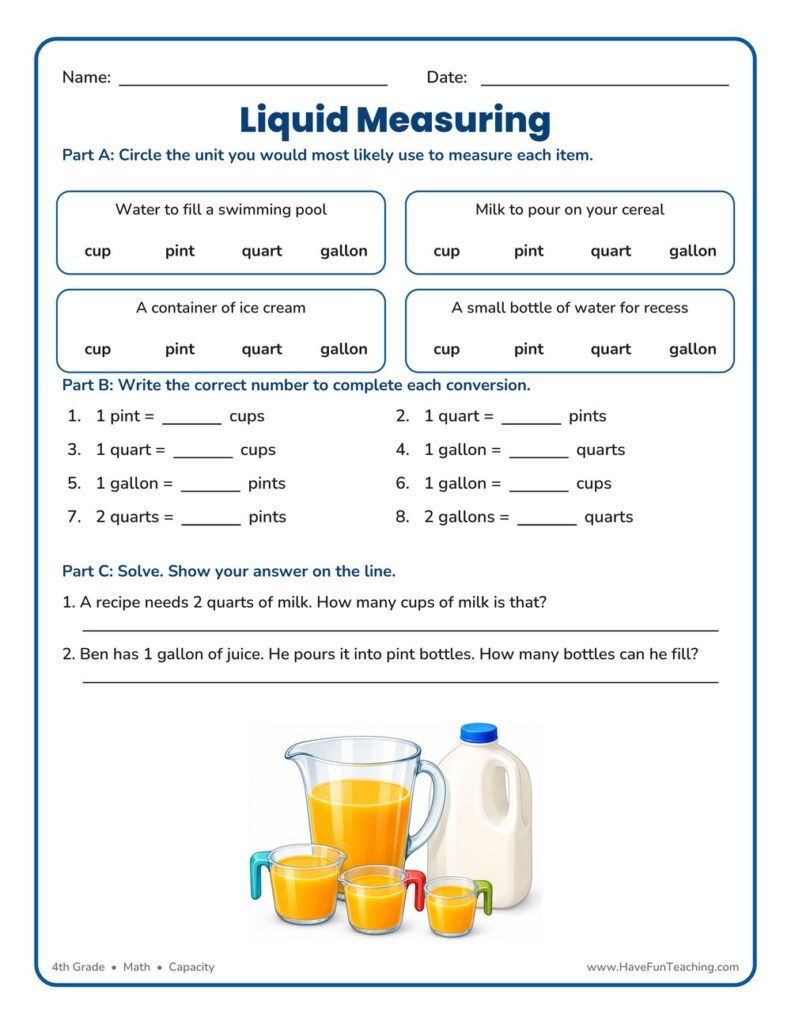
Cup Pint Quart Gallon Worksheet
This cup pint quart gallon worksheet gives 4th graders practice choosing units and converting between cups, pints, quarts, and gallons. Includes an answer key—a no-prep way to build customary capacity skills.
$6.97
Or free with a membership — members pay $3.33/mo for all 10,000+ resources. See plans
Want this one free?
Tell us where to send it and it’s yours — no card, no catch.
One free resource per teacher. We’ll also send free teaching ideas each week — unsubscribe anytime.
Teaching is easier with a membership
Unlimited printables, games & videos for PreK–6th — for your classroom or homeschool. Cancel anytime.
Start your 3-day free trial$0 today · cancel anytime · Instant access to 10,000+ resources
About this resource
Description
This Cup Pint Quart Gallon Worksheet helps fourth graders master customary units of liquid capacity. Students first choose the unit that best measures everyday items, then convert between cups, pints, quarts, and gallons. Understanding how these units relate—knowing that a gallon of milk holds far more than a single cup—gives students a real-world sense of volume they will use in kitchens, recipes, and at the grocery store.
This 4th grade capacity worksheet moves from estimation to computation. In Part A, students circle the most reasonable unit for four real objects. In Part B, they complete eight conversions, and in Part C they solve two word problems that put the conversions to work. To use it, review the key relationships (1 gallon = 4 quarts = 8 pints = 16 cups), then let students work independently. A complete answer key is included.
What’s Included
- 1 print-ready PDF worksheet
- Answer key
- A unit-choosing activity, 8 conversion problems, and 2 word problems
This cup pint quart gallon worksheet supports learning in three ways. First, it strengthens number sense by asking students to reason about which unit fits an object. Second, it builds fluency with customary capacity conversions through repeated, structured practice. Third, the word problems develop problem-solving skills, showing students how measurement is used in real life.
Teachers and parents can extend this activity with hands-on fun. Fill a gallon jug using cups and pints so students can see the equivalences for themselves. Ask children to find capacity labels on containers in the kitchen and sort them from smallest to largest. You can also turn a favorite recipe into a measurement challenge by doubling or halving the amounts together.
Related Resources
What teachers say
Reviews
You must be logged in to post a review.

A fourth grade mass and volume worksheet where students fill in the bubble to choose the best unit of measure for weight and capacity. Includes an answer key — perfect for quick, no-prep measurement practice at home or school.
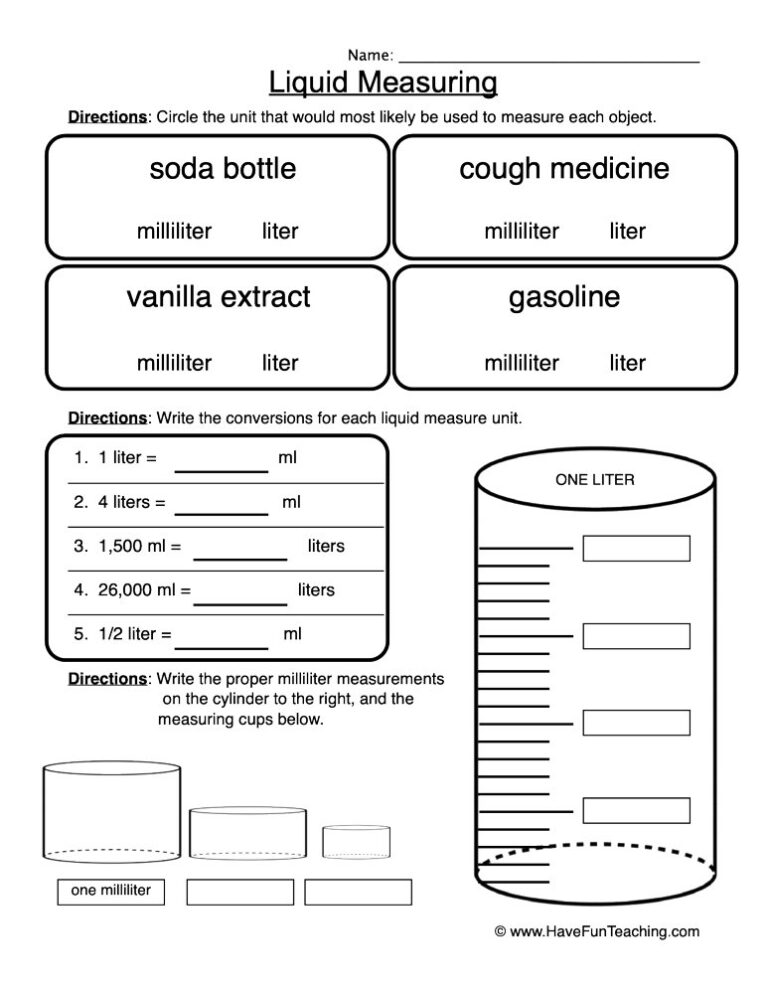
This Choosing Milliliter or Liter Worksheet has 4th graders pick the right metric unit for six everyday containers, convert liters and milliliters, and solve a word problem. Answer key included.

A measuring metric word problems worksheet where 4th graders solve five real-world grams, kilograms, milliliters and liters problems, including two that need a unit conversion first. Answer key included, so practice is quick and no-prep.

Using this Measurement Conversion Activity, students demonstrate knowledge of relative sizes of measurement units within one system of units.
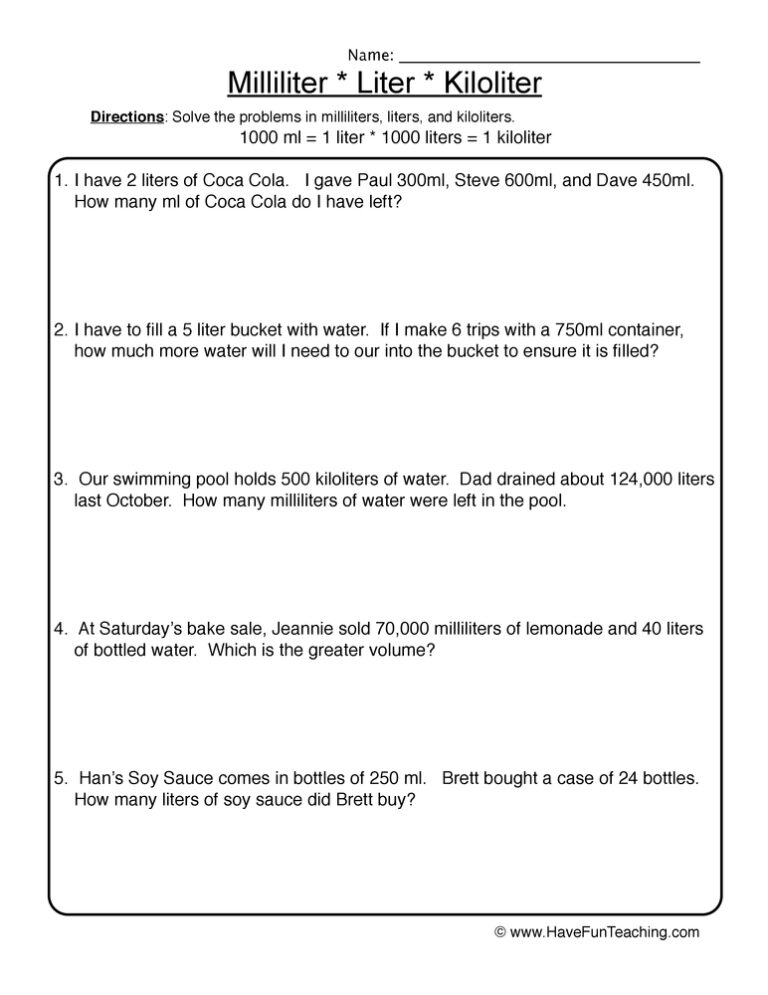
Using Liquid Measurement Scenarios Worksheet, students convert the liquid measures to build their understanding of metric units.

Using Measurement Conversions Worksheet, students convert the liquid and dry measures to build their understanding of capacity.
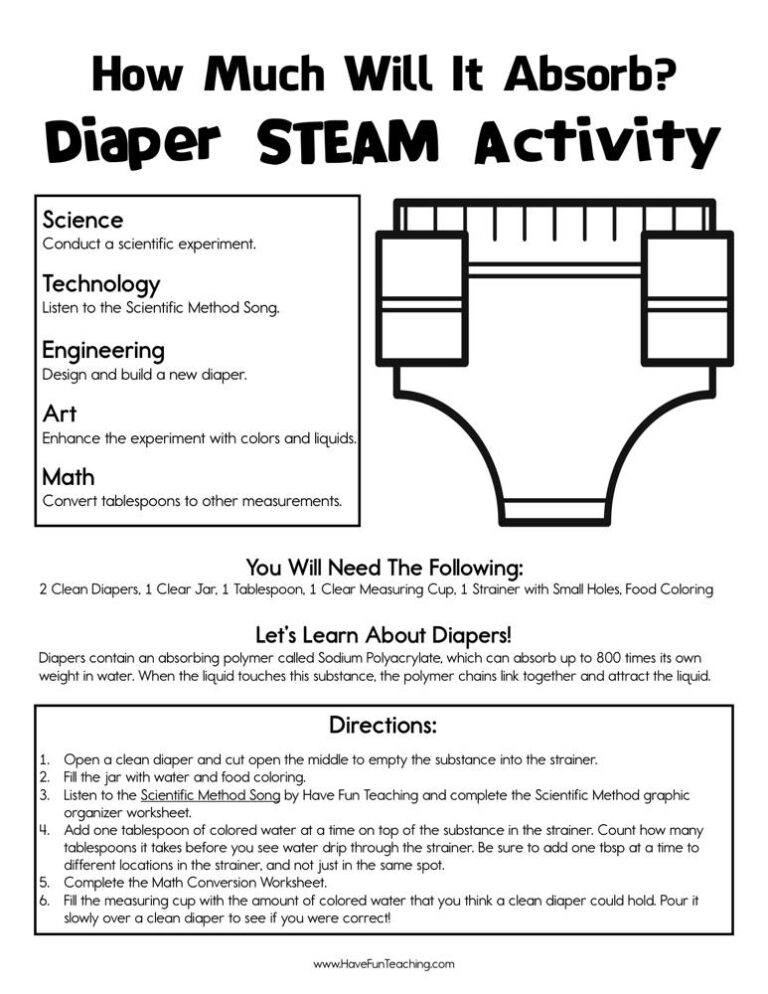
This How Much Will It Absorb? Diaper STEAM Activity includes all the learning components: Science, Technology, Engineering, Art, and Math.
A printable, ready-to-use blank calendar with a landscape monthly grid and labeled day columns. Great for Kindergarten through 5th grade classrooms to map out lessons, holidays, and daily routines—just add the month and the dates.
Using the Counting Songs (Classic Video Collection), students practice skip counting by all of the numbers by singing and counting along to these thirteen videos.
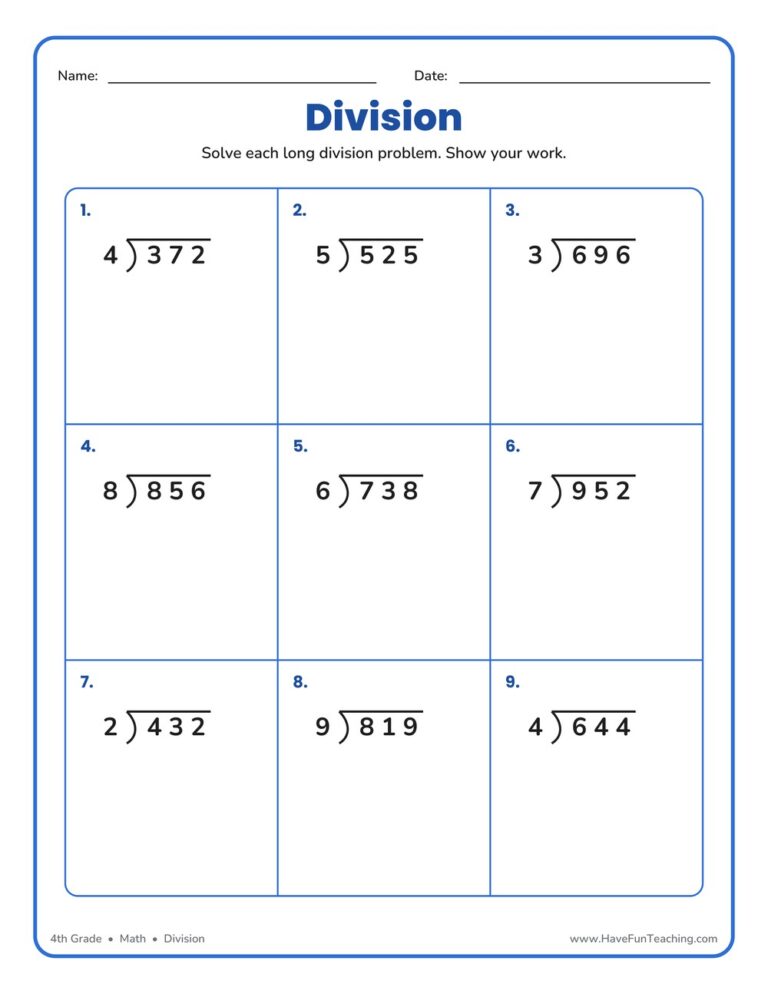
A 4th grade long division worksheet with nine three-digit-by-one-digit problems and roomy space to show each step. Includes a complete answer key for quick, no-prep division practice at home or school.
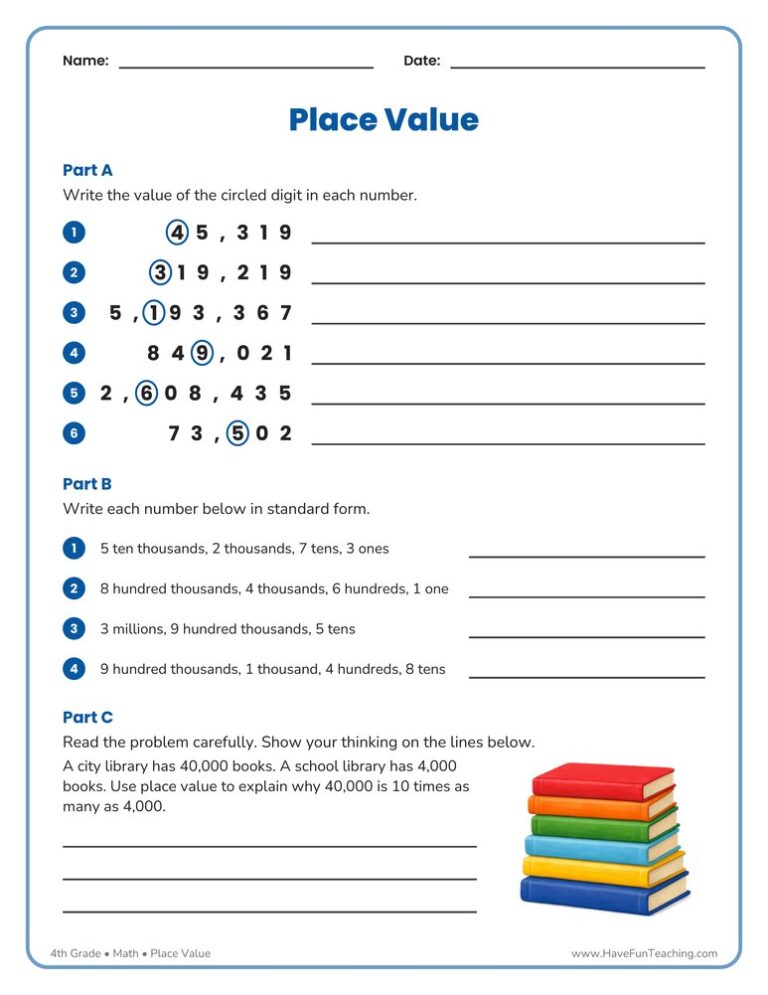
A place value identification worksheet for 4th grade: name the value of circled digits through the millions, build numbers in standard form, and explain ten times as much. Answer key included for no-prep practice.
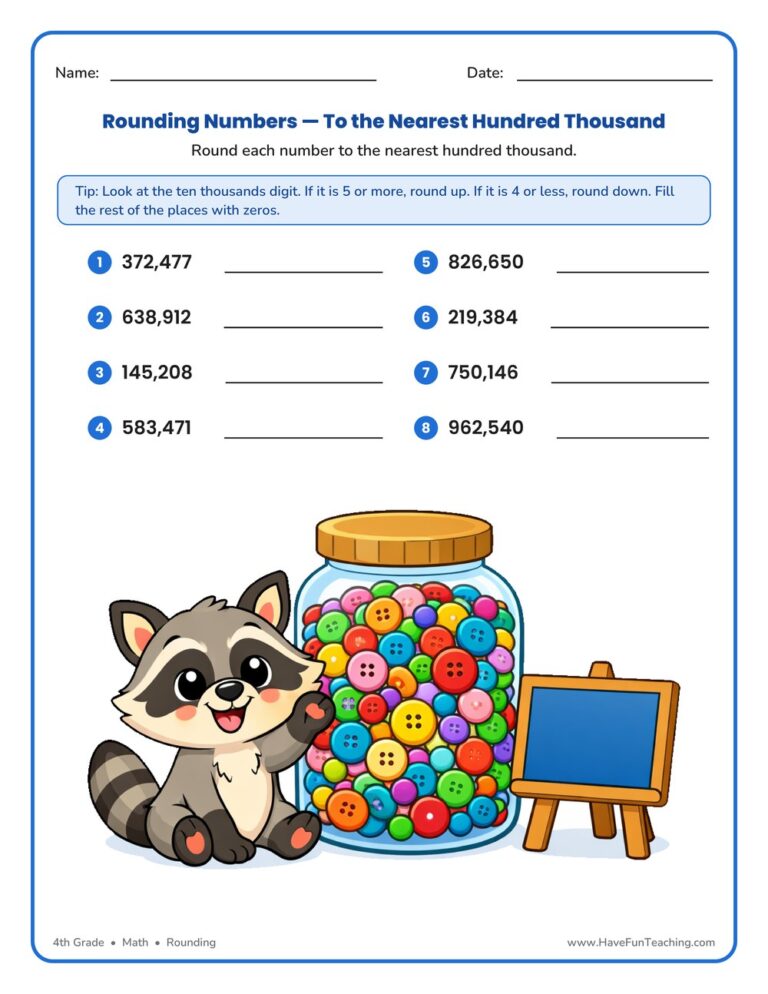
This Rounding to the Nearest Hundred Thousand Worksheet gives 4th graders focused practice rounding six-digit numbers using place value. An answer key is included, making it a quick, no-prep way to build confident number sense.
Reviews
There are no reviews yet