

Drawing Coins Worksheet
This drawing coins worksheet asks 2nd grade students to count four groups of coins and then draw the fewest coins that make three given amounts. An answer key is included.
$6.97
Or free with a membership — members pay $3.33/mo for all 10,000+ resources. See plans
Want this one free?
Tell us where to send it and it’s yours — no card, no catch.
One free resource per teacher. We’ll also send free teaching ideas each week — unsubscribe anytime.
Teaching is easier with a membership
Unlimited printables, games & videos for PreK–6th — for your classroom or homeschool. Cancel anytime.
Start your 3-day free trial$0 today · cancel anytime · Instant access to 10,000+ resources
About this resource
Description
Counting a handful of coins is harder than it looks. A second grader has to know what each coin is worth, put the coins in order, and then count on by different amounts. This Drawing Coins Worksheet builds both halves of that skill: students first count a group of coins and write the total, and then work backward and draw the coins that make a given amount. Working in both directions is what turns coin recognition into real money sense, and it is the exact reasoning students need before they ever handle dollars and cents notation.
This printable is ready to hand out. The first section shows four groups of pennies, nickels, dimes and quarters, drawn at their true relative sizes so a quarter really is bigger than a nickel and a dime really is the smallest coin on the page. Students count each group and write the total in the box. In the second section this drawing coins worksheet gives three amounts and an empty box for each one, and asks students to draw the fewest coins that make the amount. Because the fewest-coin answer is the only right one, the page can be checked quickly against the answer key on the second page.
What’s Included
- One printable worksheet page and one answer key page
- Four coin groups to count, with totals from 22¢ to 55¢
- Three draw-the-coins problems that ask for the fewest coins
- Pennies, nickels, dimes and quarters at their true relative sizes
- A friendly clay piggy bank illustration
- A name and date line for easy classroom collection
Three things make this resource work in a second grade classroom. First, counting a mixed group forces students to start from the largest coin and count on by twenty-fives, tens and fives instead of counting everything by ones. Second, the fewest-coin task is a real problem to solve, not a fact to recall, so students who already know the coin values still have thinking to do. Third, drawing the answer means students have to choose which coins to use, which is the step a matching or multiple-choice counting coins worksheet never asks for. Together the two sections cover the reading and the producing side of the same standard.
Teachers and parents can take this further with almost no preparation. Put real coins in a cup and have students pull a small handful and count it aloud with a partner. Call out an amount and race to build it with the fewest coins. Set up a classroom store where every item is priced under fifty cents and students pay with exact change. Ask a student who finished early to find a second way to make the same amount, then compare how many coins each way took. Send the page home and count the change in a pocket or a car cup holder together.
Related Resources
What teachers say
Reviews
You must be logged in to post a review.

This addition and subtraction word problems worksheet gives 2nd graders four real-world number stories to solve within 100. It includes a complete answer key, making it perfect for no-prep math practice at home or in the classroom.
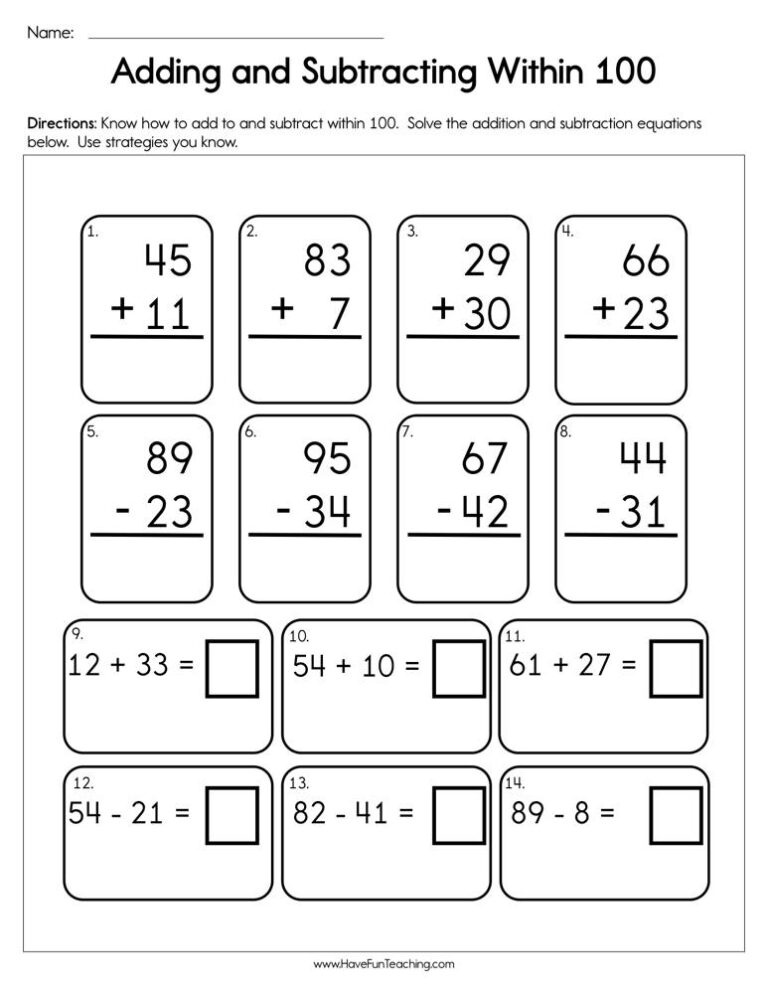
An adding and subtracting within 100 worksheet that helps 2nd graders solve two-digit problems in both stacked and horizontal form. Includes a complete answer key—great for quick, no-prep math practice at home or school.
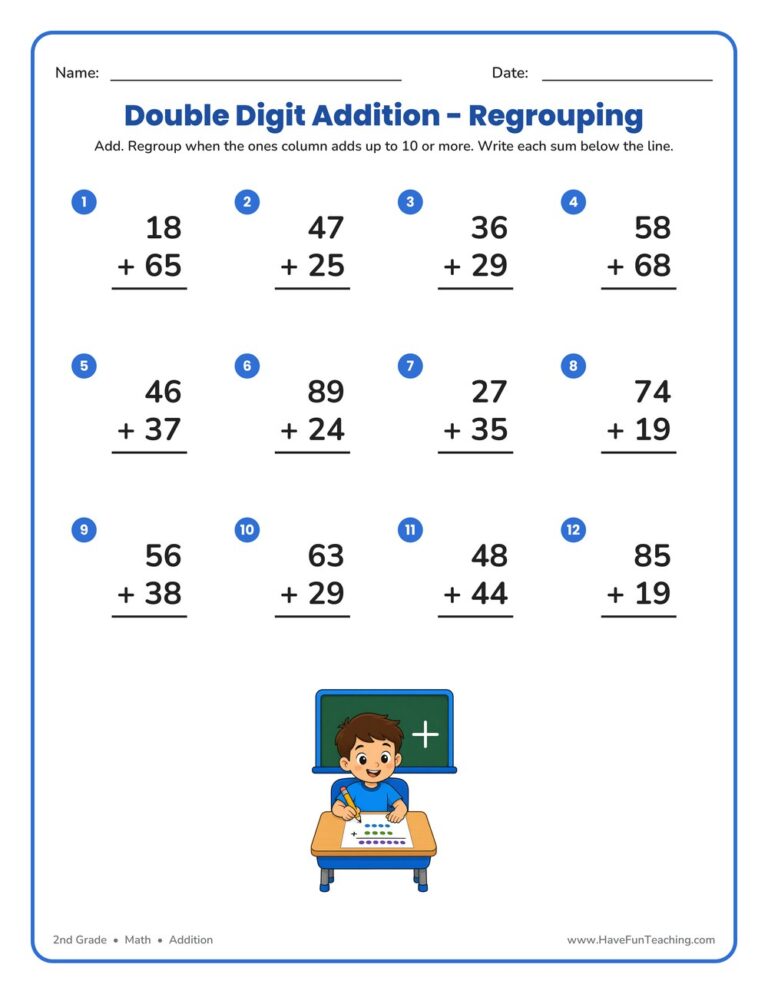
This double digit addition with regrouping worksheet gives 2nd graders twelve column-addition problems that practice carrying from the ones to the tens place. Includes a complete answer key—perfect for no-prep math practice at home or in class.

This Adding and Arrays Worksheet asks 2nd grade students to write a number sentence for six arrays and two story problems. An answer key is included, so practice with equal rows takes only minutes.

This Add and Subtract 10 and 100 Worksheet gives 2nd Grade students mental math practice with tens and hundreds, number patterns, and two word problems. An answer key is included, so checking work takes seconds.
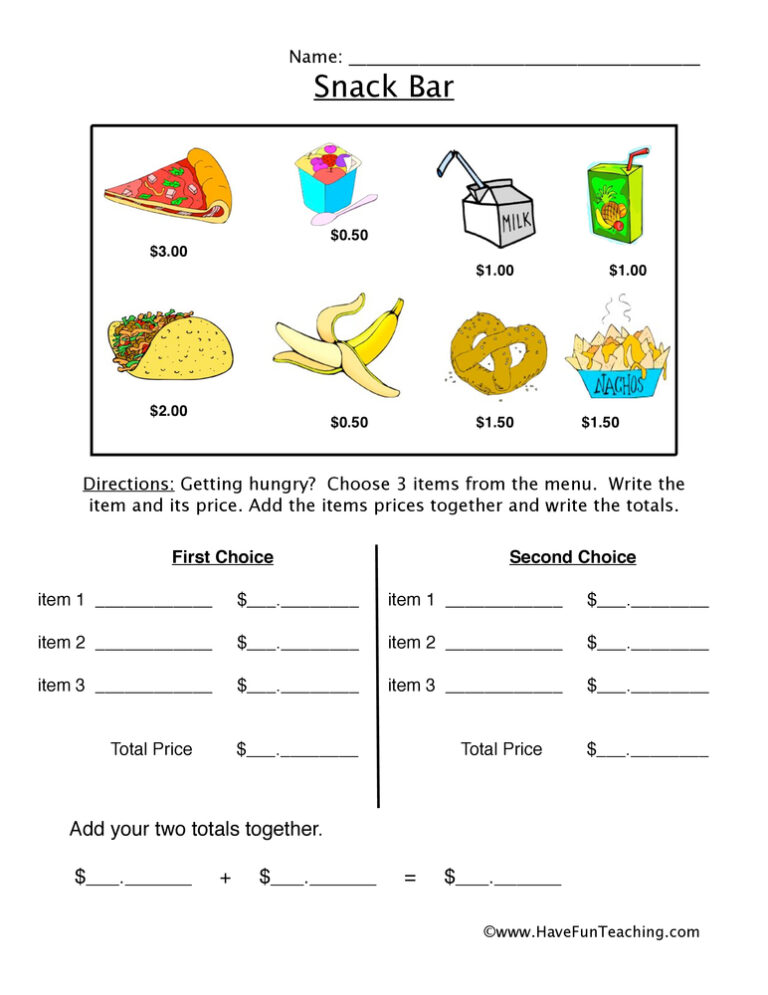
Students use the Ordering from a Snack Bar Worksheet to read a six-item menu, write two snack prices, and add them to find each total. Built for 2nd grade with an answer key included, it makes money practice feel like lunchtime.

This Word Problems With 3 Numbers Worksheet asks 2nd graders to draw a picture and then add three addends inside real stories. An answer key is included, so checking work takes only seconds.

Practice this add and subtract 10 and 100 word problems worksheet with three number stories and a 10 more, 10 less, 100 more, 100 less chart. Built for 2nd Grade with an answer key included, so mental math clicks fast.
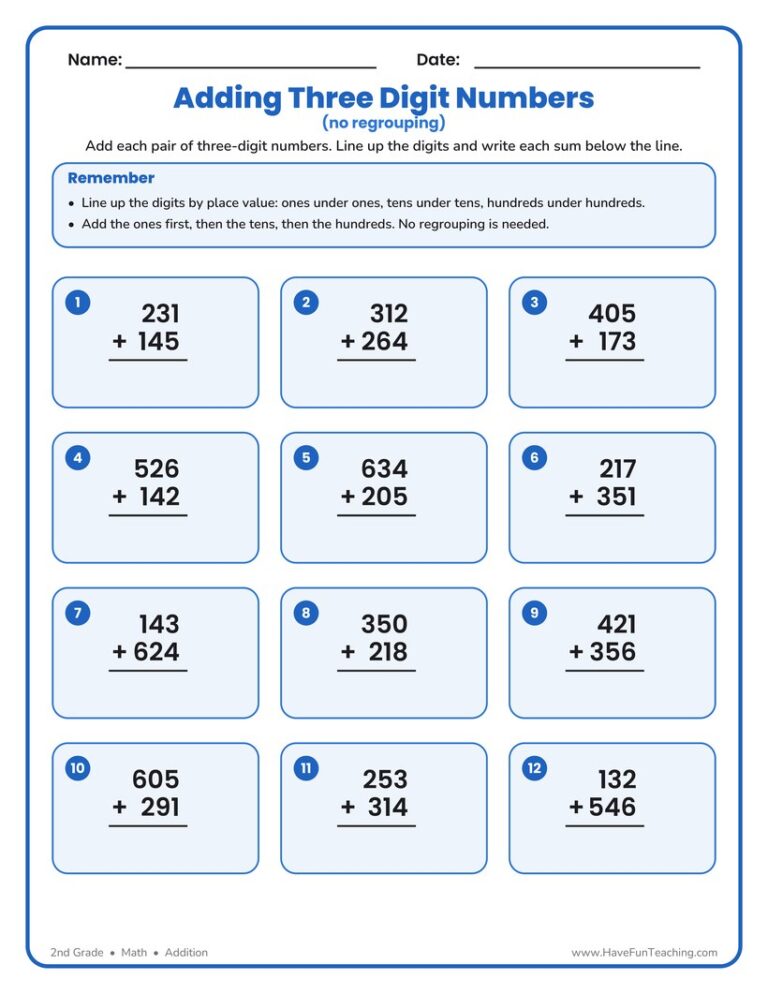
Practice adding three-digit numbers with this triple digit addition no regrouping worksheet for 2nd grade. Twelve column-addition problems with an answer key included — perfect for building place-value fluency with no-prep math practice.

This double digit addition with regrouping worksheet gives 2nd graders eight column-form problems that all trade ten ones for a new ten, plus a word problem. Answer key included for fast, no-prep practice.
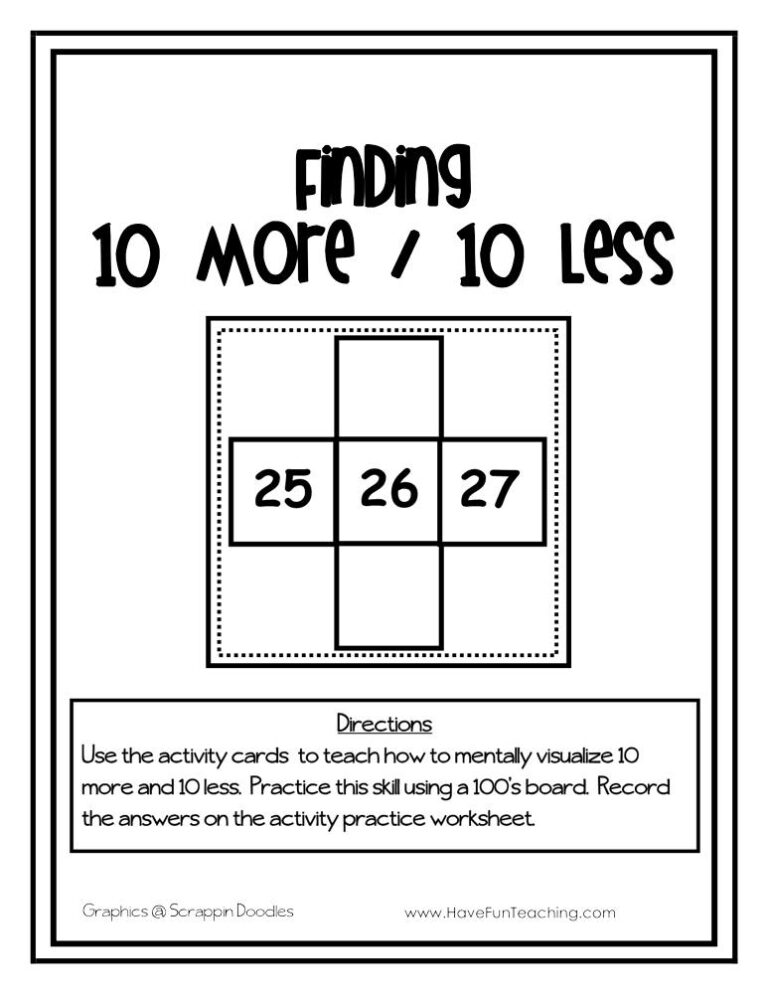
In this Finding 10 More 10 Less Activity, students practice finding 10 more and less than a given number to build skip counting and base ten skills.
Using the Adding 8 Song (Lyric Mjusic Video), students sing and practice adding 8 with all addition facts 1-15. Your kids will learn how to add 8.




Reviews
There are no reviews yet