
Skip to content
Start My 3 Free Days $0 today · cancel anytime

Money Resources

56 money resources: 43 worksheets, 8 assessments, 6 activities and more. How teachers use these

Money Resources

56 money resources: 43 worksheets, 8 assessments, 6 activities and more. How teachers use these

Workbook
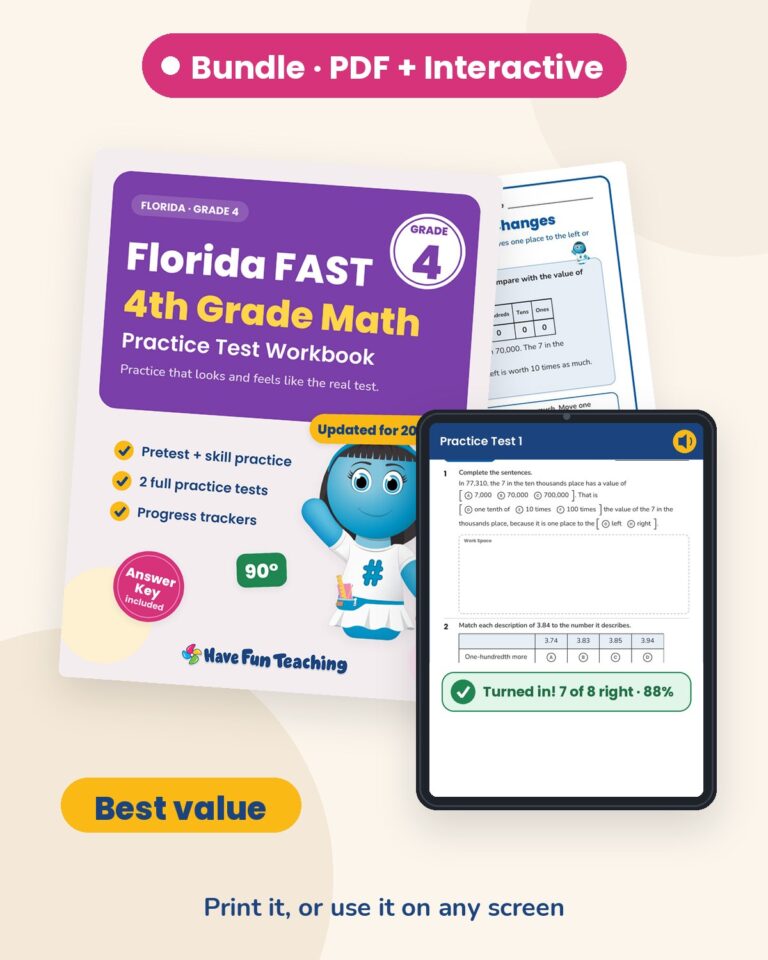
Workbook4th GradeFlorida FAST 4th Grade Math Practice Test Workbook

A Florida FAST 4th grade math practice test workbook for teachers, with a pretest, skill practice for all 39 benchmarks, mixed review and 2 full-length practice tests. Answer key included, so test prep is ready to go.

Worksheet
Worksheet2nd GradeSolving Money Word Problems Worksheet

This solving money word problems worksheet gives 2nd graders real-world practice counting coins, adding money, and making change. Includes a complete answer key—an easy, no-prep way to build money math confidence.

Worksheet
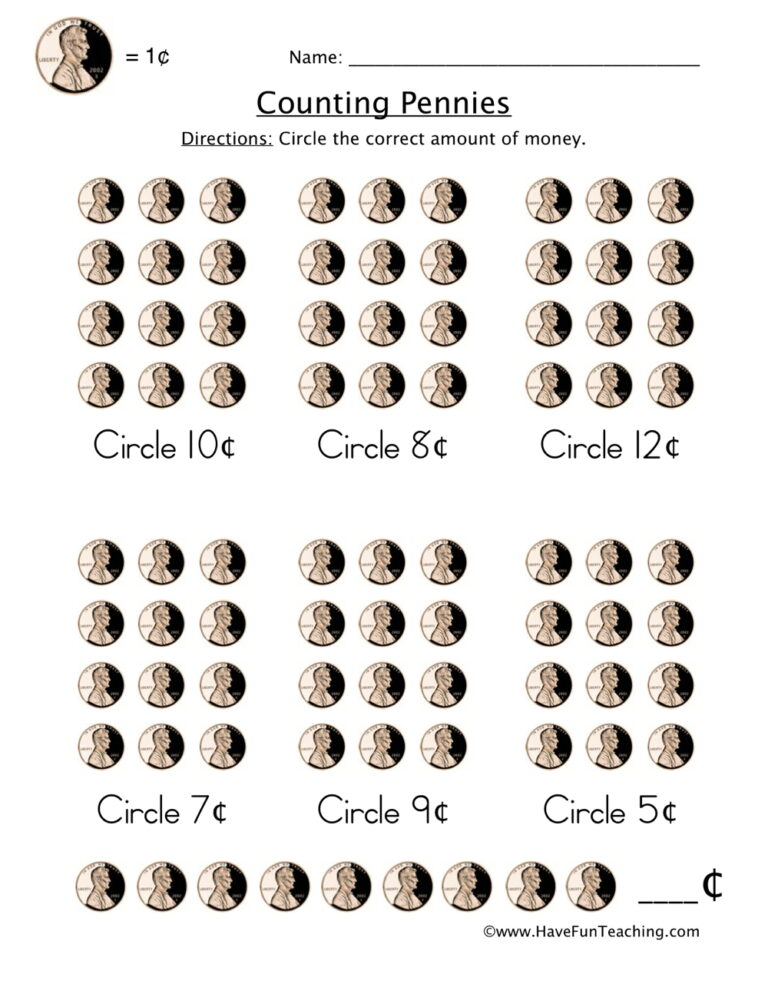
Worksheet1st GradePennies Circle Worksheet

This Pennies Circle Worksheet has 1st graders circle the pennies that make 7¢, 3¢ and 6¢, count and total three rows of pennies, and solve a coin purse story problem. Answer key included.

Worksheet
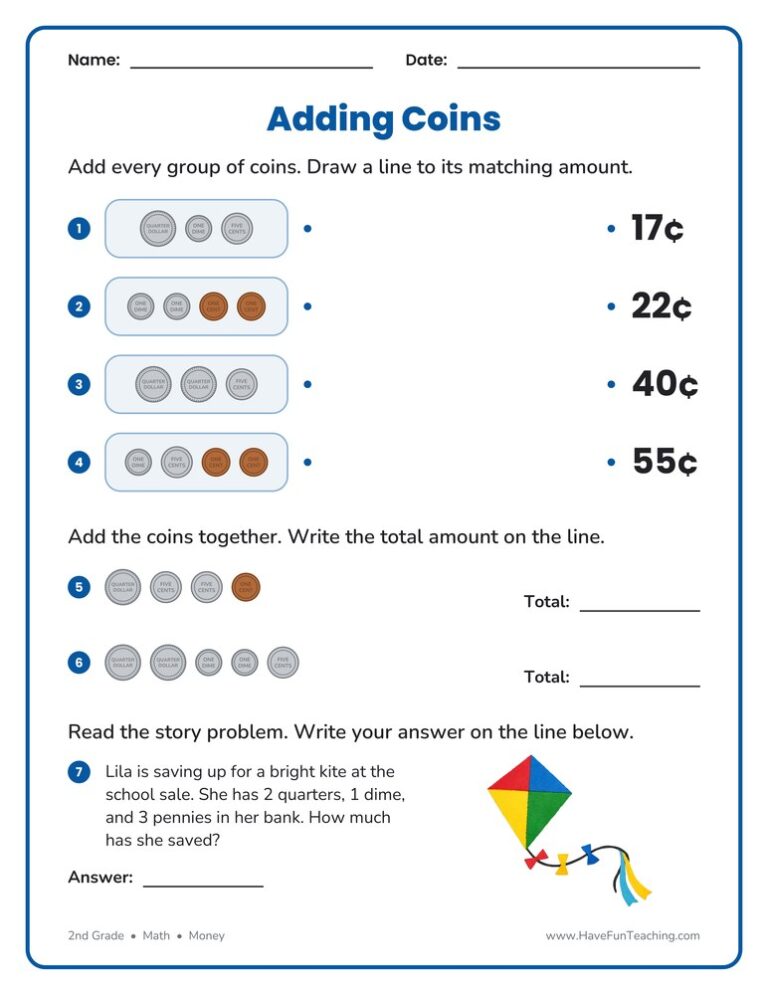
Worksheet2nd GradeAdding Coins Worksheet

This Adding Coins Worksheet gives 2nd graders seven ways to combine pennies, nickels, dimes, and quarters into one total. An answer key is included, so coin practice takes no prep at all.

Worksheet
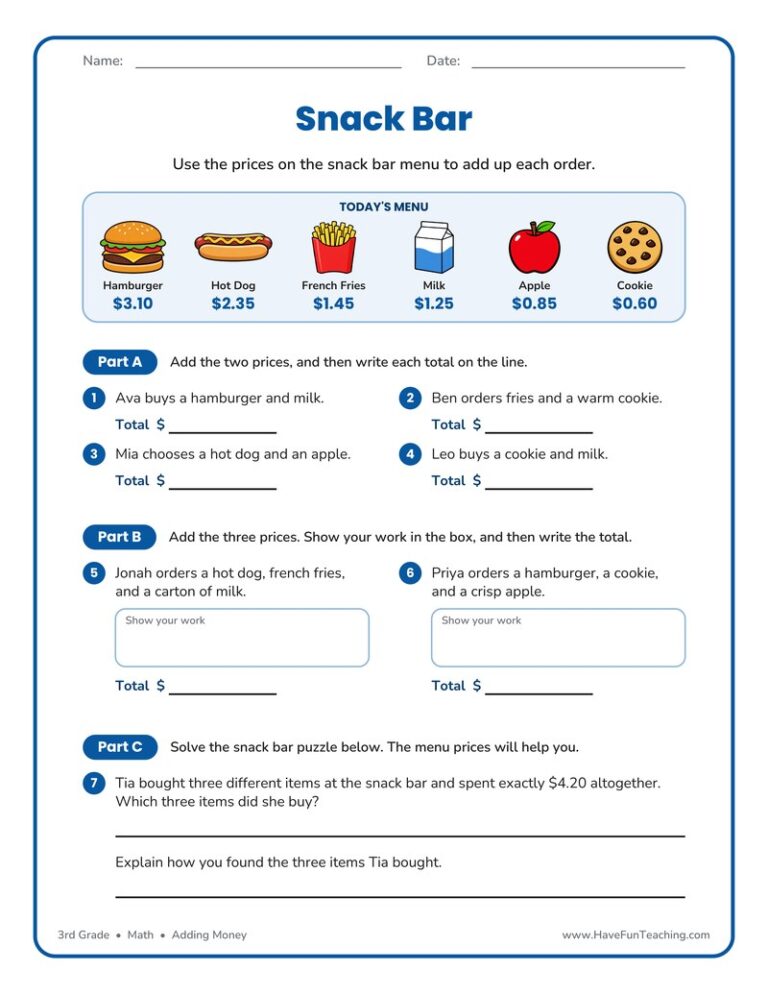
Worksheet3rd GradeSnack Bar Money Worksheet

This Snack Bar Money Worksheet gives 3rd graders a real menu to add up, from two-item orders to a three-item money puzzle. Answer key included, so practice adding dollars and cents takes no prep.

Worksheet
Worksheet3rd GradeCounting Money Worksheet

This Counting Money Worksheet helps 3rd graders add up bills and coins in real-life word problems, then solve a two-step problem. An answer key is included for quick checking.

Worksheet
Worksheet2nd GradeOrdering from a Snack Bar Worksheet

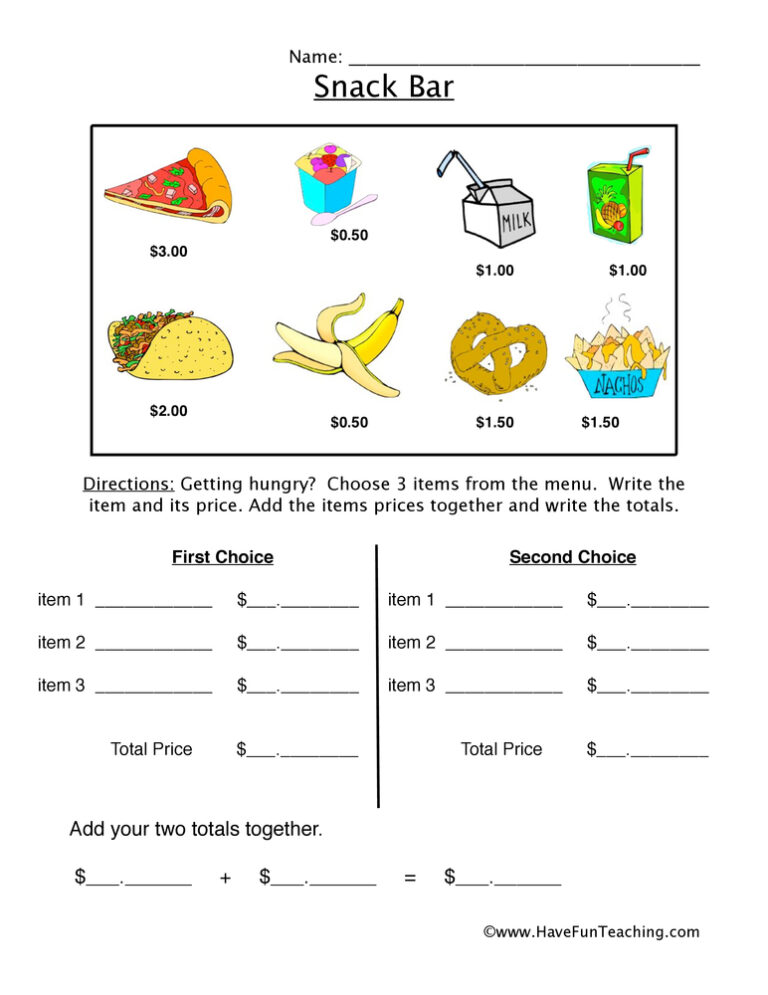
Students use the Ordering from a Snack Bar Worksheet to read a six-item menu, write two snack prices, and add them to find each total. Built for 2nd grade with an answer key included, it makes money practice feel like lunchtime.

Worksheet
Worksheet3rd GradeFind the Total Price Worksheet

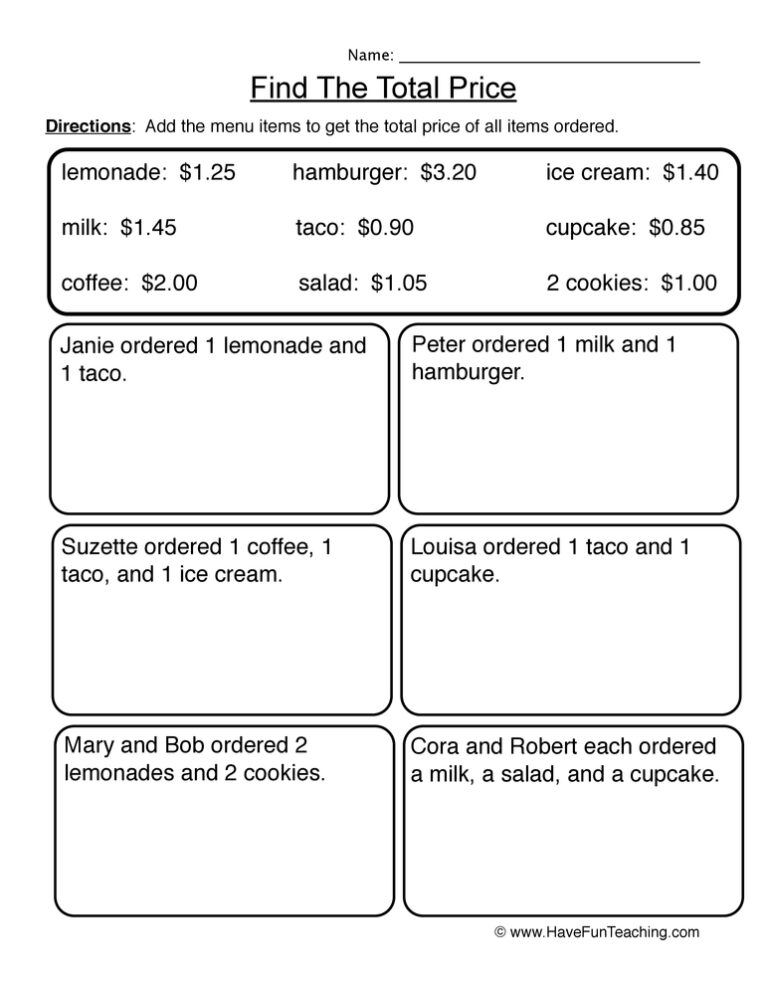
Use this find the total price worksheet to give 3rd graders four snack-shop orders to add and one spending problem to reason through. Answer key included, so money practice takes no prep.

Worksheet
Worksheet1st GradeCounting Pennies and Nickels Worksheet

Count groups of pennies and nickels, then solve two money word problems, with this Counting Pennies and Nickels Worksheet for 1st Grade. Answer key included so checking work takes seconds.

Worksheet
Worksheet2nd GradeCounting Coins Word Problems Worksheet

The Counting Coins Word Problems Worksheet gives 2nd Grade students two coin collections to total and three money word problems with work space and an answer key, so counting change becomes automatic.

Worksheet
Worksheet4th GradeMoney Word Problems Worksheet

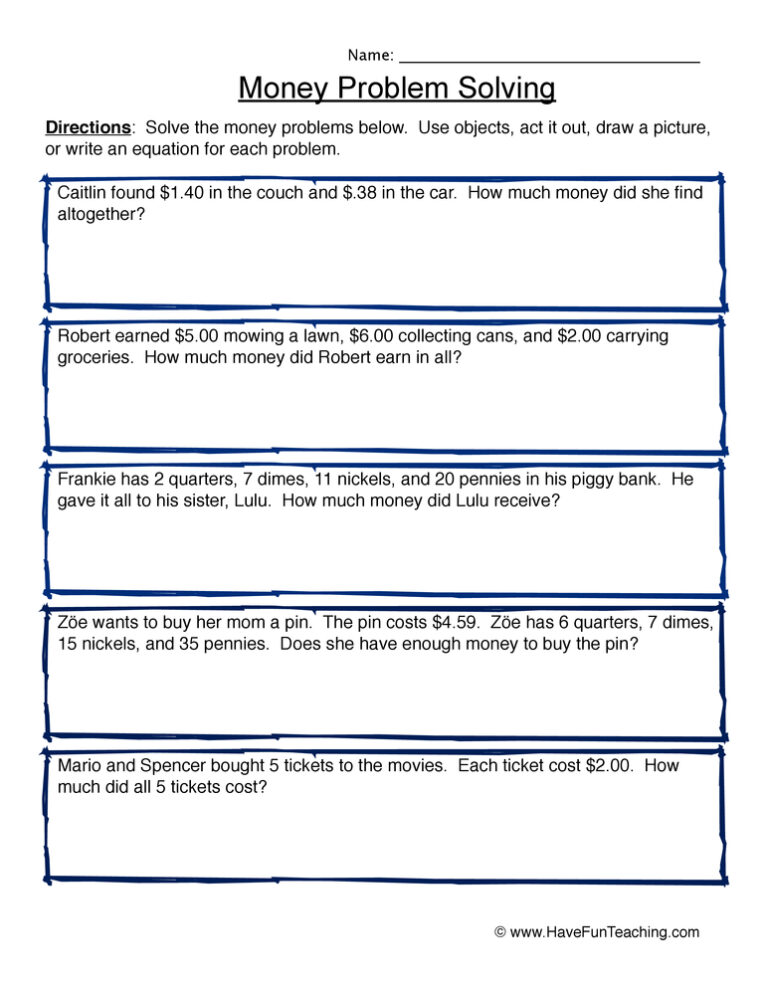
This money word problems worksheet gives 4th grade students four boxed problems and one written explanation, plus an answer key, so they practice dollars and cents in situations they already know.

Worksheet
Worksheet4th GradeMoney Graphing Worksheet

This Money Graphing Worksheet asks 4th graders to add dollars and cents, total each student's fundraising, and graph the results on a scaled bar graph. An answer key is included, so checking accurate work takes seconds.

Worksheet
Worksheet1st GradeNickels Matching Worksheet

This Nickels Matching Worksheet has 1st grade students count groups of nickels by fives, match each group to its amount, write two totals, and solve a money problem. Answer key included for quick checking.

Worksheet
Worksheet2nd GradeCounting Money Word Problems Worksheet

This Counting Money Word Problems Worksheet has 2nd grade students total two coin collections and then solve three coin word problems, with room to show their work and a full answer key.

Workbook
Workbook5th GradeFlorida FAST 5th Grade Math Practice Test Workbook

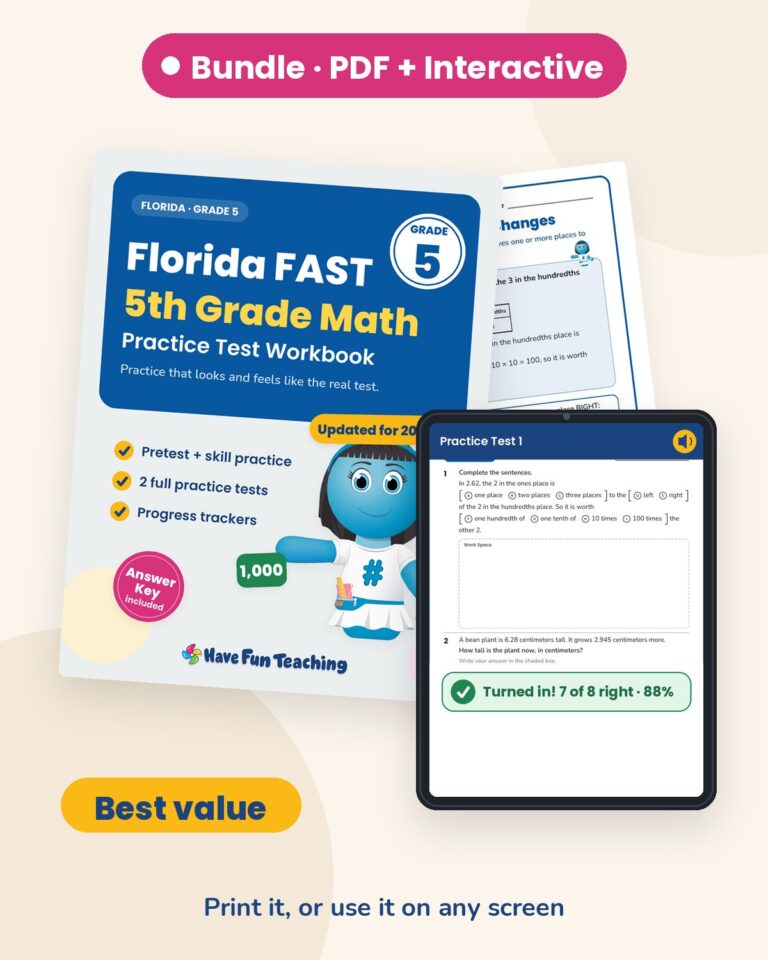
A Florida FAST 5th grade math practice test workbook for teachers, with a pretest, skill practice for all 36 benchmarks, mixed review and 2 full-length practice tests. Answer key included, so test prep is ready to go.

Worksheet
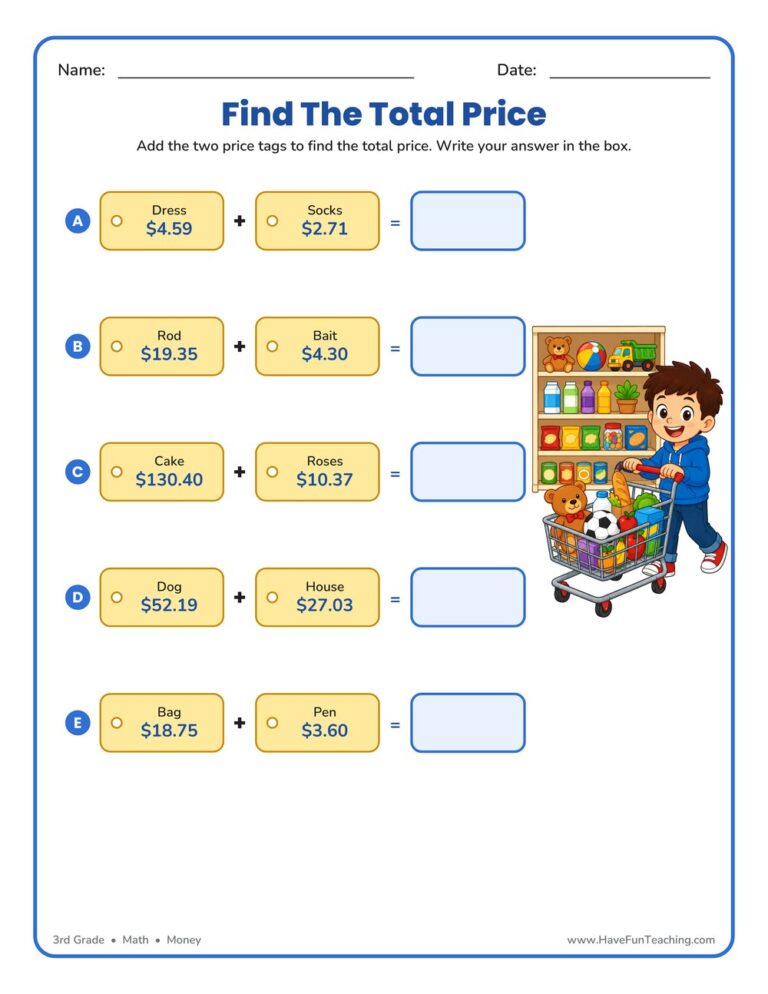
Worksheet3rd GradeFind the Total Price Pictures Worksheet

This Find the Total Price Pictures Worksheet has 3rd graders add two price tags to find each total. Answer key included for quick, no-prep money and addition practice.

Worksheet
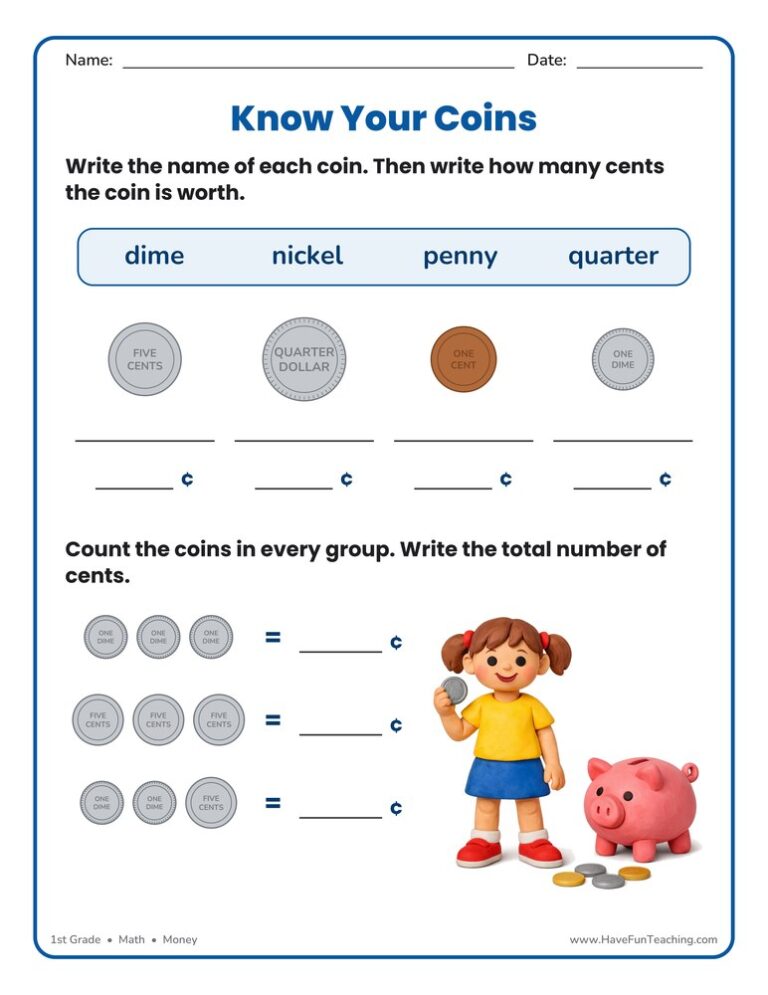
Worksheet1st GradeIdentifying Coins Worksheet

This identifying coins worksheet helps 1st graders name the penny, nickel, dime, and quarter, write each coin's value, and count small coin groups. Answer key included for fast, no-prep money practice.

Flash Cards
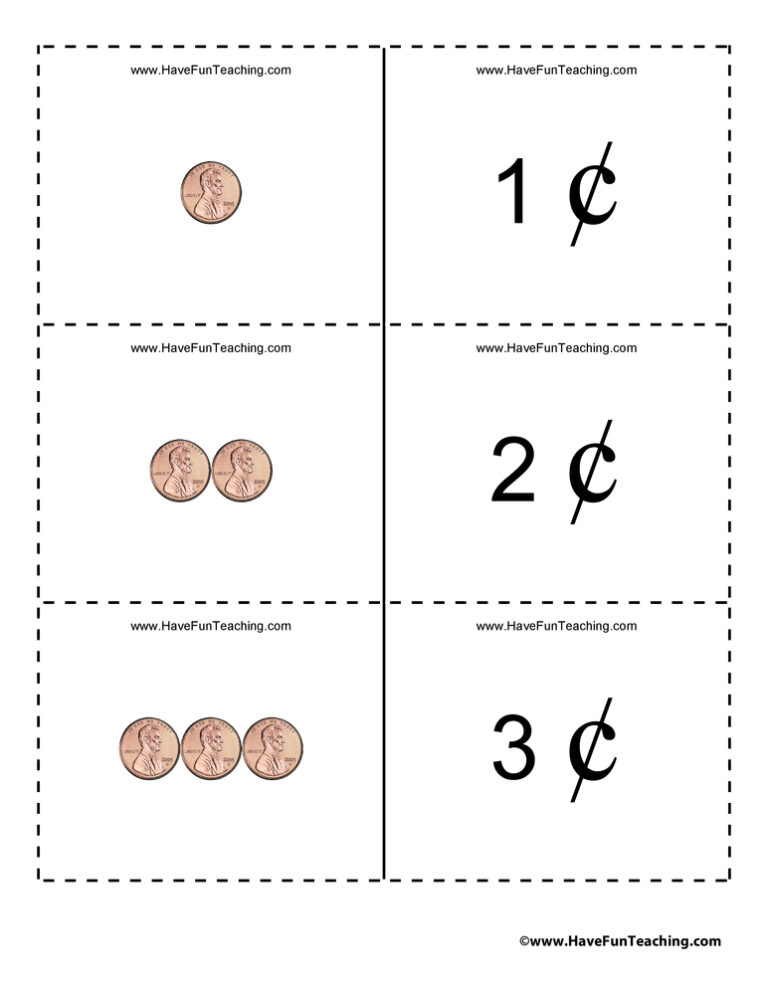
Flash CardsKindergartenMoney Flash Cards

Money flash cards for kindergarten to 3rd grade with 24 fold-over coin cards, from one penny to a dollar. Answer key included, so kids can count coins and check their own work.

Worksheet
Worksheet2nd GradeCoin Values Worksheet

A coin values worksheet that helps 2nd graders count mixed groups of pennies, nickels, dimes, and quarters, then solve two money word problems. Answer key included for fast, no-prep money practice.

Worksheet
Worksheet1st GradeSorting Coins Worksheet

This sorting coins worksheet asks 1st graders to sort eight coins into penny, nickel, dime and quarter groups, then circle the coin worth the most. Answer key included for fast, confident coin recognition.

From our teachers' playbook

Pennies, nickels, and a whole lot of cents

What do kids learn about money?

Money is math kids can hold in their hands. Little learners start by naming coins and knowing what each is worth. Then comes the tricky part: a dime is smaller than a nickel but worth more! By 2nd grade kids count mixed coins and bills and solve word problems with dollars and cents: 2 quarters + 1 dime = 60¢. Older kids add and subtract money as decimals and make change: $5.00 − $3.45 = $1.55. The click comes when kids count from the biggest coin down and skip count their way to the total.

How we teach money that kids can use

Real coins, real prices, real decisions. These are the moves that make money skills stick.

Sort real coins first

Before any worksheet, hand kids a cup of real or play coins to sort by type. Ask them to describe each one: color, size, edges, pictures. Once they can tell coins apart by touch and look, values come much easier.

Why it works: kids understand an idea best when they touch it, then draw it, then write it, the order the U.S. Department of Education recommends for elementary math.

Sorting Coins WorksheetTry it withSorting Coins WorksheetWorksheetsOpen it →
Flash the coin, say the value

Hold up a coin card and have kids call out the name and value as fast as they can. Mix the fronts and backs, since kids often only know one side. Two minutes a day makes coin recognition automatic.

Why it works: pulling an answer out of memory makes it stick far better than rereading it, one of the strongest findings in learning research (Dunlosky and colleagues, 2013).

Money Flash CardsTry it withMoney Flash CardsFlash CardsOpen it →

Count from the biggest

Teach kids to line up coins from biggest value to smallest, then count out loud: "25, 35, 40, 41." Have partners check each other's counting. Saying it out loud catches skip-counting slips right away.

Why it works: using clear, consistent math words out loud is one of the U.S. Department of Education's recommendations for elementary math.

Counting Money WorksheetTry it withCounting Money WorksheetWorksheetsOpen it →

Money questions from teachers and parents

What age should kids learn to count money?

Most kids learn to identify coins in kindergarten and 1st grade. Counting mixed coins and solving money word problems is a 2nd grade skill. Making change and working with decimals comes in 3rd and 4th grade.

How do I teach my child to count coins?

Sort coins from the highest value to the lowest, then count on from the biggest. Start with just two coin types, like dimes and pennies, before mixing in quarters and nickels.

Why do kids confuse nickels and dimes?

Because the dime is smaller but worth more. Help kids remember by focusing on value, not size, and practice with real coins so they can feel the differences.

How can I practice money skills at home?

Let kids pay at the store, count change from a piggy bank, or set up a pretend shop at home with price tags. Real money practice is the best kind.

Keep exploring



