

Fibonacci Sequence Patterns Worksheet
A fibonacci sequence patterns worksheet that walks 4th graders through one simple rule, four missing-number pattern rows, and a garden word problem. Answer key included, so checking pattern work takes seconds.
$6.97
Or free with a membership — members pay $3.33/mo for all 10,000+ resources. See plans
Want this one free?
Tell us where to send it and it’s yours — no card, no catch.
One free resource per teacher. We’ll also send free teaching ideas each week — unsubscribe anytime.
Teaching is easier with a membership
Unlimited printables, games & videos for PreK–6th — for your classroom or homeschool. Cancel anytime.
Start your 3-day free trial$0 today · cancel anytime · Instant access to 10,000+ resources
About this resource
Description
The Fibonacci Sequence is one of the friendliest number patterns in all of mathematics, and it is a perfect way to show fourth graders that a pattern is really just a rule you can repeat. The sequence starts with 0 and 1, and every number after that is the sum of the two numbers before it, which is how 0, 1, 1, 2, 3, 5, 8 keeps marching forward. This fibonacci sequence patterns worksheet gives students a clear rule, a worked example, and plenty of room to practice generating the terms themselves. Working with a growing pattern like this builds exactly the kind of thinking fourth grade standards ask for: generate a number pattern that follows a given rule, then notice features of the pattern that were not stated in the rule itself.
This printable 4th grade patterns worksheet moves from guided practice to independent problem solving in three short parts. Part A puts the rule in a highlighted box with four worked examples, then asks students to finish the Fibonacci Sequence itself by filling in the last four cells. Part B stretches the same rule across four brand-new patterns that start from different pairs of numbers, and several of the missing cells sit in the middle of a row, so students have to run the rule backwards and subtract instead of simply adding forward. Part C closes with a garden word problem and a written explanation, so students have to put their reasoning into words. Use it as morning work, as a small-group station, as homework, or as a quick check before a unit test on number patterns.
What’s Included
- 1 print-ready PDF worksheet
- Answer key
- 3 activities: an 11-cell Fibonacci Sequence to complete, 4 missing-number pattern rows, and 1 word problem with a written explanation
There are three big reasons this resource helps students learn the skill. First, the rule is stated once and then reused everywhere, so students practice applying a single rule to new situations rather than memorizing one special list of numbers. Second, the missing cells in the middle of a row turn addition practice into real reasoning, because a student has to ask what number added to 5 gives 13 instead of just adding the two numbers in front of them. Third, this fibonacci sequence patterns worksheet ends with a word problem that asks students to explain their thinking, which is the constructed-response habit that shows up on almost every state assessment in fourth and fifth grade.
Teachers and parents can keep the pattern work going long after the page is finished. Hand students a stack of index cards and have them build a Fibonacci chain across a table, one term per card, checking each new card against the two cards before it. Try starting the rule from a different pair of numbers, such as 4 and 7, and compare how quickly that chain grows next to the classic one. Take the pattern outside and count the petals on daisies or the spirals on a pinecone, since so many of those counts land on Fibonacci numbers. For a fast warm-up, write the first four terms of a mystery chain on the board and let students race to name the fifth, then have them invent a chain for a partner to solve.
Related Resources
What teachers say
Reviews
You must be logged in to post a review.

A 4th grade patterns in multiplication and division worksheet where students study IN/OUT function tables, discover each multiplication or division rule, and fill in the missing numbers. Includes a complete answer key for quick, no-prep math practice.
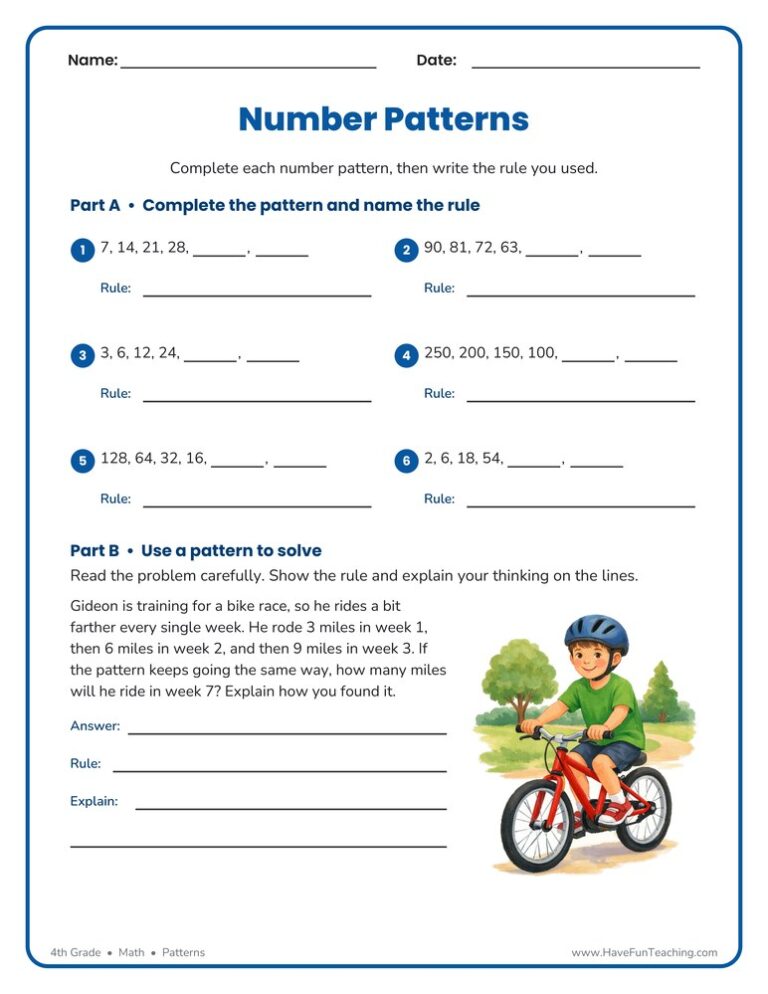
The Finding Number Patterns Worksheet gives 4th Grade students six sequences to complete and a bike-training word problem to solve, each with a line for the rule. An answer key is included for fast checking.

A bake-sale themed Multiples Worksheet that has 4th Grade students list multiples, finish number patterns, and solve word problems. An answer key is included for fast, no-prep multiplication fluency practice.

In this Pattern Detective Activity, students play detective by generating a pattern that follows a given rule.

A 4th grade Fibonacci Sequences Worksheet - Examples that has students complete the sequence, extend new patterns, find missing numbers, and explain their thinking. Answer key included for no-prep pattern practice.
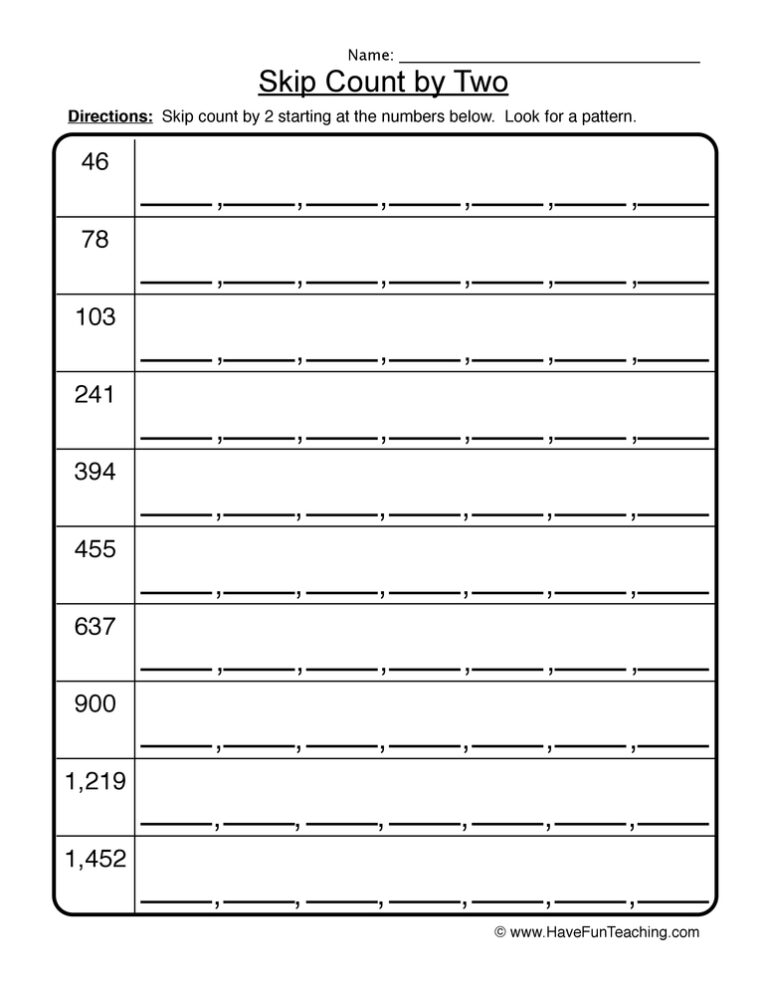
Using Skip Count by Two Worksheet, studentspractice skip-counting by 2s from any number to complete the pattern.

Using Skip Count by Three Worksheet, studentspractice skip-counting by 3s from any number to complete the pattern.
In this 4.OA.5 Fourth Grade Common Core Lesson, students generate a pattern that follows a given rule.
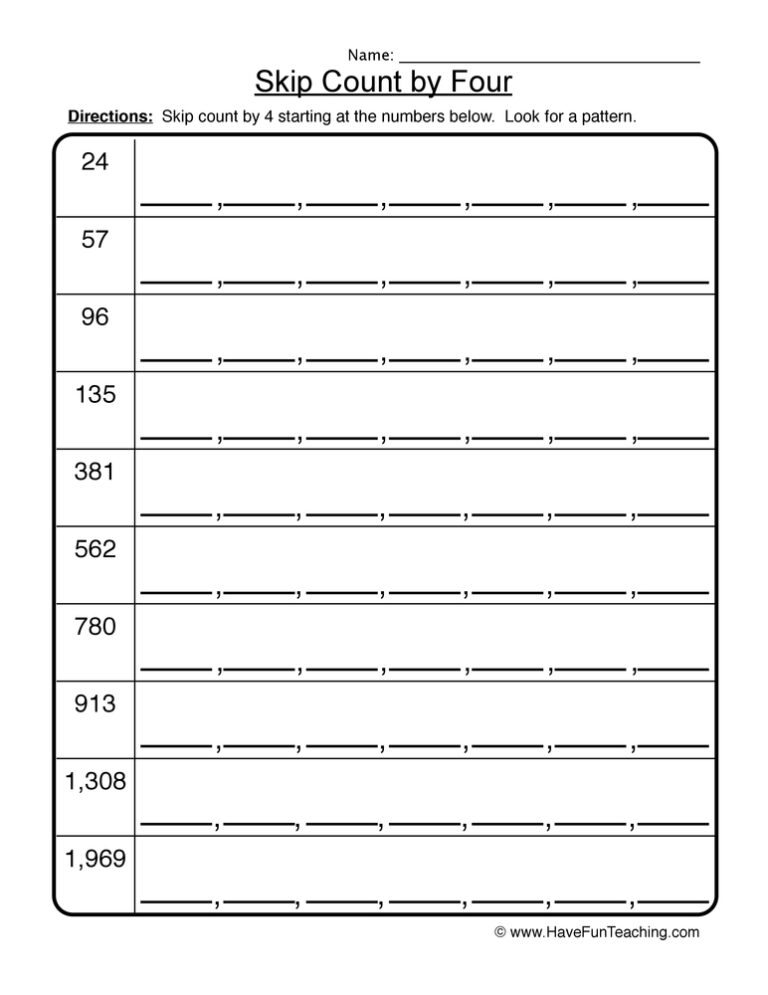
Using Skip Count by Four Worksheet, studentspractice skip-counting by 4s from any number to complete the pattern.
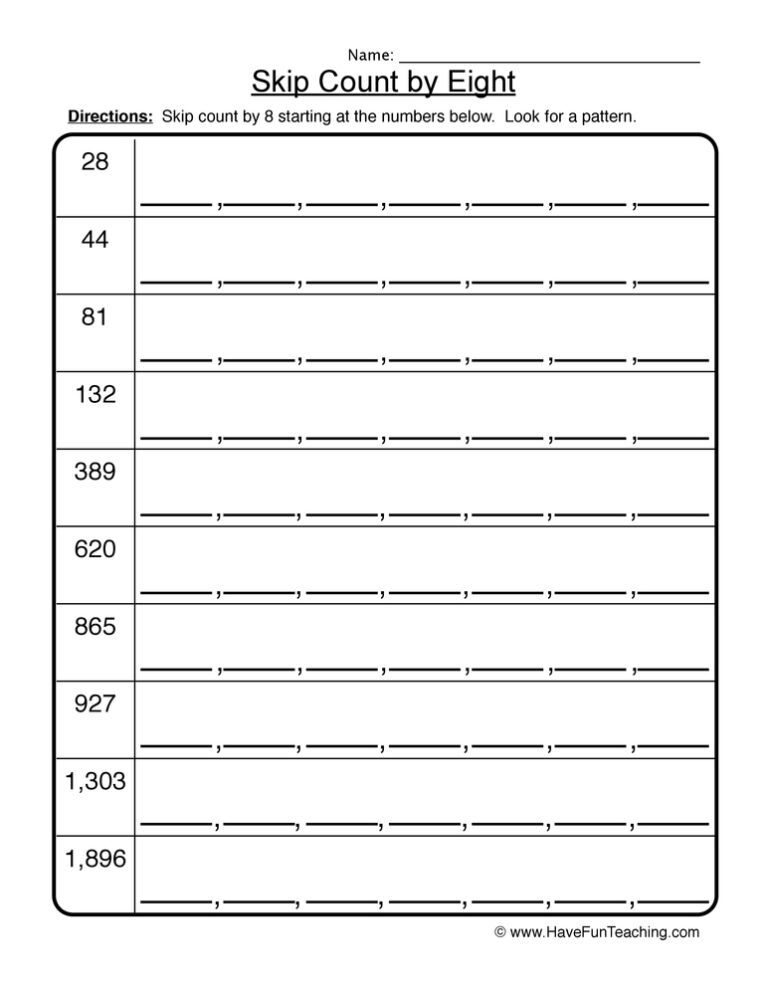
Using Skip Count by Eight Worksheet, studentspractice skip-counting by 8s from any number to complete the pattern.
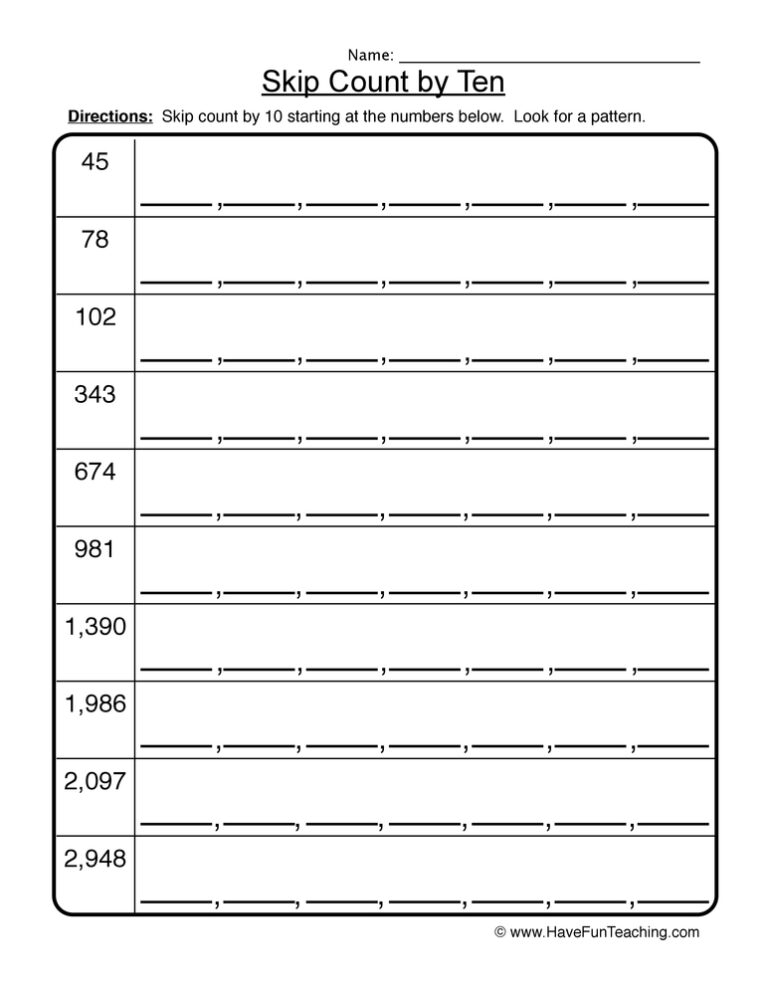
Using Skip Count by Ten Worksheet, studentspractice skip-counting by 10s from any number to complete the pattern.

In this Pattern Pairs Arithmetic Patterns Activity, students identify arithmetic patterns and explain them using properties of operations.

Reviews
There are no reviews yet